2 of 2 in CHAPTER V. CONCERNING THE WAY TO GOVERN C...18 of 99 in work
The Unforgotten Liberty
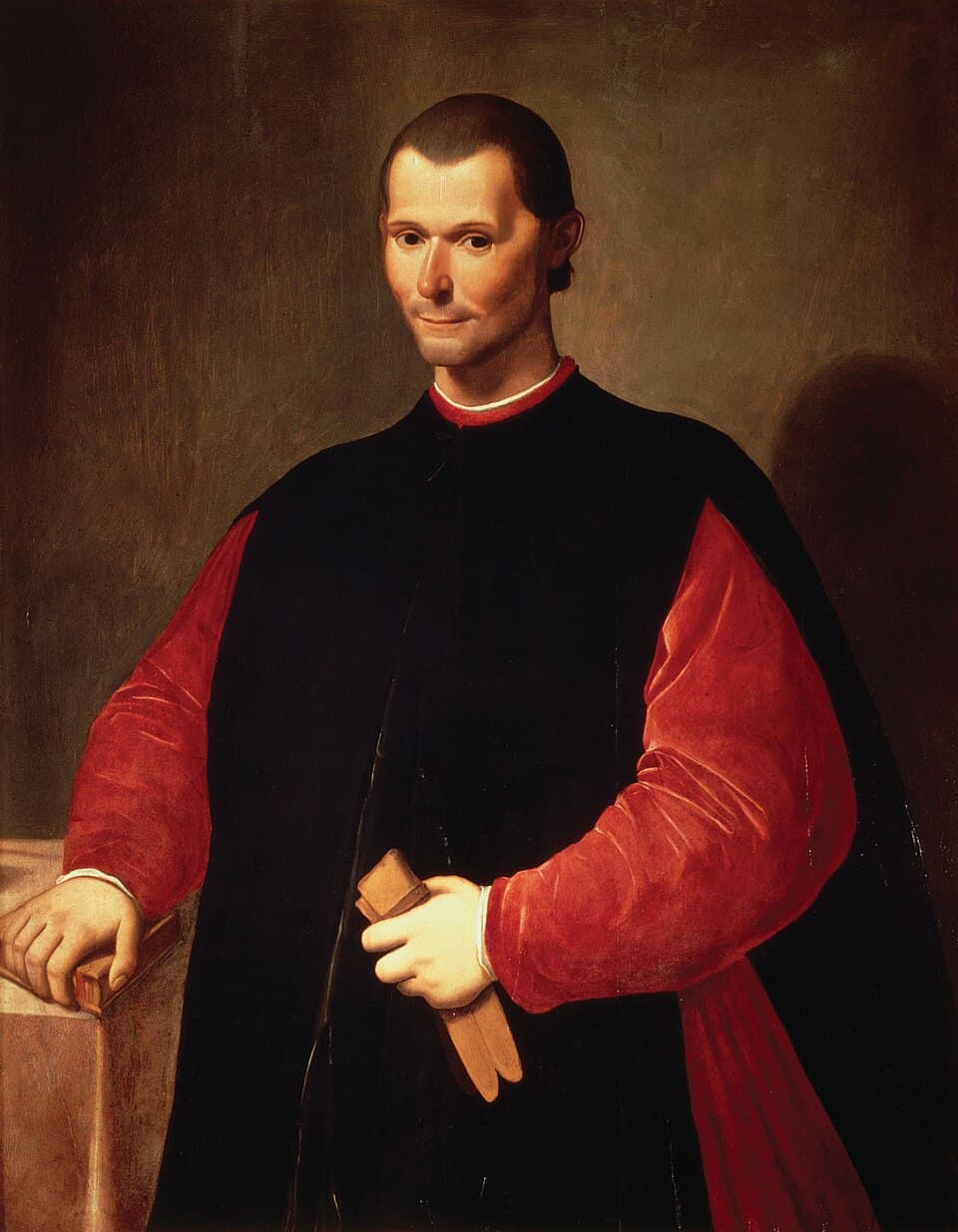
Niccolo Machiavelli
The Prince

The author warns that a prince who conquers a city accustomed to living in freedom must destroy it or face inevitable rebellion, as the memory of liberty is never forgotten by its citizens.

...e, the Spartans and the Romans. The Spartans held Athens and Thebes, establishing there an oligarchy: nevertheless they lost them. The Romans, in order to hold Capua, Carthage, and Numantia, dismantled them, and did not lose them. They wished to hold Greece as the Spartans held it, making it free and permitting its laws, and did not succeed. So to hold it they were compelled to dismantle many cities in the country, for in truth there is no safe way to retain them otherwise than by ruining them.
And he who becomes master of a city accustomed to freedom and does not destroy it, may expect to be destroyed by it, for in rebellion it has always the watchword of liberty and its ancient privileges as a rallying point, which neither time nor benefits will ever cause it to forget. And whatever you may do or provide against, they never forget that name or their privileges unless they are disunited or dispersed, but at every chance they immediately rally to them, as Pisa after the hundred years she had been held in bondage by the Florentines.
But when cities or countries are accustomed to live under a prince, and his family is exterminated, they, being on the one hand accustomed to obey and on the other hand not having the old prince, cannot agree in making one from amongst themselves, and they do not know how to govern themselves. For this reason they are very slow to take up arms, and a prince can gain them to himself and secure them much more easily. But in republics there is more vitality, greater hatred, and more desire for ve...
2
1 of 4 in CHAPTER VI. CONCERNING NEW PRINCIPALITIES...19 of 99 in work
Now entering CHAPTER VI. CONCERNING NEW PRINCIPALITIES...
Aiming Beyond the Mark
Niccolo Machiavelli
The Prince

A reflection on the importance of imitating the greatest historical figures, suggesting that setting one's goals as high as an expert archer allows a ruler to achieve success even if they cannot fully equal their models.

...and they do not know how to govern themselves. For this reason they are very slow to take up arms, and a prince can gain them to himself and secure them much more easily. But in republics there is more vitality, greater hatred, and more desire for vengeance, which will never permit them to allow the memory of their former liberty to rest; so that the safest way is to destroy them or to reside there. CHAPTER VI. CONCERNING NEW PRINCIPALITIES WHICH ARE ACQUIRED BY ONE’S OWN ARMS AND ABILITY
Let no one be surprised if, in speaking of entirely new principalities as I shall do, I adduce the highest examples both of prince and of state; because men, walking almost always in paths beaten by others, and following by imitation their deeds, are yet unable to keep entirely to the ways of others or attain to the power of those they imitate. A wise man ought always to follow the paths beaten by great men, and to imitate those who have been supreme, so that if his ability does not equal theirs, at least it will savour of it. Let him act like the clever archers who, designing to hit the mark which yet appears too far distant, and knowing the…
I say, therefore, that in entirely new principalities, where there is a new prince, more or less difficulty is found in keeping them, accordingly as there is more or less ability in him who has acquired the state. Now, as the fact of becoming a prince from a private station presupposes either ability or fortune, it is clear that one or other of these things will mitigate in some degree many difficulties. Nevertheless, he who has relied least on fortune is established the strongest. Further, it...
Continue reading →
2
2 of 4 in CHAPTER VI. CONCERNING NEW PRINCIPALITIES...20 of 99 in work
The Innovator's Dilemma
Niccolo Machiavelli
The Prince

The author discusses the inherent danger of introducing new political orders, noting that innovators face fierce opposition from those who benefited from the old system and only lukewarm support from potential beneficiaries.

...irth, in order that he should become King of Rome and founder of the fatherland. It was necessary that Cyrus should find the Persians discontented with the government of the Medes, and the Medes soft and effeminate through their long peace. Theseus could not have shown his ability had he not found the Athenians dispersed. These opportunities, therefore, made those men fortunate, and their high ability enabled them to recognize the opportunity whereby their country was ennobled and made famous.
Those who by valorous ways become princes, like these men, acquire a principality with difficulty, but they keep it with ease. The difficulties they have in acquiring it rise in part from the new rules and methods which they are forced to introduce to establish their government and its security. And it ought to be remembered that there is nothing more difficult to take in hand, more perilous to conduct, or more uncertain in its success, than to take the lead in the introduction of a new order of things, because the innovator has for enemies all those who have done well under the old conditions, and lukewarm defenders in those who may do well…
Thus it happens that whenever those who are hostile have the opportunity to attack they do it like partisans, whilst the others defend lukewarmly, in such wise that the prince is endangered along with them. It is necessary, therefore, if we desire to discuss this matter thoroughly, to inquire whether these innovators can rely on themselves or have to depend on others: that is to say, whether, to consummate their enterprise, have they to use prayers or can they use force? In the first instance...
Continue reading →
4
3 of 4 in CHAPTER VI. CONCERNING NEW PRINCIPALITIES...21 of 99 in work
Armed Prophets Conquer
Niccolo Machiavelli
The Prince

A thesis on the necessity of force in political innovation, famously concluding that 'armed prophets' succeed while 'unarmed prophets' fail because the fickle nature of the people requires coercion to maintain belief.

...conditions, and lukewarm defenders in those who may do well under the new. This coolness arises partly from fear of the opponents, who have the laws on their side, and partly from the incredulity of men, who do not readily believe in new things until they have had a long experience of them. Thus it happens that whenever those who are hostile have the opportunity to attack they do it like partisans, whilst the others defend lukewarmly, in such wise that the prince is endangered along with them.
It is necessary, therefore, if we desire to discuss this matter thoroughly, to inquire whether these innovators can rely on themselves or have to depend on others: that is to say, whether, to consummate their enterprise, have they to use prayers or can they use force? In the first instance they always succeed badly, and never compass anything; but when they can rely on themselves and use force, then they are rarely endangered. Hence it is that all armed prophets have conquered, and the unarmed ones have been destroyed. Besides the reasons mentioned, the nature of the people is variable, and whilst it is easy to persuade them, it is difficult…
If Moses, Cyrus, Theseus, and Romulus had been unarmed they could not have enforced their constitutions for long—as happened in our time to Fra Girolamo Savonarola, who was ruined with his new order of things immediately the multitude believed in him no longer, and he had no means of keeping steadfast those who believed or of making the unbelievers to believe. Therefore such as these have great difficulties in consummating their enterprise, for all their dangers are in the ascent, yet with abi...
Continue reading →
2
4 of 4 in CHAPTER VI. CONCERNING NEW PRINCIPALITIES...22 of 99 in work
Force as Persuasion
Niccolo Machiavelli
The Prince

The author emphasizes that a reformer must possess the means to use force, as the nature of the people is fickle and their belief must be maintained by compulsion once persuasion fails. He cites the success of armed prophets like Moses and the failure of unarmed ones like Savonarola to illustrate this necessity.

...e, if we desire to discuss this matter thoroughly, to inquire whether these innovators can rely on themselves or have to depend on others: that is to say, whether, to consummate their enterprise, have they to use prayers or can they use force? In the first instance they always succeed badly, and never compass anything; but when they can rely on themselves and use force, then they are rarely endangered. Hence it is that all armed prophets have conquered, and the unarmed ones have been destroyed.
Besides the reasons mentioned, the nature of the people is variable, and whilst it is easy to persuade them, it is difficult to fix them in that persuasion. And thus it is necessary to take such measures that, when they believe no longer, it may be possible to make them believe by force. If Moses, Cyrus, Theseus, and Romulus had been unarmed they could not have enforced their constitutions for long—as happened in our time to Fra Girolamo Savonarola, who was ruined with his new order of things immediately the multitude believed in him no longer, and he had no means of keeping steadfast those who believed or of making the unbelievers to…
To these great examples I wish to add a lesser one; still it bears some resemblance to them, and I wish it to suffice me for all of a like kind: it is Hiero the Syracusan.[1] This man rose from a private station to be Prince of Syracuse, nor did he, either, owe anything to fortune but opportunity; for the Syracusans, being oppressed, chose him for their captain, afterwards he was rewarded by being made their prince. He was of so great ability, even as a private citizen, that one who writes of...
Continue reading →
2