3 of 4 in CHAPTER XIII. CONCERNING AUXILIARIES, MIX...49 of 99 in work
Victory with Own Arms
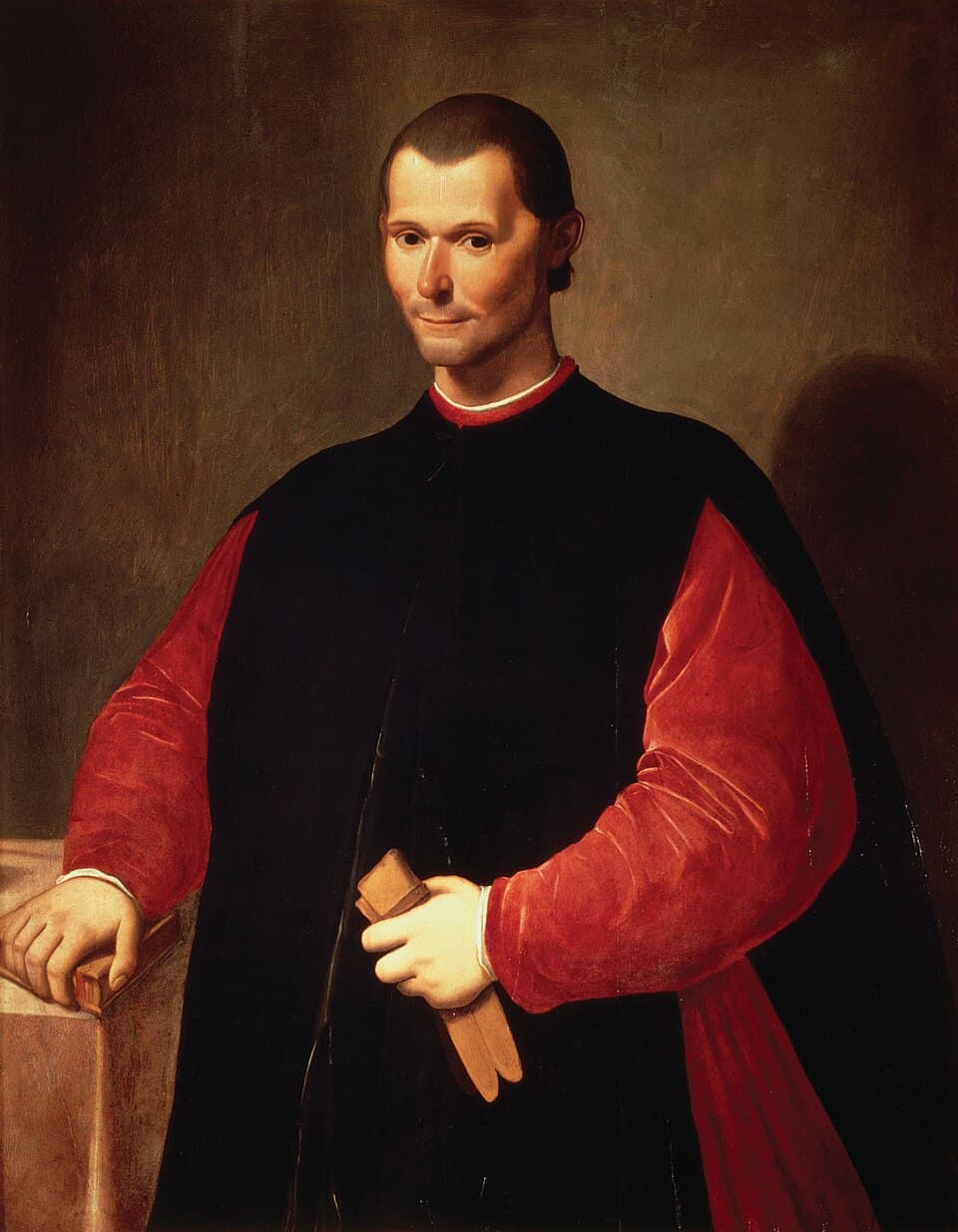
Niccolo Machiavelli
The Prince

The author advises that a wise ruler should rely exclusively on their own troops, suggesting that a victory achieved through the help of others is not a true victory.

...re hazardous than mercenaries, because with them the ruin is ready made; they are all united, all yield obedience to others; but with mercenaries, when they have conquered, more time and better opportunities are needed to injure you; they are not all of one community, they are found and paid by you, and a third party, which you have made their head, is not able all at once to assume enough authority to injure you. In conclusion, in mercenaries dastardy is most dangerous; in auxiliaries, valour.
The wise prince, therefore, has always avoided these arms and turned to his own; and has been willing rather to lose with them than to conquer with the others, not deeming that a real victory which is gained with the arms of others.
I shall never hesitate to cite Cesare Borgia and his actions. This duke entered the Romagna with auxiliaries, taking there only French soldiers, and with them he captured Imola and Forli; but afterwards, such forces not appearing to him reliable, he turned to mercenaries, discerning less danger in them, and enlisted the Orsini and Vitelli; whom presently, on handling and finding them doubtful, unfaithful, and dangerous, he destroyed and turned to his own men. And the difference between one and...
2
4 of 4 in CHAPTER XIII. CONCERNING AUXILIARIES, MIX...50 of 99 in work
The Foundation of Power
Niccolo Machiavelli
The Prince

The author asserts that true political stability is impossible without a military force comprised of one's own citizens, as reliance on mercenaries is inherently fragile.

...at this was ‘wholly unhistorical.’ He might well have added that the Roman power was at its zenith when every citizen acknowledged his liability to fight for the State, but that it began to decline as soon as this obligation was no longer recognised.”—Pall Mall Gazette, 15th May 1906. I conclude, therefore, that no principality is secure without having its own forces; on the contrary, it is entirely dependent on good fortune, not having the valour which in adversity would defend it. And
It has always been the opinion and judgment of wise men that nothing can be so uncertain or unstable as fame or power not founded on its own strength. And one’s own forces are those which are composed either of subjects, citizens, or dependents; all others are mercenaries or auxiliaries.
And the way to make ready one’s own forces will be easily found if the rules suggested by me shall be reflected upon, and if one will consider how Philip, the father of Alexander the Great, and many republics and princes have armed and organized themselves, to which rules I entirely commit myself. CHAPTER XIV. THAT WHICH CONCERNS A PRINCE ON THE SUBJECT OF THE ART OF WAR A prince ought to have no other aim or thought, nor select anything else for his study, than war and its rules and disc...
6
1 of 2 in CHAPTER XIV. THAT WHICH CONCERNS A PRINCE...51 of 99 in work
Now entering CHAPTER XIV. THAT WHICH CONCERNS A PRINCE...
The Art of War
Niccolo Machiavelli
The Prince

A prescription stating that a ruler's primary and sole focus should be the art of war, as military proficiency is the foundation of both acquiring and retaining political power.

...es are those which are composed either of subjects, citizens, or dependents; all others are mercenaries or auxiliaries. And the way to make ready one’s own forces will be easily found if the rules suggested by me shall be reflected upon, and if one will consider how Philip, the father of Alexander the Great, and many republics and princes have armed and organized themselves, to which rules I entirely commit myself. CHAPTER XIV. THAT WHICH CONCERNS A PRINCE ON THE SUBJECT OF THE ART OF WAR
A prince ought to have no other aim or thought, nor select anything else for his study, than war and its rules and discipline; for this is the sole art that belongs to him who rules, and it is of such force that it not only upholds those who are born princes, but it often enables men to rise from a private station to that rank. And, on the contrary, it is seen that when princes have thought more of ease than of arms they have lost their states. And the first cause of your losing it is to neglect this art; and what enables you to acquire a state is to be master of the art. Francesco Sforza, through being martial, from a private person became…
Because there is nothing proportionate between the armed and the unarmed; and it is not reasonable that he who is armed should yield obedience willingly to him who is unarmed, or that the unarmed man should be secure among armed servants. Because, there being in the one disdain and in the other suspicion, it is not possible for them to work well together. And therefore a prince who does not understand the art of war, over and above the other misfortunes already mentioned, cannot be respected by...
Continue reading →
2
2 of 2 in CHAPTER XIV. THAT WHICH CONCERNS A PRINCE...52 of 99 in work
The Armed Imperative
Niccolo Machiavelli
The Prince

The author emphasizes that being unarmed leads to being despised, arguing that a prince cannot expect loyalty or security if there is a military imbalance between him and his subjects.

...often enables men to rise from a private station to that rank. And, on the contrary, it is seen that when princes have thought more of ease than of arms they have lost their states. And the first cause of your losing it is to neglect this art; and what enables you to acquire a state is to be master of the art. Francesco Sforza, through being martial, from a private person became Duke of Milan; and the sons, through avoiding the hardships and troubles of arms, from dukes became private persons.
For among other evils which being unarmed brings you, it causes you to be despised, and this is one of those ignominies against which a prince ought to guard himself, as is shown later on. Because there is nothing proportionate between the armed and the unarmed; and it is not reasonable that he who is armed should yield obedience willingly to him who is unarmed, or that the unarmed man should be secure among armed servants.
Because, there being in the one disdain and in the other suspicion, it is not possible for them to work well together. And therefore a prince who does not understand the art of war, over and above the other misfortunes already mentioned, cannot be respected by his soldiers, nor can he rely on them. He ought never, therefore, to have out of his thoughts this subject of war, and in peace he should addict himself more to its exercise than in war; this he can do in two ways, the one by action, the...
2
1 of 3 in CHAPTER XV. CONCERNING THINGS FOR WHICH M...53 of 99 in work
Now entering CHAPTER XV. CONCERNING THINGS FOR WHICH M...
The Necessary Evil
Niccolo Machiavelli
The Prince

In a departure from traditional political idealism, the author argues that a prince must learn how to be 'not good' and use vice when necessary for the preservation of the state. He contends that a man who tries to be virtuous in all circumstances will inevitably be ruined by the many who are not virtuous.

..., and how in chastity, affability, humanity, and liberality Scipio conformed to those things which have been written of Cyrus by Xenophon. A wise prince ought to observe some such rules, and never in peaceful times stand idle, but increase his resources with industry in such a way that they may be available to him in adversity, so that if fortune chances it may find him prepared to resist her blows. CHAPTER XV. CONCERNING THINGS FOR WHICH MEN, AND ESPECIALLY PRINCES, ARE PRAISED OR BLAMED
It remains now to see what ought to be the rules of conduct for a prince towards subject and friends. And as I know that many have written on this point, I expect I shall be considered presumptuous in mentioning it again, especially as in discussing it I shall depart from the methods of other people. But, it being my intention to write a thing which shall be useful to him who apprehends it, it appears to me more appropriate to follow up the real truth of the matter than the imagination of it; for many have pictured republics and principalities which in fact have never been known or seen, because how one lives is so far distant from how one…
Therefore, putting on one side imaginary things concerning a prince, and discussing those which are real, I say that all men when they are spoken of, and chiefly princes for being more highly placed, are remarkable for some of those qualities which bring them either blame or praise; and thus it is that one is reputed liberal, another miserly, using a Tuscan term (because an avaricious person in our language is still he who desires to possess by robbery, whilst we call one miserly who deprives h...
Continue reading →
2