3 of 5 in CHAPTER XXV. WHAT FORTUNE CAN EFFECT IN H...87 of 99 in work
Fortune's Fickle Nature
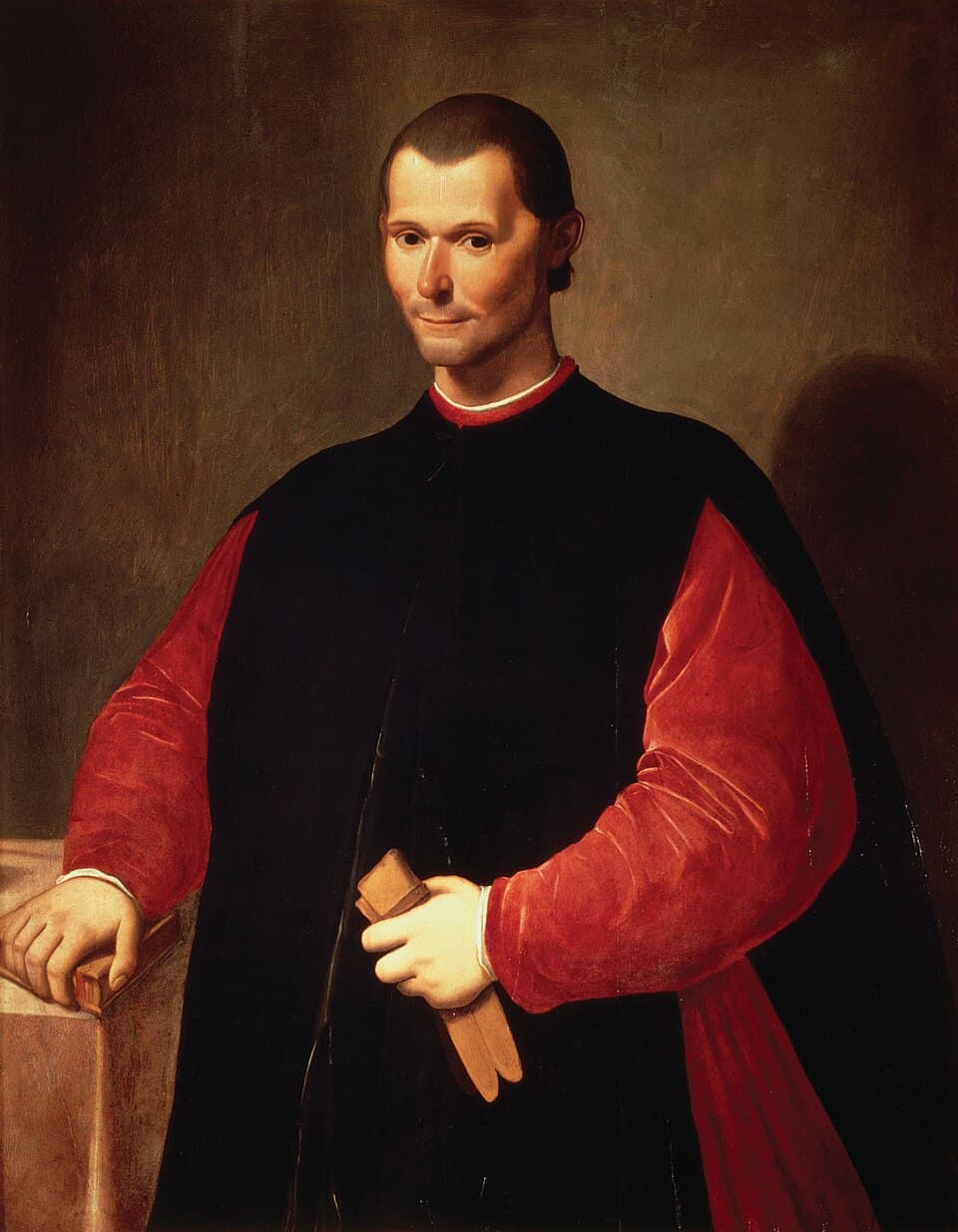
Niccolo Machiavelli
The Prince

The author argues that political success depends on a leader's ability to adapt their actions to the 'spirit of the times' rather than relying on fixed traits.

...t her, and thither she turns her forces where she knows that barriers and defences have not been raised to constrain her. And if you will consider Italy, which is the seat of these changes, and which has given to them their impulse, you will see it to be an open country without barriers and without any defence. For if it had been defended by proper valour, as are Germany, Spain, and France, either this invasion would not have made the great changes it has made or it would not have come at all.
And this I consider enough to say concerning resistance to fortune in general. But confining myself more to the particular, I say that a prince may be seen happy to-day and ruined to-morrow without having shown any change of disposition or character. This, I believe, arises firstly from causes that have already been discussed at length, namely, that the prince who relies entirely on fortune is lost when it changes. I believe also that he will be successful who directs his actions according to the spirit of the times, and that he whose actions do not accord with the times will not be successful.
Because men are seen, in affairs that lead to the end which every man has before him, namely, glory and riches, to get there by various methods; one with caution, another with haste; one by force, another by skill; one by patience, another by its opposite; and each one succeeds in reaching the goal by a different method. One can also see of two cautious men the one attain his end, the other fail; and similarly, two men by different observances are equally successful, the one being cautious, the...
5
4 of 5 in CHAPTER XXV. WHAT FORTUNE CAN EFFECT IN H...88 of 99 in work
The Many Paths to Glory
Niccolo Machiavelli
The Prince

The author observes that different men achieve the same goals of glory and riches through vastly different temperaments, suggesting that success depends on the method's alignment with the times.

...re to the particular, I say that a prince may be seen happy to-day and ruined to-morrow without having shown any change of disposition or character. This, I believe, arises firstly from causes that have already been discussed at length, namely, that the prince who relies entirely on fortune is lost when it changes. I believe also that he will be successful who directs his actions according to the spirit of the times, and that he whose actions do not accord with the times will not be successful.
Because men are seen, in affairs that lead to the end which every man has before him, namely, glory and riches, to get there by various methods; one with caution, another with haste; one by force, another by skill; one by patience, another by its opposite; and each one succeeds in reaching the goal by a different method.
One can also see of two cautious men the one attain his end, the other fail; and similarly, two men by different observances are equally successful, the one being cautious, the other impetuous; all this arises from nothing else than whether or not they conform in their methods to the spirit of the times. This follows from what I have said, that two men working differently bring about the same effect, and of two working similarly, one attains his object and the other does not. Changes in estate...
6
5 of 5 in CHAPTER XXV. WHAT FORTUNE CAN EFFECT IN H...89 of 99 in work
Fortune's Favor
Niccolo Machiavelli
The Prince

A bold vision of Fortune as a volatile force that favors the young and adventurous over the cautious, requiring aggressive action to be mastered.

...ld have done, he would never have succeeded. Because the King of France would have made a thousand excuses, and the others would have raised a thousand fears. I will leave his other actions alone, as they were all alike, and they all succeeded, for the shortness of his life did not let him experience the contrary; but if circumstances had arisen which required him to go cautiously, his ruin would have followed, because he would never have deviated from those ways to which nature inclined him.
I conclude, therefore that, fortune being changeful and mankind steadfast in their ways, so long as the two are in agreement men are successful, but unsuccessful when they fall out. For my part I consider that it is better to be adventurous than cautious, because fortune is a woman, and if you wish to keep her under it is necessary to beat and ill-use her; and it is seen that she allows herself to be mastered by the adventurous rather than by those who go to work more coldly. She is, therefore, always, woman-like, a lover of young men, because they are less cautious, more violent, and with more audacity command her.
CHAPTER XXVI. AN EXHORTATION TO LIBERATE ITALY FROM THE BARBARIANS Having carefully considered the subject of the above discourses, and wondering within myself whether the present times were propitious to a new prince, and whether there were elements that would give an opportunity to a wise and virtuous one to introduce a new order of things which would do honour to him and good to the people of this country, it appears to me that so many things concur to favour a new prince that I never...
2
1 of 3 in CHAPTER XXVI. AN EXHORTATION TO LIBERATE...90 of 99 in work
Now entering CHAPTER XXVI. AN EXHORTATION TO LIBERATE...
Chaos as Opportunity
Niccolo Machiavelli
The Prince

Machiavelli reflects on the desperate state of Italy, suggesting that its current desolation provides the perfect opportunity for a virtuous new leader to emerge and establish a new order. He draws parallels to historical figures like Moses and Cyrus, arguing that great spirits are revealed through the extremity of their people's suffering.

...onsider that it is better to be adventurous than cautious, because fortune is a woman, and if you wish to keep her under it is necessary to beat and ill-use her; and it is seen that she allows herself to be mastered by the adventurous rather than by those who go to work more coldly. She is, therefore, always, woman-like, a lover of young men, because they are less cautious, more violent, and with more audacity command her. CHAPTER XXVI. AN EXHORTATION TO LIBERATE ITALY FROM THE BARBARIANS
Having carefully considered the subject of the above discourses, and wondering within myself whether the present times were propitious to a new prince, and whether there were elements that would give an opportunity to a wise and virtuous one to introduce a new order of things which would do honour to him and good to the people of this country, it appears to me that so many things concur to favour a new prince that I never knew a time more fit than the present. And if, as I said, it was necessary that the people of Israel should be captive so as to make manifest the ability of Moses; that the Persians should be oppressed by the Medes so as to…
Although lately some spark may have been shown by one, which made us think he was ordained by God for our redemption, nevertheless it was afterwards seen, in the height of his career, that fortune rejected him; so that Italy, left as without life, waits for him who shall yet heal her wounds and put an end to the ravaging and plundering of Lombardy, to the swindling and taxing of the kingdom and of Tuscany, and cleanse those sores that for long have festered. It is seen how she entreats God to...
Continue reading →
2
2 of 3 in CHAPTER XXVI. AN EXHORTATION TO LIBERATE...91 of 99 in work
Establishing New Orders
Niccolo Machiavelli
The Prince

The author reflects on the necessity of human agency and the establishment of new laws to restore military virtue and honor in a fragmented Italy.

...are hallowed when there is no other hope but in them. Here there is the greatest willingness, and where the willingness is great the difficulties cannot be great if you will only follow those men to whom I have directed your attention. Further than this, how extraordinarily the ways of God have been manifested beyond example: the sea is divided, a cloud has led the way, the rock has poured forth water, it has rained manna, everything has contributed to your greatness; you ought to do the rest.
God is not willing to do everything, and thus take away our free will and that share of glory which belongs to us. And it is not to be wondered at if none of the above-named Italians have been able to accomplish all that is expected from your illustrious house; and if in so many revolutions in Italy, and in so many campaigns, it has always appeared as if military virtue were exhausted, this has happened because the old order of things was not good, and none of us have known how to find a new one. And nothing honours a man more than to establish new laws and new ordinances when he himself was newly risen. Such things when they are well founded…
Here there is great valour in the limbs whilst it fails in the head. Look attentively at the duels and the hand-to-hand combats, how superior the Italians are in strength, dexterity, and subtlety. But when it comes to armies they do not bear comparison, and this springs entirely from the insufficiency of the leaders, since those who are capable are not obedient, and each one seems to himself to know, there having never been any one so distinguished above the rest, either by valour or fortune,...
Continue reading →
2