7 of 7 in CHAPTER IX. CONCERNING A CIVIL PRINCIPALITY39 of 99 in work
The State's Constant Need
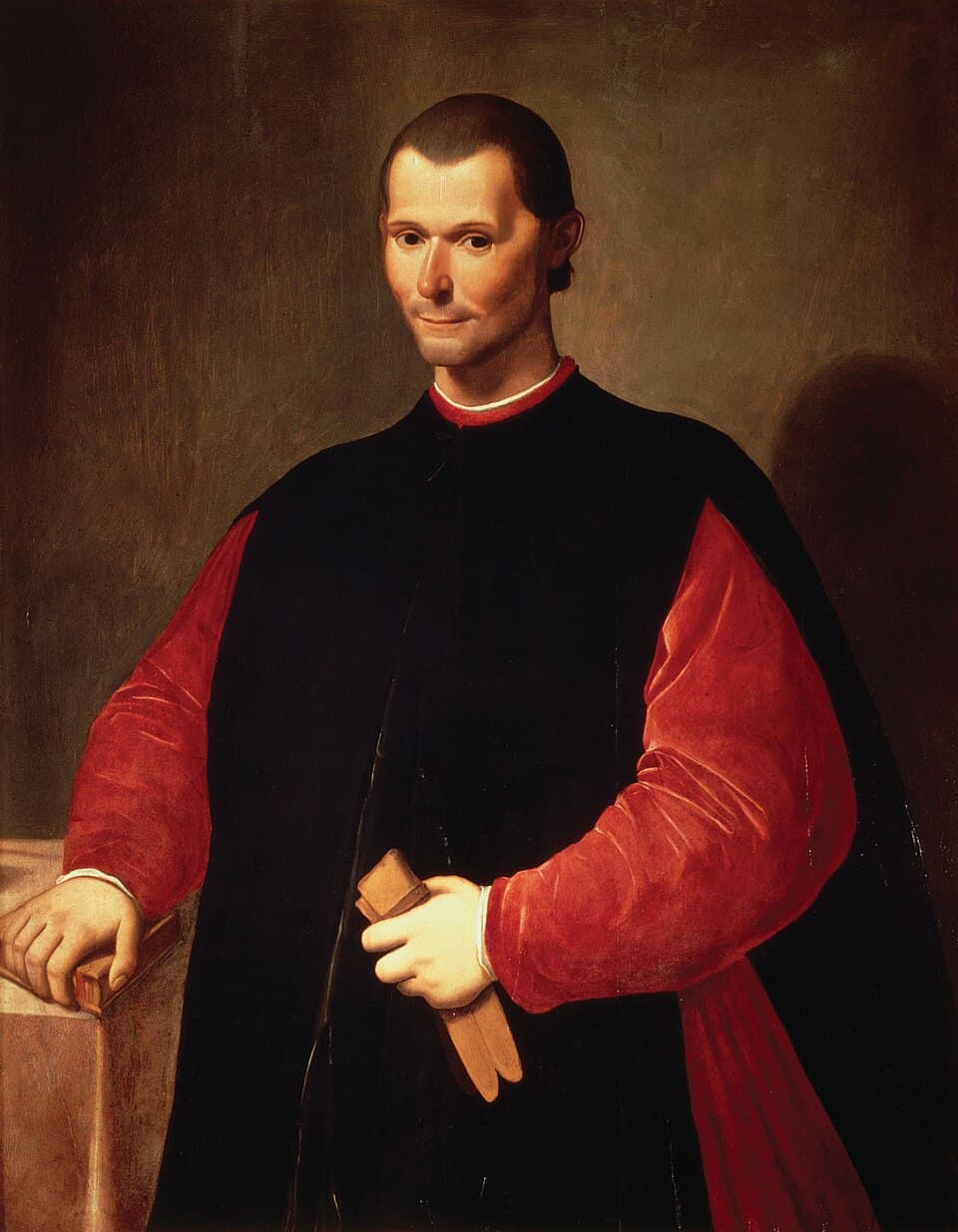
Niccolo Machiavelli
The Prince

A thesis stating that a wise prince must ensure his citizens always need the state, thereby securing their loyalty during times of crisis when it matters most.

...it rests entirely on the goodwill of those citizens who are raised to the magistracy, and who, especially in troubled times, can destroy the government with great ease, either by intrigue or open defiance; and the prince has not the chance amid tumults to exercise absolute authority, because the citizens and subjects, accustomed to receive orders from magistrates, are not of a mind to obey him amid these confusions, and there will always be in doubtful times a scarcity of men whom he can trust.
For such a prince cannot rely upon what he observes in quiet times, when citizens have need of the state, because then every one agrees with him; they all promise, and when death is far distant they all wish to die for him; but in troubled times, when the state has need of its citizens, then he finds but few. And so much the more is this experiment dangerous, inasmuch as it can only be tried once. Therefore a wise prince ought to adopt such a course that his citizens will always in every sort and kind of circumstance have need of the state and of him, and then he will always find them faithful.
CHAPTER X. CONCERNING THE WAY IN WHICH THE STRENGTH OF ALL PRINCIPALITIES OUGHT TO BE MEASURED It is necessary to consider another point in examining the character of these principalities: that is, whether a prince has such power that, in case of need, he can support himself with his own resources, or whether he has always need of the assistance of others. And to make this quite clear I say that I consider those who are able to support themselves by their own resources who can, either by...
2
1 of 1 in CHAPTER X. CONCERNING THE WAY IN WHICH TH...40 of 99 in work
Now entering CHAPTER X. CONCERNING THE WAY IN WHICH TH...
The Bond of Shared Suffering
Niccolo Machiavelli
The Prince

The author posits that a strong prince can maintain the loyalty of his subjects during a siege by balancing their hopes and fears, eventually binding them to him through the shared experience of sacrifice. He notes that men are naturally inclined to feel obligated to those they have suffered for or benefited from.

...oper ditches and walls, they have sufficient artillery, and they always keep in public depots enough for one year’s eating, drinking, and firing. And beyond this, to keep the people quiet and without loss to the state, they always have the means of giving work to the community in those labours that are the life and strength of the city, and on the pursuit of which the people are supported; they also hold military exercises in repute, and moreover have many ordinances to uphold them. Therefore,
A prince who has a strong city, and had not made himself odious, will not be attacked, or if any one should attack he will only be driven off with disgrace; again, because that the affairs of this world are so changeable, it is almost impossible to keep an army a whole year in the field without being interfered with. And whoever should reply: If the people have property outside the city, and see it burnt, they will not remain patient, and the long siege and self-interest will make them forget their prince; to this I answer that a powerful and courageous prince will overcome all such difficulties by giving at one time hope to his subjects that…
Therefore, if everything is well considered, it will not be difficult for a wise prince to keep the minds of his citizens steadfast from first to last, when he does not fail to support and defend them. CHAPTER XI. CONCERNING ECCLESIASTICAL PRINCIPALITIES It only remains now to speak of ecclesiastical principalities, touching which all difficulties are prior to getting possession, because they are acquired either by capacity or good fortune, and they can be held without either; for they ar...
Continue reading →
3
1 of 1 in CHAPTER XI. CONCERNING ECCLESIASTICAL PRI...41 of 99 in work
Now entering CHAPTER XI. CONCERNING ECCLESIASTICAL PRI...
The Divine Principality
Niccolo Machiavelli
The Prince

A reflection on ecclesiastical principalities, which are described as uniquely secure and happy because they are maintained by divine power rather than human reason or military defense.

...rt and defend them. CHAPTER XI. CONCERNING ECCLESIASTICAL PRINCIPALITIES It only remains now to speak of ecclesiastical principalities, touching which all difficulties are prior to getting possession, because they are acquired either by capacity or good fortune, and they can be held without either; for they are sustained by the ancient ordinances of religion, which are so all-powerful, and of such a character that the principalities may be held no matter how their princes behave and live.
These princes alone have states and do not defend them; and they have subjects and do not rule them; and the states, although unguarded, are not taken from them, and the subjects, although not ruled, do not care, and they have neither the desire nor the ability to alienate themselves. Such principalities only are secure and happy. But being upheld by powers, to which the human mind cannot reach, I shall speak no more of them, because, being exalted and maintained by God, it would be the act of a presumptuous and rash man to discuss them.
Nevertheless, if any one should ask of me how comes it that the Church has attained such greatness in temporal power, seeing that from Alexander backwards the Italian potentates (not only those who have been called potentates, but every baron and lord, though the smallest) have valued the temporal power very slightly—yet now a king of France trembles before it, and it has been able to drive him from Italy, and to ruin the Venetians—although this may be very manifest, it does not appear to me s...
2
1 of 5 in CHAPTER XII. HOW MANY KINDS OF SOLDIERY T...42 of 99 in work
Now entering CHAPTER XII. HOW MANY KINDS OF SOLDIERY T...
Mercenaries' Uselessness
Niccolo Machiavelli
The Prince

The author asserts that the primary foundations of a stable state are good laws and a strong military, specifically one composed of the prince's own subjects. He dismisses mercenaries and auxiliaries as useless and dangerous, arguing they lack the genuine motivation required to face death in battle.

...the characteristics of such principalities as in the beginning I proposed to discuss, and having considered in some degree the causes of there being good or bad, and having shown the methods by which many have sought to acquire them and to hold them, it now remains for me to discuss generally the means of offence and defence which belong to each of them. We have seen above how necessary it is for a prince to have his foundations well laid, otherwise it follows of necessity he will go to ruin.
The chief foundations of all states, new as well as old or composite, are good laws and good arms; and as there cannot be good laws where the state is not well armed, it follows that where they are well armed they have good laws. I shall leave the laws out of the discussion and shall speak of the arms. I say, therefore, that the arms with which a prince defends his state are either his own, or they are mercenaries, auxiliaries, or mixed. Mercenaries and auxiliaries are useless and dangerous; and if one holds his state based on these arms, he will stand neither firm nor safe; for they are disunited, ambitious, and without discipline,…
They are ready enough to be your soldiers whilst you do not make war, but if war comes they take themselves off or run from the foe; which I should have little trouble to prove, for the ruin of Italy has been caused by nothing else than by resting all her hopes for many years on mercenaries, and although they formerly made some display and appeared valiant amongst themselves, yet when the foreigners came they showed what they were. Thus it was that Charles, King of France, was allowed to seize...
Continue reading →
2
2 of 5 in CHAPTER XII. HOW MANY KINDS OF SOLDIERY T...43 of 99 in work
Mercenary Captain's Risk
Niccolo Machiavelli
The Prince

The author criticizes the use of mercenary captains, arguing they are either dangerously ambitious or incompetently ruinous, and insists that a prince must lead his own army in person.

...y for him to send his quartermasters to chalk up the billets for his soldiers to conquer the country. Cf. “The History of Henry VII,” by Lord Bacon: “King Charles had conquered the realm of Naples, and lost it again, in a kind of a felicity of a dream. He passed the whole length of Italy without resistance: so that it was true what Pope Alexander was wont to say: That the Frenchmen came into Italy with chalk in their hands, to mark up their lodgings, rather than with swords to fight.”
I wish to demonstrate further the infelicity of these arms. The mercenary captains are either capable men or they are not; if they are, you cannot trust them, because they always aspire to their own greatness, either by oppressing you, who are their master, or others contrary to your intentions; but if the captain is not skilful, you are ruined in the usual way. And if it be urged that whoever is armed will act in the same way, whether mercenary or not, I reply that when arms have to be resorted to, either by a prince or a republic, then the prince ought to go in person and perform the duty of a captain; the republic has to send its citizens,…
And experience has shown princes and republics, single-handed, making the greatest progress, and mercenaries doing nothing except damage; and it is more difficult to bring a republic, armed with its own arms, under the sway of one of its citizens than it is to bring one armed with foreign arms. Rome and Sparta stood for many ages armed and free. The Switzers are completely armed and quite free. Of ancient mercenaries, for example, there are the Carthaginians, who were oppressed by their mercen...
Continue reading →
2