2 of 3 in CHAPTER XV. CONCERNING THINGS FOR WHICH M...54 of 99 in work
The Prince's Necessary Evil
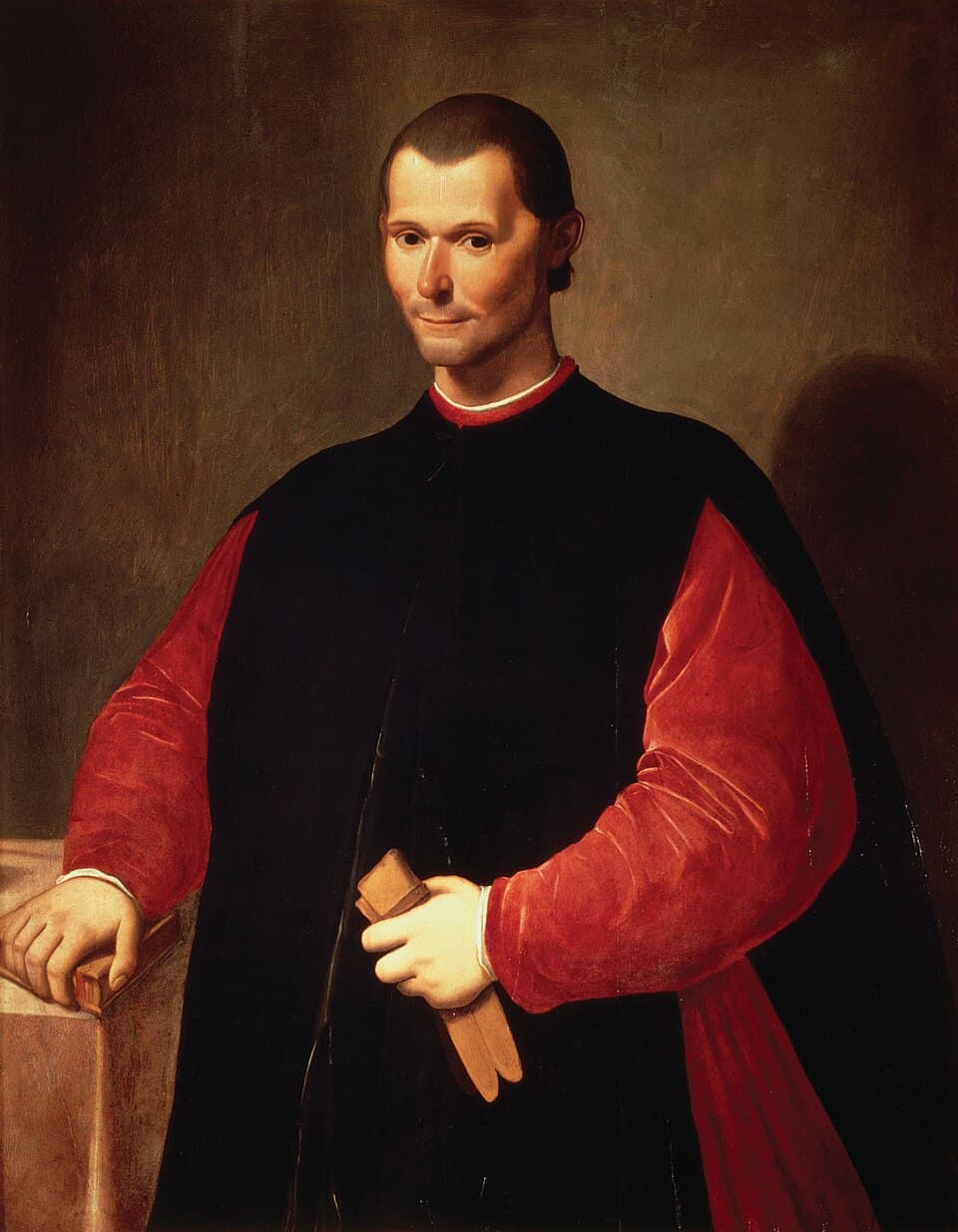
Niccolo Machiavelli
The Prince

A prescription for rulers to prioritize political reality over idealism, emphasizing that a prince must learn how to be immoral when necessity demands it.

...s to me more appropriate to follow up the real truth of the matter than the imagination of it; for many have pictured republics and principalities which in fact have never been known or seen, because how one lives is so far distant from how one ought to live, that he who neglects what is done for what ought to be done, sooner effects his ruin than his preservation; for a man who wishes to act entirely up to his professions of virtue soon meets with what destroys him among so much that is evil.
Hence it is necessary for a prince wishing to hold his own to know how to do wrong, and to make use of it or not according to necessity. Therefore, putting on one side imaginary things concerning a prince, and discussing those which are real, I say that all men when they are spoken of, and chiefly princes for being more highly placed, are remarkable for some of those qualities which bring them either blame or praise; and thus it is that one is reputed liberal, another miserly, using a Tuscan term (because an avaricious person in our language is still he who desires to possess by robbery, whilst we call one miserly who deprives himself too…
one is reputed generous, one rapacious; one cruel, one compassionate; one faithless, another faithful; one effeminate and cowardly, another bold and brave; one affable, another haughty; one lascivious, another chaste; one sincere, another cunning; one hard, another easy; one grave, another frivolous; one religious, another unbelieving, and the like. And I know that every one will confess that it would be most praiseworthy in a prince to exhibit all the above qualities that are considered good;...
Continue reading →
2
3 of 3 in CHAPTER XV. CONCERNING THINGS FOR WHICH M...55 of 99 in work
Virtue's Political Paradox
Niccolo Machiavelli
The Prince

The author argues that while it is ideal for a prince to possess all virtuous qualities, human nature makes this impossible; therefore, a ruler must be prudent enough to avoid vices that threaten his state while embracing those necessary for its preservation.

...e ought to live, that he who neglects what is done for what ought to be done, sooner effects his ruin than his preservation; for a man who wishes to act entirely up to his professions of virtue soon meets with what destroys him among so much that is evil. Hence it is necessary for a prince wishing to hold his own to know how to do wrong, and to make use of it or not according to necessity. Therefore, putting on one side imaginary things concerning a prince, and discussing those which are real,
I say that all men when they are spoken of, and chiefly princes for being more highly placed, are remarkable for some of those qualities which bring them either blame or praise; and thus it is that one is reputed liberal, another miserly, using a Tuscan term (because an avaricious person in our language is still he who desires to possess by robbery, whilst we call one miserly who deprives himself too much of the use of his own); one is reputed generous, one rapacious; one cruel, one compassionate; one faithless, another faithful; one effeminate and cowardly, another bold and brave; one affable, another haughty; one lascivious, another chaste;…
CHAPTER XVI. CONCERNING LIBERALITY AND MEANNESS Commencing then with the first of the above-named characteristics, I say that it would be well to be reputed liberal. Nevertheless, liberality exercised in a way that does not bring you the reputation for it, injures you; for if one exercises it honestly and as it should be exercised, it may not become known, and you will not avoid the reproach of its opposite. Therefore, any one wishing to maintain among men the name of liberal is obliged t...
Continue reading →
3
1 of 2 in CHAPTER XVI. CONCERNING LIBERALITY AND ME...56 of 99 in work
Now entering CHAPTER XVI. CONCERNING LIBERALITY AND ME...
The Reputation Trap
Niccolo Machiavelli
The Prince

Machiavelli advises that a reputation for liberality is often self-defeating, as it leads to the exhaustion of resources and the eventual oppression of subjects through taxation. He concludes that a wise prince should not fear a reputation for meanness, as parsimony ensures the financial stability necessary for defense and effective governance.

...his not being possible, he may with less hesitation abandon himself to them. And again, he need not make himself uneasy at incurring a reproach for those vices without which the state can only be saved with difficulty, for if everything is considered carefully, it will be found that something which looks like virtue, if followed, would be his ruin; whilst something else, which looks like vice, yet followed brings him security and prosperity. CHAPTER XVI. CONCERNING LIBERALITY AND MEANNESS
Commencing then with the first of the above-named characteristics, I say that it would be well to be reputed liberal. Nevertheless, liberality exercised in a way that does not bring you the reputation for it, injures you; for if one exercises it honestly and as it should be exercised, it may not become known, and you will not avoid the reproach of its opposite. Therefore, any one wishing to maintain among men the name of liberal is obliged to avoid no attribute of magnificence; so that a prince thus inclined will consume in such acts all his property, and will be compelled in the end, if he wish to maintain the name of liberal, to unduly…
We have not seen great things done in our time except by those who have been considered mean; the rest have failed. Pope Julius the Second was assisted in reaching the papacy by a reputation for liberality, yet he did not strive afterwards to keep it up, when he made war on the King of France; and he made many wars without imposing any extraordinary tax on his subjects, for he supplied his additional expenses out of his long thriftiness. The present King of Spain would not have undertaken or c...
Continue reading →
3
2 of 2 in CHAPTER XVI. CONCERNING LIBERALITY AND ME...57 of 99 in work
Reputation's Careful Calculus
Niccolo Machiavelli
The Prince

The author advises princes to prioritize a reputation for frugality over liberality, as excessive generosity eventually requires heavy taxation that breeds hatred.

...ot be followed by soldiers. And of that which is neither yours nor your subjects’ you can be a ready giver, as were Cyrus, Caesar, and Alexander; because it does not take away your reputation if you squander that of others, but adds to it; it is only squandering your own that injures you. And there is nothing wastes so rapidly as liberality, for even whilst you exercise it you lose the power to do so, and so become either poor or despised, or else, in avoiding poverty, rapacious and hated. And
A prince should guard himself, above all things, against being despised and hated; and liberality leads you to both. Therefore it is wiser to have a reputation for meanness which brings reproach without hatred, than to be compelled through seeking a reputation for liberality to incur a name for rapacity which begets reproach with hatred.
CHAPTER XVII. CONCERNING CRUELTY AND CLEMENCY, AND WHETHER IT IS BETTER TO BE LOVED THAN FEARED Coming now to the other qualities mentioned above, I say that every prince ought to desire to be considered clement and not cruel. Nevertheless he ought to take care not to misuse this clemency. Cesare Borgia was considered cruel; notwithstanding, his cruelty reconciled the Romagna, unified it, and restored it to peace and loyalty. And if this be rightly considered, he will be seen to have been...
2
1 of 3 in CHAPTER XVII. CONCERNING CRUELTY AND CLEM...58 of 99 in work
Now entering CHAPTER XVII. CONCERNING CRUELTY AND CLEM...
Fear Over Love
Niccolo Machiavelli
The Prince

The author argues that while it is ideal to be both loved and feared, it is much safer to be feared because love is a fickle bond of obligation that men break for their own advantage. Fear, conversely, is maintained by a dread of punishment that remains constant even when personal interests shift.

...tas me talia cogunt Moliri, et late fines custode tueri.”[2] Nevertheless he ought to be slow to believe and to act, nor should he himself show fear, but proceed in a temperate manner with prudence and humanity, so that too much confidence may not make him incautious and too much distrust render him intolerable. [2] . . . against my will, my fate A throne unsettled, and an infant state, Bid me defend my realms with all my pow’rs, And guard with these severities my shores. Christopher Pitt.
Upon this a question arises: whether it be better to be loved than feared or feared than loved? It may be answered that one should wish to be both, but, because it is difficult to unite them in one person, it is much safer to be feared than loved, when, of the two, either must be dispensed with. Because this is to be asserted in general of men, that they are ungrateful, fickle, false, cowardly, covetous, and as long as you succeed they are yours entirely; they will offer you their blood, property, life, and children, as is said above, when the need is far distant; but when it approaches they turn against you. And that prince who, relying…
Nevertheless a prince ought to inspire fear in such a way that, if he does not win love, he avoids hatred; because he can endure very well being feared whilst he is not hated, which will always be as long as he abstains from the property of his citizens and subjects and from their women. But when it is necessary for him to proceed against the life of someone, he must do it on proper justification and for manifest cause, but above all things he must keep his hands off the property of others, be...
Continue reading →
2