1 of 2 in Introduction1 of 99 in work
Now entering Introduction
Retreat to Antiquity
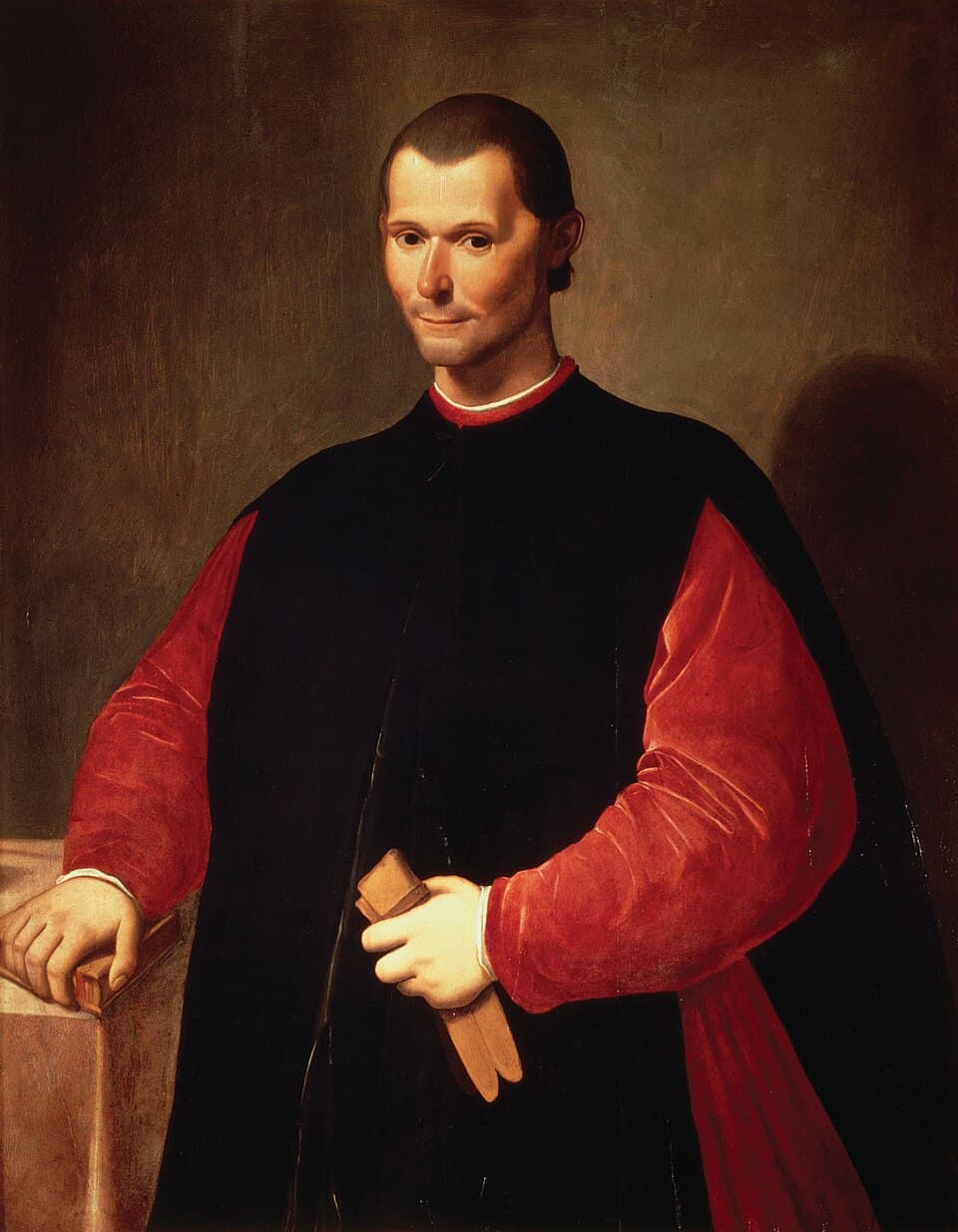
Niccolo Machiavelli
The Prince

A personal confession describing the author's intellectual sanctuary, where he finds solace and timeless wisdom by engaging with the great thinkers of antiquity.

...edici, imprisoned, and put to the question by torture. The new Medicean pope, Leo X, procured his release, and he retired to his small property at San Casciano, near Florence, where he devoted himself to literature. In a letter to Francesco Vettori, dated 13th December 1513, he has left a very interesting description of his life at this period, which elucidates his methods and his motives in writing The Prince. After describing his daily occupations with his family and neighbours, he writes:
“The evening being come, I return home and go to my study; at the entrance I pull off my peasant-clothes, covered with dust and dirt, and put on my noble court dress, and thus becomingly re-clothed I pass into the ancient courts of the men of old, where, being lovingly received by them, I am fed with that food which is mine alone; where I do not hesitate to speak with them, and to ask for the reason of their actions, and they in their benignity answer me; and for four hours I feel no weariness, I forget every trouble, poverty does not dismay, death does not terrify me; I am possessed entirely by those great men.
And because Dante says: Knowledge doth come of learning well retained, Unfruitful else, I have noted down what I have gained from their conversation, and have composed a small work on ‘Principalities,’ where I pour myself out as fully as I can in meditation on the subject, discussing what a principality is, what kinds there are, how they can be acquired, how they can be kept, why they are lost: and if any of my fancies ever pleased you, this ought not to displease you: and to a prince, especi...
2
2 of 2 in Introduction2 of 99 in work
Experience's Earned Voice
Niccolo Machiavelli
The Prince

The author defends his credentials as a political advisor, citing fifteen years of diligent study and his own poverty as proof of his loyalty, honesty, and hard-won experience.

...changed; and for some unknown reason it was finally dedicated to Lorenzo de’ Medici. Although Machiavelli discussed with Casavecchio whether it should be sent or presented in person to the patron, there is no evidence that Lorenzo ever received or even read it: he certainly never gave Machiavelli any employment. Although it was plagiarized during Machiavelli’s lifetime, The Prince was never published by him, and its text is still disputable. Machiavelli concludes his letter to Vettori thus:
“And as to this little thing [his book], when it has been read it will be seen that during the fifteen years I have given to the study of statecraft I have neither slept nor idled; and men ought ever to desire to be served by one who has reaped experience at the expense of others. And of my loyalty none could doubt, because having always kept faith I could not now learn how to break it; for he who has been faithful and honest, as I have, cannot change his nature; and my poverty is a witness to my honesty.”
Before Machiavelli had got The Prince off his hands he commenced his “Discourse on the First Decade of Titus Livius,” which should be read concurrently with The Prince. These and several minor works occupied him until the year 1518, when he accepted a small commission to look after the affairs of some Florentine merchants at Genoa. In 1519 the Medicean rulers of Florence granted a few political concessions to her citizens, and Machiavelli with others was consulted upon a new constitution...
2
1 of 2 in DEDICATION3 of 99 in work
Now entering DEDICATION
Knowledge as Precious Gift
Niccolo Machiavelli
The Prince

In this dedicatory note, the author offers his most precious possession—his distilled knowledge of the actions of great men—as a gift to a prince.

...1813; Silvestri, 9 vols., 1820-2; Passerini, Fanfani, Milanesi, 6 vols. only published, 1873-7. Minor works. Ed. F. L. Polidori, 1852; Lettere familiari, ed. E. Alvisi, 1883, 2 editions, one with excisions; Credited Writings, ed. G. Canestrini, 1857; Letters to F. Vettori, see A. Ridolfi, Pensieri intorno allo scopo di N. Machiavelli nel libro Il Principe, etc.; D. Ferrara, The Private Correspondence of Nicolo Machiavelli, 1929. DEDICATION To the Magnificent Lorenzo Di Piero De’ Medici
Those who strive to obtain the good graces of a prince are accustomed to come before him with such things as they hold most precious, or in which they see him take most delight; whence one often sees horses, arms, cloth of gold, precious stones, and similar ornaments presented to princes, worthy of their greatness. Desiring therefore to present myself to your Magnificence with some testimony of my devotion towards you, I have not found among my possessions anything which I hold more dear than, or value so much as, the knowledge of the actions of great men, acquired by long experience in contemporary affairs, and a continual study of…
And although I may consider this work unworthy of your countenance, nevertheless I trust much to your benignity that it may be acceptable, seeing that it is not possible for me to make a better gift than to offer you the opportunity of understanding in the shortest time all that I have learnt in so many years, and with so many troubles and dangers; which work I have not embellished with swelling or magnificent words, nor stuffed with rounded periods, nor with any extrinsic allurements or adorn...
Continue reading →
2