3 of 3 in CHAPTER XX. ARE FORTRESSES, AND MANY OTHE...75 of 99 in work
The Danger of Secret Favours
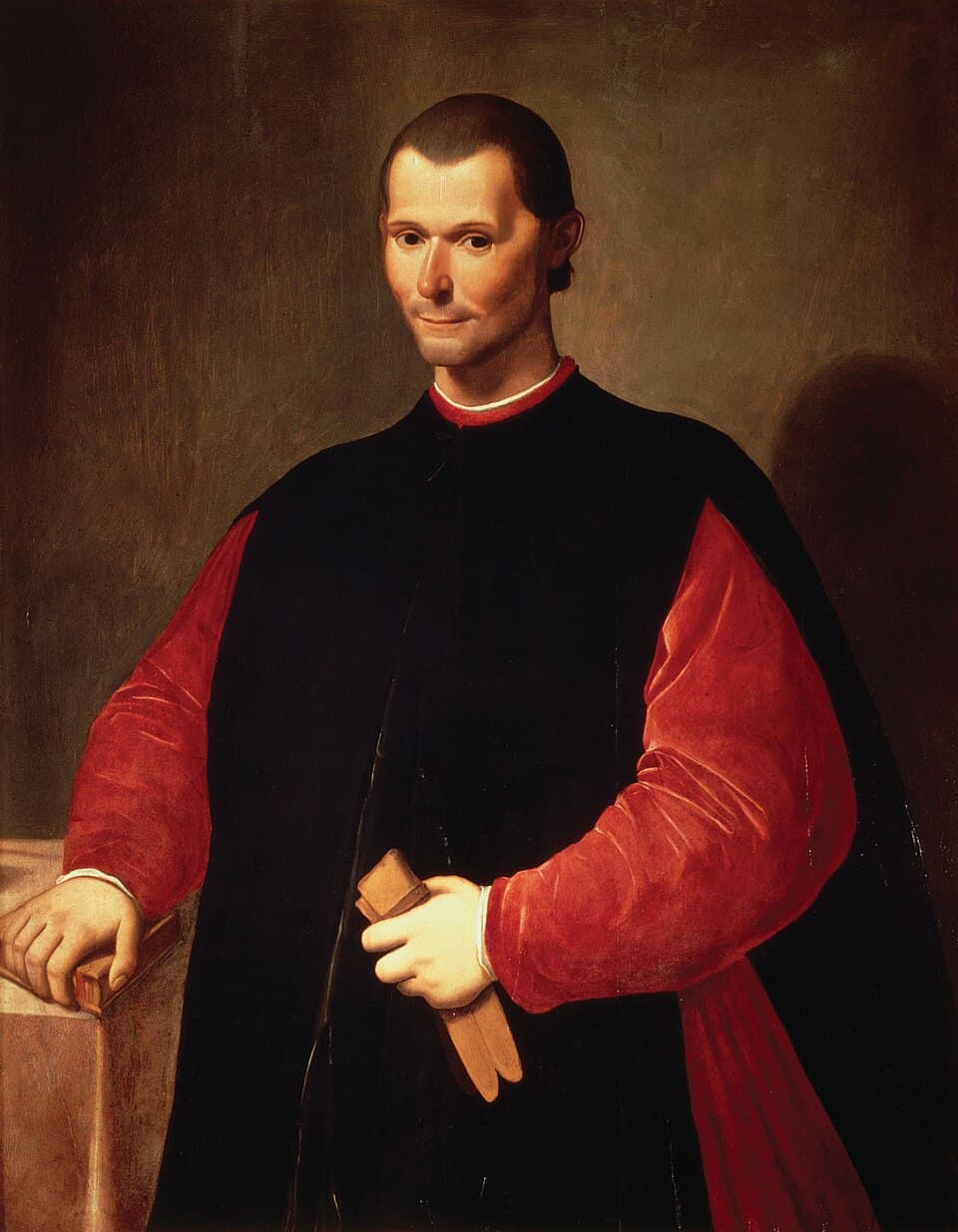
Niccolo Machiavelli
The Prince

A warning is issued that princes should be wary of those who helped them gain power out of discontent, as they are harder to satisfy than former enemies.

...at the commencement of a princedom have been hostile, if they are of a description to need assistance to support themselves, can always be gained over with the greatest ease, and they will be tightly held to serve the prince with fidelity, inasmuch as they know it to be very necessary for them to cancel by deeds the bad impression which he had formed of them; and thus the prince always extracts more profit from them than from those who, serving him in too much security, may neglect his affairs.
And since the matter demands it, I must not fail to warn a prince, who by means of secret favours has acquired a new state, that he must well consider the reasons which induced those to favour him who did so; and if it be not a natural affection towards him, but only discontent with their government, then he will only keep them friendly with great trouble and difficulty, for it will be impossible to satisfy them. And weighing well the reasons for this in those examples which can be taken from ancient and modern affairs, we shall find that it is easier for the prince to make friends of those men who were contented under the former government,…
6. It has been a custom with princes, in order to hold their states more securely, to build fortresses that may serve as a bridle and bit to those who might design to work against them, and as a place of refuge from a first attack. I praise this system because it has been made use of formerly. Notwithstanding that, Messer Nicolo Vitelli in our times has been seen to demolish two fortresses in Citta di Castello so that he might keep that state; Guido Ubaldo, Duke of Urbino, on returning to his...
Continue reading →
2
1 of 4 in CHAPTER XXI. HOW A PRINCE SHOULD CONDUCT...76 of 99 in work
Now entering CHAPTER XXI. HOW A PRINCE SHOULD CONDUCT...
Great Enterprises Build Esteem
Niccolo Machiavelli
The Prince

Machiavelli argues that a prince gains great esteem through ambitious enterprises and military conquests, using Ferdinand of Aragon's strategic rise as a primary example.

...i that Machiavelli was sent as envoy on 1499. A letter from Fortunati to the countess announces the appointment: “I have been with the signori,” wrote Fortunati, “to learn whom they would send and when. They tell me that Nicolo Machiavelli, a learned young Florentine noble, secretary to my Lords of the Ten, is to leave with me at once.” Cf. “Catherine Sforza,” by Count Pasolini, translated by P. Sylvester, 1898. CHAPTER XXI. HOW A PRINCE SHOULD CONDUCT HIMSELF SO AS TO GAIN RENOWN
Nothing makes a prince so much esteemed as great enterprises and setting a fine example. We have in our time Ferdinand of Aragon, the present King of Spain. He can almost be called a new prince, because he has risen, by fame and glory, from being an insignificant king to be the foremost king in Christendom; and if you will consider his deeds you will find them all great and some of them extraordinary. In the beginning of his reign he attacked Granada, and this enterprise was the foundation of his dominions. He did this quietly at first and without any fear of hindrance, for he held the minds of the barons of Castile occupied in thinking of…
He was able with the money of the Church and of the people to sustain his armies, and by that long war to lay the foundation for the military skill which has since distinguished him. Further, always using religion as a plea, so as to undertake greater schemes, he devoted himself with pious cruelty to driving out and clearing his kingdom of the Moors; nor could there be a more admirable example, nor one more rare. Under this same cloak he assailed Africa, he came down on Italy, he has finally at...
Continue reading →
3
2 of 4 in CHAPTER XXI. HOW A PRINCE SHOULD CONDUCT...77 of 99 in work
Declaring Against Neutrality
Niccolo Machiavelli
The Prince

The author prescribes that a prince should always take a side in a conflict between neighbors, as neutrality leads to ruin regardless of who wins.

...y against him. Again, it much assists a prince to set unusual examples in internal affairs, similar to those which are related of Messer Bernabo da Milano, who, when he had the opportunity, by any one in civil life doing some extraordinary thing, either good or bad, would take some method of rewarding or punishing him, which would be much spoken about. And a prince ought, above all things, always endeavour in every action to gain for himself the reputation of being a great and remarkable man.
A prince is also respected when he is either a true friend or a downright enemy, that is to say, when, without any reservation, he declares himself in favour of one party against the other; which course will always be more advantageous than standing neutral; because if two of your powerful neighbours come to blows, they are of such a character that, if one of them conquers, you have either to fear him or not. In either case it will always be more advantageous for you to declare yourself and to make war strenuously; because, in the first case, if you do not declare yourself, you will invariably fall a prey to the conqueror, to the pleasure and…
Because he who conquers does not want doubtful friends who will not aid him in the time of trial; and he who loses will not harbour you because you did not willingly, sword in hand, court his fate. Antiochus went into Greece, being sent for by the Ætolians to drive out the Romans. He sent envoys to the Achaeans, who were friends of the Romans, exhorting them to remain neutral; and on the other hand the Romans urged them to take up arms. This question came to be discussed in the council of the...
Continue reading →
2
3 of 4 in CHAPTER XXI. HOW A PRINCE SHOULD CONDUCT...78 of 99 in work
The Calculated Alliance
Niccolo Machiavelli
The Prince

The author argues that taking a clear side in a conflict is strategically superior to neutrality, as it builds a bond of gratitude and mutual respect with the victor.

...that it is better and more advantageous for your state not to interfere in our war, nothing can be more erroneous; because by not interfering you will be left, without favour or consideration, the guerdon of the conqueror.” Thus it will always happen that he who is not your friend will demand your neutrality, whilst he who is your friend will entreat you to declare yourself with arms. And irresolute princes, to avoid present dangers, generally follow the neutral path, and are generally ruined.
But when a prince declares himself gallantly in favour of one side, if the party with whom he allies himself conquers, although the victor may be powerful and may have him at his mercy, yet he is indebted to him, and there is established a bond of amity; and men are never so shameless as to become a monument of ingratitude by oppressing you. Victories after all are never so complete that the victor must not show some regard, especially to justice.
But if he with whom you ally yourself loses, you may be sheltered by him, and whilst he is able he may aid you, and you become companions on a fortune that may rise again. In the second case, when those who fight are of such a character that you have no anxiety as to who may conquer, so much the more is it greater prudence to be allied, because you assist at the destruction of one by the aid of another who, if he had been wise, would have saved him; and conquering, as it is impossible that he...
4
4 of 4 in CHAPTER XXI. HOW A PRINCE SHOULD CONDUCT...79 of 99 in work
The Lesser Evil
Niccolo Machiavelli
The Prince

The author argues that political decisions always involve risk, and true prudence lies in the ability to identify and choose the least harmful course of action.

...pels him, as is said above; because if he conquers you are at his discretion, and princes ought to avoid as much as possible being at the discretion of any one. The Venetians joined with France against the Duke of Milan, and this alliance, which caused their ruin, could have been avoided. But when it cannot be avoided, as happened to the Florentines when the Pope and Spain sent armies to attack Lombardy, then in such a case, for the above reasons, the prince ought to favour one of the parties.
Never let any Government imagine that it can choose perfectly safe courses; rather let it expect to have to take very doubtful ones, because it is found in ordinary affairs that one never seeks to avoid one trouble without running into another; but prudence consists in knowing how to distinguish the character of troubles, and for choice to take the lesser evil.
A prince ought also to show himself a patron of ability, and to honour the proficient in every art. At the same time he should encourage his citizens to practise their callings peaceably, both in commerce and agriculture, and in every other following, so that the one should not be deterred from improving his possessions for fear lest they be taken away from him or another from opening up trade for fear of taxes; but the prince ought to offer rewards to whoever wishes to do these things and des...
4