6 of 7 in CHAPTER XIX. THAT ONE SHOULD AVOID BEING...71 of 99 in work
The Inheritor's Failure
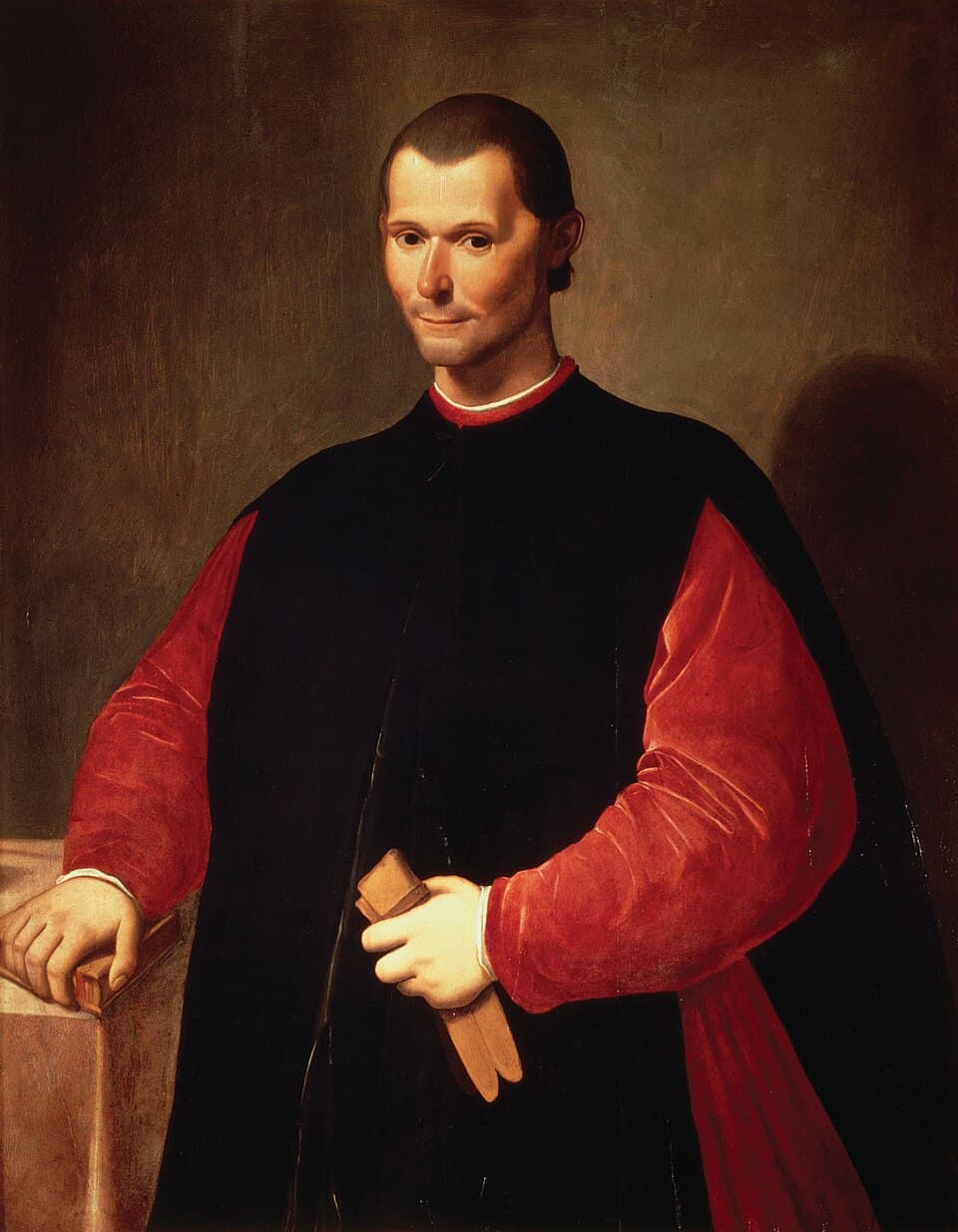
Niccolo Machiavelli
The Prince

The author uses the example of Commodus to show how a prince's cruelty, lack of dignity, and failure to manage the military lead to contempt and eventual assassination.

...ed by princes, because any one who does not fear to die can inflict them; but a prince may fear them the less because they are very rare; he has only to be careful not to do any grave injury to those whom he employs or has around him in the service of the state. Antoninus had not taken this care, but had contumeliously killed a brother of that centurion, whom also he daily threatened, yet retained in his bodyguard; which, as it turned out, was a rash thing to do, and proved the emperor’s ruin.
But let us come to Commodus, to whom it should have been very easy to hold the empire, for, being the son of Marcus, he had inherited it, and he had only to follow in the footsteps of his father to please his people and soldiers; but, being by nature cruel and brutal, he gave himself up to amusing the soldiers and corrupting them, so that he might indulge his rapacity upon the people; on the other hand, not maintaining his dignity, often descending to the theatre to compete with gladiators, and doing other vile things, little worthy of the imperial majesty, he fell into contempt with the soldiers, and being hated by one party and despised by…
It remains to discuss the character of Maximinus. He was a very warlike man, and the armies, being disgusted with the effeminacy of Alexander, of whom I have already spoken, killed him and elected Maximinus to the throne. This he did not possess for long, for two things made him hated and despised; the one, his having kept sheep in Thrace, which brought him into contempt (it being well known to all, and considered a great indignity by every one), and the other, his having at the accession to h...
Continue reading →
5
7 of 7 in CHAPTER XIX. THAT ONE SHOULD AVOID BEING...72 of 99 in work
The Imitation Paradox
Niccolo Machiavelli
The Prince

The author explains that a new prince must carefully choose which historical figures to imitate based on his specific circumstances, rather than following any one model blindly. He suggests that the qualities needed to found a state are different from those required to maintain one that is already stable.

...hereditary or a newly formed principality; because the sons of the old prince are not the heirs, but he who is elected to that position by those who have authority, and the sons remain only noblemen. And this being an ancient custom, it cannot be called a new principality, because there are none of those difficulties in it that are met with in new ones; for although the prince is new, the constitution of the state is old, and it is framed so as to receive him as if he were its hereditary lord.
But returning to the subject of our discourse, I say that whoever will consider it will acknowledge that either hatred or contempt has been fatal to the above-named emperors, and it will be recognized also how it happened that, a number of them acting in one way and a number in another, only one in each way came to a happy end and the rest to unhappy ones. Because it would have been useless and dangerous for Pertinax and Alexander, being new princes, to imitate Marcus, who was heir to the principality; and likewise it would have been utterly destructive to Caracalla, Commodus, and Maximinus to have imitated Severus, they not having sufficient…
CHAPTER XX. ARE FORTRESSES, AND MANY OTHER THINGS TO WHICH PRINCES OFTEN RESORT, ADVANTAGEOUS OR HURTFUL? 1. Some princes, so as to hold securely the state, have disarmed their subjects; others have kept their subject towns distracted by factions; others have fostered enmities against themselves; others have laid themselves out to gain over those whom they distrusted in the beginning of their governments; some have built fortresses; some have overthrown and destroyed them. And although on...
Continue reading →
2
1 of 3 in CHAPTER XX. ARE FORTRESSES, AND MANY OTHE...73 of 99 in work
Now entering CHAPTER XX. ARE FORTRESSES, AND MANY OTHE...
Arming Your Subjects
Niccolo Machiavelli
The Prince

The author posits that arming one's subjects is a strategic necessity for new princes, as it transforms distrusted individuals into loyal adherents and defenders.

...ns distracted by factions; others have fostered enmities against themselves; others have laid themselves out to gain over those whom they distrusted in the beginning of their governments; some have built fortresses; some have overthrown and destroyed them. And although one cannot give a final judgment on all of these things unless one possesses the particulars of those states in which a decision has to be made, nevertheless I will speak as comprehensively as the matter of itself will admit. 2.
There never was a new prince who has disarmed his subjects; rather when he has found them disarmed he has always armed them, because, by arming them, those arms become yours, those men who were distrusted become faithful, and those who were faithful are kept so, and your subjects become your adherents. And whereas all subjects cannot be armed, yet when those whom you do arm are benefited, the others can be handled more freely, and this difference in their treatment, which they quite understand, makes the former your dependents, and the latter, considering it to be necessary that those who have the most danger and service should have the most reward, excuse you.
But when you disarm them, you at once offend them by showing that you distrust them, either for cowardice or for want of loyalty, and either of these opinions breeds hatred against you. And because you cannot remain unarmed, it follows that you turn to mercenaries, which are of the character already shown; even if they should be good they would not be sufficient to defend you against powerful enemies and distrusted subjects. Therefore, as I have said, a new prince in a new principality has alwa...
3
2 of 3 in CHAPTER XX. ARE FORTRESSES, AND MANY OTHE...74 of 99 in work
Enemies as Ladder
Niccolo Machiavelli
The Prince

The author suggests that wise princes should strategically foster opposition or animosity to provide themselves with the opportunity to overcome it and gain renown.

...tizens, distracted by their differences, should not unite against them. Which, as we saw, did not afterwards turn out as expected, because, after the rout at Vaila, one party at once took courage and seized the state. Such methods argue, therefore, weakness in the prince, because these factions will never be permitted in a vigorous principality; such methods for enabling one the more easily to manage subjects are only useful in times of peace, but if war comes this policy proves fallacious. 4.
Without doubt princes become great when they overcome the difficulties and obstacles by which they are confronted, and therefore fortune, especially when she desires to make a new prince great, who has a greater necessity to earn renown than an hereditary one, causes enemies to arise and form designs against him, in order that he may have the opportunity of overcoming them, and by them to mount higher, as by a ladder which his enemies have raised. For this reason many consider that a wise prince, when he has the opportunity, ought with craft to foster some animosity against himself, so that, having crushed it, his renown may rise higher.
5. Princes, especially new ones, have found more fidelity and assistance in those men who in the beginning of their rule were distrusted than among those who in the beginning were trusted. Pandolfo Petrucci, Prince of Siena, ruled his state more by those who had been distrusted than by others. But on this question one cannot speak generally, for it varies so much with the individual; I will only say this, that those men who at the commencement of a princedom have been hostile, if they are of a...
1
3 of 3 in CHAPTER XX. ARE FORTRESSES, AND MANY OTHE...75 of 99 in work
The Danger of Secret Favours
Niccolo Machiavelli
The Prince

A warning is issued that princes should be wary of those who helped them gain power out of discontent, as they are harder to satisfy than former enemies.

...at the commencement of a princedom have been hostile, if they are of a description to need assistance to support themselves, can always be gained over with the greatest ease, and they will be tightly held to serve the prince with fidelity, inasmuch as they know it to be very necessary for them to cancel by deeds the bad impression which he had formed of them; and thus the prince always extracts more profit from them than from those who, serving him in too much security, may neglect his affairs.
And since the matter demands it, I must not fail to warn a prince, who by means of secret favours has acquired a new state, that he must well consider the reasons which induced those to favour him who did so; and if it be not a natural affection towards him, but only discontent with their government, then he will only keep them friendly with great trouble and difficulty, for it will be impossible to satisfy them. And weighing well the reasons for this in those examples which can be taken from ancient and modern affairs, we shall find that it is easier for the prince to make friends of those men who were contented under the former government,…
6. It has been a custom with princes, in order to hold their states more securely, to build fortresses that may serve as a bridle and bit to those who might design to work against them, and as a place of refuge from a first attack. I praise this system because it has been made use of formerly. Notwithstanding that, Messer Nicolo Vitelli in our times has been seen to demolish two fortresses in Citta di Castello so that he might keep that state; Guido Ubaldo, Duke of Urbino, on returning to his...
Continue reading →
2