2 of 2 in Book VI, Chapter II141 of 276 in work
The Past's Unchangeable Nature
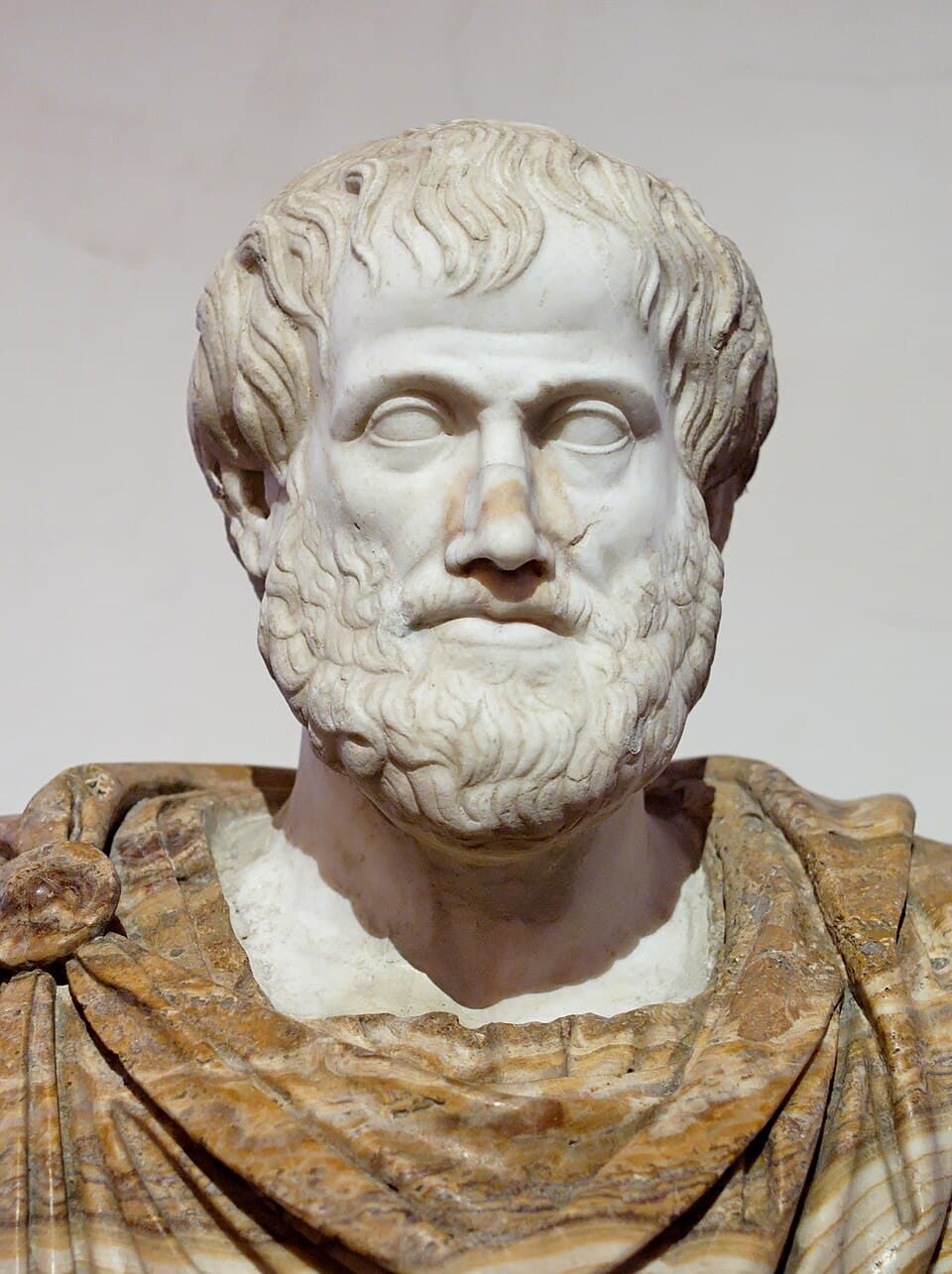
Aristotle
Nicomachean Ethics

The author asserts that moral choice only applies to the future because the past is immutable, concluding that truth is the primary work of the soul's intellectual parts.

...inated by the former: for every one who makes makes with a view to somewhat further; and that which is or may be made, is not an End in itself, but only relatively to somewhat else, and belonging to some one:[8] whereas that which is or may be done is an End in itself, because acting well is an End in itself, and this is the object of the Will,) and so Moral Choice is either[9] Intellect put in a position of Will-ing, or Appetition subjected to an Intellectual Process. And such a Cause is Man.
But nothing which is done and past can be the object of Moral Choice; for instance, no man chooses to have sacked Troy; because, in fact, no one ever deliberates about what is past, but only about that which is future, and which may therefore be influenced, whereas what has been cannot not have been: and so Agathon is right in saying “Of this alone is Deity bereft, To make undone whatever hath been done.” Thus then Truth is the work of both the Intellectual Parts of the Soul; those states therefore are the Excellences of each in which each will best attain truth.
Chapter III. Commencing then from the point stated above we will now speak of these Excellences again. Let those faculties whereby the Soul attains truth in Affirmation or Negation, be assumed to be in number five:[10] viz. Art, Knowledge, Practical Wisdom, Science, Intuition: (Supposition and Opinion I do not include, because by these one may go wrong.) What Knowledge is, is plain from the following of considerations, if one is to speak accurately, instead of being led away by resemblances....
4
1 of 1 in Book VI, Chapter III142 of 276 in work
Now entering Book VI, Chapter III
Knowledge of Necessity
Aristotle
Nicomachean Ethics

Aristotle defines true knowledge as the understanding of things that are necessary and eternal, distinguishing it from the uncertainty of observing things that can change.

...e work of both the Intellectual Parts of the Soul; those states therefore are the Excellences of each in which each will best attain truth. Chapter III. Commencing then from the point stated above we will now speak of these Excellences again. Let those faculties whereby the Soul attains truth in Affirmation or Negation, be assumed to be in number five:[10] viz. Art, Knowledge, Practical Wisdom, Science, Intuition: (Supposition and Opinion I do not include, because by these one may go wrong.)
What Knowledge is, is plain from the following of considerations, if one is to speak accurately, instead of being led away by resemblances. For we all conceive that what we strictly speaking know, cannot be otherwise than it is, because as to those things which can be otherwise than they are, we are uncertain whether they are or are not, the moment they cease to be within the sphere of our actual observation. So then, whatever comes within the range of Knowledge is by necessity, and therefore eternal, (because all things are so which exist necessarily,) and all eternal things are without beginning, and indestructible.
Again, all Knowledge is thought to be capable of being taught, and what comes within its range capable of being learned. And all teaching is based upon previous knowledge; (a statement you will find in the Analytics also,)[11] for there are two ways of teaching, by Syllogism and by Induction. In fact. Induction is the source of universal propositions, and Syllogism reasons from these universals.[12] Syllogism then may reason from principles which cannot be themselves proved Syllogistically: an...
6
1 of 1 in Book VI, Chapter IV143 of 276 in work
Now entering Book VI, Chapter IV
Art's Domain of Making
Aristotle
Nicomachean Ethics

The author distinguishes Art as a productive process concerned with things that can be otherwise, separating it from natural necessity and moral action.

...tinct from that also conjoined with Reason, which is apt to Make: and for this reason they are not included one by the other, that is, Doing is not Making, nor Making Doing.[14] Now[15] as Architecture is an Art, and is the same as “a certain state of mind, conjoined with Reason, which is apt to Make,” and as there is no Art which is not such a state, nor any such state which is not an Art, Art, in its strict and proper sense, must be “a state of mind, conjoined with true Reason, apt to Make.”
Now all Art has to do with production, and contrivance, and seeing how any of those things may be produced which may either be or not be, and the origination of which rests with the maker and not with the thing made. And, so neither things which exist or come into being necessarily, nor things in the way of nature, come under the province of Art, because these are self-originating. And since Making and Doing are distinct, Art must be concerned with the former and not the latter.
And in a certain sense Art and Fortune are concerned with the same things, as, Agathon says by the way, “Art Fortune loves, and is of her beloved.” So Art, as has been stated, is “a certain state of mind, apt to Make, conjoined with true Reason;” its absence, on the contrary, is the same state conjoined with false Reason, and both are employed upon Contingent matter. Chapter V. As for Practical Wisdom, we shall ascertain its nature by examining to what kind of persons we in common language...
6
1 of 2 in Book VI, Chapter V144 of 276 in work
Now entering Book VI, Chapter V
Deliberation Without Rules
Aristotle
Nicomachean Ethics

Practical wisdom is defined as the ability to deliberate effectively about what is conducive to living well in a general sense.

...sense Art and Fortune are concerned with the same things, as, Agathon says by the way, “Art Fortune loves, and is of her beloved.” So Art, as has been stated, is “a certain state of mind, apt to Make, conjoined with true Reason;” its absence, on the contrary, is the same state conjoined with false Reason, and both are employed upon Contingent matter. Chapter V. As for Practical Wisdom, we shall ascertain its nature by examining to what kind of persons we in common language ascribe it.[16]
It is thought then to be the property of the Practically Wise man to be able to deliberate well respecting what is good and expedient for himself, not in any definite line, as what is conducive to health or strength, but what to living well. A proof of this is that we call men Wise in this or that, when they calculate well with a view to some good end in a case where there is no definite rule. And so, in a general way of speaking, the man who is good at deliberation will be Practically Wise.
Now no man deliberates respecting things which cannot be otherwise than they are, nor such as lie not within the range of his own action: and so, since Knowledge requires strict demonstrative reasoning, of which Contingent matter does not admit (I say Contingent matter, because all matters of deliberation must be Contingent and deliberation cannot take place with respect to things which are Necessarily), Practical Wisdom cannot be Knowledge nor Art; nor the former, because what falls under the...
3
2 of 2 in Book VI, Chapter V145 of 276 in work
Vice's Blinding Effect
Aristotle
Nicomachean Ethics

The author argues that vice destroys the perception of moral principles, necessitating practical wisdom to maintain a focus on the 'final cause' of human good.

...the reason why we call the habit of perfected self-mastery by the name which in Greek it bears, etymologically signifying “that which preserves the Practical Wisdom:” for what it does preserve is the Notion I have mentioned, i.e. of one’s own true interest.[18] For it is not every kind of Notion which the pleasant and the painful corrupt and pervert, as, for instance, that “the three angles of every rectilineal triangle are equal to two right angles,” but only those bearing on moral action.
For the Principles of the matters of moral action are the final cause of them: now to the man who has been corrupted by reason of pleasure or pain the Principle immediately becomes obscured, nor does he see that it is his duty to choose and act in each instance with a view to this final cause and by reason of it: for viciousness has a tendency to destroy the moral Principle: and so Practical Wisdom must be “a state conjoined with reason, true, having human good for its object, and apt to do.”
Then again Art admits of degrees of excellence, but Practical Wisdom does not:[20] and in Art he who goes wrong purposely is preferable to him who does so unwittingly,[21] but not so in respect of Practical Wisdom or the other Virtues. It plainly is then an Excellence of a certain kind, and not an Art. Now as there are two parts of the Soul which have Reason, it must be the Excellence of the Opinionative [which we called before calculative or deliberative], because both Opinion and Practical...
3