2 of 2 in Book VI, Chapter IX151 of 276 in work
Deliberation's Right Aim
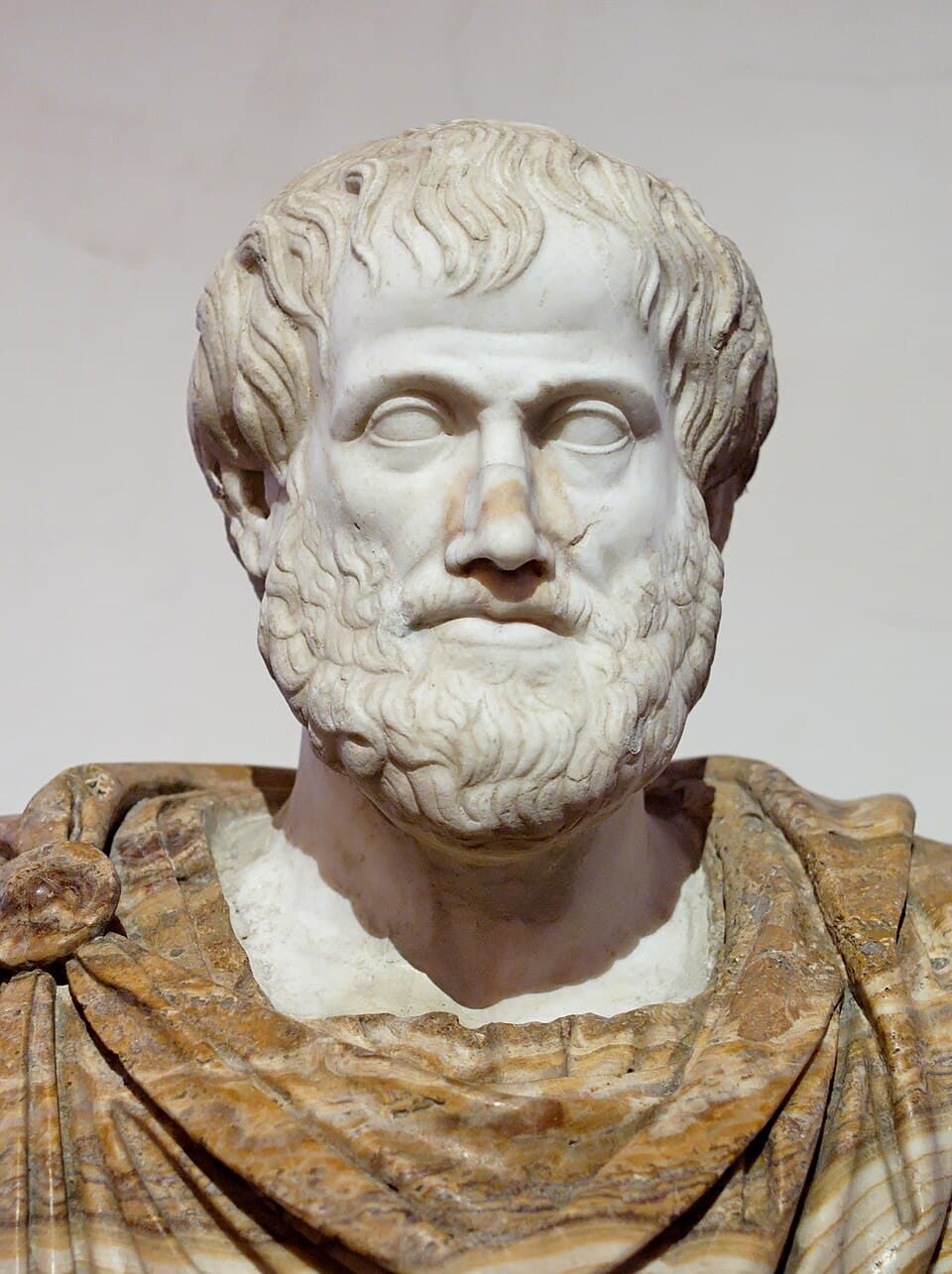
Aristotle
Nicomachean Ethics

The author defines 'Good Counsel' as a specific type of right deliberation that is directed toward attaining a truly good end, rather than just any calculated goal.

...ong, and Rightness of Opinion is Truth: and again, all which is the object of opinion is definitely marked out.[36] Still, however, Good Counsel is not independent of Reason, Does it remain then that it is a rightness of Intellectual Operation simply, because this does not amount to an assertion; and the objection to Opinion was that it is not a process of enquiry but already a definite assertion; whereas whosoever deliberates, whether well or ill, is engaged in enquiry and calculation. Well,
Good Counsel is a Rightness of deliberation, and so the first question must regard the nature and objects of deliberation. Now remember Rightness is an equivocal term; we plainly do not mean Rightness of any kind whatever; the ἀκρατὴς, for instance, or the bad man, will obtain by his calculation what he sets before him as an object, and so he may be said to have deliberated rightly in one sense, but will have attained a great evil. Whereas to have deliberated well is thought to be a good, because Good Counsel is Rightness of deliberation of such a nature as is apt to attain good.
But even this again you may get by false reasoning, and hit upon the right effect though not through right means,[37] your middle term being fallacious: and so neither will this be yet Good Counsel in consequence of which you get what you ought but not through proper means. Again, one man may hit on a thing after long deliberation, another quickly. And so that before described will not be yet Good Counsel, but the Rightness must be with reference to what is expedient; and you must have a prop...
5
1 of 9 in Book VI, Chapter XII152 of 276 in work
Now entering Book VI, Chapter XII
Virtue's Inner Motive
Aristotle
Nicomachean Ethics

The text explains that being a good person requires performing virtuous acts from a specific moral choice and for their own sake, rather than by accident or compulsion.

...as Man is accomplished by virtue of Practical Wisdom and Moral Virtue, the latter giving the right aim and direction, the former the right means to its attainment;[49] but of the fourth part of the Soul, the mere nutritive principle, there is no such Excellence, because nothing is in its power to do or leave undone.[50] As to our not being more apt to do what is noble and just by reason of possessing Practical Wisdom, we must begin a little higher up,[51] taking this for our starting-point.
As we say that men may do things in themselves just and yet not be just men; for instance, when men do what the laws require of them, either against their will, or by reason of ignorance or something else, at all events not for the sake of the things themselves; and yet they do what they ought and all that the good man should do; so it seems that to be a good man one must do each act in a particular frame of mind, I mean from Moral Choice and for the sake of the things themselves which are done. Now it is Virtue which makes the Moral Choice right, but whatever is naturally required to carry out that Choice comes under the province not of…
We must halt, as it were, awhile, and speak more clearly on these points. There is then a certain faculty, commonly named Cleverness, of such a nature as to be able to do and attain whatever conduces to any given purpose: now if that purpose be a good one the faculty is praiseworthy; if otherwise, it goes by a name which, denoting strictly the ability, implies the willingness to do anything; we accordingly call the Practically-Wise Clever, and also those who can and will do anything.[52]...
Continue reading →
2
2 of 9 in Book VI, Chapter XII153 of 276 in work
Wisdom's Moral Eye
Aristotle
Nicomachean Ethics

The author claims that practical wisdom requires moral goodness, as vice distorts the 'eye of the soul' and prevents one from correctly identifying the proper ends of action.

...We must halt, as it were, awhile, and speak more clearly on these points. There is then a certain faculty, commonly named Cleverness, of such a nature as to be able to do and attain whatever conduces to any given purpose: now if that purpose be a good one the faculty is praiseworthy; if otherwise, it goes by a name which, denoting strictly the ability, implies the willingness to do anything; we accordingly call the Practically-Wise Clever, and also those who can and will do anything.[52]
Now Practical Wisdom is not identical with Cleverness, nor is it without this power of adapting means to ends: but this Eye of the Soul (as we may call it) does not attain its proper state without goodness, as we have said before and as is quite plain, because the syllogisms into which Moral Action may be analysed have for their Major Premiss, “since —— is the End and the Chief Good” (fill up the blank with just anything you please, for we merely want to exhibit the Form, so that anything will do), but how this blank should be filled is seen only by the good man: because Vice distorts the moral vision and causes men to be deceived in…
We must enquire again also about Virtue: for it may be divided into Natural Virtue and Matured, which two bear to each other a relation similar to that which Practical Wisdom bears to Cleverness, one not of identity but resemblance. I speak of Natural Virtue, because men hold that each of the moral dispositions attach to us all somehow by nature: we have dispositions[56] towards justice, self-mastery and courage, for instance, immediately from our birth: but still we seek Goodness in its highe...
Continue reading →
3
3 of 9 in Book VI, Chapter XII154 of 276 in work
Virtue's Intellectual Core
Aristotle
Nicomachean Ethics

The text distinguishes between natural virtue and matured virtue, arguing that true virtue requires the integration of an intellectual element or practical wisdom.

...relation similar to that which Practical Wisdom bears to Cleverness, one not of identity but resemblance. I speak of Natural Virtue, because men hold that each of the moral dispositions attach to us all somehow by nature: we have dispositions[56] towards justice, self-mastery and courage, for instance, immediately from our birth: but still we seek Goodness in its highest sense as something distinct from these, and that these dispositions should attach to us in a somewhat different fashion.[57]
Children and brutes have these natural states, but then they are plainly hurtful unless combined with an intellectual element: at least thus much is matter of actual experience and observation, that as a strong body destitute of sight must, if set in motion, fall violently because it has not sight, so it is also in the case we are considering: but if it can get the intellectual element it then excels in acting. Just so the Natural State of Virtue, being like this strong body, will then be Virtue in the highest sense when it too is combined with the intellectual element. So that, as in the case of the Opinionative faculty, there are two forms,…
A proof of which is that now all, in defining Virtue, add on the “state” [mentioning also to what standard it has reference, namely that] “which is accordant with Right Reason:” now “right” means in accordance with Practical Wisdom. So then all seem to have an instinctive notion that that state which is in accordance with Practical Wisdom is Virtue; however, we must make a slight change in their statement, because that state is Virtue, not merely which is in accordance with but which implies t...
Continue reading →
3
4 of 9 in Book VI, Chapter XII155 of 276 in work
Virtue with Reason
Aristotle
Nicomachean Ethics

The author refutes Socrates by arguing that while natural virtues can exist separately, matured virtues are inseparable because they all require the single faculty of practical wisdom.

...ntioning also to what standard it has reference, namely that] “which is accordant with Right Reason:” now “right” means in accordance with Practical Wisdom. So then all seem to have an instinctive notion that that state which is in accordance with Practical Wisdom is Virtue; however, we must make a slight change in their statement, because that state is Virtue, not merely which is in accordance with but which implies the possession of Right Reason; which, upon such matters, is Practical Wisdom.
The difference between us and Socrates is this: he thought the Virtues were reasoning processes (i.e. that they were all instances of Knowledge in its strict sense), but we say they imply the possession of Reason. From what has been said then it is clear that one cannot be, strictly speaking, good without Practical Wisdom nor Practically-Wise without moral goodness. And by the distinction between Natural and Matured Virtue one can meet the reasoning by which it might be argued “that the Virtues are separable because the same man is not by nature most inclined to all at once so that he will have acquired this one before he has that other:”…
It is plain too that even had it not been apt to act we should have needed it, because it is the Excellence of a part of the Soul; and that the moral choice cannot be right independently of Practical Wisdom and Moral Goodness; because this gives the right End, that causes the doing these things which conduce to the End. Then again, it is not Master of Science (i.e. of the superior part of the Soul), just as neither is the healing art Master of health; for it does not make use of it, but looks...
Continue reading →
3