The author advises that young people or those ruled by passion are not suited for moral philosophy because they lack life experience and will not apply the knowledge to their actions.
4 of 4 in Book I, Chapter I4 of 276 in work
Experience Before Ethics
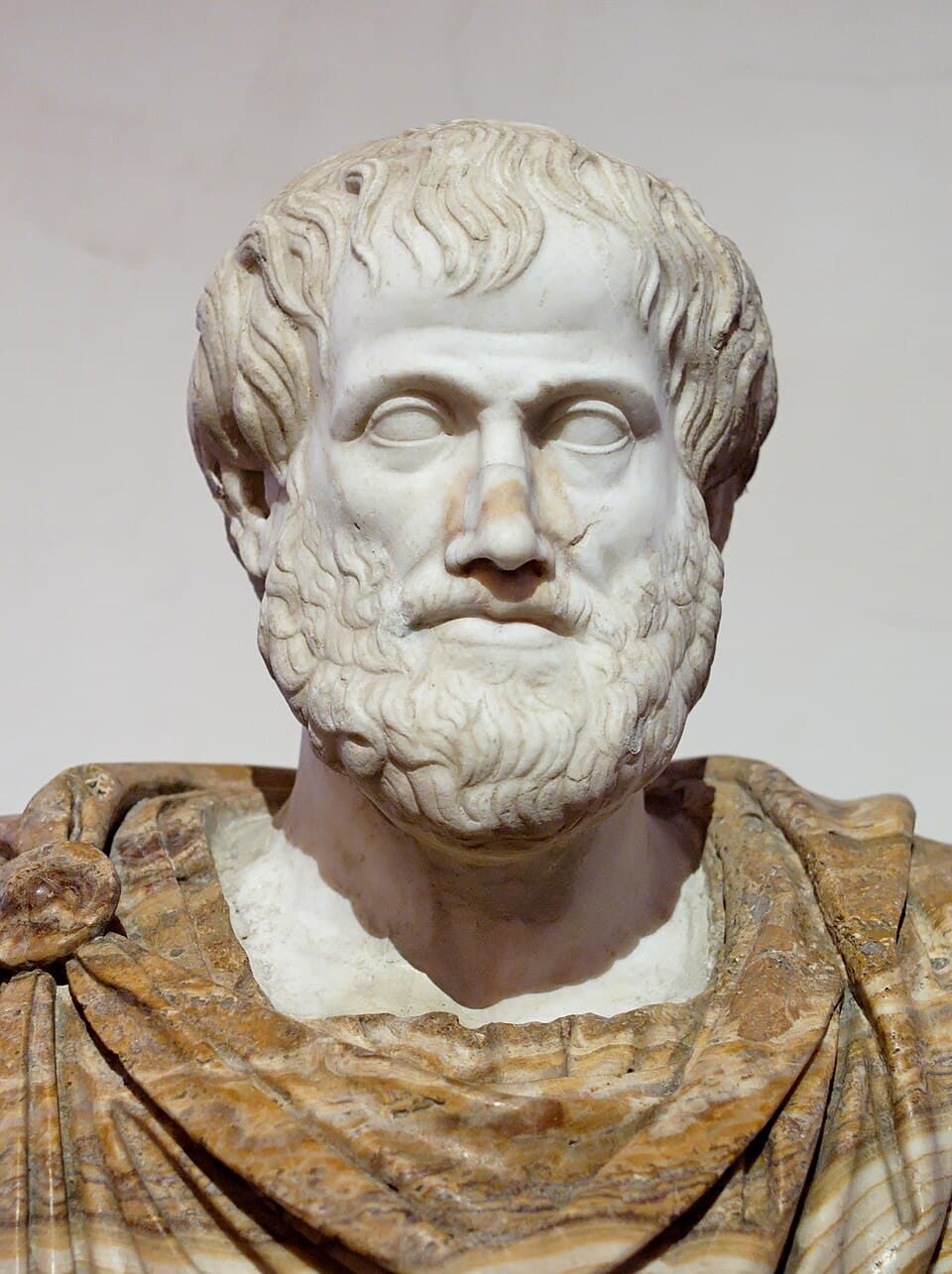
Aristotle
Nicomachean Ethics...man of education will seek exactness so far in each subject as the nature of the thing admits, it being plainly much the same absurdity to put up with a mathematician who tries to persuade instead of proving, and to demand strict demonstrative reasoning of a Rhetorician. Now each man judges well what he knows, and of these things he is a good judge: on each particular matter then he is a good judge who has been instructed in it, and in a general way the man of general mental cultivation.[2]
Hence the young man is not a fit student of Moral Philosophy, for he has no experience in the actions of life, while all that is said presupposes and is concerned with these: and in the next place, since he is apt to follow the impulses of his passions, he will hear as though he heard not, and to no profit, the end in view being practice and not mere knowledge. And I draw no distinction between young in years, and youthful in temper and disposition: the defect to which I allude being no direct result of the time, but of living at the beck and call of passion, and following each object as it rises. For to them that are such the knowledge comes…
Let thus much suffice by way of preface on these three points, the student, the spirit in which our observations should be received, and the object which we propose. Chapter II. And now, resuming the statement with which we commenced, since all knowledge and moral choice grasps at good of some kind or another, what good is that which we say πολιτικὴ aims at? or, in other words, what is the highest of all the goods which are the objects of action? So far as name goes, there is a pretty gener...
Continue reading →
4
1 of 1 in Book I, Chapter II5 of 276 in work
Now entering Book I, Chapter II
⚖Happiness's Elusive Nature

Aristotle
Nicomachean EthicsThe author observes that while everyone agrees happiness is the ultimate goal, there is deep disagreement between the masses and the wise regarding its true nature.
...dge on these points must be very profitable. Let thus much suffice by way of preface on these three points, the student, the spirit in which our observations should be received, and the object which we propose. Chapter II. And now, resuming the statement with which we commenced, since all knowledge and moral choice grasps at good of some kind or another, what good is that which we say πολιτικὴ aims at? or, in other words, what is the highest of all the goods which are the objects of action?
So far as name goes, there is a pretty general agreement: for HAPPINESS both the multitude and the refined few call it, and “living well” and “doing well” they conceive to be the same with “being happy;” but about the Nature of this Happiness, men dispute, and the multitude do not in their account of it agree with the wise. For some say it is some one of those things which are palpable and apparent, as pleasure or wealth or honour; in fact, some one thing, some another; nay, oftentimes the same man gives a different account of it; for when ill, he calls it health; when poor, wealth: and conscious of their own ignorance, men admire those who…
Some again held it to be something by itself, other than and beside these many good things, which is in fact to all these the cause of their being good. Now to sift all the opinions would be perhaps rather a fruitless task; so it shall suffice to sift those which are most generally current, or are thought to have some reason in them. And here we must not forget the difference between reasoning from principles, and reasoning to principles: for with good cause did Plato too doubt about this, an...
Continue reading →
6
1 of 7 in Book I, Chapter III6 of 276 in work
Now entering Book I, Chapter III
⚖The Three Lives

Aristotle
Nicomachean EthicsThe author provides a critical overview of the different modes of life, metaphorically describing the pursuit of pure sensual pleasure as 'slavish' and fit for 'brute animals'.
...e no need in addition of the reason for the fact. And he that has been thus trained either has principles already, or can receive them easily: as for him who neither has nor can receive them, let him hear his sentence from Hesiod: He is best of all who of himself conceiveth all things; Good again is he too who can adopt a good suggestion; But whoso neither of himself conceiveth nor hearing from another Layeth it to heart;—he is a useless man. Chapter III. But to return from this digression.
Now of the Chief Good (i.e. of Happiness) men seem to form their notions from the different modes of life, as we might naturally expect: the many and most low conceive it to be pleasure, and hence they are content with the life of sensual enjoyment. For there are three lines of life which stand out prominently to view: that just mentioned, and the life in society, and, thirdly, the life of contemplation. Now the many are plainly quite slavish, choosing a life like that of brute animals: yet they obtain some consideration, because many of the great share the tastes of Sardanapalus.
The refined and active again conceive it to be honour: for this may be said to be the end of the life in society: yet it is plainly too superficial for the object of our search, because it is thought to rest with those who pay rather than with him who receives it, whereas the Chief Good we feel instinctively must be something which is our own, and not easily to be taken from us. And besides, men seem to pursue honour, that they may believe themselves to be good:[6] for instance, they seek to b...
2
2 of 7 in Book I, Chapter III7 of 276 in work
⚖Honor's Superficial Reward

Aristotle
Nicomachean EthicsAristotle argues that honor is too superficial to be the Chief Good because it depends on the giver rather than the receiver, whereas the highest good must be an intrinsic possession.
...nt modes of life, as we might naturally expect: the many and most low conceive it to be pleasure, and hence they are content with the life of sensual enjoyment. For there are three lines of life which stand out prominently to view: that just mentioned, and the life in society, and, thirdly, the life of contemplation. Now the many are plainly quite slavish, choosing a life like that of brute animals: yet they obtain some consideration, because many of the great share the tastes of Sardanapalus.
The refined and active again conceive it to be honour: for this may be said to be the end of the life in society: yet it is plainly too superficial for the object of our search, because it is thought to rest with those who pay rather than with him who receives it, whereas the Chief Good we feel instinctively must be something which is our own, and not easily to be taken from us. And besides, men seem to pursue honour, that they may believe themselves to be good: for instance, they seek to be honoured by the wise, and by those among whom they are known, and for virtue: clearly then, in the opinion at least of these men, virtue is higher than…
In truth, one would be much more inclined to think this to be the end of the life in society; yet this itself is plainly not sufficiently final: for it is conceived possible, that a man possessed of virtue might sleep or be inactive all through his life, or, as a third case, suffer the greatest evils and misfortunes: and the man who should live thus no one would call happy, except for mere disputation’s sake.[7] And for these let thus much suffice, for they have been treated of at sufficient l...
Continue reading →
4
3 of 7 in Book I, Chapter III8 of 276 in work
⚖Wealth's Constraint

Aristotle
Nicomachean EthicsThe author argues that wealth is not the ultimate good because it is merely a tool for achieving other ends rather than an end in itself.
...r it is conceived possible, that a man possessed of virtue might sleep or be inactive all through his life, or, as a third case, suffer the greatest evils and misfortunes: and the man who should live thus no one would call happy, except for mere disputation’s sake.[7] And for these let thus much suffice, for they have been treated of at sufficient length in my Encyclia.[8] A third line of life is that of contemplation, concerning which we shall make our examination in the following pages.[9]
As for the life of money-making, it is one of constraint, and wealth manifestly is not the good we are seeking, because it is for use, that is, for the sake of something further: and hence one would rather conceive the forementioned ends to be the right ones, for men rest content with them for their own sakes. Yet, clearly, they are not the objects of our search either, though many words have been wasted on them. So much then for these.
Again, the notion of one Universal Good (the same, that is, in all things), it is better perhaps we should examine, and discuss the meaning of it, though such an enquiry is unpleasant, because they are friends of ours who have introduced these εἴδη.[11] Still perhaps it may appear better, nay to be our duty where the safety of the truth is concerned, to upset if need be even our own theories, specially as we are lovers of wisdom: for since both are dear to us, we are bound to prefer the truth....
6