Aristotle argues that pleasures specific to an activity improve its performance, while foreign pleasures or pains act as distractions that hinder or destroy the quality of the work.
5 of 6 in Book X, Chapter IV259 of 276 in work
Intrinsic vs Extrinsic Pleasure
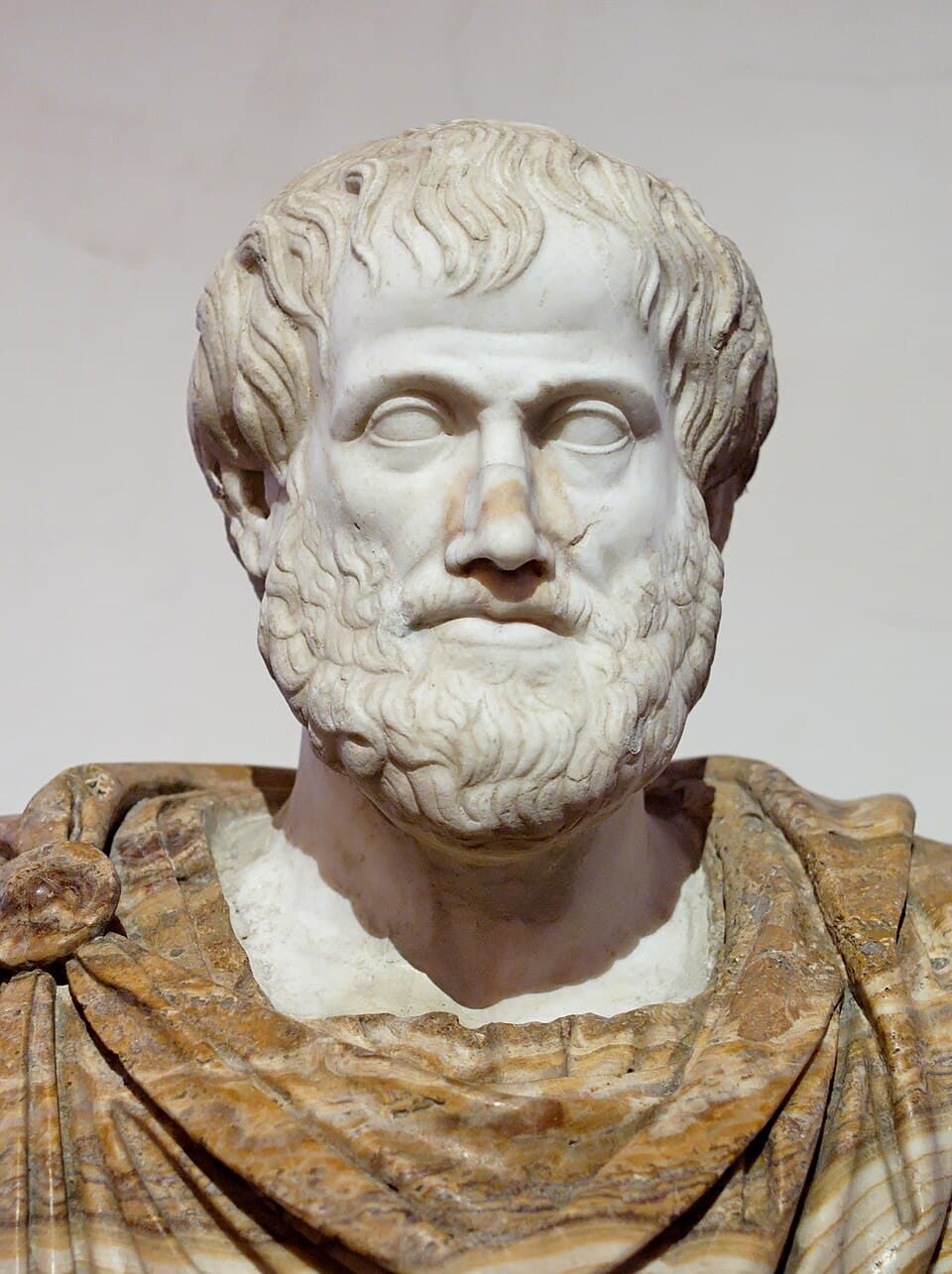
Aristotle
Nicomachean Ethics...me time: that is, the pleasanter of the two keeps pushing out the other, and, if the disparity in pleasantness be great, then more and more till a man even ceases altogether to work at the other. This is the reason why, when we are very much pleased with anything whatever, we do nothing else, and it is only when we are but moderately pleased with one occupation that we vary it with another: people, for instance, who eat sweetmeats in the theatre do so most when the performance is indifferent.
Since then the proper and peculiar Pleasure gives accuracy to the Workings and makes them more enduring and better of their kind, while those Pleasures which are foreign to them mar them, it is plain there is a wide difference between them: in fact, Pleasures foreign to any Working have pretty much the same effect as the Pains proper to it, which, in fact, destroy the Workings; I mean, if one man dislikes writing, or another calculation, the one does not write, the other does not calculate; because, in each case, the Working is attended with some Pain: so then contrary effects are produced upon the Workings by the Pleasures and Pains proper…
As for the Pleasures foreign to a Working, we have said already that they produce a similar effect to the Pain proper to it; that is they destroy the Working, only not in like way. Well then, as Workings differ from one another in goodness and badness, some being fit objects of choice, others of avoidance, and others in their nature indifferent, Pleasures are similarly related; since its own proper Pleasure attends or each Working: of course that proper to a good Working is good, that proper t...
Continue reading →
5
6 of 6 in Book X, Chapter IV260 of 276 in work
⚖Pleasure's Moral Quality

Aristotle
Nicomachean EthicsThe author posits that pleasures are categorized as good or bad based on the moral quality of the activities they accompany.
...one does not write, the other does not calculate; because, in each case, the Working is attended with some Pain: so then contrary effects are produced upon the Workings by the Pleasures and Pains proper to them, by which I mean those which arise upon the Working, in itself, independently of any other circumstances. As for the Pleasures foreign to a Working, we have said already that they produce a similar effect to the Pain proper to it; that is they destroy the Working, only not in like way.
Well then, as Workings differ from one another in goodness and badness, some being fit objects of choice, others of avoidance, and others in their nature indifferent, Pleasures are similarly related; since its own proper Pleasure attends or each Working: of course that proper to a good Working is good, that proper to a bad, bad: for even the desires for what is noble are praiseworthy, and for what is base blameworthy.
Furthermore, the Pleasures attendant on Workings are more closely connected with them even than the desires after them: for these last are separate both in time and nature, but the former are close to the Workings, and so indivisible from them as to raise a question whether the Working and the Pleasure are identical; but Pleasure does not seem to be an Intellectual Operation nor a Faculty of Perception, because that is absurd; but yet it gives some the impression of being the same from not bei...
2
1 of 1 in Book X, Chapter V261 of 276 in work
Now entering Book X, Chapter V
⚖Amusement as Rest

Aristotle
Nicomachean EthicsAristotle argues that happiness cannot consist of amusement, as amusement is merely a form of rest intended to facilitate further work, whereas happiness is an end in itself.
...children too believe that those things are most excellent which are precious in their eyes. We may well believe that as children and men have different ideas as to what is precious so too have the bad and the good: therefore, as we have many times said, those things are really precious and pleasant which seem so to the good man: and as to each individual that Working is most choice-worthy which is in accordance with his own state to the good man that is so which is in accordance with Virtue.
Happiness then stands not in amusement; in fact the very notion is absurd of the End being amusement, and of one’s toiling and enduring hardness all one’s life long with a view to amusement: for everything in the world, so to speak, we choose with some further End in view, except Happiness, for that is the End comprehending all others. Now to take pains and to labour with a view to amusement is plainly foolish and very childish: but to amuse one’s self with a view to steady employment afterwards, as Anacharsis says, is thought to be right: for amusement is like rest, and men want rest because unable to labour continuously. Rest, therefore, is…
Again, it is held that the Happy Life must be one in the way of Excellence, and this is accompanied by earnestness,[13] and stands not in amusement. Moreover those things which are done in earnest, we say, are better than things merely ludicrous and joined with amusement: and we say that the Working of the better part, or the better man, is more earnest; and the Working of the better is at once better and more capable of Happiness. Then, again, as for bodily Pleasures, any ordinary person, or...
Continue reading →
6
1 of 6 in Book X, Chapter VI262 of 276 in work
Now entering Book X, Chapter VI
⚖Contemplation as Highest Happiness

Aristotle
Nicomachean EthicsThe author argues that perfect happiness consists in contemplative activity, as it is the highest function of the intellect, which is the most divine principle within humans.
...Working of the better part, or the better man, is more earnest; and the Working of the better is at once better and more capable of Happiness. Then, again, as for bodily Pleasures, any ordinary person, or even a slave, might enjoy them, just as well as the best man living but Happiness no one supposes a slave to share except so far as it is implied in life: because Happiness stands not in such pastimes but in the Workings in the way of Excellence, as has also been stated before. Chapter VI.
Now if Happiness is a Working in the way of Excellence of course that Excellence must be the highest, that is to say, the Excellence of the best Principle. Whether then this best Principle is Intellect or some other which is thought naturally to rule and to lead and to conceive of noble and divine things, whether being in its own nature divine or the most divine of all our internal Principles, the Working of this in accordance with its own proper Excellence must be the perfect Happiness. That it is Contemplative has been already stated: and this would seem to be consistent with what we said before and with truth: for, in the first place, this…
Next, it is also most Continuous: for we are better able to contemplate than to do anything else whatever, continuously. Again, we think Pleasure must be in some way an ingredient in Happiness, and of all Workings in accordance with Excellence that in the way of Science is confessedly most pleasant: at least the pursuit of Science is thought to contain Pleasures admirable for purity and permanence; and it is reasonable to suppose that the employment is more pleasant to those who have mastered...
Continue reading →
5
2 of 6 in Book X, Chapter VI263 of 276 in work
⚖Contemplation's Self-Sufficiency

Aristotle
Nicomachean EthicsThe text asserts that the life of contemplation is the most self-sufficient form of existence, as the man of science can pursue his work alone while other virtues require social interaction.
...ter able to contemplate than to do anything else whatever, continuously. Again, we think Pleasure must be in some way an ingredient in Happiness, and of all Workings in accordance with Excellence that in the way of Science is confessedly most pleasant: at least the pursuit of Science is thought to contain Pleasures admirable for purity and permanence; and it is reasonable to suppose that the employment is more pleasant to those who have mastered, than to those who are yet seeking for, it.[14]
And the Self-Sufficiency which people speak of will attach chiefly to the Contemplative Working: of course the actual necessaries of life are needed alike by the man of science, and the just man, and all the other characters; but, supposing all sufficiently supplied with these, the just man needs people towards whom, and in concert with whom, to practise his justice; and in like manner the man of perfected self-mastery, and the brave man, and so on of the rest; whereas the man of science can contemplate and speculate even when quite alone, and the more entirely he deserves the appellation the more able is he to do so: it may be he can do…
Again, this alone would seem to be rested in for its own sake, since nothing results from it beyond the fact of having contemplated; whereas from all things which are objects of moral action we do mean to get something beside the doing them, be the same more or less. Also, Happiness is thought to stand in perfect rest;[15] for we toil that we may rest, and war that we may be at peace. Now all the Practical Virtues require either society or war for their Working, and the actions regarding thes...
Continue reading →
6