The text examines the Socratic view that a lack of self-control is impossible because no one would knowingly act against what they conceive to be best.
1 of 2 in Book VII, Chapter II161 of 276 in work
Now entering Book VII, Chapter II
Knowledge's Powerlessness
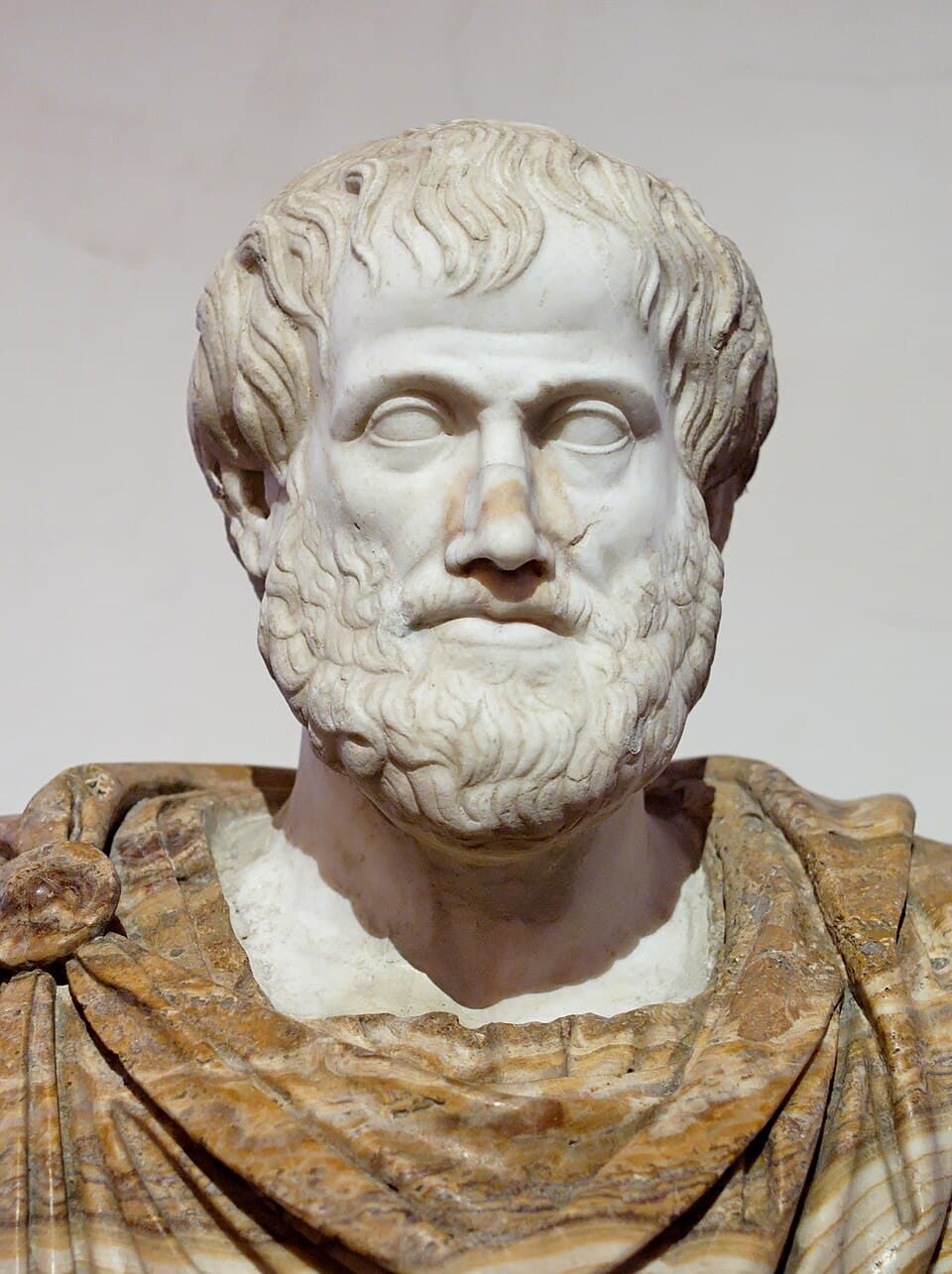
Aristotle
Nicomachean Ethics...ntrol, and the man of Imperfect Self-Control, while others distinguish between them. VI. It is sometimes said that the man of Practical Wisdom cannot be a man of Imperfect Self-Control, sometimes that men who are Practically Wise and Clever are of Imperfect Self-Control. VII. Again, men are said to be of Imperfect Self-Control, not simply but with the addition of the thing wherein, as in respect of anger, of honour, and gain. These then are pretty well the common statements. Chapter II.
Now a man may raise a question as to the nature of the right conception in violation of which a man fails of Self-Control. That he can so fail when knowing in the strict sense what is right some say is impossible: for it is a strange thing, as Socrates thought, that while Knowledge is present in his mind something else should master him and drag him about like a slave. Socrates in fact contended generally against the theory, maintaining there is no such state as that of Imperfect Self-Control, for that no one acts contrary to what is best conceiving it to be best but by reason of ignorance what is best.
With all due respect to Socrates, his account of the matter is at variance with plain facts, and we must enquire with respect to the affection, if it be caused by ignorance what is the nature of the ignorance: for that the man so failing does not suppose his acts to be right before he is under the influence of passion is quite plain.[2] There are people who partly agree with Socrates and partly not: that nothing can be stronger than Knowledge they agree, but that no man acts in contravention...
6
2 of 2 in Book VII, Chapter II162 of 276 in work
⚖Knowledge vs Action

Aristotle
Nicomachean EthicsThe author critiques Socrates' view that no one acts against their better judgment, arguing that facts show people can fail in self-control despite having knowledge.
...n of Practical Wisdom cannot be a man of Imperfect Self-Control, sometimes that men who are Practically Wise and Clever are of Imperfect Self-Control. VII. Again, men are said to be of Imperfect Self-Control, not simply but with the addition of the thing wherein, as in respect of anger, of honour, and gain. These then are pretty well the common statements. Chapter II. Now a man may raise a question as to the nature of the right conception in violation of which a man fails of Self-Control.
That he can so fail when knowing in the strict sense what is right some say is impossible: for it is a strange thing, as Socrates thought, that while Knowledge is present in his mind something else should master him and drag him about like a slave. Socrates in fact contended generally against the theory, maintaining there is no such state as that of Imperfect Self-Control, for that no one acts contrary to what is best conceiving it to be best but by reason of ignorance what is best. With all due respect to Socrates, his account of the matter is at variance with plain facts, and we must enquire with respect to the affection, if it be caused…
and so they say that it is not Knowledge, but only Opinion, which the man in question has and yet yields to the instigation of his pleasures. But then, if it is Opinion and not Knowledge, that is it the opposing conception be not strong but only mild (as in the case of real doubt), the not abiding by it in the face of strong lusts would be excusable: but wickedness is not excusable, nor is anything which deserves blame. Well then, is it Practical Wisdom which in this case offers opposition: f...
Continue reading →
6
1 of 4 in Book VII, Chapter III163 of 276 in work
Now entering Book VII, Chapter III
⚖Knowledge vs Opinion

Aristotle
Nicomachean EthicsThe author distinguishes between a lack of self-control and imperfect self-control, arguing that the strength of one's conviction (opinion vs. knowledge) does not necessarily prevent moral failure.
...ether Self-Control and Imperfect Self-Control are unlimited in their object-matter: because he who is designated without any addition a man of Imperfect Self-Control is not unlimited in his object-matter, but has exactly the same as the man who has lost all Self-Control: nor is he so designated because of his relation to this object-matter merely (for then his character would be identical with that just mentioned, loss of all Self-Control), but because of his relation to it being such and such.
For the man who has lost all Self-Control is led on with deliberate moral choice, holding that it is his line to pursue pleasure as it rises: while the man of Imperfect Self-Control does not think that he ought to pursue it, but does pursue it all the same. Now as to the notion that it is True Opinion and not Knowledge in contravention of which men fail in Self-Control, it makes no difference to the point in question, because some of those who hold Opinions have no doubt about them but suppose themselves to have accurate Knowledge; if then it is urged that men holding Opinions will be more likely than men who have Knowledge to act in…
Rather the following is the account of it: the term knowing has two senses; both the man who does not use his Knowledge, and he who does, are said to know: there will be a difference between a man’s acting wrongly, who though possessed of Knowledge does not call it into operation, and his doing so who has it and actually exercises it: the latter is a strange case, but the mere having, if not exercising, presents no anomaly. Again, as there are two kinds of propositions affecting action,[4...
Continue reading →
3
2 of 4 in Book VII, Chapter III164 of 276 in work
⚖Knowledge Without Application

Aristotle
Nicomachean EthicsThe author distinguishes between possessing knowledge and actively exercising it to explain how a person might act wrongly despite 'knowing' better.
...ion, because some of those who hold Opinions have no doubt about them but suppose themselves to have accurate Knowledge; if then it is urged that men holding Opinions will be more likely than men who have Knowledge to act in contravention of their conceptions, as having but a moderate belief in them; we reply, Knowledge will not differ in this respect from Opinion: because some men believe their own Opinions no less firmly than others do their positive Knowledge: Heraclitus is a case in point.
Rather the following is the account of it: the term knowing has two senses; both the man who does not use his Knowledge, and he who does, are said to know: there will be a difference between a man’s acting wrongly, who though possessed of Knowledge does not call it into operation, and his doing so who has it and actually exercises it: the latter is a strange case, but the mere having, if not exercising, presents no anomaly.
Again, as there are two kinds of propositions affecting action,[4] universal and particular, there is no reason why a man may not act against his Knowledge, having both propositions in his mind, using the universal but not the particular, for the particulars are the objects of moral action. There is a difference also in universal propositions;[5] a universal proposition may relate partly to a man’s self and partly to the thing in question: take the following for instance; “dry food is good fo...
5
3 of 4 in Book VII, Chapter III165 of 276 in work
⚖Knowledge in Passion

Aristotle
Nicomachean EthicsThe author compares those lacking self-control to people who are asleep or drunk, noting that they may recite knowledge without truly possessing or exercising it.
...ing in question: take the following for instance; “dry food is good for every man,” this may have the two minor premisses, “this is a man,” and “so and so is dry food;” but whether a given substance is so and so a man either has not the Knowledge or does not exert it. According to these different senses there will be an immense difference, so that for a man to know in the one sense, and yet act wrongly, would be nothing strange, but in any of the other senses it would be a matter for wonder.
Again, men may have Knowledge in a way different from any of those which have been now stated: for we constantly see a man’s state so differing by having and not using Knowledge, that he has it in a sense and also has not; when a man is asleep, for instance, or mad, or drunk: well, men under the actual operation of passion are in exactly similar conditions; for anger, lust, and some other such-like things, manifestly make changes even in the body, and in some they even cause madness; it is plain then that we must say the men of Imperfect Self-Control are in a state similar to these. And their saying what embodies Knowledge is no proof of…
Furthermore, a man may look at the account of the phænomenon in the following way, from an examination of the actual working of the mind: All action may be analysed into a syllogism, in which the one premiss is an universal maxim and the other concerns particulars of which Sense [moral or physical, as the case may be] is cognisant: now when one results from these two, it follows necessarily that, as far as theory goes the mind must assert the conclusion, and in practical propositions the man m...
Continue reading →
3