5 of 5 in Book II, Chapter II37 of 276 in work
Pleasure's Triple Grip
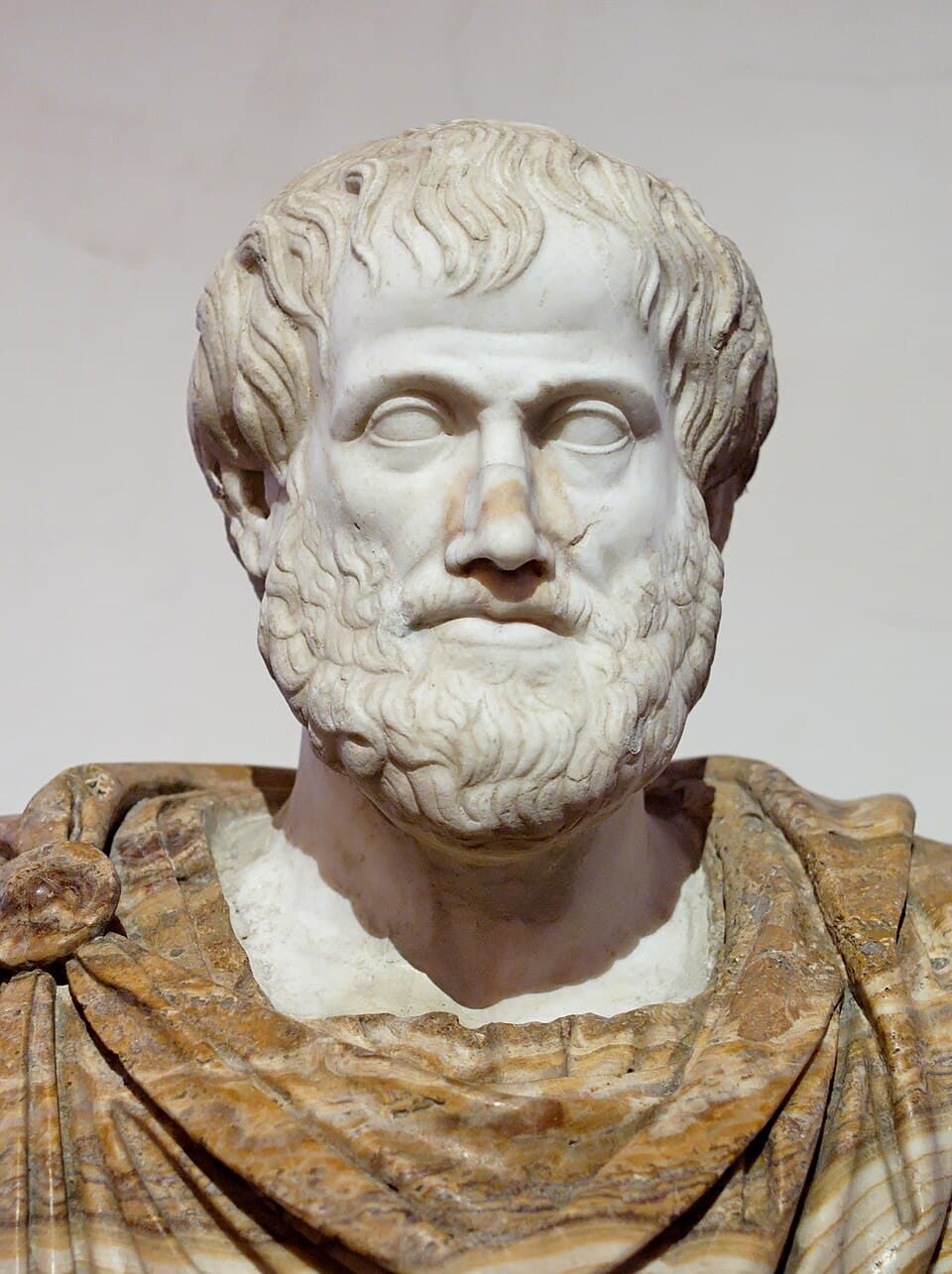
Aristotle
Nicomachean Ethics

The text identifies the three drivers of choice and avoidance, noting that pleasure is the most difficult to manage because it is ingrained from infancy.

...anner, and so forth (for which reason, by the way, some people define the Virtues as certain states of impassibility and utter quietude,[7] but they are wrong because they speak without modification, instead of adding “as they ought,” “as they ought not,” and “when,” and so on). Virtue then is assumed to be that habit which is such, in relation to pleasures and pains, as to effect the best results, and Vice the contrary. The following considerations may also serve to set this in a clear light.
There are principally three things moving us to choice and three to avoidance, the honourable, the expedient, the pleasant; and their three contraries, the dishonourable, the hurtful, and the painful: now the good man is apt to go right, and the bad man wrong, with respect to all these of course, but most specially with respect to pleasure: because not only is this common to him with all animals but also it is a concomitant of all those things which move to choice, since both the honourable and the expedient give an impression of pleasure. Again, it grows up with us all from infancy, and so it is a hard matter to remove from ourselves this…
Again, we adopt pleasure and pain (some of us more, and some less) as the measure even of actions: for this cause then our whole business must be with them, since to receive right or wrong impressions of pleasure and pain is a thing of no little importance in respect of the actions. Once more; it is harder, as Heraclitus says, to fight against pleasure than against anger: now it is about that which is more than commonly difficult that art comes into being, and virtue too, because in that which...
Continue reading →
4
1 of 2 in Book II, Chapter III38 of 276 in work
Now entering Book II, Chapter III
Virtue's Inner State
Aristotle
Nicomachean Ethics

The author differentiates between art and virtue, claiming that virtuous actions require the agent to be in a specific state of knowledge, preference, and stability.

...e actions they have the respective virtues already, just as men are grammarians or musicians when they do the actions of either art.” May we not reply by saying that it is not so even in the case of the arts referred to: because a man may produce something grammatical either by chance or the suggestion of another; but then only will he be a grammarian when he not only produces something grammatical but does so grammarian-wise, i.e. in virtue of the grammatical knowledge he himself possesses.
Again, the cases of the arts and the virtues are not parallel: because those things which are produced by the arts have their excellence in themselves, and it is sufficient therefore that these when produced should be in a certain state: but those which are produced in the way of the virtues, are, strictly speaking, actions of a certain kind (say of Justice or perfected Self-Mastery), not merely if in themselves they are in a certain state but if also he who does them does them being himself in a certain state, first if knowing what he is doing, next if with deliberate preference, and with such preference for the things’ own sake; and thirdly…
Now to constitute possession of the arts these requisites are not reckoned in, excepting the one point of knowledge: whereas for possession of the virtues knowledge avails little or nothing, but the other requisites avail not a little, but, in fact, are all in all, and these requisites as a matter of fact do come from oftentimes doing the actions of Justice and perfected Self-Mastery. The facts,[8] it is true, are called by the names of these habits when they are such as the just or perfectly...
Continue reading →
3
2 of 2 in Book II, Chapter III39 of 276 in work
Action Over Talk
Aristotle
Nicomachean Ethics

The author warns that virtue is only acquired through action and criticizes those who believe they can become good through theoretical 'philosophising' without practice.

...s little or nothing, but the other requisites avail not a little, but, in fact, are all in all, and these requisites as a matter of fact do come from oftentimes doing the actions of Justice and perfected Self-Mastery. The facts,[8] it is true, are called by the names of these habits when they are such as the just or perfectly self-mastering man would do; but he is not in possession of the virtues who merely does these facts, but he who also so does them as the just and self-mastering do them.
We are right then in saying, that these virtues are formed in a man by his doing the actions; but no one, if he should leave them undone, would be even in the way to become a good man. Yet people in general do not perform these actions, but taking refuge in talk they flatter themselves they are philosophising, and that they will so be good men: acting in truth very like those sick people who listen to the doctor with great attention but do nothing that he tells them: just as these then cannot be well bodily under such a course of treatment, so neither can those be mentally by such philosophising.
Chapter IV. Next, we must examine what Virtue is.[9] Well, since the things which come to be in the mind are, in all, of three kinds, Feelings, Capacities, States, Virtue of course must belong to one of the three classes. By Feelings, I mean such as lust, anger, fear, confidence, envy, joy, friendship, hatred, longing, emulation, compassion, in short all such as are followed by pleasure or pain: by Capacities, those in right of which we are said to be capable of these feelings; as by virtue...
3
1 of 1 in Book II, Chapter IV40 of 276 in work
Now entering Book II, Chapter IV
The Virtuous Mean
Aristotle
Nicomachean Ethics

The author defines and distinguishes between feelings, capacities, and states, explaining that virtue is found in the 'state' of having a right relation to one's feelings.

...l so be good men: acting in truth very like those sick people who listen to the doctor with great attention but do nothing that he tells them: just as these then cannot be well bodily under such a course of treatment, so neither can those be mentally by such philosophising. Chapter IV. Next, we must examine what Virtue is.[9] Well, since the things which come to be in the mind are, in all, of three kinds, Feelings, Capacities, States, Virtue of course must belong to one of the three classes.
By Feelings, I mean such as lust, anger, fear, confidence, envy, joy, friendship, hatred, longing, emulation, compassion, in short all such as are followed by pleasure or pain: by Capacities, those in right of which we are said to be capable of these feelings; as by virtue of which we are able to have been made angry, or grieved, or to have compassionated; by States, those in right of which we are in a certain relation good or bad to the aforementioned feelings; to having been made angry, for instance, we are in a wrong relation if in our anger we were too violent or too slack, but if we were in the happy medium we are in a right relation to…
And so on of the rest. Now Feelings neither the virtues nor vices are, because in right of the Feelings we are not denominated either good or bad, but in right of the virtues and vices we are. Again, in right of the Feelings we are neither praised nor blamed,[10] (for a man is not commended for being afraid or being angry, nor blamed for being angry merely but for being so in a particular way), but in right of the virtues and vices we are. Again, both anger and fear we feel without moral cho...
Continue reading →
6
1 of 4 in Book II, Chapter V41 of 276 in work
Now entering Book II, Chapter V
Excellence as Function
Aristotle
Nicomachean Ethics

The author establishes a functional definition of virtue as the state that enables a thing to be in a good condition and to perform its specific work well.

...they are not Capacities, for we are not called good or bad merely because we are able to feel, nor are we praised or blamed. And again, Capacities we have by nature, but we do not come to be good or bad by nature, as we have said before. Since then the virtues are neither Feelings nor Capacities, it remains that they must be States. Chapter V. Now what the genus of Virtue is has been said; but we must not merely speak of it thus, that it is a state but say also what kind of a state it is.
We must observe then that all excellence makes that whereof it is the excellence both to be itself in a good state and to perform its work well. The excellence of the eye, for instance, makes both the eye good and its work also: for by the excellence of the eye we see well. So too the excellence of the horse makes a horse good, and good in speed, and in carrying his rider, and standing up against the enemy. If then this is universally the case, the excellence of Man, i.e. Virtue, must be a state whereby Man comes to be good and whereby he will perform well his proper work.
Now how this shall be it is true we have said already, but still perhaps it may throw light on the subject to see what is its characteristic nature. In all quantity then, whether continuous or discrete,[11] one may take the greater part, the less, or the exactly equal, and these either with reference to the thing itself, or relatively to us: and the exactly equal is a mean between excess and defect. Now by the mean of the thing, i.e. absolute mean, I denote that which is equidistant from eit...
4