8 of 9 in Book VI, Chapter XII159 of 276 in work
Two Kinds of Priority
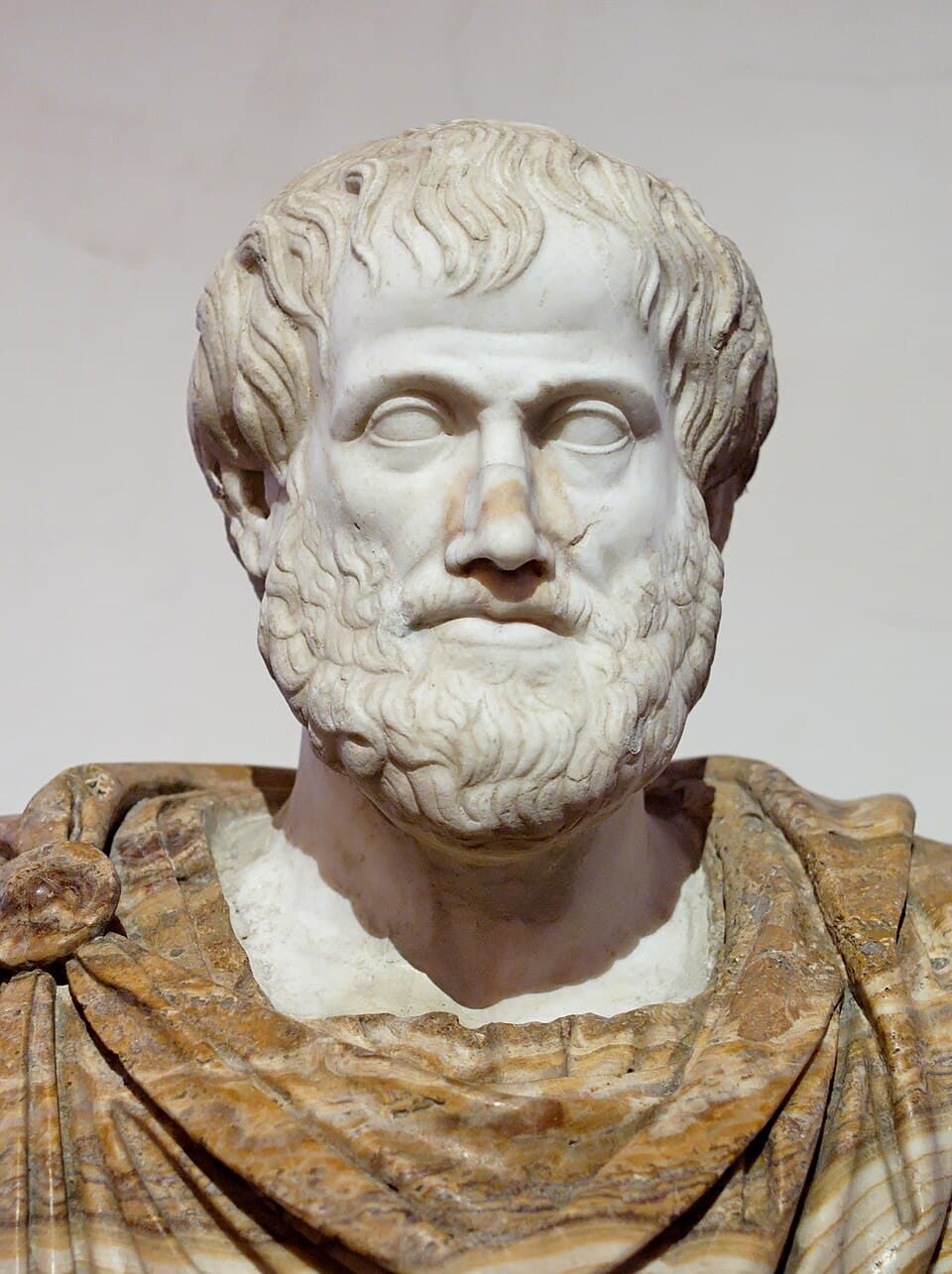
Aristotle
Nicomachean Ethics

The author distinguishes between things that are 'prior by nature' (universals) and things that are 'prior to us' (sensory particulars).

...cause it is impossible to know that which is not. First, that is indemonstrable, because, if demonstrable, he cannot be said to know them who has no demonstration of them for knowing such things as are demonstrable is the same as having demonstration of them. Causes they must be, and better known, and prior in time, causes, because we then know when we are acquainted with the cause, and prior, if causes, and known beforehand, not merely comprehended in idea but known to exist
(The terms prior, and better known, bear two senses for prior by nature and prior relatively to ourselves are not the same, nor better known by nature, and better known to us I mean, by prior and better known relatively to ourselves, such things as are nearer to sensation, but abstractedly so such as are further Those are furthest which are most universal those nearest which are particulars, and these are mutually opposed.)
And by first, I mean principles akin to the conclusion, for principle means the same as first And the principle or first step in demonstration is a proposition incapable of syllogistic proof, i.e. one to which there is none prior. Now of such syllogistic principles I call that a θέσις which you cannot demonstrate, and which is unnecessary with a view to learning something else. That which is necessary in order to learn something else is an Axiom. Further, since one is to believe and kn...
6
9 of 9 in Book VI, Chapter XII160 of 276 in work
Foundational Knowledge
Aristotle
Nicomachean Ethics

The author explains the requirements for demonstrative knowledge, asserting that one must believe the foundational principles more firmly than the conclusions derived from them.

...culars, and these are mutually opposed.) And by first, I mean principles akin to the conclusion, for principle means the same as first And the principle or first step in demonstration is a proposition incapable of syllogistic proof, i.e. one to which there is none prior. Now of such syllogistic principles I call that a θέσις which you cannot demonstrate, and which is unnecessary with a view to learning something else. That which is necessary in order to learn something else is an Axiom.
Further, since one is to believe and know the thing by having a syllogism of the kind called demonstration, and what constitutes it to be such is the nature of the premisses, it is necessary not merely to know before, but to know better than the conclusion, either all or at least some of, the principles, because that which is the cause of a quality inhering in something else always inheres itself more as the cause of our loving is itself more lovable. So, since the principles are the cause of our knowing and behoving we know and believe them more, because by reason of them we know also the conclusion following. Further: the man who is to…
BOOK VII Chapter I. Next we must take a different point to start from,[1] and observe that of what is to be avoided in respect of moral character there are three forms; Vice, Imperfect Self-Control, and Brutishness. Of the two former it is plain what the contraries are, for we call the one Virtue, the other Self-Control; and as answering to Brutishness it will be most suitable to assign Superhuman, i.e. heroical and godlike Virtue, as, in Homer, Priam says of Hector “that he was very exc...
Continue reading →
6
1 of 2 in Book VII, Chapter II161 of 276 in work
Now entering Book VII, Chapter II
Knowledge's Powerlessness
Aristotle
Nicomachean Ethics

The text examines the Socratic view that a lack of self-control is impossible because no one would knowingly act against what they conceive to be best.

...ntrol, and the man of Imperfect Self-Control, while others distinguish between them. VI. It is sometimes said that the man of Practical Wisdom cannot be a man of Imperfect Self-Control, sometimes that men who are Practically Wise and Clever are of Imperfect Self-Control. VII. Again, men are said to be of Imperfect Self-Control, not simply but with the addition of the thing wherein, as in respect of anger, of honour, and gain. These then are pretty well the common statements. Chapter II.
Now a man may raise a question as to the nature of the right conception in violation of which a man fails of Self-Control. That he can so fail when knowing in the strict sense what is right some say is impossible: for it is a strange thing, as Socrates thought, that while Knowledge is present in his mind something else should master him and drag him about like a slave. Socrates in fact contended generally against the theory, maintaining there is no such state as that of Imperfect Self-Control, for that no one acts contrary to what is best conceiving it to be best but by reason of ignorance what is best.
With all due respect to Socrates, his account of the matter is at variance with plain facts, and we must enquire with respect to the affection, if it be caused by ignorance what is the nature of the ignorance: for that the man so failing does not suppose his acts to be right before he is under the influence of passion is quite plain.[2] There are people who partly agree with Socrates and partly not: that nothing can be stronger than Knowledge they agree, but that no man acts in contravention...
6
2 of 2 in Book VII, Chapter II162 of 276 in work
Knowledge vs Action
Aristotle
Nicomachean Ethics

The author critiques Socrates' view that no one acts against their better judgment, arguing that facts show people can fail in self-control despite having knowledge.

...n of Practical Wisdom cannot be a man of Imperfect Self-Control, sometimes that men who are Practically Wise and Clever are of Imperfect Self-Control. VII. Again, men are said to be of Imperfect Self-Control, not simply but with the addition of the thing wherein, as in respect of anger, of honour, and gain. These then are pretty well the common statements. Chapter II. Now a man may raise a question as to the nature of the right conception in violation of which a man fails of Self-Control.
That he can so fail when knowing in the strict sense what is right some say is impossible: for it is a strange thing, as Socrates thought, that while Knowledge is present in his mind something else should master him and drag him about like a slave. Socrates in fact contended generally against the theory, maintaining there is no such state as that of Imperfect Self-Control, for that no one acts contrary to what is best conceiving it to be best but by reason of ignorance what is best. With all due respect to Socrates, his account of the matter is at variance with plain facts, and we must enquire with respect to the affection, if it be caused…
and so they say that it is not Knowledge, but only Opinion, which the man in question has and yet yields to the instigation of his pleasures. But then, if it is Opinion and not Knowledge, that is it the opposing conception be not strong but only mild (as in the case of real doubt), the not abiding by it in the face of strong lusts would be excusable: but wickedness is not excusable, nor is anything which deserves blame. Well then, is it Practical Wisdom which in this case offers opposition: f...
Continue reading →
6
1 of 4 in Book VII, Chapter III163 of 276 in work
Now entering Book VII, Chapter III
Knowledge vs Opinion
Aristotle
Nicomachean Ethics

The author distinguishes between a lack of self-control and imperfect self-control, arguing that the strength of one's conviction (opinion vs. knowledge) does not necessarily prevent moral failure.

...ether Self-Control and Imperfect Self-Control are unlimited in their object-matter: because he who is designated without any addition a man of Imperfect Self-Control is not unlimited in his object-matter, but has exactly the same as the man who has lost all Self-Control: nor is he so designated because of his relation to this object-matter merely (for then his character would be identical with that just mentioned, loss of all Self-Control), but because of his relation to it being such and such.
For the man who has lost all Self-Control is led on with deliberate moral choice, holding that it is his line to pursue pleasure as it rises: while the man of Imperfect Self-Control does not think that he ought to pursue it, but does pursue it all the same. Now as to the notion that it is True Opinion and not Knowledge in contravention of which men fail in Self-Control, it makes no difference to the point in question, because some of those who hold Opinions have no doubt about them but suppose themselves to have accurate Knowledge; if then it is urged that men holding Opinions will be more likely than men who have Knowledge to act in…
Rather the following is the account of it: the term knowing has two senses; both the man who does not use his Knowledge, and he who does, are said to know: there will be a difference between a man’s acting wrongly, who though possessed of Knowledge does not call it into operation, and his doing so who has it and actually exercises it: the latter is a strange case, but the mere having, if not exercising, presents no anomaly. Again, as there are two kinds of propositions affecting action,[4...
Continue reading →
3