1 of 2 in Book VIII, Chapter I187 of 276 in work
Now entering Book VIII, Chapter I
Friendship's Necessity
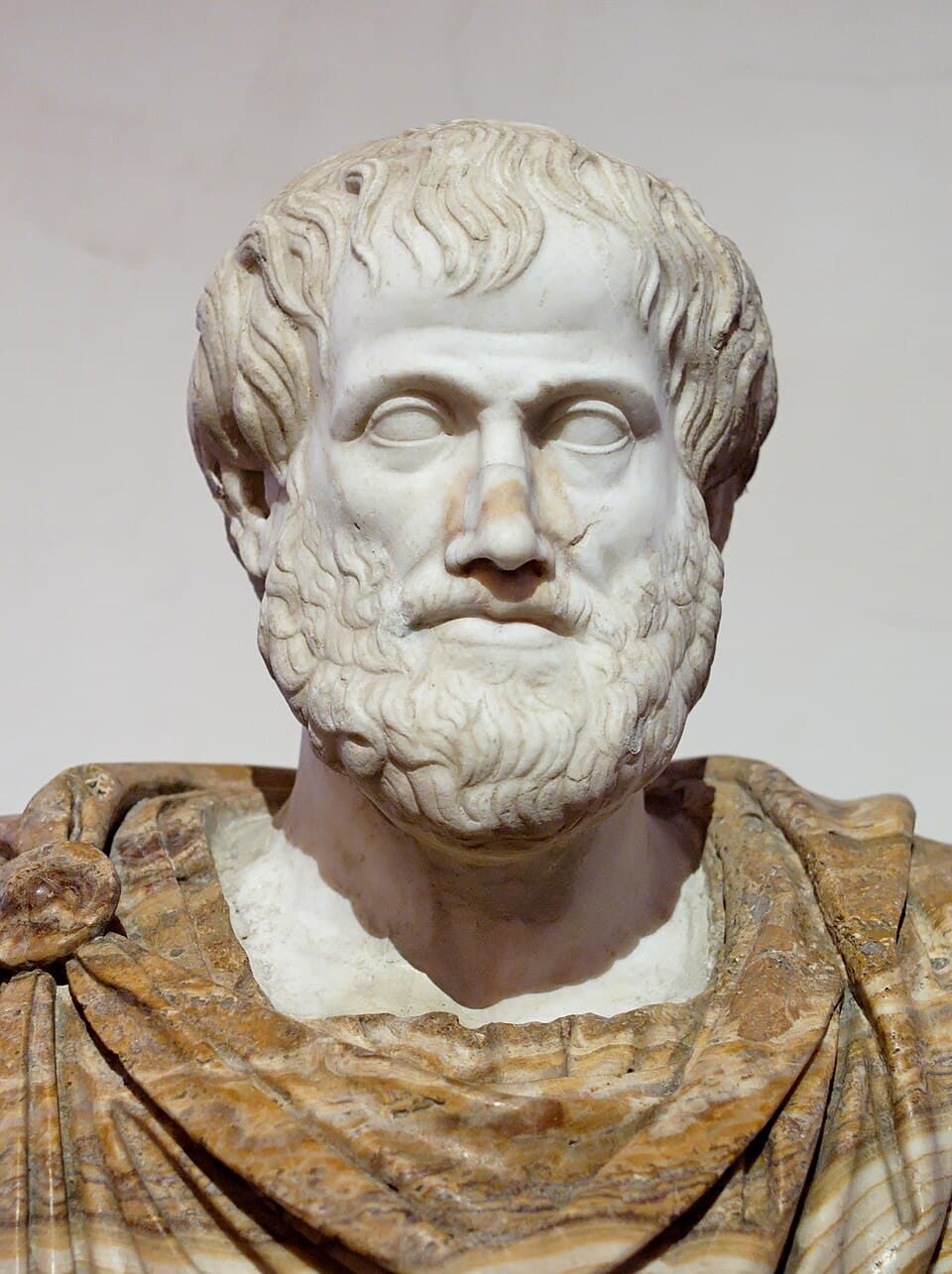
Aristotle
Nicomachean Ethics

The author asserts that friendship is a necessary component of a good life, as even those with great wealth and power require friends to exercise their prosperity through kindness.

...in the absence than in the presence of motion. The reason why the Poet’s dictum “change is of all things most pleasant” is true, is “a baseness in our blood;” for as the bad man is easily changeable, bad must be also the nature that craves change, i.e. it is neither simple nor good. We have now said our say about Self-Control and its opposite; and about Pleasure and Pain. What each is, and how the one set is good the other bad. We have yet to speak of Friendship. BOOK VIII Chapter I.
Next would seem properly to follow a dissertation on Friendship: because, in the first place, it is either itself a virtue or connected with virtue; and next it is a thing most necessary for life, since no one would choose to live without friends though he should have all the other good things in the world: and, in fact, men who are rich or possessed of authority and influence are thought to have special need of friends: for where is the use of such prosperity if there be taken away the doing of kindnesses of which friends are the most usual and most commendable objects?
Or how can it be kept or preserved without friends? because the greater it is so much the more slippery and hazardous: in poverty moreover and all other adversities men think friends to be their only refuge. Furthermore, Friendship helps the young to keep from error: the old, in respect of attention and such deficiencies in action as their weakness makes them liable to; and those who are in their prime, in respect of noble deeds (“They two together going,” Homer says, you may remember), beca...
2
2 of 2 in Book VIII, Chapter I188 of 276 in work
Friendship Over Justice
Aristotle
Nicomachean Ethics

The author argues that friendship is the primary bond of communities, often superseding the necessity of justice in harmonious relationships.

...le to devise plans and carry them out. Again, it seems to be implanted in us by Nature: as, for instance, in the parent towards the offspring and the offspring towards the parent (not merely in the human species, but likewise in birds and most animals), and in those of the same tribe towards one another, and specially in men of the same nation; for which reason we commend those men who love their fellows: and one may see in the course of travel how close of kin and how friendly man is to man.
Furthermore, Friendship seems to be the bond of Social Communities, and legislators seem to be more anxious to secure it than Justice even. I mean, Unanimity is somewhat like to Friendship, and this they certainly aim at and specially drive out faction as being inimical. Again, where people are in Friendship Justice is not required; but, on the other hand, though they are just they need Friendship in addition, and that principle which is most truly just is thought to partake of the nature of Friendship.
Lastly, not only is it a thing necessary but honourable likewise: since we praise those who are fond of friends, and the having numerous friends is thought a matter of credit to a man; some go so far as to hold, that “good man” and “friend” are terms synonymous. Chapter II. Yet the disputed points respecting it are not few: some men lay down that it is a kind of resemblance, and that men who are like one another are friends: whence come the common sayings, “Like will to like,” “Birds of a fe...
2
1 of 2 in Book VIII, Chapter III189 of 276 in work
Now entering Book VIII, Chapter III
Perceived Good as Friendship
Aristotle
Nicomachean Ethics

Aristotle explores the psychology of friendship, noting that individuals are drawn to what they perceive as good for themselves.

...but some peculiar matter alone, is the object of this affection; that is to say, what is good, or pleasurable, or useful. Now it would seem that that is useful through which accrues any good or pleasure, and so the objects of Friendship, as absolute Ends, are the good and the pleasurable. A question here arises; whether it is good absolutely or that which is good to the individuals, for which men feel Friendship (these two being sometimes distinct): and similarly in respect of the pleasurable.
It seems then that each individual feels it towards that which is good to himself, and that abstractedly it is the real good which is the object of Friendship, and to each individual that which is good to each. It comes then to this; that each individual feels Friendship not for what is but for that which conveys to his mind the impression of being good to himself. But this will make no real difference, because that which is truly the object of Friendship will also convey this impression to the mind.
There are then three causes from which men feel Friendship: but the term is not applied to the case of fondness for things inanimate because there is no requital of the affection nor desire for the good of those objects: it certainly savours of the ridiculous to say that a man fond of wine wishes well to it: the only sense in which it is true being that he wishes it to be kept safe and sound for his own use and benefit.[3] But to the friend they say one should wish all good for his sake. And w...
2
2 of 2 in Book VIII, Chapter III190 of 276 in work
Friendship's Three Motives
Aristotle
Nicomachean Ethics

The author defines the necessary conditions for friendship as mutual goodwill and affection that is recognized by both parties.

...ecause Friendship they describe as being “Kindliness between persons who reciprocate it.” But must they not add that the feeling must be mutually known? for many men are kindly disposed towards those whom they have never seen but whom they conceive to be amiable or useful: and this notion amounts to the same thing as a real feeling between them. Well, these are plainly Kindly-disposed towards one another: but how can one call them friends while their mutual feelings are unknown to one another?
To complete the idea of Friendship, then, it is requisite that they have kindly feelings towards one another, and wish one another good from one of the aforementioned causes, and that these kindly feelings should be mutually known. Chapter IV. As the motives to Friendship differ in kind so do the respective feelings and Friendships. The species then of Friendship are three, in number equal to the objects of it, since in the line of each there may be “mutual affection mutually known.”
Now they who have Friendship for one another desire one another’s good according to the motive of their Friendship; accordingly they whose motive is utility have no Friendship for one another really, but only in so far as some good arises to them from one another. And they whose motive is pleasure are in like case: I mean, they have Friendship for men of easy pleasantry, not because they are of a given character but because they are pleasant to themselves. So then they whose motive to Friend...
4
1 of 1 in Book VIII, Chapter IV191 of 276 in work
Now entering Book VIII, Chapter IV
Friendship of Utility
Aristotle
Nicomachean Ethics

The author analyzes friendships based on utility or pleasure, concluding they are fragile because they depend on what the friend provides rather than who they are.

...e “mutual affection mutually known.” Now they who have Friendship for one another desire one another’s good according to the motive of their Friendship; accordingly they whose motive is utility have no Friendship for one another really, but only in so far as some good arises to them from one another. And they whose motive is pleasure are in like case: I mean, they have Friendship for men of easy pleasantry, not because they are of a given character but because they are pleasant to themselves.
So then they whose motive to Friendship is utility love their friends for what is good to themselves; they whose motive is pleasure do so for what is pleasurable to themselves; that is to say, not in so far as the friend beloved is but in so far as he is useful or pleasurable. These Friendships then are a matter of result: since the object is not beloved in that he is the man he is but in that he furnishes advantage or pleasure as the case may be. Such Friendships are of course very liable to dissolution if the parties do not continue alike: I mean, that the others cease to have any Friendship for them when they are no longer pleasurable or…
Now it is the nature of utility not to be permanent but constantly varying: so, of course, when the motive which made them friends is vanished, the Friendship likewise dissolves; since it existed only relatively to those circumstances. Friendship of this kind is thought to exist principally among the old (because men at that time of life pursue not what is pleasurable but what is profitable); and in such, of men in their prime and of the young, as are given to the pursuit of profit. They that...
Continue reading →
4