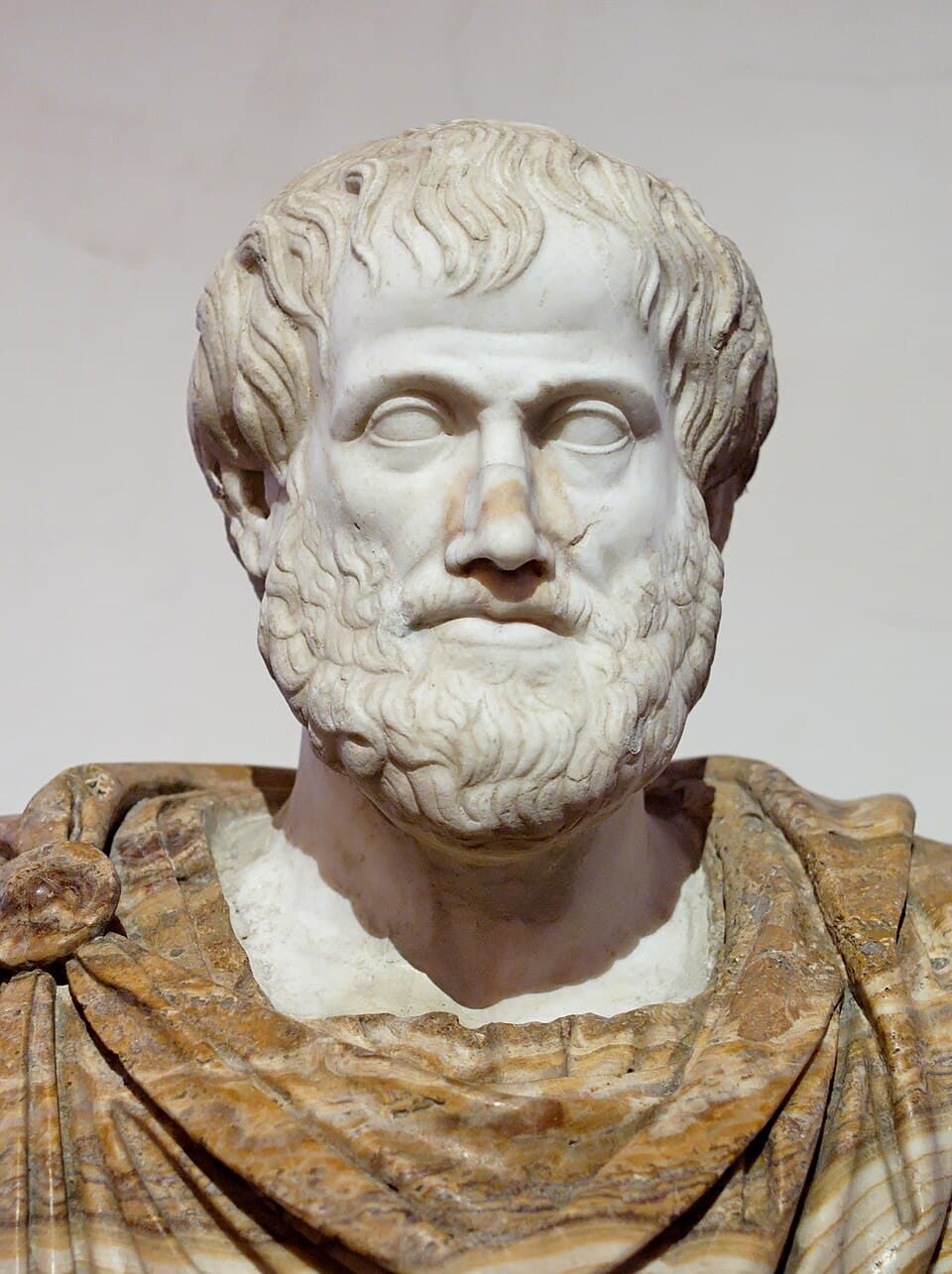
The text differentiates moral choice from opinion, noting that character is formed by our choices of good and evil rather than the mere holding of beliefs.
3 of 4 in Book III, Chapter IV59 of 276 in work
Choice vs Opinion
Aristotle
Nicomachean Ethics...; or happiness again we wish for, and commonly say so, but to say we choose is not an appropriate term, because, in short, the province of Moral Choice seems to be those things which are in our own power. Neither can it be Opinion; for Opinion is thought to be unlimited in its range of objects, and to be exercised as well upon things eternal and impossible as on those which are in our own power: again, Opinion is logically divided into true and false, not into good and bad as Moral Choice is.
However, nobody perhaps maintains its identity with Opinion simply; but it is not the same with opinion of any kind, because by choosing good and bad things we are constituted of a certain character, but by having opinions on them we are not. Again, we choose to take or avoid, and so on, but we opine what a thing is, or for what it is serviceable, or how; but we do not opine to take or avoid. Further, Moral Choice is commended rather for having a right object than for being judicious, but Opinion for being formed in accordance with truth.
Again, we choose such things as we pretty well know to be good, but we form opinions respecting such as we do not know at all. And it is not thought that choosing and opining best always go together, but that some opine the better course and yet by reason of viciousness choose not the things which they should. It may be urged, that Opinion always precedes or accompanies Moral Choice; be it so, this makes no difference, for this is not the point in question, but whether Moral Choice is the sa...
5
4 of 4 in Book III, Chapter IV60 of 276 in work
⚖Deliberated Voluntary Action

Aristotle
Nicomachean EthicsThe text explores the etymology and logic of moral choice, identifying it as a specific subset of voluntary action involving prior reasoning.
...we pretty well know to be good, but we form opinions respecting such as we do not know at all. And it is not thought that choosing and opining best always go together, but that some opine the better course and yet by reason of viciousness choose not the things which they should. It may be urged, that Opinion always precedes or accompanies Moral Choice; be it so, this makes no difference, for this is not the point in question, but whether Moral Choice is the same as Opinion of a certain kind.
Since then it is none of the aforementioned things, what is it, or how is it characterised? Voluntary it plainly is, but not all voluntary action is an object of Moral Choice. May we not say then, it is “that voluntary which has passed through a stage of previous deliberation?” because Moral Choice is attended with reasoning and intellectual process. The etymology of its Greek name seems to give a hint of it, being when analysed “chosen in preference to somewhat else.”
Chapter V. Well then; do men deliberate about everything, and is anything soever the object of Deliberation, or are there some matters with respect to which there is none? (It may be as well perhaps to say, that by “object of Deliberation” is meant such matter as a sensible man would deliberate upon, not what any fool or madman might.) Well: about eternal things no one deliberates; as, for instance, the universe, or the incommensurability of the diameter and side of a square. Nor again abo...
6
1 of 3 in Book III, Chapter V61 of 276 in work
Now entering Book III, Chapter V
⚖Deliberation on Means

Aristotle
Nicomachean EthicsThe author defines deliberation as a process concerning the means to an end rather than the ends themselves, occurring in matters that are generally governed by laws but remain uncertain in specific cases.
...aracters, because we have no doubt how they should be formed; but we do deliberate on all buch things as are usually done through our own instrumentality, but not invariably in the same way; as, for instance, about matters connected with the healing art, or with money-making; and, again, more about piloting ships than gymnastic exercises, because the former has been less exactly determined, and so forth; and more about arts than sciences, because we more frequently doubt respecting the former.
So then Deliberation takes place in such matters as are under general laws, but still uncertain how in any given case they will issue, i.e. in which there is some indefiniteness; and for great matters we associate coadjutors in counsel, distrusting our ability to settle them alone. Further, we deliberate not about Ends, but Means to Ends. No physician, for instance, deliberates whether he will cure, nor orator whether he will persuade, nor statesman whether he will produce a good constitution, nor in fact any man in any other function about his particular End; but having set before them a certain End they look how and through what means it…
or, if there is but one means of accomplishing the object, then how it may be through this, this again through what, till they come to the first cause; and this will be the last found; for a man engaged in a process of deliberation seems to seek and analyse, as a man, to solve a problem, analyses the figure given him. And plainly not every search is Deliberation, those in mathematics to wit, but every Deliberation is a search, and the last step in the analysis is the first in the constructive p...
Continue reading →
5
2 of 3 in Book III, Chapter V62 of 276 in work
⚖Choice's Final Origin

Aristotle
Nicomachean EthicsThe text explains that moral choice is the result of deliberation, where an individual identifies the internal principle of action to make a definite decision.
...is the originator of his actions; and Deliberation has for its object whatever may be done through one’s own instrumentality, and the actions are with a view to other things; and so it is, not the End, but the Means to Ends on which Deliberation is employed. Nor, again, is it employed on matters of detail, as whether the substance before me is bread, or has been properly cooked; for these come under the province of sense, and if a man is to be always deliberating, he may go on ad infinitum.
Further, exactly the same matter is the object both of Deliberation and Moral Choice; but that which is the object of Moral Choice is thenceforward separated off and definite, because by object of Moral Choice is denoted that which after Deliberation has been preferred to something else: for each man leaves off searching how he shall do a thing when he has brought the origination up to himself, i.e. to the governing principle in himself, because it is this which makes the choice.
A good illustration of this is furnished by the old regal constitutions which Homer drew from, in which the Kings would announce to the commonalty what they had determined before. Now since that which is the object of Moral Choice is something in our own power, which is the object of deliberation and the grasping of the Will, Moral Choice must be “a grasping after something in our own power consequent upon Deliberation:” because after having deliberated we decide, and then grasp by our Will in...
5
3 of 3 in Book III, Chapter V63 of 276 in work
⚖The Deliberate Will

Aristotle
Nicomachean EthicsMoral choice is defined as a deliberate desire for things within our power, serving as the calculated means to achieve specific ends.
...10] because by object of Moral Choice is denoted that which after Deliberation has been preferred to something else: for each man leaves off searching how he shall do a thing when he has brought the origination up to himself, i.e. to the governing principle in himself,[11] because it is this which makes the choice. A good illustration of this is furnished by the old regal constitutions which Homer drew from, in which the Kings would announce to the commonalty what they had determined before.
Now since that which is the object of Moral Choice is something in our own power, which is the object of deliberation and the grasping of the Will, Moral Choice must be “a grasping after something in our own power consequent upon Deliberation:” because after having deliberated we decide, and then grasp by our Will in accordance with the result of our deliberation. Let this be accepted as a sketch of the nature and object of Moral Choice, that object being “Means to Ends.”
Chapter VI. That Wish has for its object-matter the End, has been already stated; but there are two opinions respecting it; some thinking that its object is real good, others whatever impresses the mind with a notion of good. Now those who maintain that the object of Wish is real good are beset by this difficulty, that what is wished for by him who chooses wrongly is not really an object of Wish (because, on their theory, if it is an object of wish, it must be good, but it is, in the case s...
6