The author advises that moral obligations must be tailored to the specific nature of the relationship, such as those with parents or companions.
1 of 2 in Book IX, Chapter II222 of 276 in work
Now entering Book IX, Chapter II
Claims of Different Relationships
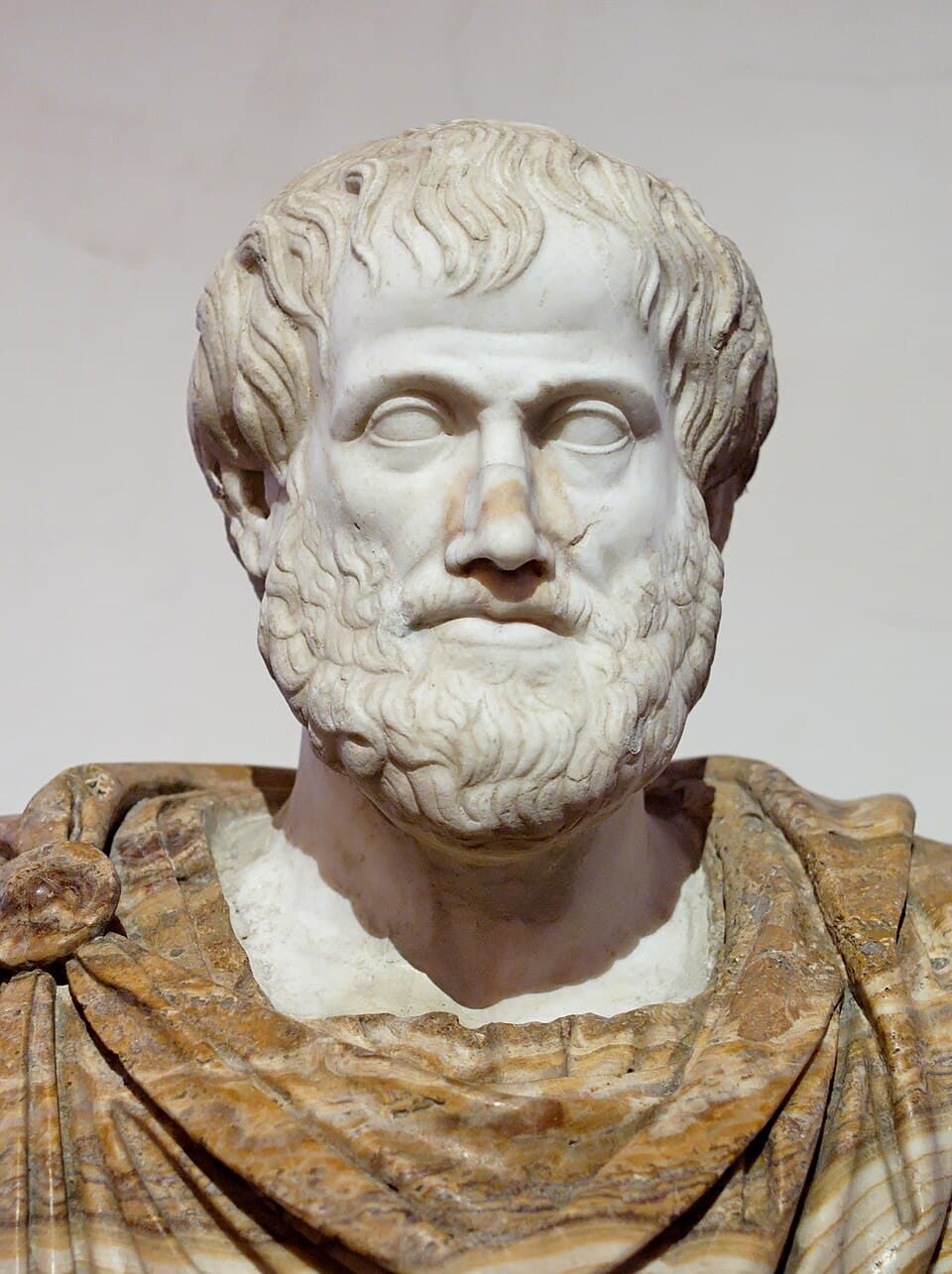
Aristotle
Nicomachean Ethics...him to be a scoundrel. And again, in certain cases no obligation lies on a man to lend to one who has lent to him; suppose, for instance, that a bad man lent to him, as being a good man, under the notion that he should get repaid, whereas the said good man has no hope of repayment from him being a bad man. Either then the case is really as we have supposed it and then the claim is not equal, or it is not so but supposed to be; and still in so acting people are not to be thought to act wrongly.
In short, as has been oftentimes stated before, all statements regarding feelings and actions can be definite only in proportion as their object-matter is so; it is of course quite obvious that all people have not the same claim upon one, nor are the claims of one’s father unlimited; just as Jupiter does not claim all kinds of sacrifice without distinction: and since the claims of parents, brothers, companions, and benefactors, are all different, we must give to each what belongs to and befits each.
And this is seen to be the course commonly pursued: to marriages men commonly invite their relatives, because these are from a common stock and therefore all the actions in any way pertaining thereto are common also: and to funerals men think that relatives ought to assemble in preference to other people, for the same reason. And it would seem that in respect of maintenance it is our duty to assist our parents in preference to all others, as being their debtors, and because it is more honoura...
4
2 of 2 in Book IX, Chapter II223 of 276 in work
⚖Honor's Proper Measure

Aristotle
Nicomachean EthicsThe text provides specific guidelines on how to distribute honor and respect to parents, elders, and peers based on their specific roles and the nature of the relationship.
...y invite their relatives, because these are from a common stock and therefore all the actions in any way pertaining thereto are common also: and to funerals men think that relatives ought to assemble in preference to other people, for the same reason. And it would seem that in respect of maintenance it is our duty to assist our parents in preference to all others, as being their debtors, and because it is more honourable to succour in these respects the authors of our existence than ourselves.
Honour likewise we ought to pay to our parents just as to the gods, but then, not all kinds of honour: not the same, for instance, to a father as to a mother: nor again to a father the honour due to a scientific man or to a general but that which is a father’s due, and in like manner to a mother that which is a mother’s. To all our elders also the honour befitting their age, by rising up in their presence, turning out of the way for them, and all similar marks of respect: to our companions again, or brothers, frankness and free participation in all we have. And to those of the same family, or tribe, or city, with ourselves, and all similarly…
in that of those who are in different classes it is a matter of more trouble. This, however, should not be a reason for giving up the attempt, but we must observe the distinctions so far as it is practicable to do so. Chapter III. A question is also raised as to the propriety of dissolving or not dissolving those Friendships the parties to which do not remain what they were when the connection was formed. Now surely in respect of those whose motive to Friendship is utility or pleasure there...
Continue reading →
4
1 of 3 in Book IX, Chapter III224 of 276 in work
Now entering Book IX, Chapter III
⚖Friendship on False Grounds

Aristotle
Nicomachean EthicsThe text explains that friendships based on utility or pleasure naturally dissolve when those benefits cease, and conflict arises only when one party pretends the bond is based on character.
...ntimacy: of course in the case of those of the same class the discrimination is easier; in that of those who are in different classes it is a matter of more trouble. This, however, should not be a reason for giving up the attempt, but we must observe the distinctions so far as it is practicable to do so. Chapter III. A question is also raised as to the propriety of dissolving or not dissolving those Friendships the parties to which do not remain what they were when the connection was formed.
Now surely in respect of those whose motive to Friendship is utility or pleasure there can be nothing wrong in breaking up the connection when they no longer have those qualities; because they were friends [not of one another, but] of those qualities: and, these having failed, it is only reasonable to expect that they should cease to entertain the sentiment. But a man has reason to find fault if the other party, being really attached to him because of advantage or pleasure, pretended to be so because of his moral character: in fact, as we said at the commencement, the most common source of quarrels between friends is their not being friends…
Now when a man has been deceived in having supposed himself to excite the sentiment of Friendship by reason of his moral character, the other party doing nothing to indicate he has but himself to blame: but when he has been deceived by the pretence of the other he has a right to find fault with the man who has so deceived him, aye even more than with utterers of false coin, in proportion to the greater preciousness of that which is the object-matter of the villany. But suppose a man takes up...
Continue reading →
3
2 of 3 in Book IX, Chapter III225 of 276 in work
⚖Friendship's Moral Limit

Aristotle
Nicomachean EthicsThe author advises that one is not obligated to maintain a friendship with a person who turns out to be wicked, as one should not be a lover of evil.
...y suppose themselves to be. Now when a man has been deceived in having supposed himself to excite the sentiment of Friendship by reason of his moral character, the other party doing nothing to indicate he has but himself to blame: but when he has been deceived by the pretence of the other he has a right to find fault with the man who has so deceived him, aye even more than with utterers of false coin, in proportion to the greater preciousness of that which is the object-matter of the villany.
But suppose a man takes up another as being a good man, who turns out, and is found by him, to be a scoundrel, is he bound still to entertain Friendship for him? or may we not say at once it is impossible? since it is not everything which is the object-matter of Friendship, but only that which is good; and so there is no obligation to be a bad man’s friend, nor, in fact, ought one to be such: for one ought not to be a lover of evil, nor to be assimilated to what is base; which would be implied, because we have said before, like is friendly to like.
Are we then to break with him instantly? not in all cases; only where our friends are incurably depraved; when there is a chance of amendment we are bound to aid in repairing the moral character of our friends even more than their substance, in proportion as it is better and more closely related to Friendship. Still he who should break off the connection is not to be judged to act wrongly, for he never was a friend to such a character as the other now is, and therefore, since the man is change...
2
3 of 3 in Book IX, Chapter III226 of 276 in work
⚖Breaking with Depravity

Aristotle
Nicomachean EthicsThe author provides guidelines on when to end a friendship, suggesting that one should first attempt to repair a friend's character before abandoning the connection.
...who turns out, and is found by him, to be a scoundrel, is he bound still to entertain Friendship for him? or may we not say at once it is impossible? since it is not everything which is the object-matter of Friendship, but only that which is good; and so there is no obligation to be a bad man’s friend, nor, in fact, ought one to be such: for one ought not to be a lover of evil, nor to be assimilated to what is base; which would be implied, because we have said before, like is friendly to like.
Are we then to break with him instantly? not in all cases; only where our friends are incurably depraved; when there is a chance of amendment we are bound to aid in repairing the moral character of our friends even more than their substance, in proportion as it is better and more closely related to Friendship. Still he who should break off the connection is not to be judged to act wrongly, for he never was a friend to such a character as the other now is, and therefore, since the man is changed and he cannot reduce him to his original state, he backs out of the connection.
To put another case: suppose that one party remains what he was when the Friendship was formed, while the other becomes morally improved and widely different from his friend in goodness; is the improved character to treat the other as a friend? May we not say it is impossible? The case of course is clearest where there is a great difference, as in the Friendships of boys: for suppose that of two boyish friends the one still continues a boy in mind and the other becomes a man of the highest ch...
4