The author argues that friendship is an extension of self-love and defines the various ways people characterize a friend's intentions and sympathies.
1 of 5 in Book IX, Chapter IV227 of 276 in work
Now entering Book IX, Chapter IV
Friendship from Self-Feelings
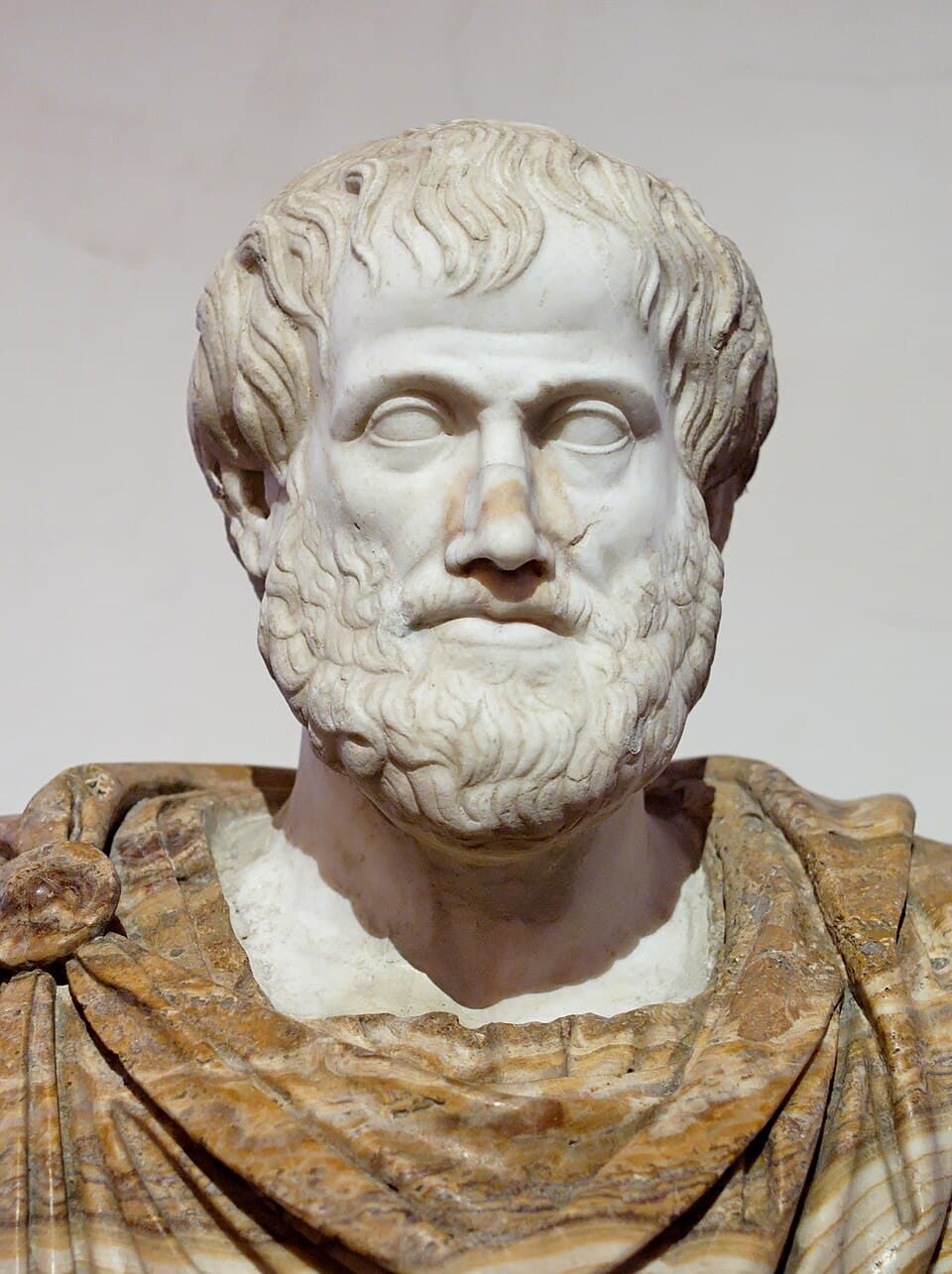
Aristotle
Nicomachean Ethics...mproved party to bear himself towards his former friend in no way differently to what he would have done had the connection never existed? Surely he ought to bear in mind the intimacy of past times, and just as we think ourselves bound to do favours for our friends in preference to strangers, so to those who have been friends and are so no longer we should allow somewhat on the score of previous Friendship, whenever the cause of severance is not excessive depravity on their part. Chapter IV.
Now the friendly feelings which are exhibited towards our friends, and by which Friendships are characterised, seem to have sprung out of those which we entertain toward ourselves. I mean, people define a friend to be “one who intends and does what is good (or what he believes to be good) to another for that other’s sake,” or “one who wishes his friend to be and to live for that friend’s own sake” (which is the feeling of mothers towards their children, and of friends who have come into collision). Others again, “one who lives with another and chooses the same objects,” or “one who sympathises with his friend in his sorrows and in his joys”…
Well, by some one of these marks people generally characterise Friendship: and each of these the good man has towards himself, and all others have them in so far as they suppose themselves to be good. (For, as has been said before, goodness, that is the good man, seems to be a measure to every one else.) For he is at unity in himself, and with every part of his soul he desires the same objects; and he wishes for himself both what is, and what he believes to be, good; and he does it (it being...
Continue reading →
2
2 of 5 in Book IX, Chapter IV228 of 276 in work
⚖The Unified Self

Aristotle
Nicomachean EthicsThe author posits that a good man is in harmony with himself and that the intellectual principle constitutes the true 'self' which one seeks to preserve.
...thers again, “one who lives with another and chooses the same objects,” or “one who sympathises with his friend in his sorrows and in his joys” (this too is especially the case with mothers). Well, by some one of these marks people generally characterise Friendship: and each of these the good man has towards himself, and all others have them in so far as they suppose themselves to be good. (For, as has been said before, goodness, that is the good man, seems to be a measure to every one else.)
For he is at unity in himself, and with every part of his soul he desires the same objects; and he wishes for himself both what is, and what he believes to be, good; and he does it (it being characteristic of the good man to work at what is good), and for the sake of himself, inasmuch as he does it for the sake of his Intellectual Principle which is generally thought to be a man’s Self. Again, he wishes himself And specially this Principle whereby he is an intelligent being, to live and be preserved in life, because existence is a good to him that is a good man. But it is to himself that each individual wishes what is good, and no man,…
Furthermore, the good man wishes to continue to live with himself; for he can do it with pleasure, in that his memories of past actions are full of delight and his anticipations of the future are good and such are pleasurable. Then, again, he has good store of matter for his Intellect to contemplate, and he most especially sympathises with his Self in its griefs and joys, because the objects which give him pain and pleasure are at all times the same, not one thing to-day and a different one to...
Continue reading →
4
3 of 5 in Book IX, Chapter IV229 of 276 in work
⚖The Good Man's Self-Sympathy

Aristotle
Nicomachean EthicsThe text provides a portrait of the good man's internal life, characterized by a harmonious relationship with himself, pleasant memories, and a lack of regret.
...t it is to himself that each individual wishes what is good, and no man, conceiving the possibility of his becoming other than he now is, chooses that that New Self should have all things indiscriminately: a god, for instance, has at the present moment the Chief Good, but he has it in right of being whatever he actually now is: and the Intelligent Principle must be judged to be each man’s Self, or at least eminently so [though other Principles help, of course, to constitute him the man he is].
Furthermore, the good man wishes to continue to live with himself; for he can do it with pleasure, in that his memories of past actions are full of delight and his anticipations of the future are good and such are pleasurable. Then, again, he has good store of matter for his Intellect to contemplate, and he most especially sympathises with his Self in its griefs and joys, because the objects which give him pain and pleasure are at all times the same, not one thing to-day and a different one to-morrow: because he is not given to repentance, if one may so speak.
It is then because each of these feelings are entertained by the good man towards his own Self and a friend feels towards a friend as towards himself (a friend being in fact another Self), that Friendship is thought to be some one of these things and they are accounted friends in whom they are found. Whether or no there can really be Friendship between a man and his Self is a question we will not at present entertain: there may be thought to be Friendship, in so far as there are two or more of...
2
4 of 5 in Book IX, Chapter IV230 of 276 in work
⚖Friend as Another Self

Aristotle
Nicomachean EthicsThe text explores the concept of friendship with oneself, suggesting that external friendship is modeled after the high degree of care a good man has for his own soul.
...he can do it with pleasure, in that his memories of past actions are full of delight and his anticipations of the future are good and such are pleasurable. Then, again, he has good store of matter for his Intellect to contemplate, and he most especially sympathises with his Self in its griefs and joys, because the objects which give him pain and pleasure are at all times the same, not one thing to-day and a different one to-morrow: because he is not given to repentance,[1] if one may so speak.
It is then because each of these feelings are entertained by the good man towards his own Self and a friend feels towards a friend as towards himself (a friend being in fact another Self), that Friendship is thought to be some one of these things and they are accounted friends in whom they are found. Whether or no there can really be Friendship between a man and his Self is a question we will not at present entertain: there may be thought to be Friendship, in so far as there are two or more of the aforesaid requisites, and because the highest degree of Friendship, in the usual acceptation of that term, resembles the feeling entertained by a…
But it may be urged that the aforesaid requisites are to all appearance found in the common run of men, though they are men of a low stamp. May it not be answered, that they share in them only in so far as they please themselves, and conceive themselves to be good? for certainly, they are not either really, or even apparently, found in any one of those who are very depraved and villainous; we may almost say not even in those who are bad men at all: for they are at variance with themselves and...
Continue reading →
2
5 of 5 in Book IX, Chapter IV231 of 276 in work
⚖The Soul's Civil War

Aristotle
Nicomachean EthicsThe author describes the internal psychological torment and remorse of the wicked, whose souls are divided between conflicting desires and regrets.
...r them: while they who from their depravity have actually done many dreadful actions hate and avoid life, and accordingly kill themselves: and the wicked seek others in whose company to spend their time, but fly from themselves because they have many unpleasant subjects of memory, and can only look forward to others like them when in solitude but drown their remorse in the company of others: and as they have nothing to raise the sentiment of Friendship so they never feel it towards themselves.
Neither, in fact, can they who are of this character sympathise with their Selves in their joys and sorrows, because their soul is, as it were, rent by faction, and the one principle, by reason of the depravity in them, is grieved at abstaining from certain things, while the other and better principle is pleased thereat; and the one drags them this way and the other that way, as though actually tearing them asunder. And though it is impossible actually to have at the same time the sensations of pain and pleasure; yet after a little time the man is sorry for having been pleased, and he could wish that those objects had not given him pleasure;…
It is plain then that the wicked man cannot be in the position of a friend even towards himself, because he has in himself nothing which can excite the sentiment of Friendship. If then to be thus is exceedingly wretched it is a man’s duty to flee from wickedness with all his might and to strive to be good, because thus may he be friends with himself and may come to be a friend to another. Chapter V. Kindly Feeling, though resembling Friendship, is not identical with it, because it may exist...
Continue reading →
2