3 of 4 in Book VII, Chapter III165 of 276 in work
Knowledge in Passion
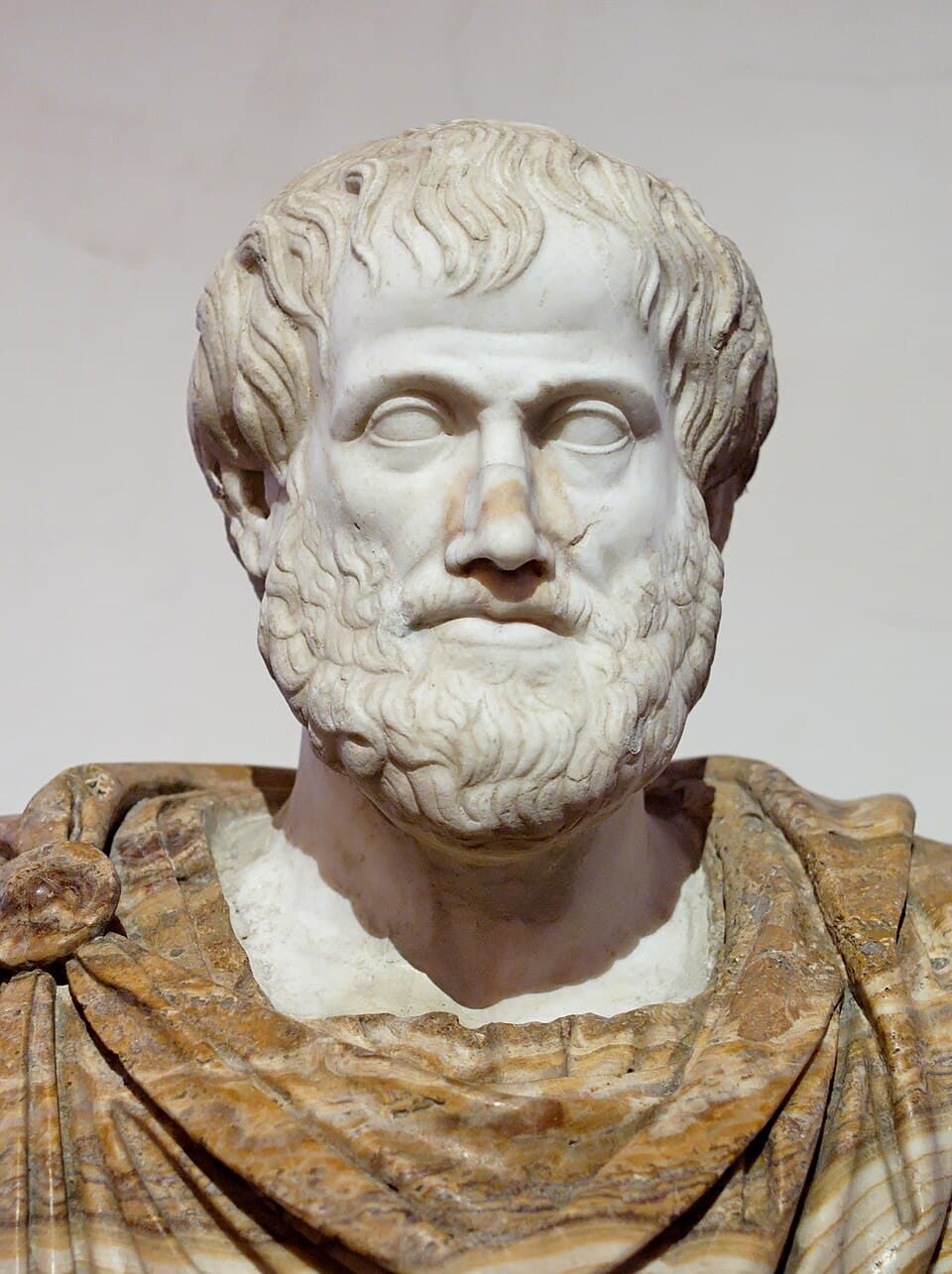
Aristotle
Nicomachean Ethics

The author compares those lacking self-control to people who are asleep or drunk, noting that they may recite knowledge without truly possessing or exercising it.

...ing in question: take the following for instance; “dry food is good for every man,” this may have the two minor premisses, “this is a man,” and “so and so is dry food;” but whether a given substance is so and so a man either has not the Knowledge or does not exert it. According to these different senses there will be an immense difference, so that for a man to know in the one sense, and yet act wrongly, would be nothing strange, but in any of the other senses it would be a matter for wonder.
Again, men may have Knowledge in a way different from any of those which have been now stated: for we constantly see a man’s state so differing by having and not using Knowledge, that he has it in a sense and also has not; when a man is asleep, for instance, or mad, or drunk: well, men under the actual operation of passion are in exactly similar conditions; for anger, lust, and some other such-like things, manifestly make changes even in the body, and in some they even cause madness; it is plain then that we must say the men of Imperfect Self-Control are in a state similar to these. And their saying what embodies Knowledge is no proof of…
Furthermore, a man may look at the account of the phænomenon in the following way, from an examination of the actual working of the mind: All action may be analysed into a syllogism, in which the one premiss is an universal maxim and the other concerns particulars of which Sense [moral or physical, as the case may be] is cognisant: now when one results from these two, it follows necessarily that, as far as theory goes the mind must assert the conclusion, and in practical propositions the man m...
Continue reading →
3
4 of 4 in Book VII, Chapter III166 of 276 in work
Reason vs Desire
Aristotle
Nicomachean Ethics

The author explains the mechanics of a lack of self-control as a conflict where desire overcomes a rational universal principle through the influence of a particular impression.

...h Sense [moral or physical, as the case may be] is cognisant: now when one results from these two, it follows necessarily that, as far as theory goes the mind must assert the conclusion, and in practical propositions the man must act accordingly. For instance, let the universal be, “All that is sweet should be tasted,” the particular, “This is sweet;” it follows necessarily that he who is able and is not hindered should not only draw, but put in practice, the conclusion “This is to be tasted.”
When then there is in the mind one universal proposition forbidding to taste, and the other “All that is sweet is pleasant” with its minor “This is sweet” (which is the one that really works), and desire happens to be in the man, the first universal bids him avoid this but the desire leads him on to taste; for it has the power of moving the various organs: and so it results that he fails in Self-Control, in a certain sense under the influence of Reason and Opinion not contrary in itself to Reason but only accidentally so; because it is the desire that is contrary to Right Reason, but not the Opinion: and so for this reason brutes are not…
As to the manner in which the ignorance is removed and the man of Imperfect Self-Control recovers his Knowledge, the account is the same as with respect to him who is drunk or asleep, and is not peculiar to this affection, so physiologists[8] are the right people to apply to. But whereas the minor premiss of every practical syllogism is an opinion on matter cognisable by Sense and determines the actions; he who is under the influence of passion either has not this, or so has it that his having...
Continue reading →
2
1 of 1 in Book VII, Chapter IV167 of 276 in work
Now entering Book VII, Chapter IV
The Hidden Danger
Aristotle
Nicomachean Ethics

The passage analyzes the severity of vice, suggesting that those who pursue excess without the pressure of strong desire are more deeply corrupted.

...ese enjoyments but not in respect of any of those others. And for this reason we put into the same rank the man of Imperfect Self-Control, the man who has lost it entirely, the man who has it, and the man of Perfected Self-Mastery; but not any of those other characters, because the former have for their object-matter the same pleasures and pains: but though they have the same object-matter, they are not related to it in the same way, but two of them act upon moral choice, two without it. And so
We should say that man is more entirely given up to his passions who pursues excessive pleasures, and avoids moderate pains, being either not at all, or at least but little, urged by desire, than the man who does so because his desire is very strong: because we think what would the former be likely to do if he had the additional stimulus of youthful lust and violent pain consequent on the want of those pleasures which we have denominated necessary?
Well then, since of desires and pleasures there are some which are in kind honourable and good (because things pleasant are divisible, as we said before, into such as are naturally objects of choice, such as are naturally objects of avoidance, and such as are in themselves indifferent, money, gain, honour, victory, for instance); in respect of all such and those that are indifferent, men are blamed not merely[11] for being affected by or desiring or liking them, but for exceeding in any way in...
5
1 of 2 in Book VII, Chapter VI168 of 276 in work
Now entering Book VII, Chapter VI
Anger's Misguided Reason
Aristotle
Nicomachean Ethics

The author compares anger to a hasty servant who mishears reason, arguing it is less disgraceful than lust because it still maintains a tenuous connection to the rational faculty.

...ture of utter absence of Self-Control, as it is found in Man. Chapter VI. It is plain then that the object-matter of Imperfect Self-Control and Self-Control is restricted to the same as that of utter absence of Self-Control and that of Perfected Self-Mastery, and that the rest is the object-matter of a different species so named metaphorically and not simply: we will now examine the position, “that Imperfect Self-Control in respect of Anger is less disgraceful than that in respect of Lusts.”
In the first place, it seems that Anger does in a way listen to Reason but mishears it; as quick servants who run out before they have heard the whole of what is said and then mistake the order; dogs, again, bark at the slightest stir, before they have seen whether it be friend or foe; just so Anger, by reason of its natural heat and quickness, listening to Reason, but without having heard the command of Reason, rushes to its revenge. That is to say, Reason or some impression on the mind shows there is insolence or contempt in the offender, and then Anger, reasoning as it were that one ought to fight against what is such, fires up…
Again, a man is more excusable for following such desires as are natural, just as he is for following such Lusts as are common to all and to that degree in which they are common. Now Anger and irritability are more natural than Lusts when in excess and for objects not necessary. (This was the ground of the defence the man made who beat his father, “My father,” he said, “used to beat his, and his father his again, and this little fellow here,” pointing to his child, “will beat me when he is gro...
Continue reading →
6
2 of 2 in Book VII, Chapter VI169 of 276 in work
Brutishness vs Vice
Aristotle
Nicomachean Ethics

Aristotle compares brutishness to vice, arguing that while a brute lacks a moral principle entirely, a bad man with a corrupted intellect is far more dangerous and harmful.

...ers caused by maimings and diseases. Now the first of these only are the object-matter of Perfected Self-Mastery and utter absence of Self-Control; and therefore we never attribute either of these states to Brutes (except metaphorically, and whenever any one kind of animal differs entirely from another in insolence, mischievousness, or voracity), because they have not moral choice or process of deliberation, but are quite different from that kind of creature just as are madmen from other men.
Brutishness is not so low in the scale as Vice, yet it is to be regarded with more fear: because it is not that the highest principle has been corrupted, as in the human creature, but the subject has it not at all. It is much the same, therefore, as if one should compare an inanimate with an animate being, which were the worse: for the badness of that which has no principle of origination is always less harmful; now Intellect is a principle of origination. A similar case would be the comparing injustice and an unjust man together: for in different ways each is the worst: a bad man would produce ten thousand times as much harm as a bad brute.
Chapter VII. Now with respect to the pleasures and pains which come to a man through Touch and Taste, and the desiring or avoiding such (which we determined before to constitute the object-matter of the states of utter absence of Self-Control and Perfected Self-Mastery), one may be so disposed as to yield to temptations to which most men would be superior, or to be superior to those to which most men would yield: in respect of pleasures, these characters will be respectively the man of Imperf...
6