The author argues that true friendship requires time and shared experience to prove mutual worth, noting that a desire for friendship is not the same as friendship itself.
2 of 3 in Book VIII, Chapter V193 of 276 in work
Friendship's Slow Growth
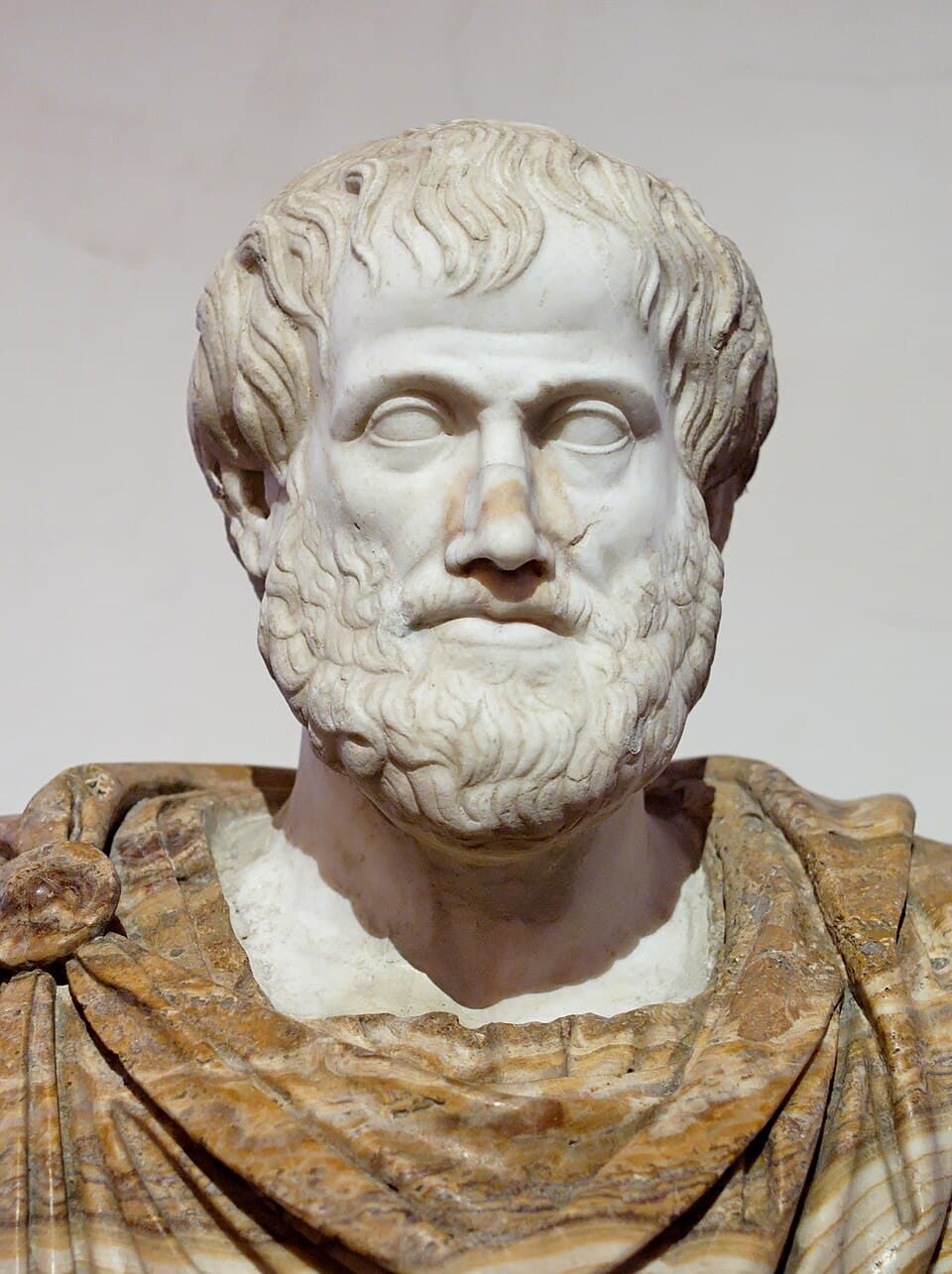
Aristotle
Nicomachean Ethics...similarity of some sort; and to this kind belong all the aforementioned requisites in the parties themselves, because in this the parties are similar, and so on:[4] moreover, in it there is the abstractedly good and the abstractedly pleasant, and as these are specially the object-matter of Friendship so the feeling and the state of Friendship is found most intense and most excellent in men thus qualified. Rare it is probable Friendships of this kind will be, because men of this kind are rare.
Besides, all requisite qualifications being presupposed, there is further required time and intimacy: for, as the proverb says, men cannot know one another “till they have eaten the requisite quantity of salt together;” nor can they in fact admit one another to intimacy, much less be friends, till each has appeared to the other and been proved to be a fit object of Friendship. They who speedily commence an interchange of friendly actions may be said to wish to be friends, but they are not so unless they are also proper objects of Friendship and mutually known to be such: that is to say, a desire for Friendship may arise quickly but not Friendship itself.
Well, this Friendship is perfect both in respect of the time and in all other points; and exactly the same and similar results accrue to each party from the other; which ought to be the case between friends. The friendship based upon the pleasurable is, so to say, a copy of this, since the good are sources of pleasure to one another: and that based on utility likewise, the good being also useful to one another. Between men thus connected Friendships are most permanent when the same result acc...
4
3 of 3 in Book VIII, Chapter V194 of 276 in work
⚖Friendship's Shield

Aristotle
Nicomachean EthicsThe author claims that true friendship between good people is uniquely resistant to suspicion and slander due to established mutual confidence.
...f advantage commonly part when the advantage ceases; for, in reality, they never were friends of one another but of the advantage. So then it appears that from motives of pleasure or profit bad men may be friends to one another, or good men to bad men or men of neutral character to one of any character whatever: but disinterestedly, for the sake of one another, plainly the good alone can be friends; because bad men have no pleasure even in themselves unless in so far as some advantage arises.
And further, the Friendship of the good is alone superior to calumny; it not being easy for men to believe a third person respecting one whom they have long tried and proved: there is between good men mutual confidence, and the feeling that one’s friend would never have done one wrong, and all other such things as are expected in Friendship really worthy the name; but in the other kinds there is nothing to prevent all such suspicions.
I call them Friendships, because since men commonly give the name of friends to those who are connected from motives of profit (which is justified by political language, for alliances between states are thought to be contracted with a view to advantage), and to those who are attached to one another by the motive of pleasure (as children are), we may perhaps also be allowed to call such persons friends, and say there are several species of Friendship; primarily and specially that of the good, i...
3
1 of 2 in Book VIII, Chapter VI195 of 276 in work
Now entering Book VIII, Chapter VI
⚖Friendship's Distance

Aristotle
Nicomachean EthicsThe text observes that physical distance and lack of intercourse can erode friendship, as human nature naturally avoids the painful and seeks the pleasurable.
...result and termed friends from their resemblance to these last. Chapter VI. Further; just as in respect of the different virtues some men are termed good in respect of a certain inward state, others in respect of acts of working, so is it in respect of Friendship: I mean, they who live together take pleasure in, and impart good to, one another: but they who are asleep or are locally separated do not perform acts, but only are in such a state as to act in a friendly way if they acted at all:
Distance has in itself no direct effect upon Friendship, but only prevents the acting it out: yet, if the absence be protracted, it is thought to cause a forgetfulness even of the Friendship: and hence it has been said, “many and many a Friendship doth want of intercourse destroy.” Accordingly, neither the old nor the morose appear to be calculated for Friendship, because the pleasurableness in them is small, and no one can spend his days in company with that which is positively painful or even not pleasurable; since to avoid the painful and aim at the pleasurable is one of the most obvious tendencies of human nature.
They who get on with one another very fairly, but are not in habits of intimacy, are rather like people having kindly feelings towards one another than friends; nothing being so characteristic of friends as the living with one another, because the necessitous desire assistance, and the happy companionship, they being the last persons in the world for solitary existence: but people cannot spend their time together unless they are mutually pleasurable and take pleasure in the same objects, a qual...
3
2 of 2 in Book VIII, Chapter VI196 of 276 in work
⚖Friendship's Shared Pleasure

Aristotle
Nicomachean EthicsAristotle distinguishes between mere kindly feelings and true friendship, emphasizing that the latter requires intimacy and the shared enjoyment of time.
..., it is thought to cause a forgetfulness even of the Friendship: and hence it has been said, “many and many a Friendship doth want of intercourse destroy.” Accordingly, neither the old nor the morose appear to be calculated for Friendship, because the pleasurableness in them is small, and no one can spend his days in company with that which is positively painful or even not pleasurable; since to avoid the painful and aim at the pleasurable is one of the most obvious tendencies of human nature.
They who get on with one another very fairly, but are not in habits of intimacy, are rather like people having kindly feelings towards one another than friends; nothing being so characteristic of friends as the living with one another, because the necessitous desire assistance, and the happy companionship, they being the last persons in the world for solitary existence: but people cannot spend their time together unless they are mutually pleasurable and take pleasure in the same objects, a quality which is thought to appertain to the Friendship of companionship.
Chapter VII. The connection then subsisting between the good is Friendship par excellence, as has already been frequently said: since that which is abstractedly good or pleasant is thought to be an object of Friendship and choice-worthy, and to each individual whatever is such to him; and the good man to the good man for both these reasons. (Now the entertaining the sentiment is like a feeling, but Friendship itself like a state: because the former may have for its object even things inani...
2
1 of 3 in Book VIII, Chapter VII197 of 276 in work
Now entering Book VIII, Chapter VII
⚖Friendship as Moral State

Aristotle
Nicomachean EthicsThis passage distinguishes between the feeling of affection and the state of friendship, noting that true friendship involves a moral choice to love the good in another.
...nless they are mutually pleasurable and take pleasure in the same objects, a quality which is thought to appertain to the Friendship of companionship. Chapter VII. The connection then subsisting between the good is Friendship par excellence, as has already been frequently said: since that which is abstractedly good or pleasant is thought to be an object of Friendship and choice-worthy, and to each individual whatever is such to him; and the good man to the good man for both these reasons.
(Now the entertaining the sentiment is like a feeling, but Friendship itself like a state: because the former may have for its object even things inanimate, but requital of Friendship is attended with moral choice which proceeds from a moral state: and again, men wish good to the objects of their Friendship for their sakes, not in the way of a mere feeling but of moral state.) And the good, in loving their friend, love their own good (inasmuch as the good man, when brought into that relation, becomes a good to him with whom he is so connected), so that either party loves his own good, and repays his friend equally both in wishing well and in…
Well, these points belong most to the Friendship between good men. But between morose or elderly men Friendship is less apt to arise, because they are somewhat awkward-tempered, and take less pleasure in intercourse and society; these being thought to be specially friendly and productive of Friendship: and so young men become friends quickly, old men not so (because people do not become friends with any, unless they take pleasure in them); and in like manner neither do the morose. Yet men of t...
Continue reading →
2