1 of 2 in Book I, Chapter XI27 of 276 in work
Now entering Book I, Chapter XI
Excellence as Happiness
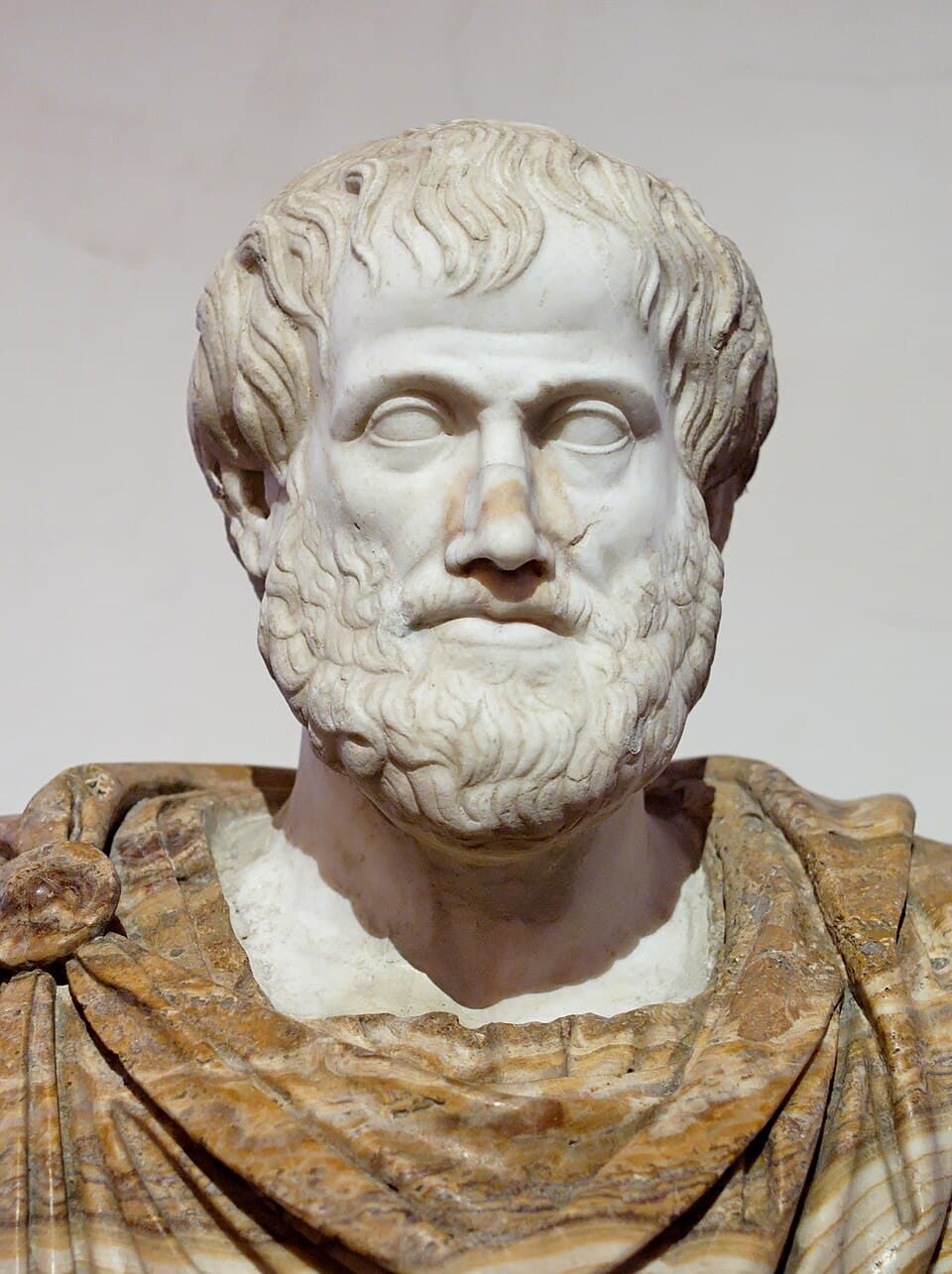
Aristotle
Nicomachean Ethics

The author links the study of ethics to statesmanship, arguing that the goal of a true leader is to understand human excellence to make citizens good.

...However, it is perhaps more suitable to a regular treatise on encomia to pursue this topic with exactness: it is enough for our purpose that from what has been said it is evident that Happiness belongs to the class of things precious and final. And it seems to be so also because of its being a starting-point; which it is, in that with a view to it we all do everything else that is done; now the starting-point and cause of good things we assume to be something precious and divine. Chapter XI.
Moreover, since Happiness is a kind of working of the soul in the way of perfect Excellence, we must enquire concerning Excellence: for so probably shall we have a clearer view concerning Happiness; and again, he who is really a statesman is generally thought to have spent most pains on this, for he wishes to make the citizens good and obedient to the laws. (For examples of this class we have the lawgivers of the Cretans and Lacedæmonians and whatever other such there have been.) But if this investigation belongs properly to πολιτικὴ, then clearly the enquiry will be in accordance with our original design. Well, we are to enquire concerning…
And by Human Excellence we mean not that of man’s body but that of his soul; for we call Happiness a working of the Soul. And if this is so, it is plain that some knowledge of the nature of the Soul is necessary for the statesman, just as for the oculist a knowledge of the whole body, and the more so in proportion as πολιτικὴ is more precious and higher than the healing art: and in fact physicians of the higher class do busy themselves much with the knowledge of the body. So then the statesm...
Continue reading →
5
2 of 2 in Book I, Chapter XI28 of 276 in work
Reason's Dual Domains
Aristotle
Nicomachean Ethics

The author divides the human soul into rational and irrational parts, further subdividing the irrational part into a vegetative state and a desiderative state that can be persuaded by reason.

...we do not. But, it may be, not the less[42] on that account are we to suppose that there is in the Soul also somewhat besides the Reason, which is opposed to this and goes against it; as to how it is different, that is irrelevant.) But of Reason this too does evidently partake, as we have said: for instance, in the man of self-control it obeys Reason: and perhaps in the man of perfected self-mastery,[43] or the brave man, it is yet more obedient; in them it agrees entirely with the Reason.
So then the Irrational is plainly twofold: the one part, the merely vegetative, has no share of Reason, but that of desire, or appetition generally, does partake of it in a sense, in so far as it is obedient to it and capable of submitting to its rule. (So too in common phrase we say we have λόγος of our father or friends, and this in a different sense from that in which we say we have λόγος of mathematics.) Now that the Irrational is in some way persuaded by the Reason, admonition, and every act of rebuke and exhortation indicate. If then we are to say that this also has Reason, then the Rational, as well as the Irrational, will be twofold,…
pure science, intelligence, and practical wisdom—Intellectual: liberality, and perfected self-mastery—Moral: in speaking of a man’s Moral character, we do not say he is a scientific or intelligent but a meek man, or one of perfected self-mastery: and we praise the man of science in right of his mental state;[45] and of these such as are praiseworthy we call Excellences. BOOK II Chapter I. Well: human Excellence is of two kinds, Intellectual and Moral:[1] now the Intellectual springs orig...
Continue reading →
5
1 of 4 in Book II, Chapter I29 of 276 in work
Now entering Book II, Chapter I
Virtue Beyond Nature
Aristotle
Nicomachean Ethics

The author argues that moral virtues are not innate but are developed through the habituation of our natural capacities.

...science in right of his mental state;[45] and of these such as are praiseworthy we call Excellences. BOOK II Chapter I. Well: human Excellence is of two kinds, Intellectual and Moral:[1] now the Intellectual springs originally, and is increased subsequently, from teaching (for the most part that is[2]), and needs therefore experience and time; whereas the Moral comes from custom, and so the Greek term denoting it is but a slight deflection from the term denoting custom in that language.
From this fact it is plain that not one of the Moral Virtues comes to be in us merely by nature: because of such things as exist by nature, none can be changed by custom: a stone, for instance, by nature gravitating downwards, could never by custom be brought to ascend, not even if one were to try and accustom it by throwing it up ten thousand times; nor could file again be brought to descend, nor in fact could anything whose nature is in one way be brought by custom to be in another. The Virtues then come to be in us neither by nature, nor in despite of nature, but we are furnished by nature with a capacity for receiving themu and are…
Again, in whatever cases we get things by nature, we get the faculties first and perform the acts of working afterwards; an illustration of which is afforded by the case of our bodily senses, for it was not from having often seen or heard that we got these senses, but just the reverse: we had them and so exercised them, but did not have them because we had exercised them. But the Virtues we get by first performing single acts of working, which, again, is the case of other things, as the arts f...
Continue reading →
5
2 of 4 in Book II, Chapter I30 of 276 in work
Virtue Through Practice
Aristotle
Nicomachean Ethics

The author argues that virtues are acquired through habit and practice rather than being innate, just as one becomes a builder by building.

...anguage. From this fact it is plain that not one of the Moral Virtues comes to be in us merely by nature: because of such things as exist by nature, none can be changed by custom: a stone, for instance, by nature gravitating downwards, could never by custom be brought to ascend, not even if one were to try and accustom it by throwing it up ten thousand times; nor could file again be brought to descend, nor in fact could anything whose nature is in one way be brought by custom to be in another.
The Virtues then come to be in us neither by nature, nor in despite of nature, but we are furnished by nature with a capacity for receiving themu and are perfected in them through custom. Again, in whatever cases we get things by nature, we get the faculties first and perform the acts of working afterwards; an illustration of which is afforded by the case of our bodily senses, for it was not from having often seen or heard that we got these senses, but just the reverse: we had them and so exercised them, but did not have them because we had exercised them. But the Virtues we get by first performing single acts of working, which, again, is the…
And to the truth of this testimony is borne by what takes place in communities: because the law-givers make the individual members good men by habituation, and this is the intention certainly of every law-giver, and all who do not effect it well fail of their intent; and herein consists the difference between a good Constitution and a bad. Again, every Virtue is either produced or destroyed from and by the very same circumstances: art too in like manner; I mean it is by playing the harp that...
Continue reading →
5
3 of 4 in Book II, Chapter I31 of 276 in work
Virtue Through Action
Aristotle
Nicomachean Ethics

The author explains that moral virtues are acquired through repetitive action and habituation, much like learning a craft or a technical skill.

...of nature,[3] but we are furnished by nature with a capacity for receiving themu and are perfected in them through custom. Again, in whatever cases we get things by nature, we get the faculties first and perform the acts of working afterwards; an illustration of which is afforded by the case of our bodily senses, for it was not from having often seen or heard that we got these senses, but just the reverse: we had them and so exercised them, but did not have them because we had exercised them.
But the Virtues we get by first performing single acts of working, which, again, is the case of other things, as the arts for instance; for what we have to make when we have learned how, these we learn how to make by making: men come to be builders, for instance, by building; harp-players, by playing on the harp: exactly so, by doing just actions we come to be just; by doing the actions of self-mastery we come to be perfected in self-mastery; and by doing brave actions brave. And to the truth of this testimony is borne by what takes place in communities: because the law-givers make the individual members good men by habituation, and this is…
Again, every Virtue is either produced or destroyed from and by the very same circumstances: art too in like manner; I mean it is by playing the harp that both the good and the bad harp-players are formed: and similarly builders and all the rest; by building well men will become good builders; by doing it badly bad ones: in fact, if this had not been so, there would have been no need of instructors, but all men would have been at once good or bad in their several arts without them. So too the...
Continue reading →
3