1 of 2 in Book VIII, Chapter III189 of 276 in work
Now entering Book VIII, Chapter III
Perceived Good as Friendship
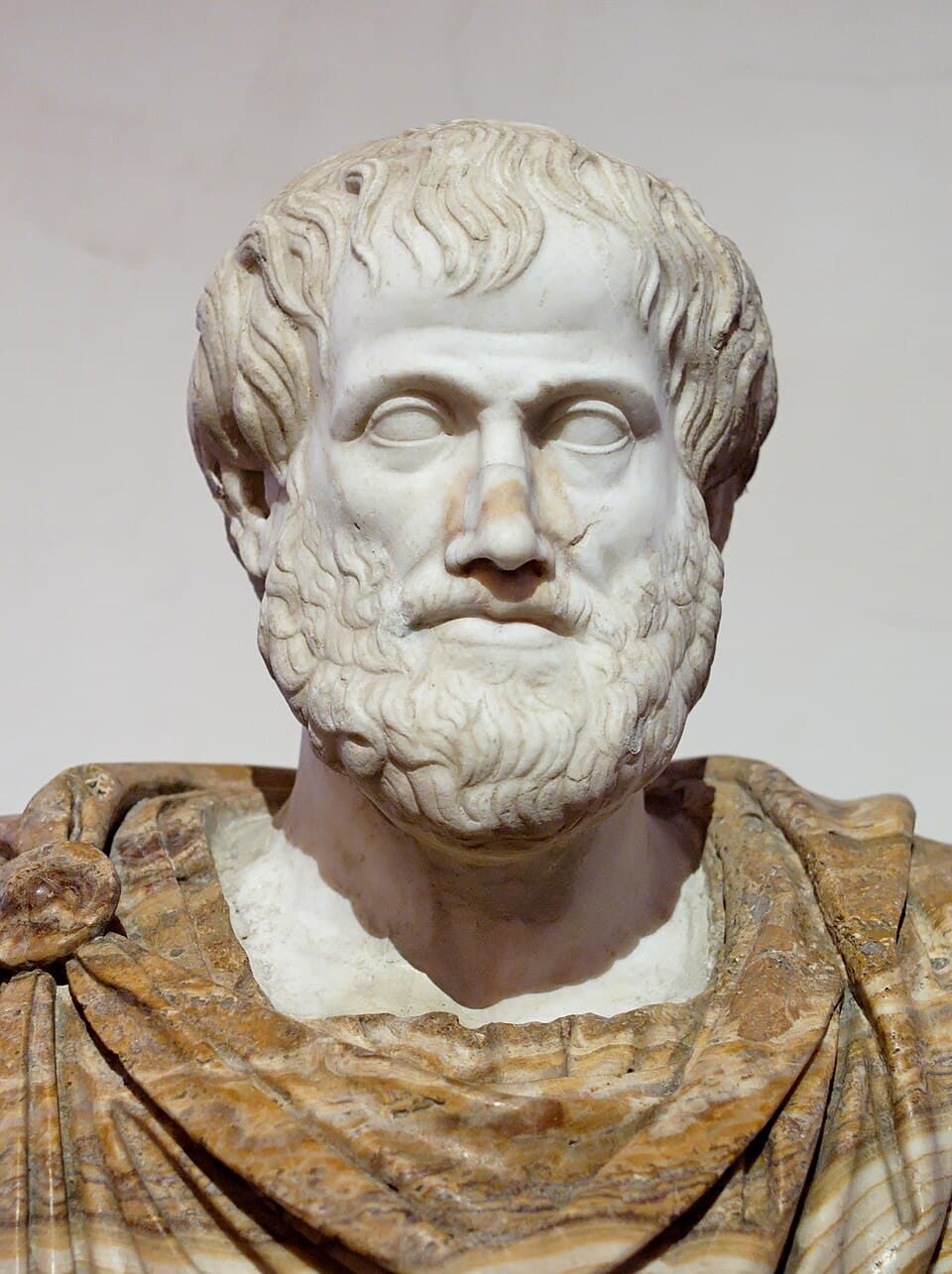
Aristotle
Nicomachean Ethics

Aristotle explores the psychology of friendship, noting that individuals are drawn to what they perceive as good for themselves.

...but some peculiar matter alone, is the object of this affection; that is to say, what is good, or pleasurable, or useful. Now it would seem that that is useful through which accrues any good or pleasure, and so the objects of Friendship, as absolute Ends, are the good and the pleasurable. A question here arises; whether it is good absolutely or that which is good to the individuals, for which men feel Friendship (these two being sometimes distinct): and similarly in respect of the pleasurable.
It seems then that each individual feels it towards that which is good to himself, and that abstractedly it is the real good which is the object of Friendship, and to each individual that which is good to each. It comes then to this; that each individual feels Friendship not for what is but for that which conveys to his mind the impression of being good to himself. But this will make no real difference, because that which is truly the object of Friendship will also convey this impression to the mind.
There are then three causes from which men feel Friendship: but the term is not applied to the case of fondness for things inanimate because there is no requital of the affection nor desire for the good of those objects: it certainly savours of the ridiculous to say that a man fond of wine wishes well to it: the only sense in which it is true being that he wishes it to be kept safe and sound for his own use and benefit.[3] But to the friend they say one should wish all good for his sake. And w...
2
2 of 2 in Book VIII, Chapter III190 of 276 in work
Friendship's Three Motives
Aristotle
Nicomachean Ethics

The author defines the necessary conditions for friendship as mutual goodwill and affection that is recognized by both parties.

...ecause Friendship they describe as being “Kindliness between persons who reciprocate it.” But must they not add that the feeling must be mutually known? for many men are kindly disposed towards those whom they have never seen but whom they conceive to be amiable or useful: and this notion amounts to the same thing as a real feeling between them. Well, these are plainly Kindly-disposed towards one another: but how can one call them friends while their mutual feelings are unknown to one another?
To complete the idea of Friendship, then, it is requisite that they have kindly feelings towards one another, and wish one another good from one of the aforementioned causes, and that these kindly feelings should be mutually known. Chapter IV. As the motives to Friendship differ in kind so do the respective feelings and Friendships. The species then of Friendship are three, in number equal to the objects of it, since in the line of each there may be “mutual affection mutually known.”
Now they who have Friendship for one another desire one another’s good according to the motive of their Friendship; accordingly they whose motive is utility have no Friendship for one another really, but only in so far as some good arises to them from one another. And they whose motive is pleasure are in like case: I mean, they have Friendship for men of easy pleasantry, not because they are of a given character but because they are pleasant to themselves. So then they whose motive to Friend...
4
1 of 1 in Book VIII, Chapter IV191 of 276 in work
Now entering Book VIII, Chapter IV
Friendship of Utility
Aristotle
Nicomachean Ethics

The author analyzes friendships based on utility or pleasure, concluding they are fragile because they depend on what the friend provides rather than who they are.

...e “mutual affection mutually known.” Now they who have Friendship for one another desire one another’s good according to the motive of their Friendship; accordingly they whose motive is utility have no Friendship for one another really, but only in so far as some good arises to them from one another. And they whose motive is pleasure are in like case: I mean, they have Friendship for men of easy pleasantry, not because they are of a given character but because they are pleasant to themselves.
So then they whose motive to Friendship is utility love their friends for what is good to themselves; they whose motive is pleasure do so for what is pleasurable to themselves; that is to say, not in so far as the friend beloved is but in so far as he is useful or pleasurable. These Friendships then are a matter of result: since the object is not beloved in that he is the man he is but in that he furnishes advantage or pleasure as the case may be. Such Friendships are of course very liable to dissolution if the parties do not continue alike: I mean, that the others cease to have any Friendship for them when they are no longer pleasurable or…
Now it is the nature of utility not to be permanent but constantly varying: so, of course, when the motive which made them friends is vanished, the Friendship likewise dissolves; since it existed only relatively to those circumstances. Friendship of this kind is thought to exist principally among the old (because men at that time of life pursue not what is pleasurable but what is profitable); and in such, of men in their prime and of the young, as are given to the pursuit of profit. They that...
Continue reading →
4
1 of 3 in Book VIII, Chapter V192 of 276 in work
Now entering Book VIII, Chapter V
Friendship of Goodness
Aristotle
Nicomachean Ethics

The author defines perfect friendship as a permanent bond between good people who wish for each other's well-being based on their inherent character.

...hy they form and dissolve Friendships rapidly: since the Friendship changes with the pleasurable object and such pleasure changes quickly. The young are also much given up to Love; this passion being, in great measure, a matter of impulse and based on pleasure: for which cause they conceive Friendships and quickly drop them, changing often in the same day: but these wish for society and intimate intercourse with their friends, since they thus attain the object of their Friendship. Chapter V.
That then is perfect Friendship which subsists between those who are good and whose similarity consists in their goodness: for these men wish one another’s good in similar ways; in so far as they are good (and good they are in themselves); and those are specially friends who wish good to their friends for their sakes, because they feel thus towards them on their own account and not as a mere matter of result; so the Friendship between these men continues to subsist so long as they are good; and goodness, we know, has in it a principle of permanence.
Moreover, each party is good abstractedly and also relatively to his friend, for all good men are not only abstractedly good but also useful to one another. Such friends are also mutually pleasurable because all good men are so abstractedly, and also relatively to one another, inasmuch as to each individual those actions are pleasurable which correspond to his nature, and all such as are like them. Now when men are good these will be always the same, or at least similar. Friendship then under...
2
2 of 3 in Book VIII, Chapter V193 of 276 in work
Friendship's Slow Growth
Aristotle
Nicomachean Ethics

The author argues that true friendship requires time and shared experience to prove mutual worth, noting that a desire for friendship is not the same as friendship itself.

...similarity of some sort; and to this kind belong all the aforementioned requisites in the parties themselves, because in this the parties are similar, and so on:[4] moreover, in it there is the abstractedly good and the abstractedly pleasant, and as these are specially the object-matter of Friendship so the feeling and the state of Friendship is found most intense and most excellent in men thus qualified. Rare it is probable Friendships of this kind will be, because men of this kind are rare.
Besides, all requisite qualifications being presupposed, there is further required time and intimacy: for, as the proverb says, men cannot know one another “till they have eaten the requisite quantity of salt together;” nor can they in fact admit one another to intimacy, much less be friends, till each has appeared to the other and been proved to be a fit object of Friendship. They who speedily commence an interchange of friendly actions may be said to wish to be friends, but they are not so unless they are also proper objects of Friendship and mutually known to be such: that is to say, a desire for Friendship may arise quickly but not Friendship itself.
Well, this Friendship is perfect both in respect of the time and in all other points; and exactly the same and similar results accrue to each party from the other; which ought to be the case between friends. The friendship based upon the pleasurable is, so to say, a copy of this, since the good are sources of pleasure to one another: and that based on utility likewise, the good being also useful to one another. Between men thus connected Friendships are most permanent when the same result acc...
4