Aristotle distinguishes between unjust acts committed through passion and those committed through deliberate choice, asserting that only the latter confirms a person as truly wicked.
3 of 3 in Book V, Chapter XI130 of 276 in work
Choice's Moral Stain
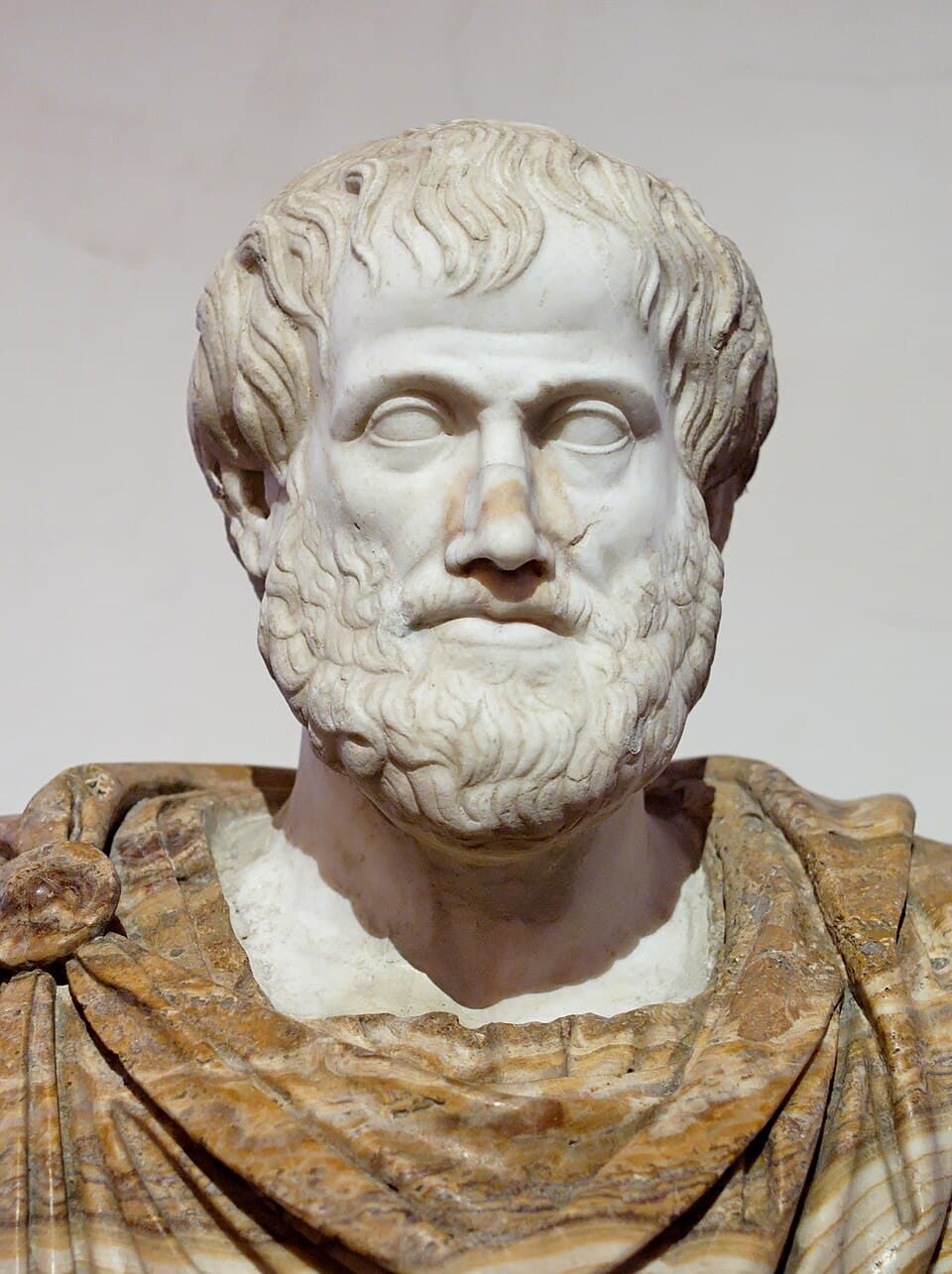
Aristotle
Nicomachean Ethics...blow but a result has followed which he did not anticipate; as, for instance, he did it not to wound but merely to prick him; or it is not the man whom, or the way in which, he meant. Now when the hurt has come about contrary to all reasonable expectation, it is a Misadventure; when though not contrary to expectation yet without any viciousness, it is a Mistake; for a man makes a mistake when the origination of the cause rests with himself, he has a misadventure when it is external to himself.
When again he acts with knowledge, but not from previous deliberation, it is an unjust action; for instance, whatever happens to men from anger or other passions which are necessary or natural: for when doing these hurts or making these mistakes they act unjustly of course and their actions are unjust, still they are not yet confirmed unjust or wicked persons by reason of these, because the hurt did not arise from depravity in the doer of it: but when it does arise from deliberate choice, then the doer is a confirmed unjust and depraved man.
And on this principle acts done from anger are fairly judged not to be from malice prepense, because it is not the man who acts in wrath who is the originator really but he who caused his wrath. And again, the question at issue in such cases is not respecting the fact but respecting the justice of the case, the occasion of anger being a notion of injury.[25] I mean, that the parties do not dispute about the fact, as in questions of contract (where one of the two must be a rogue, unless real fo...
6
1 of 2 in Book V, Chapter XII131 of 276 in work
Now entering Book V, Chapter XII
⚖Act vs. Suffer

Aristotle
Nicomachean EthicsThe author distinguishes between the act of doing something unjust and the formal state of acting unjustly, which requires a specific relational context.
...tary or involuntary. Now as for being justly dealt with, the position that every case of this is voluntary is a strange one, for some are certainly justly dealt with without their will.[27] The fact is a man may also fairly raise this question, whether in every case he who has suffered what is unjust is therefore unjustly dealt with, or rather that the case is the same with suffering as it is with acting; namely that in both it is possible to participate in what is just, but only accidentally.
Clearly the case of what is unjust is similar: for doing things in themselves unjust is not identical with acting unjustly, nor is suffering them the same as being unjustly dealt with. So too of acting justly and being justly dealt with, since it is impossible to be unjustly dealt with unless some one else acts unjustly or to be justly dealt with unless some one else acts justly.
Now if acting unjustly is simply “hurting another voluntarily” (by which I mean, knowing whom you are hurting, and wherewith, and how you are hurting him), and the man who fails of self-control voluntarily hurts himself, then this will be a case of being voluntarily dealt unjustly with, and it will be possible for a man to deal unjustly with himself. (This by the way is one of the questions raised, whether it is possible for a man to deal unjustly with himself.) Or again, a man may, by reason...
5
2 of 2 in Book V, Chapter XII132 of 276 in work
⚖Voluntary Harm's Paradox

Aristotle
Nicomachean EthicsThe text clarifies that being 'unjustly dealt with' requires the action to be against the victim's wish, concluding that one cannot be voluntarily treated unjustly.
...m), and the man who fails of self-control voluntarily hurts himself, then this will be a case of being voluntarily dealt unjustly with, and it will be possible for a man to deal unjustly with himself. (This by the way is one of the questions raised, whether it is possible for a man to deal unjustly with himself.) Or again, a man may, by reason of failing of self-control, receive hurt from another man acting voluntarily, and so here will be another case of being unjustly dealt with voluntarily.
The solution, I take it, is this: the definition of being unjustly dealt with is not correct, but we must add, to the hurting with the knowledge of the person hurt and the instrument and the manner of hurting him, the fact of its being against the wish of the man who is hurt. So then a man may be hurt and suffer what is in itself unjust voluntarily, but unjustly dealt with voluntarily no man can be: since no man wishes to be hurt, not even he who fails of self-control, who really acts contrary to his wish: for no man wishes for that which he does not think to be good, and the man who fails of self-control does not what he thinks he ought to…
And again, he that gives away his own property (as Homer says Glaucus gave to Diomed, “armour of gold for brass, armour worth a hundred oxen for that which was worth but nine”) is not unjustly dealt with, because the giving rests entirely with himself; but being unjustly dealt with does not, there must be some other person who is dealing unjustly towards him. With respect to being unjustly dealt with then, it is clear that it is not voluntary. Chapter XIII. There remain yet two points on wh...
Continue reading →
5
1 of 2 in Book V, Chapter XIV133 of 276 in work
Now entering Book V, Chapter XIV
⚖The Disposition's Difficulty

Aristotle
Nicomachean EthicsThe author argues that while physical acts of injustice are easy to perform, acting with a truly just or unjust internal disposition is difficult.
...f he knowingly decided unjustly, then he himself as well as the receiver got the larger share, that is, either of favour from the receiver or private revenge against the other party: and so the man who decided unjustly from these motives gets a larger share, in exactly the same sense as a man would who received part of the actual matter of the unjust action: because in this case the man who wrongly adjudged, say a field, did not actually get land but money by his unjust decision. Chapter XIV.
Now men suppose that acting Unjustly rests entirely with themselves, and conclude that acting Justly is therefore also easy. But this is not really so; to have connection with a neighbour’s wife, or strike one’s neighbour, or give the money with one’s hand, is of course easy and rests with one’s self: but the doing these acts with certain inward dispositions neither is easy nor rests entirely with one’s self.
And in like way, the knowing what is Just and what Unjust men think no great instance of wisdom because it is not hard to comprehend those things of which the laws speak. They forget that these are not Just actions, except accidentally: to be Just they must be done and distributed in a certain manner: and this is a more difficult task than knowing what things are wholesome; for in this branch of knowledge it is an easy matter to know honey, wine, hellebore, cautery, or the use of the knife, but...
5
2 of 2 in Book V, Chapter XIV134 of 276 in work
⚖Just Distribution's Difficulty

Aristotle
Nicomachean EthicsAristotle compares justice to medicine, noting that knowing the rules is easy, but knowing how to apply them to specific people and times is the true challenge.
...at acting Justly is therefore also easy. But this is not really so; to have connection with a neighbour’s wife, or strike one’s neighbour, or give the money with one’s hand, is of course easy and rests with one’s self: but the doing these acts with certain inward dispositions neither is easy nor rests entirely with one’s self. And in like way, the knowing what is Just and what Unjust men think no great instance of wisdom because it is not hard to comprehend those things of which the laws speak.
They forget that these are not Just actions, except accidentally: to be Just they must be done and distributed in a certain manner: and this is a more difficult task than knowing what things are wholesome; for in this branch of knowledge it is an easy matter to know honey, wine, hellebore, cautery, or the use of the knife, but the knowing how one should administer these with a view to health, and to whom and at what time, amounts in fact to being a physician.
From this very same mistake they suppose also, that acting Unjustly is equally in the power of the Just man, for the Just man no less, nay even more, than the Unjust, may be able to do the particular acts; he may be able to have intercourse with a woman or strike a man; or the brave man to throw away his shield and turn his back and run this way or that. True: but then it is not the mere doing these things which constitutes acts of cowardice or injustice (except accidentally), but the doing th...
3