The passage analyzes why bodily pleasures are often pursued in excess as remedies for pain and why they are considered inferior to higher, more natural states of being.
12 of 14 in Book VII, Chapter IX184 of 276 in work
Pleasure as Pain's Remedy
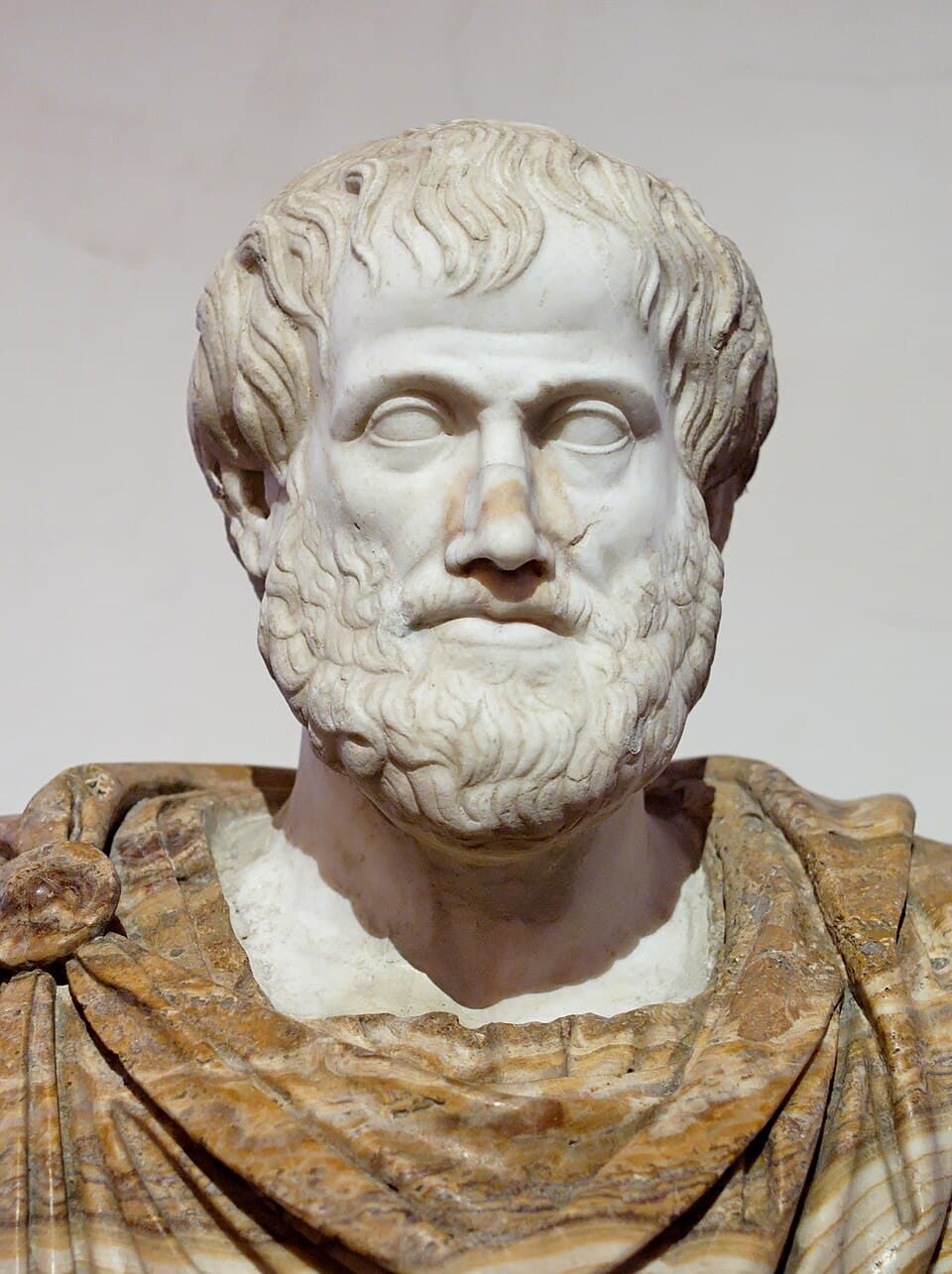
Aristotle
Nicomachean Ethics...only in the case of him who pursues excessive Pleasure is Pain contrary to excessive Pleasure. It is not enough however merely to state the truth, we should also show how the false view arises; because this strengthens conviction. I mean, when we have given a probable reason why that impresses people as true which really is not true, it gives them a stronger conviction of the truth. And so we must now explain why the bodily Pleasures appear to people to be more choice-worthy than any others.
The first obvious reason is, that bodily Pleasure drives out Pain; and because Pain is felt in excess men pursue Pleasure in excess, i.e. generally bodily Pleasure, under the notion of its being a remedy for that Pain. These remedies, moreover, come to be violent ones; which is the very reason they are pursued, since the impression they produce on the mind is owing to their being looked at side by side with their contrary. And, as has been said before, there are the two following reasons why bodily Pleasure is thought to be not-good. 1. Some Pleasures of this class are actings of a low nature, whether congenital as in brutes, or acquired by…
(But some Pleasures result when natural states are being perfected: these therefore are good as a matter of result.) Again, the very fact of their being violent causes them to be pursued by such as can relish no others: such men in fact create violent thirsts for themselves (if harmless ones then we find no fault, if harmful then it is bad and low) because they have no other things to take pleasure in, and the neutral state is distasteful to some people constitutionally; for toil of some kind...
Continue reading →
4
13 of 14 in Book VII, Chapter IX185 of 276 in work
⚖Violent Pleasures' Trap

Aristotle
Nicomachean EthicsThe author argues that some people pursue violent pleasures because they lack other sources of enjoyment and find a neutral state of existence constitutionally distasteful.
...o following reasons why bodily Pleasure is thought to be not-good. 1. Some Pleasures of this class are actings of a low nature, whether congenital as in brutes, or acquired by custom as in low bad men. 2. Others are in the nature of cures, cures that is of some deficiency; now of course it is better to have [the healthy state] originally than that it should accrue afterwards. (But some Pleasures result when natural states are being perfected: these therefore are good as a matter of result.)
Again, the very fact of their being violent causes them to be pursued by such as can relish no others: such men in fact create violent thirsts for themselves (if harmless ones then we find no fault, if harmful then it is bad and low) because they have no other things to take pleasure in, and the neutral state is distasteful to some people constitutionally; for toil of some kind is inseparable from life, as physiologists testify, telling us that the acts of seeing or hearing are painful, only that we are used to the pain and do not find it out.
Similarly in youth the constant growth produces a state much like that of vinous intoxication, and youth is pleasant. Again, men of the melancholic temperament constantly need some remedial process (because the body, from its temperament, is constantly being worried), and they are in a chronic state of violent desire. But Pleasure drives out Pain; not only such Pleasure as is directly contrary to Pain but even any Pleasure provided it be strong: and this is how men come to be utterly destitute...
5
14 of 14 in Book VII, Chapter IX186 of 276 in work
⚖Divine Simplicity's Pleasure

Aristotle
Nicomachean EthicsThe author reflects on the complexity of human nature versus the simple, motionless pleasure of the Divine, suggesting that our inability to find constant pleasure stems from our corruptible, dual nature.
...-Mastery, i.e. low and bad. But those Pleasures which are unconnected with Pains do not admit of excess: i.e. such as belong to objects which are naturally pleasant and not merely as a matter of result: by the latter class I mean such as are remedial, and the reason why these are thought to be pleasant is that the cure results from the action in some way of that part of the constitution which remains sound. By “pleasant naturally” I mean such as put into action a nature which is pleasant.
The reason why no one and the same thing is invariably pleasant is that our nature is, not simple, but complex, involving something different from itself (so far as we are corruptible beings). Suppose then that one part of this nature be doing something, this something is, to the other part, unnatural: but, if there be an equilibrium of the two natures, then whatever is being done is indifferent. It is obvious that if there be any whose nature is simple and not complex, to such a being the same course of acting will always be the most pleasurable. For this reason it is that the Divinity feels Pleasure which is always one, i.e. simple: not…
The reason why the Poet’s dictum “change is of all things most pleasant” is true, is “a baseness in our blood;” for as the bad man is easily changeable, bad must be also the nature that craves change, i.e. it is neither simple nor good. We have now said our say about Self-Control and its opposite; and about Pleasure and Pain. What each is, and how the one set is good the other bad. We have yet to speak of Friendship. BOOK VIII Chapter I. Next would seem properly to follow a dissertat...
Continue reading →
2
1 of 2 in Book VIII, Chapter I187 of 276 in work
Now entering Book VIII, Chapter I
⚖Friendship's Necessity

Aristotle
Nicomachean EthicsThe author asserts that friendship is a necessary component of a good life, as even those with great wealth and power require friends to exercise their prosperity through kindness.
...in the absence than in the presence of motion. The reason why the Poet’s dictum “change is of all things most pleasant” is true, is “a baseness in our blood;” for as the bad man is easily changeable, bad must be also the nature that craves change, i.e. it is neither simple nor good. We have now said our say about Self-Control and its opposite; and about Pleasure and Pain. What each is, and how the one set is good the other bad. We have yet to speak of Friendship. BOOK VIII Chapter I.
Next would seem properly to follow a dissertation on Friendship: because, in the first place, it is either itself a virtue or connected with virtue; and next it is a thing most necessary for life, since no one would choose to live without friends though he should have all the other good things in the world: and, in fact, men who are rich or possessed of authority and influence are thought to have special need of friends: for where is the use of such prosperity if there be taken away the doing of kindnesses of which friends are the most usual and most commendable objects?
Or how can it be kept or preserved without friends? because the greater it is so much the more slippery and hazardous: in poverty moreover and all other adversities men think friends to be their only refuge. Furthermore, Friendship helps the young to keep from error: the old, in respect of attention and such deficiencies in action as their weakness makes them liable to; and those who are in their prime, in respect of noble deeds (“They two together going,” Homer says, you may remember), beca...
2
2 of 2 in Book VIII, Chapter I188 of 276 in work
⚖Friendship Over Justice

Aristotle
Nicomachean EthicsThe author argues that friendship is the primary bond of communities, often superseding the necessity of justice in harmonious relationships.
...le to devise plans and carry them out. Again, it seems to be implanted in us by Nature: as, for instance, in the parent towards the offspring and the offspring towards the parent (not merely in the human species, but likewise in birds and most animals), and in those of the same tribe towards one another, and specially in men of the same nation; for which reason we commend those men who love their fellows: and one may see in the course of travel how close of kin and how friendly man is to man.
Furthermore, Friendship seems to be the bond of Social Communities, and legislators seem to be more anxious to secure it than Justice even. I mean, Unanimity is somewhat like to Friendship, and this they certainly aim at and specially drive out faction as being inimical. Again, where people are in Friendship Justice is not required; but, on the other hand, though they are just they need Friendship in addition, and that principle which is most truly just is thought to partake of the nature of Friendship.
Lastly, not only is it a thing necessary but honourable likewise: since we praise those who are fond of friends, and the having numerous friends is thought a matter of credit to a man; some go so far as to hold, that “good man” and “friend” are terms synonymous. Chapter II. Yet the disputed points respecting it are not few: some men lay down that it is a kind of resemblance, and that men who are like one another are friends: whence come the common sayings, “Like will to like,” “Birds of a fe...
2