1 of 1 in Book IV, Chapter VIII104 of 276 in work
Now entering Book IV, Chapter VIII
The Art of Opposition
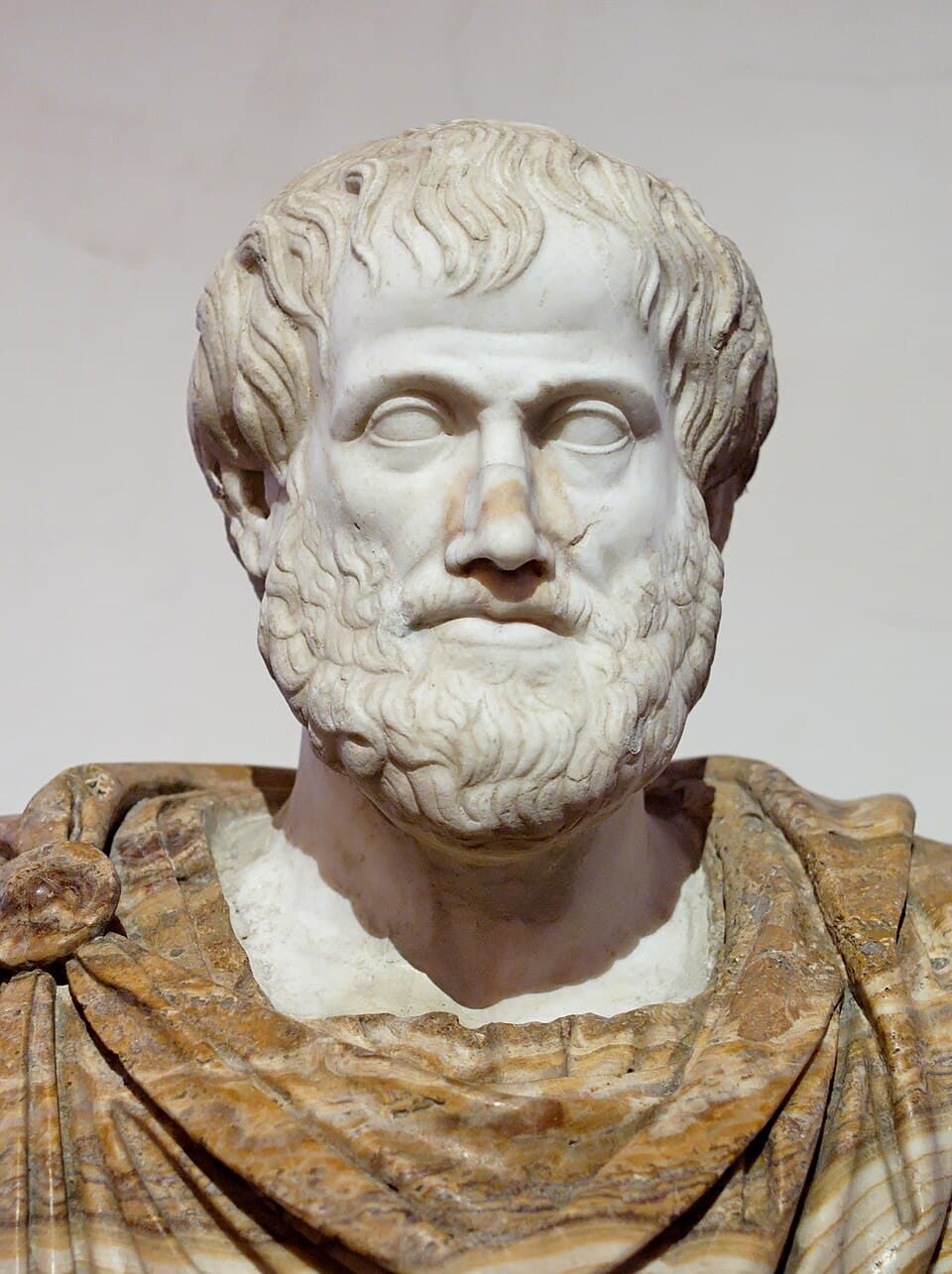
Aristotle
Nicomachean Ethics

The author defines the social extremes of over-complaisance and contentiousness, arguing that the virtuous path is a praiseworthy mean between the two.

...state is praiseworthy, in virtue of which we are angry with those with whom, and at those things with which, we ought to be angry, and in right manner, and so on; while the excesses and defects are blameable, slightly so if only slight, more so if greater, and when considerable very blameable. It is clear, therefore, that the mean state is what we are to hold to. This then is to be taken as our account of the various moral states which have Anger for their object-matter. Chapter VIII. Next,
As regards social intercourse and interchange of words and acts, some men are thought to be Over-Complaisant who, with a view solely to giving pleasure, agree to everything and never oppose, but think their line is to give no pain to those they are thrown amongst: they, on the other hand, are called Cross and Contentious who take exactly the contrary line to these, and oppose in everything, and have no care at all whether they give pain or not. Now it is quite clear of course, that the states I have named are blameable, and that the mean between them is praiseworthy, in virtue of which a man will let pass what he ought as he ought, and also…
However, this state has no name appropriated, but it is most like Friendship; since the man who exhibits it is just the kind of man whom we would call the amiable friend, with the addition of strong earnest affection; but then this is the very point in which it differs from Friendship, that it is quite independent of any feeling or strong affection for those among whom the man mixes: I mean, that he takes everything as he ought, not from any feeling of love or hatred, but simply because his nat...
Continue reading →
6
1 of 3 in Book IV, Chapter IX105 of 276 in work
Now entering Book IV, Chapter IX
The Truthful Mean
Aristotle
Nicomachean Ethics

Aristotle defines the 'mean' character of truthfulness by contrasting it with the extremes of exaggeration and self-depreciation.

...lace, by a particular discussion of each we shall be better acquainted with the general subject of moral character, and next we shall be the more convinced that the virtues are mean states by seeing that this is universally the case. In respect then of living in society, those who carry on this intercourse with a view to pleasure and pain have been already spoken of; we will now go on to speak of those who are True or False, alike in their words and deeds and in the claims which they advance.
Now the Exaggerator is thought to have a tendency to lay claim to things reflecting credit on him, both when they do not belong to him at all and also in greater degree than that in which they really do: whereas the Reserved man, on the contrary, denies those which really belong to him or else depreciates them, while the mean character being a Plain-matter-of-fact person is Truthful in life and word, admitting the existence of what does really belong to him and making it neither greater nor less than the truth.
It is possible of course to take any of these lines either with or without some further view: but in general men speak, and act, and live, each according to his particular character and disposition, unless indeed a man is acting from any special motive. Now since falsehood is in itself low and blameable, while truth is noble and praiseworthy, it follows that the Truthful man (who is also in the mean) is praiseworthy, and the two who depart from strict truth are both blameable, but especially...
6
2 of 3 in Book IV, Chapter IX106 of 276 in work
Truth as Moral State
Aristotle
Nicomachean Ethics

The author defines the truthful man as one who is honest as a matter of moral character rather than merely fulfilling legal or contractual obligations.

...belong to him or else depreciates them, while the mean character being a Plain-matter-of-fact person is Truthful in life and word, admitting the existence of what does really belong to him and making it neither greater nor less than the truth. It is possible of course to take any of these lines either with or without some further view: but in general men speak, and act, and live, each according to his particular character and disposition, unless indeed a man is acting from any special motive.
Now since falsehood is in itself low and blameable, while truth is noble and praiseworthy, it follows that the Truthful man (who is also in the mean) is praiseworthy, and the two who depart from strict truth are both blameable, but especially the Exaggerator. We will now speak of each, and first of the Truthful man: I call him Truthful, because we are not now meaning the man who is true in his agreements nor in such matters as amount to justice or injustice (this would come within the province of a different virtue), but, in such as do not involve any such serious difference as this, the man we are describing is true in life and word simply…
And he that is such must be judged to be a good man: for he that has a love for Truth as such, and is guided by it in matters indifferent, will be so likewise even more in such as are not indifferent; for surely he will have a dread of falsehood as base, since he shunned it even in itself: and he that is of such a character is praiseworthy, yet he leans rather to that which is below the truth, this having an appearance of being in better taste because exaggerations are so hateful. As for the...
Continue reading →
6
3 of 3 in Book IV, Chapter IX107 of 276 in work
Truthfulness as Moral State
Aristotle
Nicomachean Ethics

The author defines the truthful man as one who is honest as a matter of character and moral state, even in trivial matters where no legal justice is at stake.

...some further view: but in general men speak, and act, and live, each according to his particular character and disposition, unless indeed a man is acting from any special motive. Now since falsehood is in itself low and blameable, while truth is noble and praiseworthy, it follows that the Truthful man (who is also in the mean) is praiseworthy, and the two who depart from strict truth are both blameable, but especially the Exaggerator. We will now speak of each, and first of the Truthful man:
I call him Truthful, because we are not now meaning the man who is true in his agreements nor in such matters as amount to justice or injustice (this would come within the province of a different virtue), but, in such as do not involve any such serious difference as this, the man we are describing is true in life and word simply because he is in a certain moral state. And he that is such must be judged to be a good man: for he that has a love for Truth as such, and is guided by it in matters indifferent, will be so likewise even more in such as are not indifferent; for surely he will have a dread of falsehood as base, since he shunned it even…
As for the man who lays claim to things above what really belongs to him without any special motive, he is like a base man because he would not otherwise have taken pleasure in falsehood, but he shows as a fool rather than as a knave. But if a man does this with a special motive, suppose for honour or glory, as the Braggart does, then he is not so very blameworthy, but if, directly or indirectly, for pecuniary considerations, he is more unseemly. Now the Braggart is such not by his power...
Continue reading →
5
1 of 1 in Book IV, Chapter X108 of 276 in work
Now entering Book IV, Chapter X
The Gentleman's Jocularity
Aristotle
Nicomachean Ethics

The author defines 'Tact' as a mean state involving the ability to speak and listen in a manner appropriate for a gentleman, distinguishing it from vulgarity.

...erm expressing properly ease of movement, because such are thought to be, as one may say, motions of the moral character; and as bodies are judged of by their motions so too are moral characters. Now as the ridiculous lies on the surface, and the majority of men take more pleasure than they ought in Jocularity and Jesting, the Buffoons too get this name of Easy Pleasantry, as if refined and gentlemanlike; but that they differ from these, and considerably too, is plain from what has been said.
One quality which belongs to the mean state is Tact: it is characteristic of a man of Tact to say and listen to such things as are fit for a good man and a gentleman to say and listen to: for there are things which are becoming for such a one to say and listen to in the way of Jocularity, and there is a difference between the Jocularity of the Gentleman and that of the Vulgarian; and again, between that of the educated and uneducated man.
This you may see from a comparison of the Old and New Comedy: in the former obscene talk made the fun; in the latter it is rather innuendo: and this is no slight difference as regards decency. Well then, are we to characterise him who jests well by his saying what is becoming a gentleman, or by his avoiding to pain the object of his wit, or even by his giving him pleasure? or will not such a definition be vague, since different things are hateful and pleasant to different men? Be this as it...
6