1 of 2 in Book VII, Chapter VI168 of 276 in work
Now entering Book VII, Chapter VI
Anger's Misguided Reason
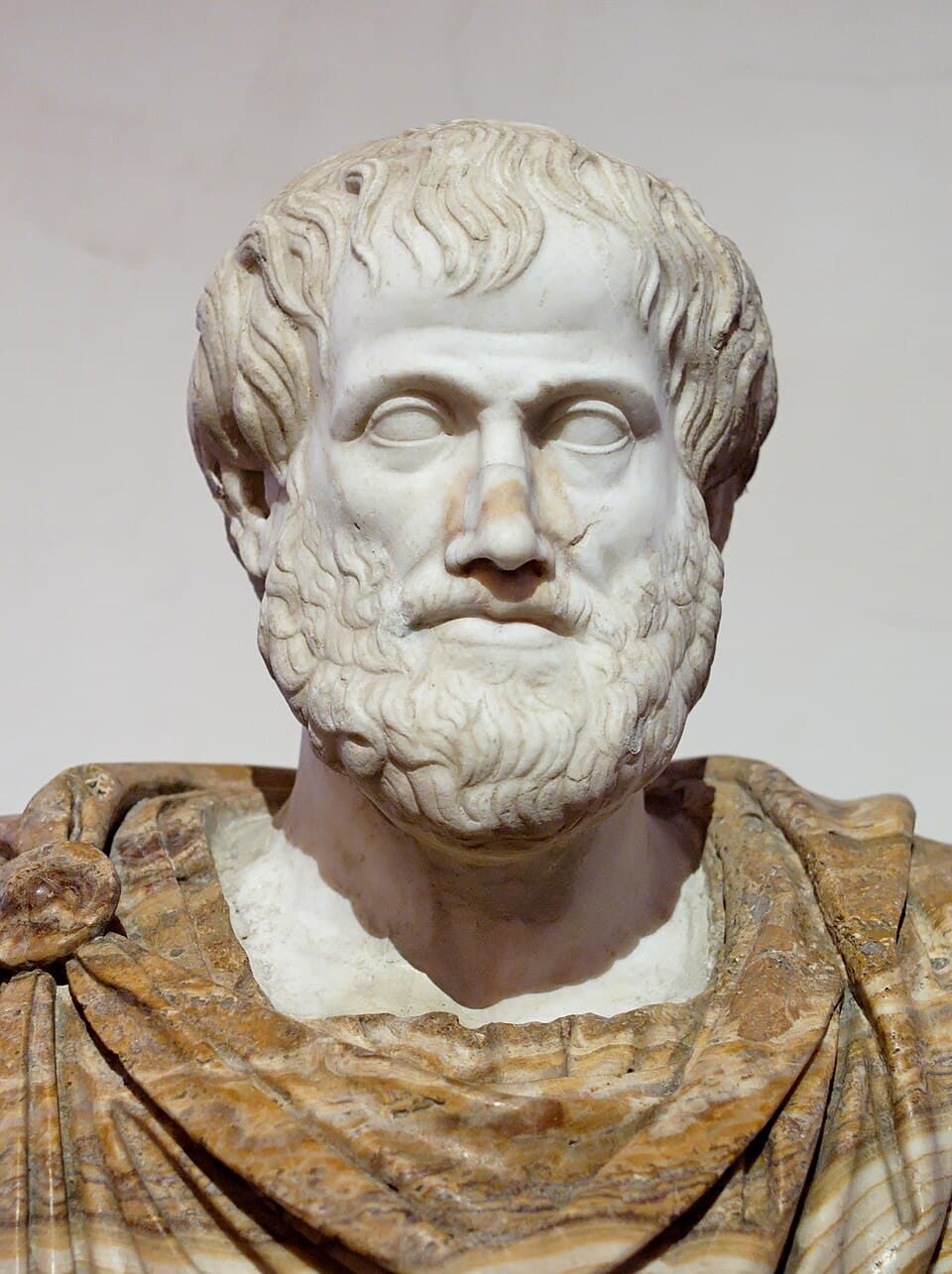
Aristotle
Nicomachean Ethics

The author compares anger to a hasty servant who mishears reason, arguing it is less disgraceful than lust because it still maintains a tenuous connection to the rational faculty.

...ture of utter absence of Self-Control, as it is found in Man. Chapter VI. It is plain then that the object-matter of Imperfect Self-Control and Self-Control is restricted to the same as that of utter absence of Self-Control and that of Perfected Self-Mastery, and that the rest is the object-matter of a different species so named metaphorically and not simply: we will now examine the position, “that Imperfect Self-Control in respect of Anger is less disgraceful than that in respect of Lusts.”
In the first place, it seems that Anger does in a way listen to Reason but mishears it; as quick servants who run out before they have heard the whole of what is said and then mistake the order; dogs, again, bark at the slightest stir, before they have seen whether it be friend or foe; just so Anger, by reason of its natural heat and quickness, listening to Reason, but without having heard the command of Reason, rushes to its revenge. That is to say, Reason or some impression on the mind shows there is insolence or contempt in the offender, and then Anger, reasoning as it were that one ought to fight against what is such, fires up…
Again, a man is more excusable for following such desires as are natural, just as he is for following such Lusts as are common to all and to that degree in which they are common. Now Anger and irritability are more natural than Lusts when in excess and for objects not necessary. (This was the ground of the defence the man made who beat his father, “My father,” he said, “used to beat his, and his father his again, and this little fellow here,” pointing to his child, “will beat me when he is gro...
Continue reading →
6
2 of 2 in Book VII, Chapter VI169 of 276 in work
Brutishness vs Vice
Aristotle
Nicomachean Ethics

Aristotle compares brutishness to vice, arguing that while a brute lacks a moral principle entirely, a bad man with a corrupted intellect is far more dangerous and harmful.

...ers caused by maimings and diseases. Now the first of these only are the object-matter of Perfected Self-Mastery and utter absence of Self-Control; and therefore we never attribute either of these states to Brutes (except metaphorically, and whenever any one kind of animal differs entirely from another in insolence, mischievousness, or voracity), because they have not moral choice or process of deliberation, but are quite different from that kind of creature just as are madmen from other men.
Brutishness is not so low in the scale as Vice, yet it is to be regarded with more fear: because it is not that the highest principle has been corrupted, as in the human creature, but the subject has it not at all. It is much the same, therefore, as if one should compare an inanimate with an animate being, which were the worse: for the badness of that which has no principle of origination is always less harmful; now Intellect is a principle of origination. A similar case would be the comparing injustice and an unjust man together: for in different ways each is the worst: a bad man would produce ten thousand times as much harm as a bad brute.
Chapter VII. Now with respect to the pleasures and pains which come to a man through Touch and Taste, and the desiring or avoiding such (which we determined before to constitute the object-matter of the states of utter absence of Self-Control and Perfected Self-Mastery), one may be so disposed as to yield to temptations to which most men would be superior, or to be superior to those to which most men would yield: in respect of pleasures, these characters will be respectively the man of Imperf...
6
1 of 2 in Book VII, Chapter VII170 of 276 in work
Now entering Book VII, Chapter VII
Forms of Self-Control
Aristotle
Nicomachean Ethics

Aristotle categorizes imperfect self-control into precipitancy and weakness, explaining how different psychological states lead individuals to succumb to passion despite their resolutions.

...which the common herd are able to resist; always supposing his failure not to be owing to natural constitution or disease, I mean, as the Scythian kings are constitutionally Soft, or the natural difference between the sexes. Again, the man who is a slave to amusement is commonly thought to be destitute of Self-Control, but he really is Soft; because amusement is an act of relaxing, being an act of resting, and the character in question is one of those who exceed due bounds in respect of this.
Moreover of Imperfect Self-Control there are two forms, Precipitancy and Weakness: those who have it in the latter form though they have made resolutions do not abide by them by reason of passion; the others are led by passion because they have never formed any resolutions at all: while there are some who, like those who by tickling themselves beforehand get rid of ticklishness, having felt and seen beforehand the approach of temptation, and roused up themselves and their resolution, yield not to passion; whether the temptation be somewhat pleasant or somewhat painful.
The Precipitate form of Imperfect Self-Control they are most liable to who are constitutionally of a sharp or melancholy temperament: because the one by reason of the swiftness, the other by reason of the violence, of their passions, do not wait for Reason, because they are disposed to follow whatever notion is impressed upon their minds. Again, the man utterly destitute of Self-Control, as was observed before, is not given to remorse: for it is part of his character that he abides by his mora...
5
2 of 2 in Book VII, Chapter VII171 of 276 in work
Virtue's Foundational Role
Aristotle
Nicomachean Ethics

The author claims that moral principles are not taught by reason but are grasped through excellence and habits of character.

...so they of Imperfect Self-Control are not unjust, but they do unjust acts. But to resume. Since the man of Imperfect Self-Control is of such a character as to follow bodily pleasures in excess and in defiance of Right Reason, without acting on any deliberate conviction, whereas the man utterly destitute of Self-Control does act upon a conviction which rests on his natural inclination to follow after these pleasures; the former may be easily persuaded to a different course, but the latter not:
For Virtue and Vice respectively preserve and corrupt the moral principle; now the motive is the principle or starting point in moral actions, just as axioms and postulates are in mathematics: and neither in morals nor mathematics is it Reason which is apt to teach the principle; but Excellence, either natural or acquired by custom, in holding right notions with respect to the principle.
He who does this in morals is the man of Perfected Self-Mastery, and the contrary character is the man utterly destitute of Self-Control. Again, there is a character liable to be taken off his feet in defiance of Right Reason because of passion; whom passion so far masters as to prevent his acting in accordance with Right Reason, but not so far as to make him be convinced that it is his proper line to follow after such pleasures without limit: this character is the man of Imperfect Self- Contr...
6
1 of 1 in Book VII, Chapter VIII172 of 276 in work
Now entering Book VII, Chapter VIII
Self-Control's Fixed Core
Aristotle
Nicomachean Ethics

The text distinguishes between the self-controlled man and the 'positive' or opinionated man, noting that the latter is driven by the pleasure of victory rather than reason.

...wo characters respectively abide or not, but he is “simply” entitled to the designations who abides or not by the true opinion. There are also people, who have a trick of abiding by their, own opinions, who are commonly called Positive, as they who are hard to be persuaded, and whose convictions are not easily changed: now these people bear some resemblance to the character of Self-Control, just as the prodigal to the liberal or the rash man to the brave, but they are different in many points.
The man of Self-Control does not change by reason of passion and lust, yet when occasion so requires he will be easy of persuasion: but the Positive man changes not at the call of Reason, though many of this class take up certain desires and are led by their pleasures. Among the class of Positive are the Opinionated, the Ignorant, and the Bearish: the first, from the motives of pleasure and pain: I mean, they have the pleasurable feeling of a kind of victory in not having their convictions changed, and they are pained when their decrees, so to speak, are reversed: so that, in fact, they rather resemble the man of Imperfect Self-Control than the man of Self-Control.
Again, there are some who depart from their resolutions not by reason of any Imperfection of Self-Control; take, for instance, Neoptolemus in the Philoctetes of Sophocles. Here certainly pleasure was the motive of his departure from his resolution, but then it was one of a noble sort: for to be truthful was noble in his eyes and he had been persuaded by Ulysses to lie. So it is not every one who acts from the motive of pleasure who is utterly destitute of Self-Control or base or of Imperfect...
5