1 of 1 in Book X, Chapter VII268 of 276 in work
Now entering Book X, Chapter VII
Happiness with Moderation
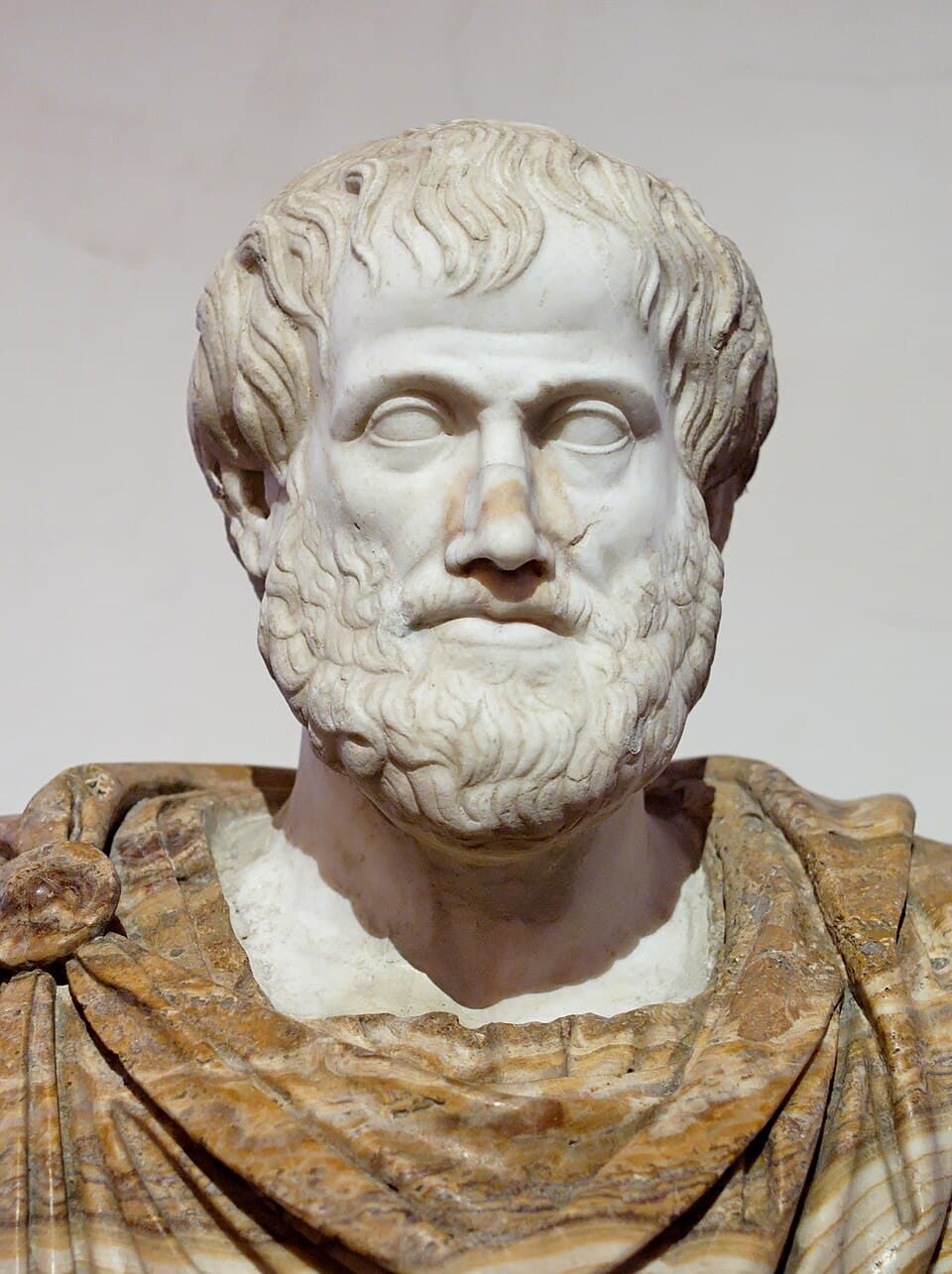
Aristotle
Nicomachean Ethics

The author posits that while happiness is primarily contemplative, it still requires a moderate amount of external goods and health to be sustained.

...such Working. To the Gods then all their life is blessed; and to men in so far as there is in it some copy of such Working, but of the other animals none is happy because it in no way shares in Contemplative Speculation. Happiness then is co-extensive with this Contemplative Speculation, and in proportion as people have the act of Contemplation so far have they also the being happy, not incidentally, but in the way of Contemplative Speculation because it is in itself precious. Chapter VII.
So Happiness must be a kind of Contemplative Speculation; but since it is Man we are speaking of he will need likewise External Prosperity, because his Nature is not by itself sufficient for Speculation, but there must be health of body, and nourishment, and tendance of all kinds. However, it must not be thought, because without external goods a man cannot enjoy high Happiness, that therefore he will require many and great goods in order to be happy: for neither Self-sufficiency, nor Action, stand in Excess, and it is quite possible to act nobly without being ruler of sea and land, since even with moderate means a man may act in accordance with Virtue.
And this may be clearly seen in that men in private stations are thought to act justly, not merely no less than men in power but even more: it will be quite enough that just so much should belong to a man as is necessary, for his life will be happy who works in accordance with Virtue. Solon perhaps drew a fair picture of the Happy, when he said that they are men moderately supplied with external goods, and who have achieved the most noble deeds, as he thought, and who have lived with perfect...
6
1 of 8 in Book X, Chapter VIII269 of 276 in work
Now entering Book X, Chapter VIII
Practice Over Speculation
Aristotle
Nicomachean Ethics

The author asserts that in ethics, theoretical knowledge is insufficient; one must actively practice and exert effort to become truly virtuous.

...pleasure in what is best and most akin to themselves (and this must be the Pure Intellect); and that they requite with kindness those who love and honour this most, as paying observance to what is dear to them, and as acting rightly and nobly. And it is quite obvious that the man of Science chiefly combines all these: he is therefore dearest to the Gods, and it is probable that he is at the same time most Happy. Thus then on this view also the man of Science will be most Happy. Chapter VIII.
Now then that we have said enough in our sketchy kind of way on these subjects; I mean, on the Virtues, and also on Friendship and Pleasure; are we to suppose that our original purpose is completed? Must we not rather acknowledge, what is commonly said, that in matters of moral action mere Speculation and Knowledge is not the real End but rather Practice: and if so, then neither in respect of Virtue is Knowledge enough; we must further strive to have and exert it, and take whatever other means there are of becoming good.
Now if talking and writing were of themselves sufficient to make men good, they would justly, as Theognis observes have reaped numerous and great rewards, and the thing to do would be to provide them: but in point of fact, while they plainly have the power to guide and stimulate the generous among the young and to base upon true virtuous principle any noble and truly high-minded disposition, they as plainly are powerless to guide the mass of men to Virtue and goodness; because it is not their...
2
2 of 8 in Book X, Chapter VIII270 of 276 in work
The Limits of Words
Aristotle
Nicomachean Ethics

The author argues that theoretical arguments are insufficient to make the masses virtuous, as most people are governed by fear of punishment and passion rather than a sense of shame or nobility.

...nough in our sketchy kind of way on these subjects; I mean, on the Virtues, and also on Friendship and Pleasure; are we to suppose that our original purpose is completed? Must we not rather acknowledge, what is commonly said, that in matters of moral action mere Speculation and Knowledge is not the real End but rather Practice: and if so, then neither in respect of Virtue is Knowledge enough; we must further strive to have and exert it, and take whatever other means there are of becoming good.
Now if talking and writing were of themselves sufficient to make men good, they would justly, as Theognis observes have reaped numerous and great rewards, and the thing to do would be to provide them: but in point of fact, while they plainly have the power to guide and stimulate the generous among the young and to base upon true virtuous principle any noble and truly high-minded disposition, they as plainly are powerless to guide the mass of men to Virtue and goodness; because it is not their nature to be amenable to a sense of shame but only to fear; nor to abstain from what is low and mean because it is disgraceful to do it but because of…
but as for what is noble and truly pleasurable they have not an idea of it, inasmuch as they have never tasted of it. Men such as these then what mere words can transform? No, indeed! it is either actually impossible, or a task of no mean difficulty, to alter by words what has been of old taken into men’s very dispositions: and, it may be, it is a ground for contentment if with all the means and appliances for goodness in our hands we can attain to Virtue. The formation of a virtuous characte...
Continue reading →
5
3 of 8 in Book X, Chapter VIII271 of 276 in work
Virtue's Three Sources
Aristotle
Nicomachean Ethics

The author discusses the origins of virtue, suggesting that while nature and teaching play roles, a student's mind must first be prepared to love the good, much like tilling soil.

..., and they avoid the contrary pains; but as for what is noble and truly pleasurable they have not an idea of it, inasmuch as they have never tasted of it. Men such as these then what mere words can transform? No, indeed! it is either actually impossible, or a task of no mean difficulty, to alter by words what has been of old taken into men’s very dispositions: and, it may be, it is a ground for contentment if with all the means and appliances for goodness in our hands we can attain to Virtue.
The formation of a virtuous character some ascribe to Nature, some to Custom, and some to Teaching. Now Nature’s part, be it what it may, obviously does not rest with us, but belongs to those who in the truest sense are fortunate, by reason of certain divine agency, Then, as for Words and Precept, they, it is to be feared, will not avail with all; but it may be necessary for the mind of the disciple to have been previously prepared for liking and disliking as he ought; just as the soil must, to nourish the seed sown.
For he that lives in obedience to passion cannot hear any advice that would dissuade him, nor, if he heard, understand: now him that is thus how can one reform? in fact, generally, passion is not thought to yield to Reason but to brute force. So then there must be, to begin with, a kind of affinity to Virtue in the disposition; which must cleave to what is honourable and loath what is disgraceful. But to get right guidance towards Virtue from the earliest youth is not easy unless one is brought...
6
4 of 8 in Book X, Chapter VIII272 of 276 in work
Law's Habit-Forming Power
Aristotle
Nicomachean Ethics

The author asserts that because self-mastery is difficult for the masses, the state must use laws and habituation to regulate behavior from youth through adulthood.

...ly prepared for liking and disliking as he ought; just as the soil must, to nourish the seed sown. For he that lives in obedience to passion cannot hear any advice that would dissuade him, nor, if he heard, understand: now him that is thus how can one reform? in fact, generally, passion is not thought to yield to Reason but to brute force. So then there must be, to begin with, a kind of affinity to Virtue in the disposition; which must cleave to what is honourable and loath what is disgraceful.
But to get right guidance towards Virtue from the earliest youth is not easy unless one is brought up under laws of such kind; because living with self-mastery and endurance is not pleasant to the mass of men, and specially not to the young. For this reason the food, and manner of living generally, ought to be the subject of legal regulation, because things when become habitual will not be disagreeable. Yet perhaps it is not sufficient that men while young should get right food and tendance, but, inasmuch as they will have to practise and become accustomed to certain things even after they have attained to man’s estate, we shall want laws on…
And therefore some men hold that while lawgivers should employ the sense of honour to exhort and guide men to Virtue, under the notion that they will then obey who have been well trained in habits; they should impose chastisement and penalties on those who disobey and are of less promising nature; and the incurable expel entirely: because the good man and he who lives under a sense of honour will be obedient to reason; and the baser sort, who grasp at pleasure, will be kept in check, like beas...
Continue reading →
3