The text explores the concept of friendship with oneself, suggesting that external friendship is modeled after the high degree of care a good man has for his own soul.
4 of 5 in Book IX, Chapter IV230 of 276 in work
Friend as Another Self
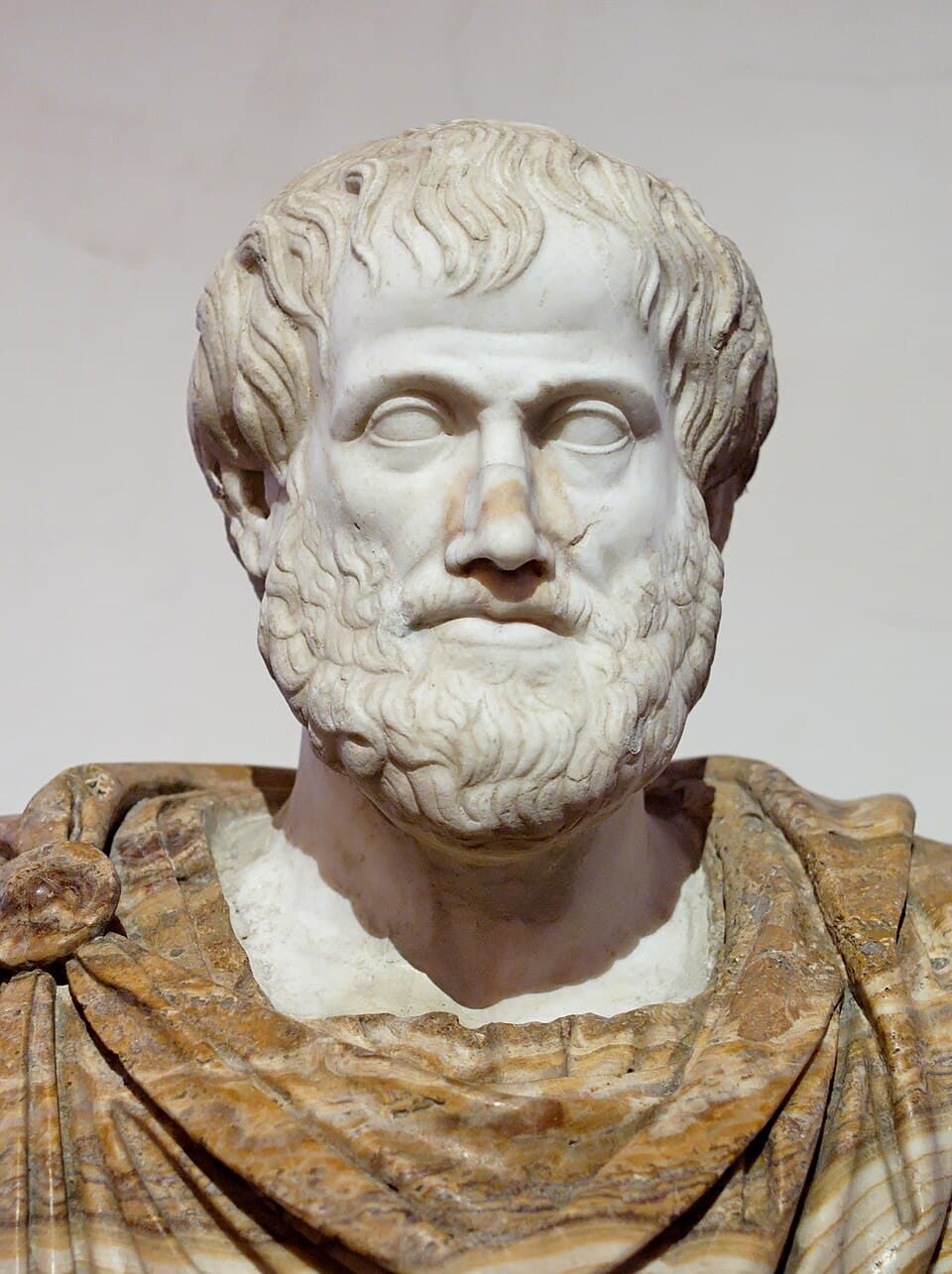
Aristotle
Nicomachean Ethics...he can do it with pleasure, in that his memories of past actions are full of delight and his anticipations of the future are good and such are pleasurable. Then, again, he has good store of matter for his Intellect to contemplate, and he most especially sympathises with his Self in its griefs and joys, because the objects which give him pain and pleasure are at all times the same, not one thing to-day and a different one to-morrow: because he is not given to repentance,[1] if one may so speak.
It is then because each of these feelings are entertained by the good man towards his own Self and a friend feels towards a friend as towards himself (a friend being in fact another Self), that Friendship is thought to be some one of these things and they are accounted friends in whom they are found. Whether or no there can really be Friendship between a man and his Self is a question we will not at present entertain: there may be thought to be Friendship, in so far as there are two or more of the aforesaid requisites, and because the highest degree of Friendship, in the usual acceptation of that term, resembles the feeling entertained by a…
But it may be urged that the aforesaid requisites are to all appearance found in the common run of men, though they are men of a low stamp. May it not be answered, that they share in them only in so far as they please themselves, and conceive themselves to be good? for certainly, they are not either really, or even apparently, found in any one of those who are very depraved and villainous; we may almost say not even in those who are bad men at all: for they are at variance with themselves and...
Continue reading →
2
5 of 5 in Book IX, Chapter IV231 of 276 in work
⚖The Soul's Civil War

Aristotle
Nicomachean EthicsThe author describes the internal psychological torment and remorse of the wicked, whose souls are divided between conflicting desires and regrets.
...r them: while they who from their depravity have actually done many dreadful actions hate and avoid life, and accordingly kill themselves: and the wicked seek others in whose company to spend their time, but fly from themselves because they have many unpleasant subjects of memory, and can only look forward to others like them when in solitude but drown their remorse in the company of others: and as they have nothing to raise the sentiment of Friendship so they never feel it towards themselves.
Neither, in fact, can they who are of this character sympathise with their Selves in their joys and sorrows, because their soul is, as it were, rent by faction, and the one principle, by reason of the depravity in them, is grieved at abstaining from certain things, while the other and better principle is pleased thereat; and the one drags them this way and the other that way, as though actually tearing them asunder. And though it is impossible actually to have at the same time the sensations of pain and pleasure; yet after a little time the man is sorry for having been pleased, and he could wish that those objects had not given him pleasure;…
It is plain then that the wicked man cannot be in the position of a friend even towards himself, because he has in himself nothing which can excite the sentiment of Friendship. If then to be thus is exceedingly wretched it is a man’s duty to flee from wickedness with all his might and to strive to be good, because thus may he be friends with himself and may come to be a friend to another. Chapter V. Kindly Feeling, though resembling Friendship, is not identical with it, because it may exist...
Continue reading →
2
1 of 1 in Book IX, Chapter VI232 of 276 in work
Now entering Book IX, Chapter VI
⚖Unity Among the Good

Aristotle
Nicomachean EthicsThe passage describes 'Unity of Sentiment' as a social friendship found among the good who share steady goals, contrasted with the bad who are divided by selfishness and jealousy.
...ians, or appointing Pittacus ruler (that is to say, supposing he himself was willing). But when each wishes himself to be in power (as the brothers in the Phœnissæ), they quarrel and form parties: for, plainly, Unity of Sentiment does not merely imply that each entertains the same idea be it what it may, but that they do so in respect of the same object, as when both the populace and the sensible men of a State desire that the best men should be in office, because then all attain their object.
Thus Unity of Sentiment is plainly a social Friendship, as it is also said to be: since it has for its object-matter things expedient and relating to life. And this Unity exists among the good: for they have it towards themselves and towards one another, being, if I may be allowed the expression, in the same position: I mean, the wishes of such men are steady and do not ebb and flow like the Euripus, and they wish what is just and expedient and aim at these things in common. The bad, on the contrary, can as little have Unity of Sentiment as they can be real friends, except to a very slight extent, desiring as they do unfair advantage in…
The result is that they quarrel while they are for keeping one another to work but are not willing to perform their just share. Chapter VII. Benefactors are commonly held to have more Friendship for the objects of their kindness than these for them: and the fact is made a subject of discussion and enquiry, as being contrary to reasonable expectation. The account of the matter which satisfies most persons is that the one are debtors and the others creditors: and therefore that, as in the case...
Continue reading →
2
1 of 3 in Book IX, Chapter VII233 of 276 in work
Now entering Book IX, Chapter VII
⚖Creator's Love

Aristotle
Nicomachean EthicsThe author compares benefactors to artists and parents, arguing they love those they help because the recipient represents their own existence realized through action.
...r at receiving than conferring benefits. But the real cause, it would seem, rests upon nature, and the case is not parallel to that of creditors; because in this there is no affection to the persons, but merely a wish for their preservation with a view to the return: whereas, in point of fact, they who have done kindnesses feel friendship and love for those to whom they have done them, even though they neither are, nor can by possibility hereafter be, in a position to serve their benefactors.
And this is the case also with artisans; every one, I mean, feels more affection for his own work than that work possibly could for him if it were animate. It is perhaps specially the case with poets: for these entertain very great affection for their poems, loving them as their own children. It is to this kind of thing I should be inclined to compare the case of benefactors: for the object of their kindness is their own work, and so they love this more than this loves its creator. And the account of this is that existence is to all a thing choice-worthy and an object of affection; now we exist by acts of working, that is, by living and…
And this is natural, for the work produced displays in act what existed before potentially. Then again, the benefactor has a sense of honour in right of his action, so that he may well take pleasure in him in whom this resides; but to him who has received the benefit there is nothing honourable in respect of his benefactor, only something advantageous which is both less pleasant and less the object of Friendship. Again, pleasure is derived from the actual working out of a present action, from...
Continue reading →
4
2 of 3 in Book IX, Chapter VII234 of 276 in work
⚖The Enduring Benefactor

Aristotle
Nicomachean EthicsThe author distinguishes between types of pleasure, claiming that the pleasure of the benefactor is more enduring because it is tied to the lasting nature of an honorable work.
..., by his act of working: therefore he loves his work because he loves existence. And this is natural, for the work produced displays in act what existed before potentially. Then again, the benefactor has a sense of honour in right of his action, so that he may well take pleasure in him in whom this resides; but to him who has received the benefit there is nothing honourable in respect of his benefactor, only something advantageous which is both less pleasant and less the object of Friendship.
Again, pleasure is derived from the actual working out of a present action, from the anticipation of a future one, and from the recollection of a past one: but the highest pleasure and special object of affection is that which attends on the actual working. Now the benefactor’s work abides (for the honourable is enduring), but the advantage of him who has received the kindness passes away. Again, there is pleasure in recollecting honourable actions, but in recollecting advantageous ones there is none at all or much less (by the way though, the contrary is true of the expectation of advantage).
Further, the entertaining the feeling of Friendship is like acting on another; but being the object of the feeling is like being acted upon. So then, entertaining the sentiment of Friendship, and all feelings connected with it, attend on those who, in the given case of a benefaction, are the superior party. Once more: all people value most what has cost them much labour in the production; for instance, people who have themselves made their money are fonder of it than those who have inherited...
4