The author argues that disgraceful pleasures are not truly pleasant, as their appeal to the 'ill-disposed' is a distortion similar to how sickness affects taste.
2 of 4 in Book X, Chapter II251 of 276 in work
Pleasure's True Source
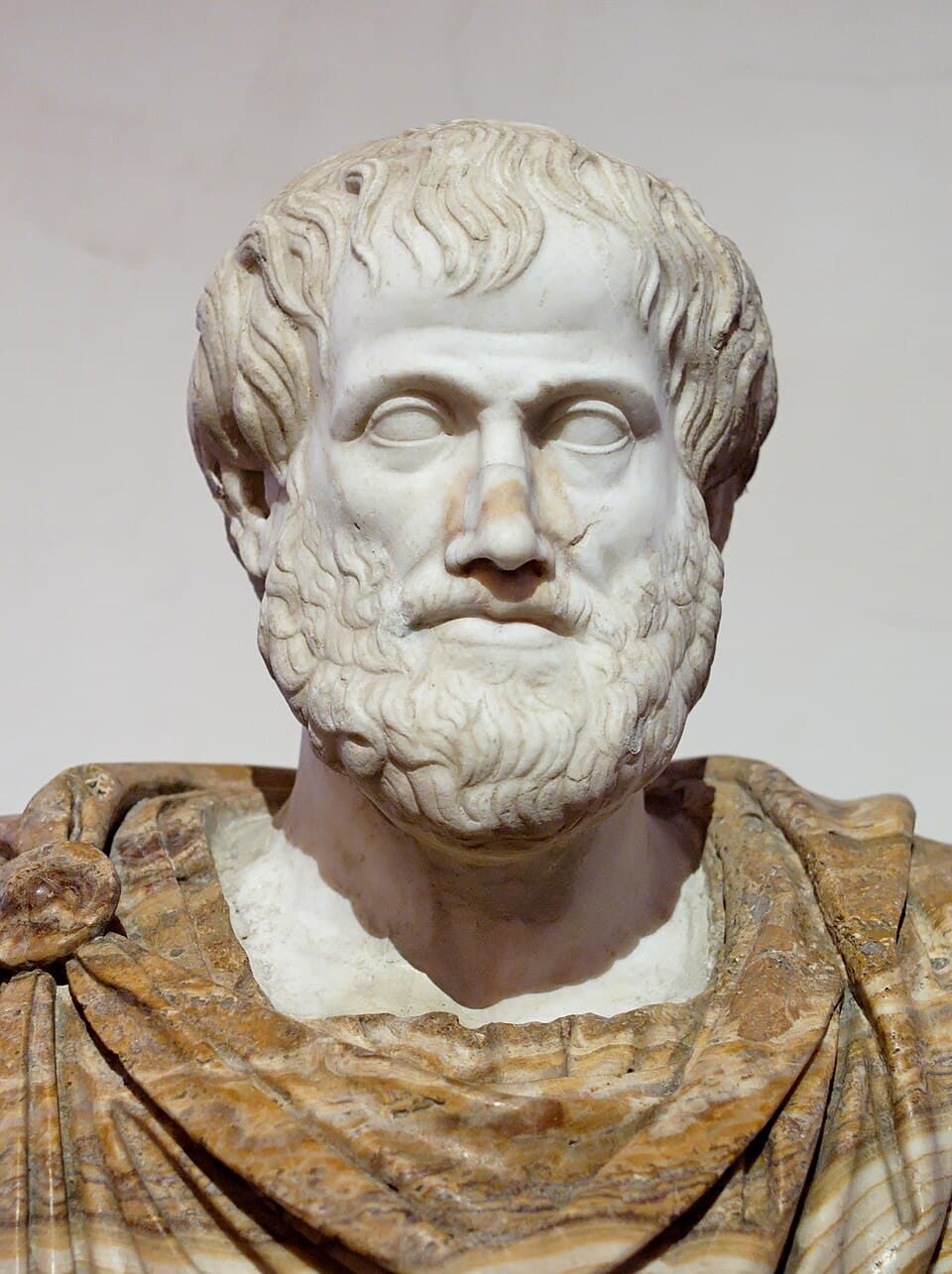
Aristotle
Nicomachean Ethics...eople have felt a lack and so have had Pain first, they, of course, are pleased with the supply of their lack. But this is not the case with all Pleasures: those attendant on mathematical studies, for instance, are unconnected with any Pain; and of such as attend on the senses those which arise through the sense of Smell; and again, many sounds, and sights, and memories, and hopes: now of what can these be Generations? because there has been here no lack of anything to be afterwards supplied.
And to those who bring forward disgraceful Pleasures we may reply that these are not really pleasant things; for it does not follow because they are pleasant to the ill-disposed that we are to admit that they are pleasant except to them; just as we should not say that those things are really wholesome, or sweet, or bitter, which are so to the sick, or those objects really white which give that impression to people labouring under ophthalmia. Or we might say thus, that the Pleasures are choice-worthy but not as derived from these sources: just as wealth is, but not as the price of treason; or health, but not on the terms of eating anything however loathsome.
Or again, may we not say that Pleasures differ in kind? those derived from honourable objects, for instance are different from those arising from disgraceful ones; and it is not possible to experience the Pleasure of the just man without being just, or of the musical man without being musical; and so on of others. The distinction commonly drawn between the friend and the flatterer would seem to show clearly either that Pleasure is not a good, or that there are different kinds of Pleasure: for...
5
3 of 4 in Book X, Chapter II252 of 276 in work
⚖Pleasure's Insufficient Measure

Aristotle
Nicomachean EthicsThe author argues that certain excellences like knowledge and memory are intrinsically valuable and would be chosen even if they yielded no pleasure.
...ce the Pleasure of the just man without being just, or of the musical man without being musical; and so on of others. The distinction commonly drawn between the friend and the flatterer would seem to show clearly either that Pleasure is not a good, or that there are different kinds of Pleasure: for the former is thought to have good as the object of his intercourse, the latter Pleasure only; and this last is reproached, but the former men praise as having different objects in his intercourse.
Again, no one would choose to live with a child’s intellect all his life through, though receiving the highest possible Pleasure from such objects as children receive it from; or to take Pleasure in doing any of the most disgraceful things, though sure never to be pained. There are many things also about which we should be diligent even though they brought no Pleasure; as seeing, remembering, knowing, possessing the various Excellences; and the fact that Pleasures do follow on these naturally makes no difference, because we should certainly choose them even though no Pleasure resulted from them.
It seems then to be plain that Pleasure is not the Chief Good, nor is every kind of it choice-worthy: and that there are some choice-worthy in themselves, differing in kind, i.e. in the sources from which they are derived. Let this then suffice by way of an account of the current maxims respecting Pleasure and Pain. Chapter III. Now what it is, and how characterised, will be more plain if we take up the subject afresh. An act of Sight is thought to be complete at any moment; that is to sa...
5
4 of 4 in Book X, Chapter II253 of 276 in work
⚖Pleasure's False Crown

Aristotle
Nicomachean EthicsAristotle argues that certain excellences like sight and knowledge are inherently valuable regardless of the pleasure they produce, proving pleasure is not the sole Chief Good.
...ent kinds of Pleasure: for the former is thought to have good as the object of his intercourse, the latter Pleasure only; and this last is reproached, but the former men praise as having different objects in his intercourse. Again, no one would choose to live with a child’s intellect all his life through, though receiving the highest possible Pleasure from such objects as children receive it from; or to take Pleasure in doing any of the most disgraceful things, though sure never to be pained.
There are many things also about which we should be diligent even though they brought no Pleasure; as seeing, remembering, knowing, possessing the various Excellences; and the fact that Pleasures do follow on these naturally makes no difference, because we should certainly choose them even though no Pleasure resulted from them. It seems then to be plain that Pleasure is not the Chief Good, nor is every kind of it choice-worthy: and that there are some choice-worthy in themselves, differing in kind, i.e. in the sources from which they are derived.
Let this then suffice by way of an account of the current maxims respecting Pleasure and Pain. Chapter III. Now what it is, and how characterised, will be more plain if we take up the subject afresh. An act of Sight is thought to be complete at any moment; that is to say, it lacks nothing the accession of which subsequently will complete its whole nature. Well, Pleasure resembles this: because it is a whole, as one may say; and one could not at any moment of time take a Pleasure whose whole...
4
1 of 1 in Book X, Chapter III254 of 276 in work
Now entering Book X, Chapter III
⚖Pleasure's Timeless Wholeness

Aristotle
Nicomachean EthicsAristotle argues that pleasure is a complete whole at any given moment, distinguishing it from 'movement' which requires time to reach an end.
...ould certainly choose them even though no Pleasure resulted from them. It seems then to be plain that Pleasure is not the Chief Good, nor is every kind of it choice-worthy: and that there are some choice-worthy in themselves, differing in kind, i.e. in the sources from which they are derived. Let this then suffice by way of an account of the current maxims respecting Pleasure and Pain. Chapter III. Now what it is, and how characterised, will be more plain if we take up the subject afresh.
An act of Sight is thought to be complete at any moment; that is to say, it lacks nothing the accession of which subsequently will complete its whole nature. Well, Pleasure resembles this: because it is a whole, as one may say; and one could not at any moment of time take a Pleasure whose whole nature would be completed by its lasting for a longer time. And for this reason it is not a Movement: for all Movement takes place in time of certain duration and has a certain End to accomplish;
for instance, the Movement of house-building[9] is then only complete when the builder has produced what he intended, that is, either in the whole time [necessary to complete the whole design], or in a given portion.[10] But all the subordinate Movements are incomplete in the parts of the time, and are different in kind from the whole movement and from one another (I mean, for instance, that the fitting the stones together is a Movement different from that of fluting the column, and both again...
6
1 of 6 in Book X, Chapter IV255 of 276 in work
Now entering Book X, Chapter IV
⚖Best Working's Perfection

Aristotle
Nicomachean EthicsAristotle claims that the highest pleasure is found in the perfect operation of a faculty directed toward its most excellent object.
...or a Generation: neither then of Pleasure is there Movement or Generation, because it is, as one may say, “a whole.”[11] Chapter IV. Now since every Percipient Faculty works upon the Object answering to it, and perfectly the Faculty in a good state upon the most excellent of the Objects within its range (for Perfect Working is thought to be much what I have described; and we will not raise any question about saying “the Faculty” works, instead of, “that subject wherein the Faculty resides”),
In each case the best Working is that of the Faculty in its best state upon the best of the Objects answering to it. And this will be, further, most perfect and most pleasant: for Pleasure is attendant upon every Percipient Faculty, and in like manner on every intellectual operation and speculation; and that is most pleasant which is most perfect, and that most perfect which is the Working of the best Faculty upon the most excellent of the Objects within its range. And Pleasure perfects the Working.
But Pleasure does not perfect it in the same way as the Faculty and Object of Perception do, being good; just as health and the physician are not in similar senses causes of a healthy state. And that Pleasure does arise upon the exercise of every Percipient Faculty is evident, for we commonly say that sights and sounds are pleasant; it is plain also that this is especially the case when the Faculty is most excellent and works upon a similar Object: and when both the Object and Faculty of Perce...
5