Aristotle explores the relationship between justice and friendship, arguing that while they cannot exist toward inanimate objects or slaves as tools, they exist toward all humans capable of law and agreement.
2 of 2 in Book VIII, Chapter XI210 of 276 in work
Friendship's Common Ground
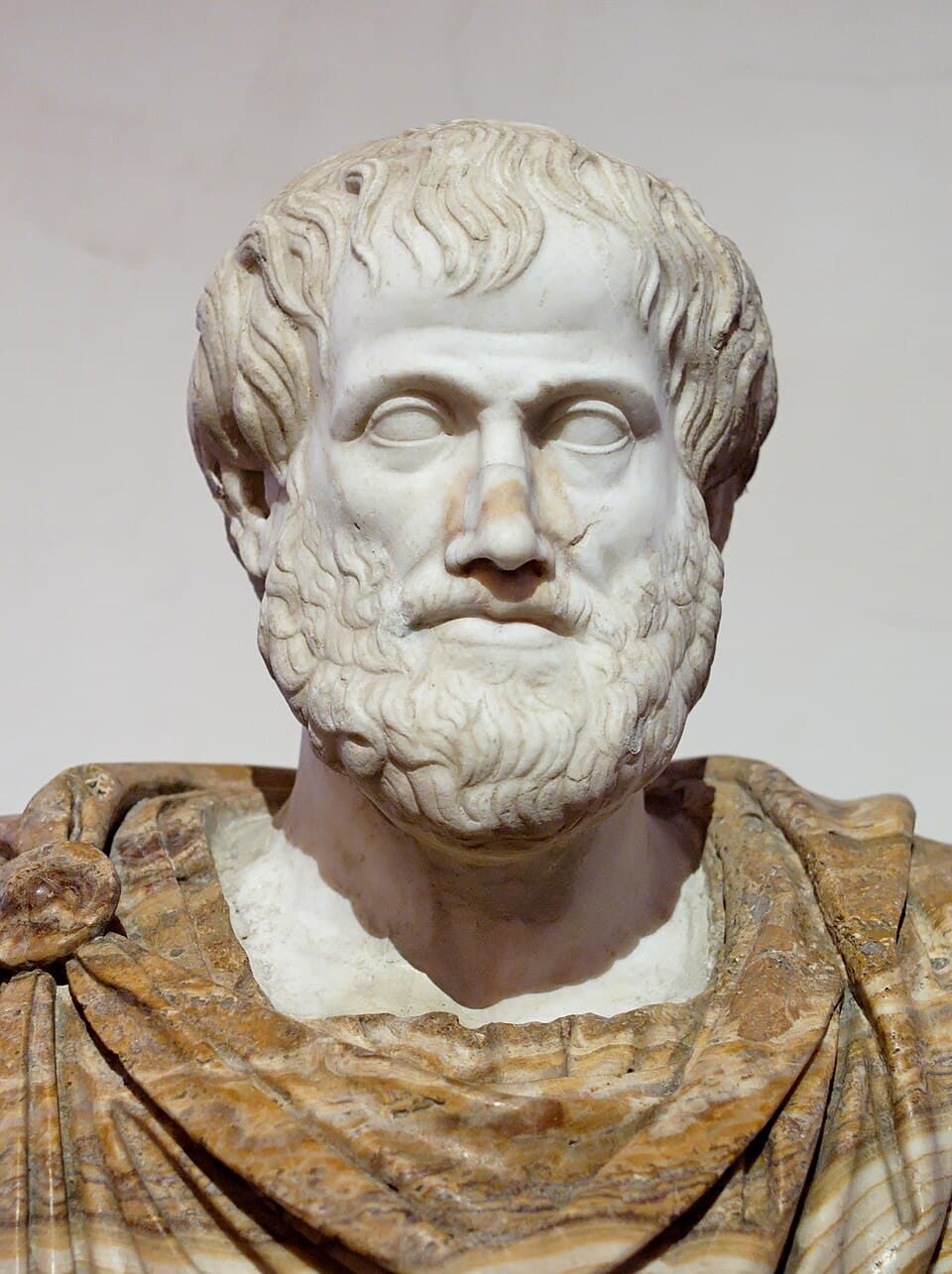
Aristotle
Nicomachean Ethics...ns have generally like feelings and like dispositions. Like to this also is the Friendship of a Timocracy, because the citizens are intended to be equal and equitable: rule, therefore, passes from hand to hand, and is distributed on equal terms: so too is the Friendship accordingly. In the deflections from the constitutional forms, just as the principle of Justice is but small so is the Friendship also: and least of all in the most perverted form: in Despotism there is little or no Friendship.
For generally wherever the ruler and the ruled have nothing in common there is no Friendship because there is no Justice; but the case is as between an artisan and his tool, or between soul and body, and master and slave; all these are benefited by those who use them, but towards things inanimate there is neither Friendship nor Justice: nor even towards a horse or an ox, or a slave quâ slave, because there is nothing in common: a slave as such is an animate tool, a tool an inanimate slave. Quâ slave, then, there is no Friendship towards him, only quâ man: for it is thought that there is some principle of Justice between every man, and…
So in Despotisms the Friendships and the principle of Justice are inconsiderable in extent, but in Democracies they are most considerable because they who are equal have much in common. Chapter XII. Now of course all Friendship is based upon Communion, as has been already stated: but one would be inclined to separate off from the rest the Friendship of Kindred, and that of Companions: whereas those of men of the same city, or tribe, or crew, and all such, are more peculiarly, it would seem, b...
Continue reading →
3
1 of 2 in Book VIII, Chapter XII211 of 276 in work
Now entering Book VIII, Chapter XII
⚖Parental Bond Asymmetry

Aristotle
Nicomachean EthicsThe author analyzes the hierarchy of familial friendship, arguing that parents love their children more than children love parents because the source has a greater connection to its product.
...al have much in common. Chapter XII. Now of course all Friendship is based upon Communion, as has been already stated: but one would be inclined to separate off from the rest the Friendship of Kindred, and that of Companions: whereas those of men of the same city, or tribe, or crew, and all such, are more peculiarly, it would seem, based upon Communion, inasmuch as they plainly exist in right of some agreement expressed or implied: among these one may rank also the Friendship of Hospitality,
The Friendship of Kindred is likewise of many kinds, and appears in all its varieties to depend on the Parental: parents, I mean, love their children as being a part of themselves, children love their parents as being themselves somewhat derived from them. But parents know their offspring more than these know that they are from the parents, and the source is more closely bound to that which is produced than that which is produced is to that which formed it: of course, whatever is derived from one’s self is proper to that from which it is so derived (as, for instance, a tooth or a hair, or any other thing whatever to him that has it): but the…
Then again the greater length of time comes in: the parents love their offspring from the first moment of their being, but their offspring them only after a lapse of time when they have attained intelligence or instinct. These considerations serve also to show why mothers have greater strength of affection than fathers. Now parents love their children as themselves (since what is derived from themselves becomes a kind of other Self by the fact of separation), but children their parents as bei...
Continue reading →
4
2 of 2 in Book VIII, Chapter XII212 of 276 in work
⚖Marriage as Partnership

Aristotle
Nicomachean EthicsThe author argues that marital friendship is a natural law based on the human tendency to pair for both procreation and the practical division of labor in life.
...there is in that of Companions, and more in the good, and generally in those who are alike; in proportion as they are more closely tied and from their very birth have a feeling of affection for one another to begin with, and as they are more like in disposition who spring from the same stock and have grown up together and been educated alike: and besides this they have the greatest opportunities in respect of time for proving one another, and can therefore depend most securely upon the trial.
Between Husband and Wife there is thought to be Friendship by a law of nature: man being by nature disposed to pair, more than to associate in Communities: in proportion as the family is prior in order of time and more absolutely necessary than the Community. And procreation is more common to him with other animals; all the other animals have Communion thus far, but human creatures cohabit not merely for the sake of procreation but also with a view to life in general:: because in this connection the works are immediately divided, and some belong to the man, others to the woman: thus they help one the other, putting what is peculiar to each into the common stock.
And for these reasons this Friendship is thought to combine the profitable and the pleasurable: it will be also based upon virtue if they are good people; because each has goodness and they may take delight in this quality in each other. Children too are thought to be a tie: accordingly the childless sooner separate, for the children are a good common to both and anything in common is a bond of union. The question how a man is to live with his wife, or (more generally) one friend with another...
5
1 of 4 in Book VIII, Chapter XIII213 of 276 in work
Now entering Book VIII, Chapter XIII
⚖Friendship Without Blame

Aristotle
Nicomachean EthicsThe text explains that conflict arises in utility-based friendships, whereas friendships based on goodness are characterized by mutual kindness and a lack of fault-finding.
...ople who are alike in goodness, become friends, and better with worse, and so also pleasant people; again, because of advantage people are friends, either balancing exactly their mutual profitableness or differing from one another herein. Well then, those who are equal should in right of this equality be equalised also by the degree of their Friendship and the other points, and those who are on a footing of inequality by rendering Friendship in proportion to the superiority of the other party.
Fault-finding and blame arises, either solely or most naturally, in Friendship of which utility is the motive: for they who are friends by reason of goodness, are eager to do kindnesses to one another because this is a natural result of goodness and Friendship; and when men are vying with each other for this End there can be no fault-finding nor contention: since no one is annoyed at one who entertains for him the sentiment of Friendship and does kindnesses to him, but if of a refined mind he requites him with kind actions. And suppose that one of the two exceeds the other, yet as he is attaining his object he will not find fault with his…
Neither can there well be quarrels between men who are friends for pleasure’s sake: because supposing them to delight in living together then both attain their desire; or if not a man would be put in a ridiculous light who should find fault with another for not pleasing him, since it is in his power to forbear intercourse with him. But the Friendship because of advantage is very liable to fault-finding; because, as the parties use one another with a view to advantage, the requirements are cont...
Continue reading →
4
2 of 4 in Book VIII, Chapter XIII214 of 276 in work
⚖Advantage Friendship's Faults

Aristotle
Nicomachean EthicsThe text analyzes why friendships based on utility are prone to conflict, noting that disputes arise when parties have different expectations regarding the moral or legal nature of their obligations.
.... And suppose that one of the two exceeds the other, yet as he is attaining his object he will not find fault with his friend, for good is the object of each party. Neither can there well be quarrels between men who are friends for pleasure’s sake: because supposing them to delight in living together then both attain their desire; or if not a man would be put in a ridiculous light who should find fault with another for not pleasing him, since it is in his power to forbear intercourse with him.
But the Friendship because of advantage is very liable to fault-finding; because, as the parties use one another with a view to advantage, the requirements are continually enlarging, and they think they have less than of right belongs to them, and find fault because though justly entitled they do not get as much as they want: while they who do the kindnesses, can never come up to the requirements of those to whom they are being done. It seems also, that as the Just is of two kinds, the unwritten and the legal, so Friendship because of advantage is of two kinds, what may be called the Moral, and the Legal: and the most fruitful source of…
The Legal is upon specified conditions, either purely tradesmanlike from hand to hand or somewhat more gentlemanly as regards time but still by agreement a quid pro quo. In this Legal kind the obligation is clear and admits of no dispute, the friendly element is the delay in requiring its discharge: and for this reason in some countries no actions can be maintained at Law for the recovery of such debts, it being held that they who have dealt on the footing of credit must be content to abide...
Continue reading →
3