Aristotle compares justice to medicine, noting that knowing the rules is easy, but knowing how to apply them to specific people and times is the true challenge.
2 of 2 in Book V, Chapter XIV134 of 276 in work
Just Distribution's Difficulty
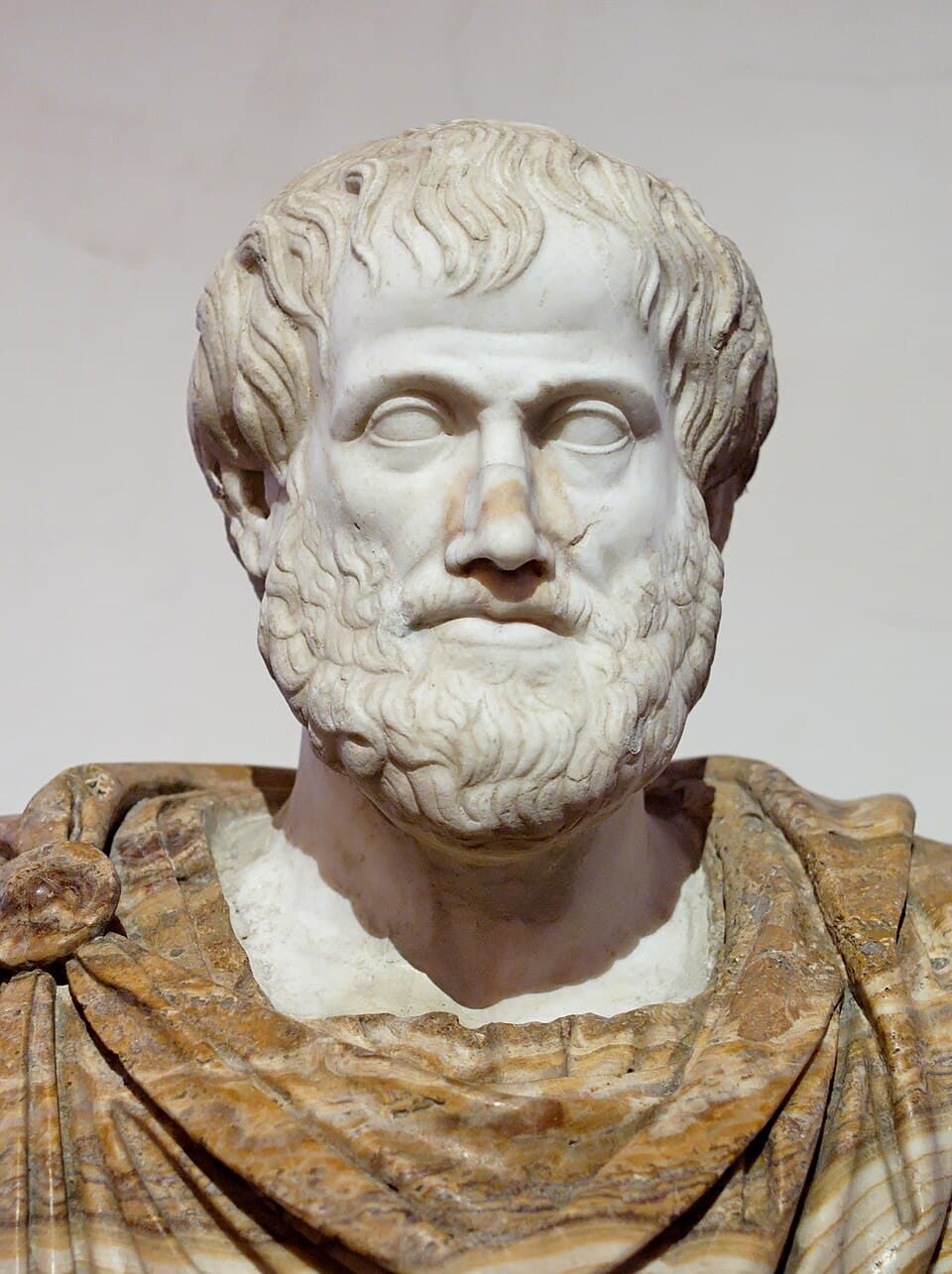
Aristotle
Nicomachean Ethics...at acting Justly is therefore also easy. But this is not really so; to have connection with a neighbour’s wife, or strike one’s neighbour, or give the money with one’s hand, is of course easy and rests with one’s self: but the doing these acts with certain inward dispositions neither is easy nor rests entirely with one’s self. And in like way, the knowing what is Just and what Unjust men think no great instance of wisdom because it is not hard to comprehend those things of which the laws speak.
They forget that these are not Just actions, except accidentally: to be Just they must be done and distributed in a certain manner: and this is a more difficult task than knowing what things are wholesome; for in this branch of knowledge it is an easy matter to know honey, wine, hellebore, cautery, or the use of the knife, but the knowing how one should administer these with a view to health, and to whom and at what time, amounts in fact to being a physician.
From this very same mistake they suppose also, that acting Unjustly is equally in the power of the Just man, for the Just man no less, nay even more, than the Unjust, may be able to do the particular acts; he may be able to have intercourse with a woman or strike a man; or the brave man to throw away his shield and turn his back and run this way or that. True: but then it is not the mere doing these things which constitutes acts of cowardice or injustice (except accidentally), but the doing th...
3
1 of 3 in Book V, Chapter XV135 of 276 in work
Now entering Book V, Chapter XV
⚖Law's Necessary Error

Aristotle
Nicomachean EthicsAristotle defines equity as a necessary correction to universal law, arguing that the general nature of legal statutes cannot account for every specific, complex human circumstance.
...esis different; or if both are good then they are identical. This is a tolerably fair statement of the difficulty which on these grounds arises in respect of the Equitable; but, in fact, all these may be reconciled and really involve no contradiction: for the Equitable is Just, being also better than one form of Just, but is not better than the Just as though it were different from it in kind: Just and Equitable then are identical, and, both being good, the Equitable is the better of the two.
What causes the difficulty is this; the Equitable is Just, but not the Just which is in accordance with written law, being in fact a correction of that kind of Just. And the account of this is, that every law is necessarily universal while there are some things which it is not possible to speak of rightly in any universal or general statement. Where then there is a necessity for general statement, while a general statement cannot apply rightly to all cases, the law takes the generality of cases, being fully aware of the error thus involved; and rightly too notwithstanding, because the fault is not in the law, or in the framer of the law, but…
When then the law has spoken in general terms, and there arises a case of exception to the general rule, it is proper, in so far as the lawgiver omits the case and by reason of his universality of statement is wrong, to set right the omission by ruling it as the lawgiver himself would rule were he there present, and would have provided by law had he foreseen the case would arise. And so the Equitable is Just but better than one form of Just; I do not mean the abstract Just but the error which...
Continue reading →
6
2 of 3 in Book V, Chapter XV136 of 276 in work
⚖Law's Universal Defect

Aristotle
Nicomachean EthicsThe author defines equity as a necessary correction to the law, arguing that universal rules must be adapted to fit the unique and 'undefined' circumstances of specific cases.
...ramer of the law, but is inherent in the nature of the thing, because the matter of all action is necessarily such. When then the law has spoken in general terms, and there arises a case of exception to the general rule, it is proper, in so far as the lawgiver omits the case and by reason of his universality of statement is wrong, to set right the omission by ruling it as the lawgiver himself would rule were he there present, and would have provided by law had he foreseen the case would arise.
And so the Equitable is Just but better than one form of Just; I do not mean the abstract Just but the error which arises out of the universality of statement: and this is the nature of the Equitable, “a correction of Law, where Law is defective by reason of its universality.” This is the reason why not all things are according to law, because there are things about which it is simply impossible to lay down a law, and so we want special enactments for particular cases. For to speak generally, the rule of the undefined must be itself undefined also, just as the rule to measure Lesbian building is made of lead: for this rule shifts according to…
It is clear then what the Equitable is; namely that it is Just but better than one form of Just: and hence it appears too who the Equitable man is: he is one who has a tendency to choose and carry out these principles, and who is not apt to press the letter of the law on the worse side but content to waive his strict claims though backed by the law: and this moral state is Equity, being a species of Justice, not a different moral state from Justice. Chapter XVI. The answer to the second of t...
Continue reading →
6
3 of 3 in Book V, Chapter XV137 of 276 in work
⚖The Equitable Man

Aristotle
Nicomachean EthicsThe author defines equity as a superior form of justice where a person voluntarily waives their strict legal rights for the sake of fairness.
...eason of its universality.” This is the reason why not all things are according to law, because there are things about which it is simply impossible to lay down a law, and so we want special enactments for particular cases. For to speak generally, the rule of the undefined must be itself undefined also, just as the rule to measure Lesbian building is made of lead: for this rule shifts according to the form of each stone and the special enactment according to the facts of the case in question.
It is clear then what the Equitable is; namely that it is Just but better than one form of Just: and hence it appears too who the Equitable man is: he is one who has a tendency to choose and carry out these principles, and who is not apt to press the letter of the law on the worse side but content to waive his strict claims though backed by the law: and this moral state is Equity, being a species of Justice, not a different moral state from Justice.
Chapter XVI. The answer to the second of the two questions indicated above, “whether it is possible for a man to deal unjustly by himself,” is obvious from what has been already stated. In the first place, one class of Justs is those which are enforced by law in accordance with Virtue in the most extensive sense of the term: for instance, the law does not bid a man kill himself; and whatever it does not bid it forbids: well, whenever a man does hurt contrary to the law (unless by way of requ...
4
1 of 2 in Book VI, Chapter I138 of 276 in work
Now entering Book VI, Chapter I
⚖The Mean's Moving Target

Aristotle
Nicomachean EthicsThe author acknowledges that while following 'Right Reason' and the 'mean' is a correct rule, it is too vague to be useful without a more definite understanding of how to apply it in practice.
...s thought that there is Just of a certain kind between these parts mutually, as between ruler and ruled. Let this then be accepted as an account of the distinctions which we recognise respecting Justice and the rest of the moral virtues.[30] BOOK VI Chapter I. Having stated in a former part of this treatise that men should choose the mean instead of either the excess or defect, and that the mean is according to the dictates of Right Reason; we will now proceed to explain this term. For
In all the habits which we have expressly mentioned, as likewise in all the others, there is, so to speak, a mark with his eye fixed on which the man who has Reason tightens or slacks his rope; and there is a certain limit of those mean states which we say are in accordance with Right Reason, and lie between excess on the one hand and defect on the other. Now to speak thus is true enough but conveys no very definite meaning: as, in fact, in all other pursuits requiring attention and diligence on which skill and science are brought to bear; it is quite true of course to say that men are neither to labour nor relax too much or too little, but…
as, for instance, if in answer to the question, what are proper applications to the body, he were to be told, “Oh! of course, whatever the science of medicine, and in such manner as the physician, directs.” And so in respect of the mental states it is requisite not merely that this should be true which has been already stated, but further that it should be expressly laid down what Right Reason is, and what is the definition of it. Chapter II. Now in our division of the Excellences of the Sou...
Continue reading →
3