2 of 3 in Book V, Chapter II114 of 276 in work
Justice as Other's Good
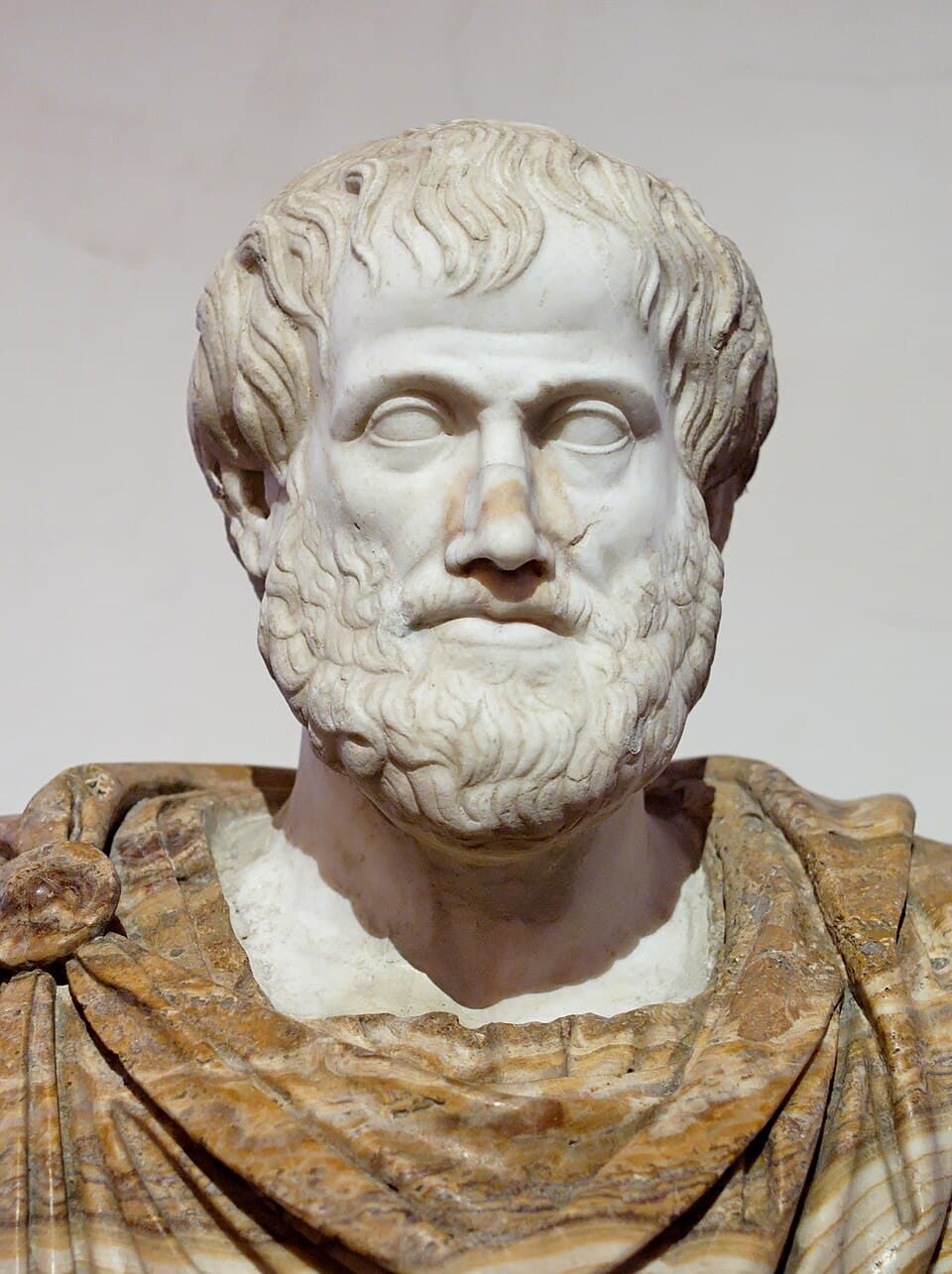
Aristotle
Nicomachean Ethics

Justice is characterized as a unique virtue because it is directed toward the welfare of others rather than just the self.

...ue. And perfect it is because he that has it is able to practise his virtue towards his neighbour and not merely on himself; I mean, there are many who can practise virtue in the regulation of their own personal conduct who are wholly unable to do it in transactions with their neighbour. And for this reason that saying of Bias is thought to be a good one, “Rule will show what a man is;” for he who bears Rule is necessarily in contact with others, i.e. in a community. And for this same reason
Justice alone of all the Virtues is thought to be a good to others, because it has immediate relation to some other person, inasmuch as the Just man does what is advantageous to another, either to his ruler or fellow-subject. Now he is the basest of men who practises vice not only in his own person, but towards his friends also; but he the best who practises virtue not merely in his own person but towards his neighbour, for this is a matter of some difficulty.
However, Justice in this sense is not a part of Virtue but is co-extensive with Virtue; nor is the Injustice which answers to it a part of Vice but co-extensive with Vice. Now wherein Justice in this sense differs from Virtue appears from what has been said: it is the same really, but the point of view is not the same: in so far as it has respect to one’s neighbour it is Justice, in so far as it is such and such a moral state it is simply Virtue. Chapter III. But the object of our enquiry is...
4
3 of 3 in Book V, Chapter II115 of 276 in work
Justice as Complete Virtue
Aristotle
Nicomachean Ethics

The author defines justice as virtue in relation to others, arguing that the best men practice virtue toward their neighbors rather than just themselves.

...e wholly unable to do it in transactions with their neighbour. And for this reason that saying of Bias is thought to be a good one, “Rule will show what a man is;” for he who bears Rule is necessarily in contact with others, i.e. in a community. And for this same reason Justice alone of all the Virtues is thought to be a good to others, because it has immediate relation to some other person, inasmuch as the Just man does what is advantageous to another, either to his ruler or fellow-subject.
Now he is the basest of men who practises vice not only in his own person, but towards his friends also; but he the best who practises virtue not merely in his own person but towards his neighbour, for this is a matter of some difficulty. However, Justice in this sense is not a part of Virtue but is co-extensive with Virtue; nor is the Injustice which answers to it a part of Vice but co-extensive with Vice. Now wherein Justice in this sense differs from Virtue appears from what has been said: it is the same really, but the point of view is not the same: in so far as it has respect to one’s neighbour it is Justice, in so far as it is such and…
Chapter III. But the object of our enquiry is Justice, in the sense in which it is a part of Virtue (for there is such a thing, as we commonly say), and likewise with respect to particular Injustice. And of the existence of this last the following consideration is a proof: there are many vices by practising which a man acts unjustly, of course, but does not grasp at more than his share of good; if, for instance, by reason of cowardice he throws away his shield, or by reason of ill-temper he u...
Continue reading →
4
1 of 2 in Book V, Chapter VI116 of 276 in work
Now entering Book V, Chapter VI
Justice as Equal Mean
Aristotle
Nicomachean Ethics

The author provides a mathematical and logical definition of justice as a mean and an equality involving at least four terms: two persons and two shares.

...dultery, poisoning, pimping, kidnapping of slaves, assassination, false witness; or accompanied with open violence; as insult, bonds, death, plundering, maiming, foul language, slanderous abuse. Chapter VI. Well, the unjust man we have said is unequal, and the abstract “Unjust” unequal: further, it is plain that there is some mean of the unequal, that is to say, the equal or exact half (because in whatever action there is the greater and the less there is also the equal, i.e. the exact half).
If then the Unjust is unequal the Just is equal, which all must allow without further proof: and as the equal is a mean the Just must be also a mean. Now the equal implies two terms at least: it follows then that the Just is both a mean and equal, and these to certain persons; and, in so far as it is a mean, between certain things (that is, the greater and the less), and, so far as it is equal, between two, and in so far as it is just it is so to certain persons. The Just then must imply four terms at least, for those to which it is just are two, and the terms representing the things are two. And there will be the same equality between the…
Again, the necessity of this equality of ratios is shown by the common phrase “according to rate,” for all agree that the Just in distributions ought to be according to some rate: but what that rate is to be, all do not agree; the democrats are for freedom, oligarchs for wealth, others for nobleness of birth, and the aristocratic party for virtue. The Just, then, is a certain proportionable thing. For proportion does not apply merely to number in the abstract,[10] but to number generally, sinc...
Continue reading →
6
2 of 2 in Book V, Chapter VI117 of 276 in work
Proportion's Four Terms
Aristotle
Nicomachean Ethics

Aristotle defines justice in distribution as a form of mathematical proportion, though he notes that different political systems disagree on what specific quality should determine the ratio of distribution.

...e terms representing the things are two. And there will be the same equality between the terms representing the persons, as between those representing the things: because as the latter are to one another so are the former: for if the persons are not equal they must not have equal shares; in fact this is the very source of all the quarrelling and wrangling in the world, when either they who are equal have and get awarded to them things not equal, or being not equal those things which are equal.
Again, the necessity of this equality of ratios is shown by the common phrase “according to rate,” for all agree that the Just in distributions ought to be according to some rate: but what that rate is to be, all do not agree; the democrats are for freedom, oligarchs for wealth, others for nobleness of birth, and the aristocratic party for virtue. The Just, then, is a certain proportionable thing. For proportion does not apply merely to number in the abstract, but to number generally, since it is equality of ratios, and implies four terms at least (that this is the case in what may be called discrete proportion is plain and obvious, but it is…
thus A:B:C may be expressed A:B::B:C. In the first, B is named twice; and so, if, as in the second, B is actually written twice, the proportionals will be four): and the Just likewise implies four terms at the least, and the ratio between the two pair of terms is the same, because the persons and the things are divided similarly. It will stand then thus, A:B::C:D, and then permutando A:C::B:D, and then (supposing C and D to represent the things) A+C:B+D::A:B. The distribution in fact consisting...
Continue reading →
5
1 of 3 in Book V, Chapter VII118 of 276 in work
Now entering Book V, Chapter VII
Arithmetical Justice
Aristotle
Nicomachean Ethics

This passage defines corrective justice as an arithmetical equality where a judge seeks to restore balance by penalizing the gainer to compensate the sufferer regardless of their social status.

...is the Corrective, which arises in voluntary as well as involuntary transactions. Now this just has a different form from the aforementioned; for that which is concerned in distribution of common property is always according to the aforementioned proportion: I mean that, if the division is made out of common property, the shares will bear the same proportion to one another as the original contributions did: and the Unjust which is opposite to this Just is that which violates the proportionate.
But the Just which arises in transactions between men is an equal in a certain sense, and the Unjust an unequal, only not in the way of that proportion but of arithmetical. Because it makes no difference whether a robbery, for instance, is committed by a good man on a bad or by a bad man on a good, nor whether a good or a bad man has committed adultery: the law looks only to the difference created by the injury and treats the men as previously equal, where the one does and the other suffers injury, or the one has done and the other suffered harm. And so this Unjust, being unequal, the judge endeavours to reduce to equality again, because…
For these terms gain and loss are applied to these cases, though perhaps the term in some particular instance may not be strictly proper, as gain, for instance, to the man who has given a blow, and loss to him who has received it: still, when the suffering has been estimated, the one is called loss and the other gain. And so the equal is a mean between the more and the less, which represent gain and loss in contrary ways (I mean, that the more of good and the less of evil is gain, the less of...
Continue reading →
6