2 of 2 in Book IV, Chapter XI110 of 276 in work
Shame's Conditional Good
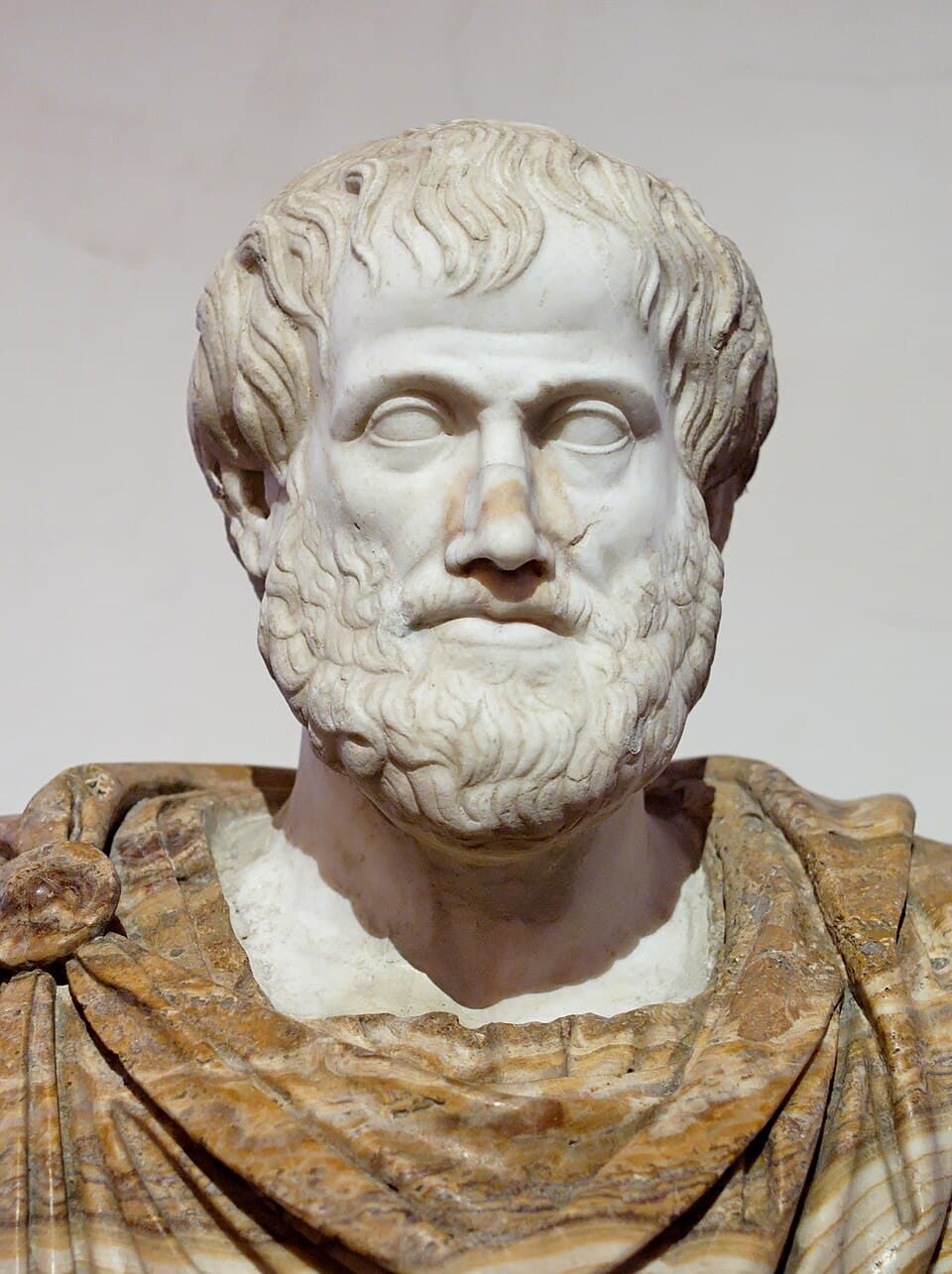
Aristotle
Nicomachean Ethics

Aristotle argues that shame is not a virtue for a good man, as a virtuous person should never voluntarily commit the disgraceful acts that cause shame.

...h as we hold that he ought not to do things which cause Shame; for Shame, since it arises at low bad actions, does not at all belong to the good man, because such ought not to be done at all: nor does it make any difference to allege that some things are disgraceful really, others only because they are thought so; for neither should be done, so that a man ought not to be in the position of feeling Shame. In truth, to be such a man as to do anything disgraceful is the part of a faulty character.
And for a man to be such that he would feel Shame if he should do anything disgraceful, and to think that this constitutes him a good man, is absurd: because Shame is felt at voluntary actions only, and a good man will never voluntarily do what is base. True it is, that Shame may be good on a certain supposition, as “if a man should do such things, he would feel Shame:” but then the Virtues are good in themselves, and not merely in supposed cases.
And, granted that impudence and the not being ashamed to do what is disgraceful is base, it does not the more follow that it is good for a man to do such things and feel Shame. Nor is Self-Control properly a Virtue, but a kind of mixed state: however, all about this shall be set forth in a future Book. BOOK V Chapter I. Now the points for our enquiry in respect of Justice and Injustice are, what kind of actions are their object-matter, and what kind of a mean state Justice is, and betwe...
6
1 of 2 in Book V, Chapter I111 of 276 in work
Now entering Book V, Chapter I
Justice as Capacity
Aristotle
Nicomachean Ethics

The author establishes a foundational definition of justice as a moral state that enables and motivates individuals to perform just acts.

...erly a Virtue, but a kind of mixed state: however, all about this shall be set forth in a future Book. BOOK V Chapter I. Now the points for our enquiry in respect of Justice and Injustice are, what kind of actions are their object-matter, and what kind of a mean state Justice is, and between what points the abstract principle of it, i.e. the Just, is a mean. And our enquiry shall be, if you please, conducted in the same method as we have observed in the foregoing parts of this Treatise.
We see then that all men mean by the term Justice a moral state such that in consequence of it men have the capacity of doing what is just, and actually do it, and wish it: similarly also with respect to Injustice, a moral state such that in consequence of it men do unjustly and wish what is unjust: let us also be content then with these as a ground-work sketched out.
I mention the two, because the same does not hold with regard to States whether of mind or body as with regard to Sciences or Faculties: I mean that whereas it is thought that the same Faculty or Science embraces contraries, a State will not: from health, for instance, not the contrary acts are done but the healthy ones only; we say a man walks healthily when he walks as the healthy man would. However, of the two contrary states the one may be frequently known from the other, and oftentimes t...
5
2 of 2 in Book V, Chapter I112 of 276 in work
Pray for Personal Good
Aristotle
Nicomachean Ethics

The author advises that instead of pursuing external goods that may be harmful to the individual, one should pray for and choose what is truly good for oneself.

...sed equivocally to denote the bone which is under the neck of animals and the instrument with which people close doors. Let it be ascertained then in how many senses the term “Unjust man” is used. Well, he who violates the law, and he who is a grasping man, and the unequal man, are all thought to be Unjust and so manifestly the Just man will be, the man who acts according to law, and the equal man “The Just” then will be the lawful and the equal, and “the Unjust” the unlawful and the unequal.
Well, since the Unjust man is also a grasping man, he will be so, of course, with respect to good things, but not of every kind, only those which are the subject-matter of good and bad fortune and which are in themselves always good but not always to the individual. Yet men pray for and pursue these things: this they should not do but pray that things which are in the abstract good may be so also to them, and choose what is good for themselves.
But the Unjust man does not always choose actually the greater part, but even sometimes the less; as in the case of things which are simply evil: still, since the less evil is thought to be in a manner a good and the grasping is after good, therefore even in this case he is thought to be a grasping man, i.e. one who strives for more good than fairly falls to his share: of course he is also an unequal man, this being an inclusive and common term. Chapter II. We said that the violator of Law...
2
1 of 3 in Book V, Chapter II113 of 276 in work
Now entering Book V, Chapter II
Perfect Virtue Toward Others
Aristotle
Nicomachean Ethics

The author poetically describes justice as the most perfect virtue because it is the only one exercised toward others rather than merely for one's own benefit.

...he doing the deeds not only of the brave man (as not leaving the ranks, nor flying, nor throwing away one’s arms), but those also of the perfectly self-mastering man, as abstinence from adultery and wantonness; and those of the meek man, as refraining from striking others or using abusive language: and in like manner in respect of the other virtues and vices commanding some things and forbidding others, rightly if it is a good law, in a way somewhat inferior if it is one extemporised. Now this
Justice is in fact perfect Virtue, yet not simply so but as exercised towards one’s neighbour: and for this reason Justice is thought oftentimes to be the best of the Virtues, and “neither Hesper nor the Morning-star So worthy of our admiration:” and in a proverbial saying we express the same; “All virtue is in Justice comprehended.” And it is in a special sense perfect Virtue because it is the practice of perfect Virtue. And perfect it is because he that has it is able to practise his virtue towards his neighbour and not merely on himself; I mean, there are many who can practise virtue in the regulation of their own personal conduct who are…
And for this reason that saying of Bias is thought to be a good one, “Rule will show what a man is;” for he who bears Rule is necessarily in contact with others, i.e. in a community. And for this same reason Justice alone of all the Virtues is thought to be a good to others, because it has immediate relation to some other person, inasmuch as the Just man does what is advantageous to another, either to his ruler or fellow-subject. Now he is the basest of men who practises vice not only in his...
Continue reading →
2
2 of 3 in Book V, Chapter II114 of 276 in work
Justice as Other's Good
Aristotle
Nicomachean Ethics

Justice is characterized as a unique virtue because it is directed toward the welfare of others rather than just the self.

...ue. And perfect it is because he that has it is able to practise his virtue towards his neighbour and not merely on himself; I mean, there are many who can practise virtue in the regulation of their own personal conduct who are wholly unable to do it in transactions with their neighbour. And for this reason that saying of Bias is thought to be a good one, “Rule will show what a man is;” for he who bears Rule is necessarily in contact with others, i.e. in a community. And for this same reason
Justice alone of all the Virtues is thought to be a good to others, because it has immediate relation to some other person, inasmuch as the Just man does what is advantageous to another, either to his ruler or fellow-subject. Now he is the basest of men who practises vice not only in his own person, but towards his friends also; but he the best who practises virtue not merely in his own person but towards his neighbour, for this is a matter of some difficulty.
However, Justice in this sense is not a part of Virtue but is co-extensive with Virtue; nor is the Injustice which answers to it a part of Vice but co-extensive with Vice. Now wherein Justice in this sense differs from Virtue appears from what has been said: it is the same really, but the point of view is not the same: in so far as it has respect to one’s neighbour it is Justice, in so far as it is such and such a moral state it is simply Virtue. Chapter III. But the object of our enquiry is...
4