2 of 4 in Book IX, Chapter IX242 of 276 in work
Happiness Through Others
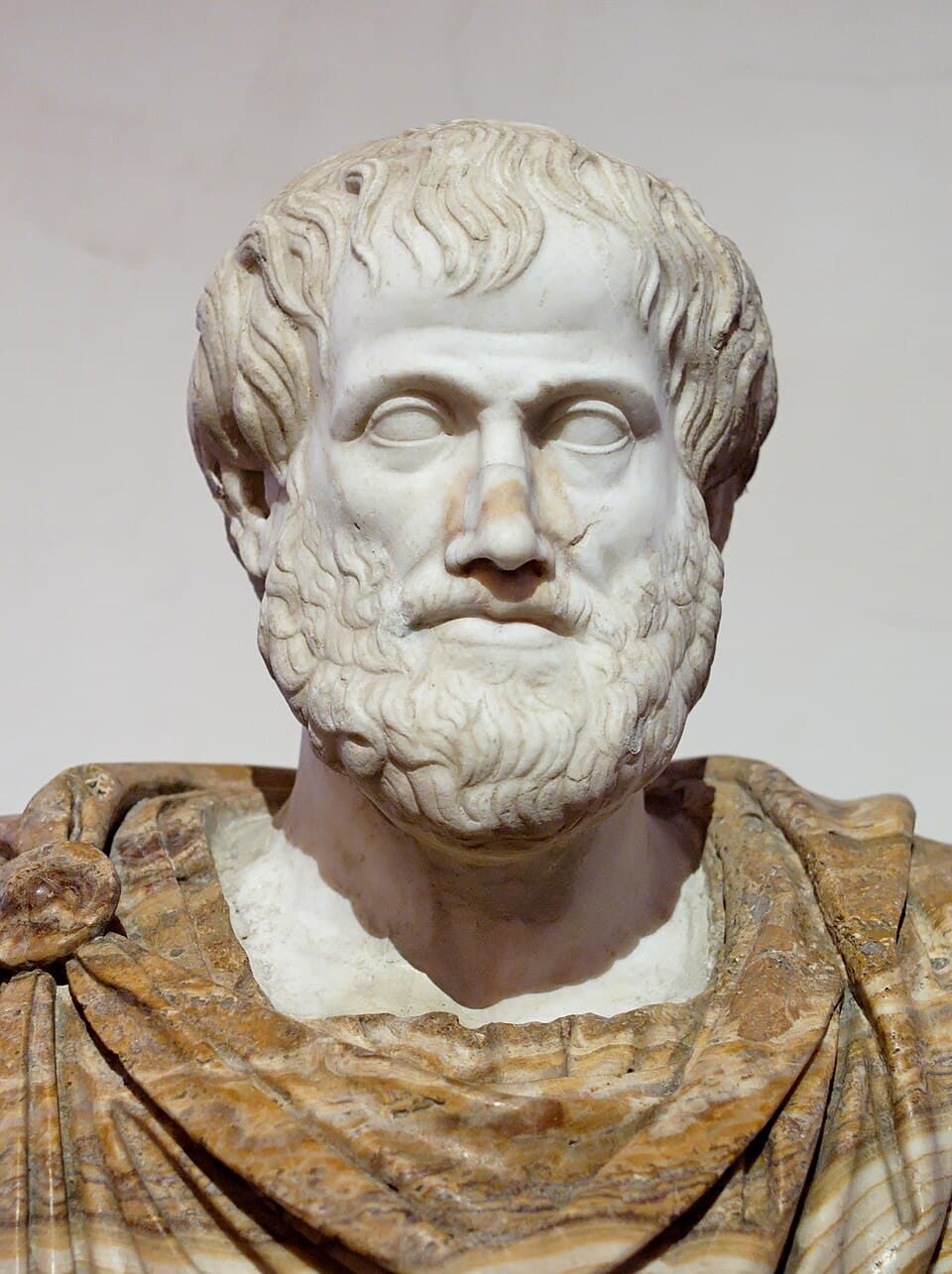
Aristotle
Nicomachean Ethics

The author explains why a happy person still needs virtuous friends: to provide a source of pleasurable contemplation of good actions.

...d such as are Friends with a view to the pleasurable, or at least only to a slight extent; because his life, being already pleasurable, does not want pleasure imported from without; and so, since the Happy man does not need Friends of these kinds, he is thought not to need any at all. But it may be, this is not true: for it was stated originally, that Happiness is a kind of Working; now Working plainly is something that must come into being, not be already there like a mere piece of property.
If then the being happy consists in living and working, and the good man’s working is in itself excellent and pleasurable (as we said at the commencement of the treatise), and if what is our own reckons among things pleasurable, and if we can view our neighbours better than ourselves and their actions better than we can our own, then the actions of their Friends who are good men are pleasurable to the good; inasmuch as they have both the requisites which are naturally pleasant. So the man in the highest state of happiness will need Friends of this kind, since he desires to contemplate good actions, and actions of his own, which those of his…
Again, common opinion requires that the Happy man live with pleasure to himself: now life is burthensome to a man in solitude, for it is not easy to work continuously by one’s self, but in company with, and in regard to others, it is easier, and therefore the working, being pleasurable in itself will be more continuous (a thing which should be in respect of the Happy man); for the good man, in that he is good takes pleasure in the actions which accord with Virtue and is annoyed at those which...
Continue reading →
2
3 of 4 in Book IX, Chapter IX243 of 276 in work
Virtue's Intrinsic Pleasure
Aristotle
Nicomachean Ethics

The author argues that happiness is more easily sustained in the company of others because social interaction makes the continuous exercise of virtue more pleasant.

...at is our own reckons among things pleasurable, and if we can view our neighbours better than ourselves and their actions better than we can our own, then the actions of their Friends who are good men are pleasurable to the good; inasmuch as they have both the requisites which are naturally pleasant. So the man in the highest state of happiness will need Friends of this kind, since he desires to contemplate good actions, and actions of his own, which those of his friend, being a good man, are.
Again, common opinion requires that the Happy man live with pleasure to himself: now life is burthensome to a man in solitude, for it is not easy to work continuously by one’s self, but in company with, and in regard to others, it is easier, and therefore the working, being pleasurable in itself will be more continuous (a thing which should be in respect of the Happy man); for the good man, in that he is good takes pleasure in the actions which accord with Virtue and is annoyed at those which spring from Vice, just as a musical man is pleased with beautiful music and annoyed by bad.
And besides, as Theognis says, Virtue itself may be improved by practice, from living with the good. And, upon the following considerations more purely metaphysical, it will probably appear that the good friend is naturally choice-worthy to the good man. We have said before, that whatever is naturally good is also in itself good and pleasant to the good man; now the fact of living, so far as animals are concerned, is characterised generally by the power of sentience, in man it is characterised...
4
4 of 4 in Book IX, Chapter IX244 of 276 in work
Friend as Second Self
Aristotle
Nicomachean Ethics

The author posits that because existence is inherently good and pleasant to the virtuous person, the existence of a friend—who is a 'second self'—is equally choice-worthy.

...perceives that he sees; and he that hears perceives that he hears; and he that walks perceives that he walks; and in all the other instances in like manner there is a faculty which reflects upon and perceives the fact that we are working, so that we can perceive that we perceive and intellectually know that we intellectually know: but to perceive that we perceive or that we intellectually know is to perceive that we exist, since existence was defined to be perceiving or intellectually knowing.
Now to perceive that one lives is a thing pleasant in itself, life being a thing naturally good, and the perceiving of the presence in ourselves of things naturally good being pleasant. Therefore the fact of living is choice-worthy, and to the good specially so since existence is good and pleasant to them: for they receive pleasure from the internal consciousness of that which in itself is good. But the good man is to his friend as to himself, friend being but a name for a second Self; therefore as his own existence is choice-worthy to each so too, or similarly at least, is his friend’s existence.
But the ground of one’s own existence being choice-worthy is the perceiving of one’s self being good, any such perception being in itself pleasant. Therefore one ought to be thoroughly conscious of one’s friend’s existence, which will result from living with him, that is sharing in his words and thoughts: for this is the meaning of the term as applied to the human species, not mere feeding together as in the case of brutes. If then to the man in a high state of happiness existence is in itself...
3
1 of 1 in Book IX, Chapter X245 of 276 in work
Now entering Book IX, Chapter X
Friendship's Natural Limit
Aristotle
Nicomachean Ethics

The author claims that true intimacy is limited by nature, arguing that one cannot maintain many deep friendships simultaneously because intense emotion requires a single object.

...it is not possible to be intimate with many, in other words, to part one’s self among many. And besides it must be remembered that they also are to be friends to one another if they are all to live together: but it is a matter of difficulty to find this in many men at once. It comes likewise to be difficult to bring home to one’s self the joys and sorrows of many: because in all probability one would have to sympathise at the same time with the joys of this one and the sorrows of that other.
Perhaps then it is well not to endeavour to have very many friends but so many as are enough for intimacy: because, in fact, it would seem not to be possible to be very much a friend to many at the same time: and, for the same reason, not to be in love with many objects at the same time: love being a kind of excessive Friendship which implies but one object: and all strong emotions must be limited in the number towards whom they are felt. And if we look to facts this seems to be so: for not many at a time become friends in the way of companionship, all the famous Friendships of the kind are between two persons: whereas they who have many…
To be sure, in the way merely of society, a man may be a friend to many without being necessarily over-complaisant, but being truly good: but one cannot be a friend to many because of their virtue, and for the persons’ own sake; in fact, it is a matter for contentment to find even a few such. Chapter XI. Again: are friends most needed in prosperity or in adversity? they are required, we know, in both states, because the unfortunate need help and the prosperous want people to live with and to...
Continue reading →
3
1 of 2 in Book IX, Chapter XI246 of 276 in work
Now entering Book IX, Chapter XI
Friends in Adversity
Aristotle
Nicomachean Ethics

Aristotle observes the existential comfort provided by friends during adversity, noting the factual relief their sympathy brings to a sufferer's pain.

...osperity or in adversity? they are required, we know, in both states, because the unfortunate need help and the prosperous want people to live with and to do kindnesses to: for they have a desire to act kindly to some one. To have friends is more necessary in adversity, and therefore in this case useful ones are wanted; and to have them in prosperity is more honourable, and this is why the prosperous want good men for friends, it being preferable to confer benefits on, and to live with, these.
For the very presence of friends is pleasant even in adversity: since men when grieved are comforted by the sympathy of their friends. And from this, by the way, the question might be raised, whether it is that they do in a manner take part of the weight of calamities, or only that their presence, being pleasurable, and the consciousness of their sympathy, make the pain of the sufferer less. However, we will not further discuss whether these which have been suggested or some other causes produce the relief, at least the effect we speak of is a matter of plain fact.
But their presence has probably a mixed effect: I mean, not only is the very seeing friends pleasant, especially to one in misfortune, and actual help towards lessening the grief is afforded (the natural tendency of a friend, if he is gifted with tact, being to comfort by look and word, because he is well acquainted with the sufferer’s temper and disposition and therefore knows what things give him pleasure and pain), but also the perceiving a friend to be grieved at his misfortunes causes the...
2