3 of 3 in Book I, Chapter V17 of 276 in work
Contextual Exactness
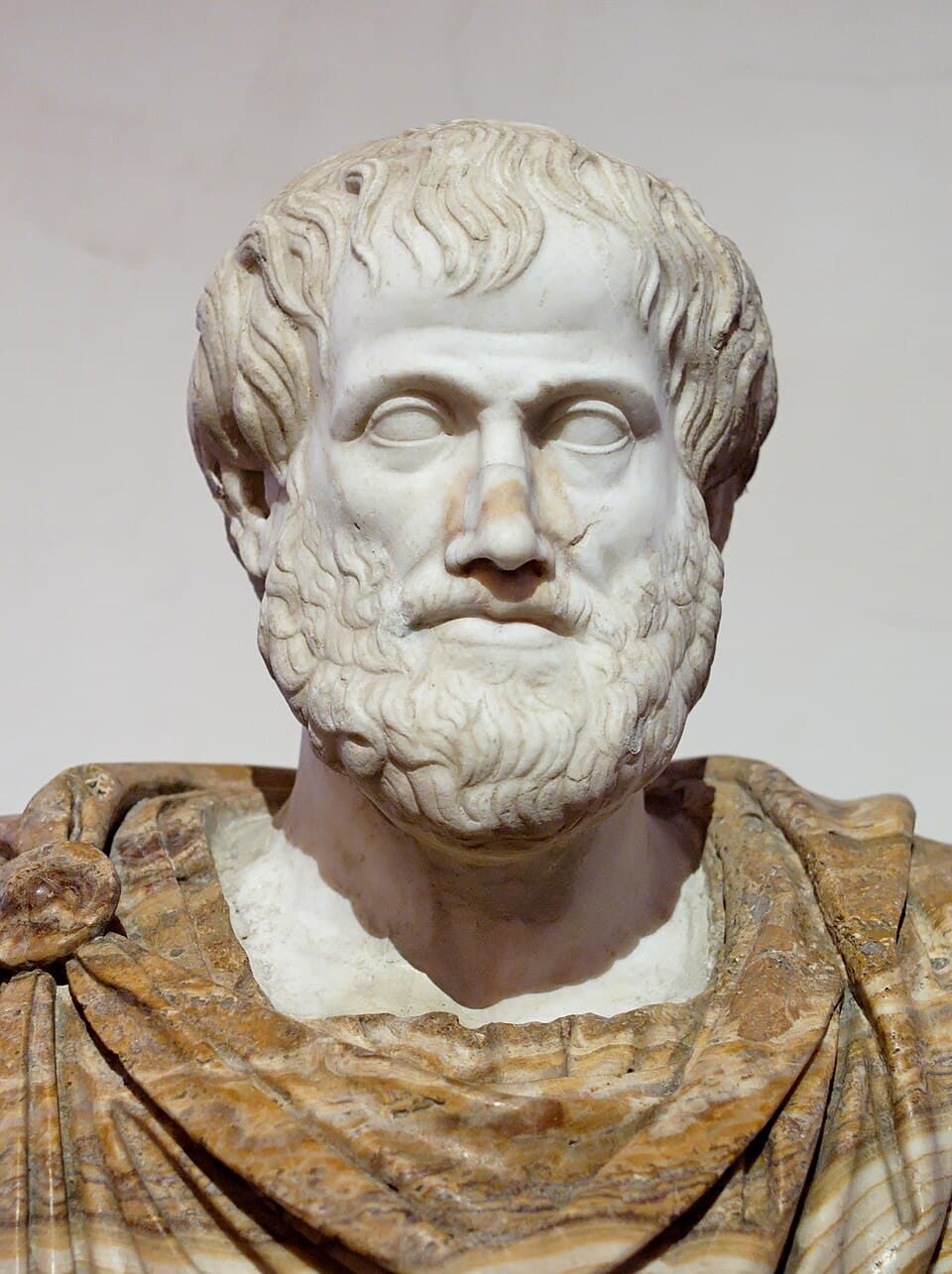
Aristotle
Nicomachean Ethics

The author advises that one should not seek the same level of exactness in all subjects, but should instead adapt the precision of the inquiry to the nature of the subject matter.

...so it is not one day or a short time that makes a man blessed and happy. Let this then be taken for a rough sketch of the Chief Good: since it is probably the right way to give first the outline, and fill it in afterwards. And it would seem that any man may improve and connect what is good in the sketch, and that time is a good discoverer and co-operator in such matters: it is thus in fact that all improvements in the various arts have been brought about, for any man may fill up a deficiency.
You must remember also what has been already stated, and not seek for exactness in all matters alike, but in each according to the subject-matter, and so far as properly belongs to the system. The carpenter and geometrician, for instance, enquire into the right line in different fashion: the former so far as he wants it for his work, the latter enquires into its nature and properties, because he is concerned with the truth. So then should one do in other matters, that the incidental matters may not exceed the direct ones.
And again, you must not demand the reason either in all things alike,[21] because in some it is sufficient that the fact has been well demonstrated, which is the case with first principles; and the fact is the first step, i.e. starting-point or principle. And of these first principles some are obtained by induction, some by perception,[22] some by a course of habituation, others in other different ways. And we must try to trace up each in their own nature, and take pains to secure their bei...
4
1 of 3 in Book I, Chapter VI18 of 276 in work
Now entering Book I, Chapter VI
Soul's Proper Good
Aristotle
Nicomachean Ethics

The author proposes to investigate happiness by categorizing goods into external, bodily, and soulful types, prioritizing the soul.

...le. And of these first principles some are obtained by induction, some by perception,[22] some by a course of habituation, others in other different ways. And we must try to trace up each in their own nature, and take pains to secure their being well defined, because they have great influence on what follows: it is thought, I mean, that the starting-point or principle is more than half the whole matter, and that many of the points of enquiry come simultaneously into view thereby. Chapter VI.
We must now enquire concerning Happiness, not only from our conclusion and the data on which our reasoning proceeds, but likewise from what is commonly said about it: because with what is true all things which really are are in harmony, but with that which is false the true very soon jars. Now there is a common division of goods into three classes; one being called external, the other two those of the soul and body respectively, and those belonging to the soul we call most properly and specially good.
Well, in our definition we assume that the actions and workings of the soul constitute Happiness, and these of course belong to the soul. And so our account is a good one, at least according to this opinion, which is of ancient date, and accepted by those who profess philosophy. Rightly too are certain actions and workings said to be the end, for thus it is brought into the number of the goods of the soul instead of the external. Agreeing also with our definition is the common notion, that the...
5
2 of 3 in Book I, Chapter VI19 of 276 in work
Action Over State
Aristotle
Nicomachean Ethics

The author distinguishes between the possession of virtue and its active exercise, concluding that happiness and the 'prizes' of life go to those who act.

...least not independently of it; while others again take in external prosperity. Of these opinions, some rest on the authority of numbers or antiquity, others on that of few, and those men of note: and it is not likely that either of these classes should be wrong in all points, but be right at least in some one, or even in most. Now with those who assert it to be Virtue (Excellence), or some kind of Virtue, our account agrees: for working in the way of Excellence surely belongs to Excellence.
And there is perhaps no unimportant difference between conceiving of the Chief Good as in possession or as in use, in other words, as a mere state or as a working. For the state or habit may possibly exist in a subject without effecting any good, as, for instance, in him who is asleep, or in any other way inactive; but the working cannot so, for it will of necessity act, and act well. And as at the Olympic games it is not the finest and strongest men who are crowned, but they who enter the lists, for out of these the prize-men are selected; so too in life, of the honourable and the good, it is they who act who rightly win the prizes. Their…
Now in the case of the multitude of men the things which they individually esteem pleasant clash, because they are not such by nature, whereas to the lovers of nobleness those things are pleasant which are such by nature: but the actions in accordance with virtue are of this kind, so that they are pleasant both to the individuals and also in themselves. So then their life has no need of pleasure as a kind of additional appendage, but involves pleasure in itself. For, besides what I have just m...
Continue reading →
0
3 of 3 in Book I, Chapter VI20 of 276 in work
Virtue's Inherent Pleasure
Aristotle
Nicomachean Ethics

The text asserts that virtuous actions are inherently pleasant to those who love nobility, meaning a truly good person finds joy in the virtuous act itself rather than seeking external pleasure.

...cted; so too in life, of the honourable and the good, it is they who act who rightly win the prizes.[24] Their life too is in itself pleasant: for the feeling of pleasure is a mental sensation, and that is to each pleasant of which he is said to be fond: a horse, for instance, to him who is fond of horses, and a sight to him who is fond of sights: and so in like manner just acts to him who is fond of justice, and more generally the things in accordance with virtue to him who is fond of virtue.
Now in the case of the multitude of men the things which they individually esteem pleasant clash, because they are not such by nature, whereas to the lovers of nobleness those things are pleasant which are such by nature: but the actions in accordance with virtue are of this kind, so that they are pleasant both to the individuals and also in themselves. So then their life has no need of pleasure as a kind of additional appendage, but involves pleasure in itself. For, besides what I have just mentioned, a man is not a good man at all who feels no pleasure in noble actions, just as no one would call that man just who does not feel pleasure in…
Then again they are certainly good and noble, and each of these in the highest degree; if we are to take as right the judgment of the good man, for he judges as we have said. Thus then Happiness is most excellent, most noble, and most pleasant, and these attributes are not separated as in the well-known Delian inscription— “Most noble is that which is most just, but best is health; And naturally most pleasant is the obtaining one’s desires.” For all these co-exist in the best acts of workin...
Continue reading →
4
1 of 1 in Book I, Chapter VII21 of 276 in work
Now entering Book I, Chapter VII
Happiness's Complete Life
Aristotle
Nicomachean Ethics

The author defines happiness as requiring both complete virtue and a complete life, noting that extreme misfortune can negate a claim to happiness.

...umed the End of πολιτικὴ to be most excellent: now this bestows most care on making the members of the community of a certain character; good that is and apt to do what is honourable. With good reason then neither ox nor horse nor any other brute animal do we call happy, for none of them can partake in such working: and for this same reason a child is not happy either, because by reason of his tender age he cannot yet perform such actions: if the term is applied, it is by way of anticipation.
For to constitute Happiness, there must be, as we have said, complete virtue and a complete life: for many changes and chances of all kinds arise during a life, and he who is most prosperous may become involved in great misfortunes in his old age, as in the heroic poems the tale is told of Priam: but the man who has experienced such fortune and died in wretchedness, no man calls happy.
Chapter VIII. Are we then to call no man happy while he lives, and, as Solon would have us, look to the end? And again, if we are to maintain this position, is a man then happy when he is dead? or is not this a complete absurdity, specially in us who say Happiness is a working of a certain kind? If on the other hand we do not assert that the dead man is happy, and Solon does not mean this, but only that one would then be safe in pronouncing a man happy, as being thenceforward out of the reac...
6