The author argues that vague appeals to 'moderation' or 'right reason' are insufficient for ethics and that a precise definition of these terms is required for practical wisdom.
2 of 2 in Book VI, Chapter I139 of 276 in work
The Need for Definition
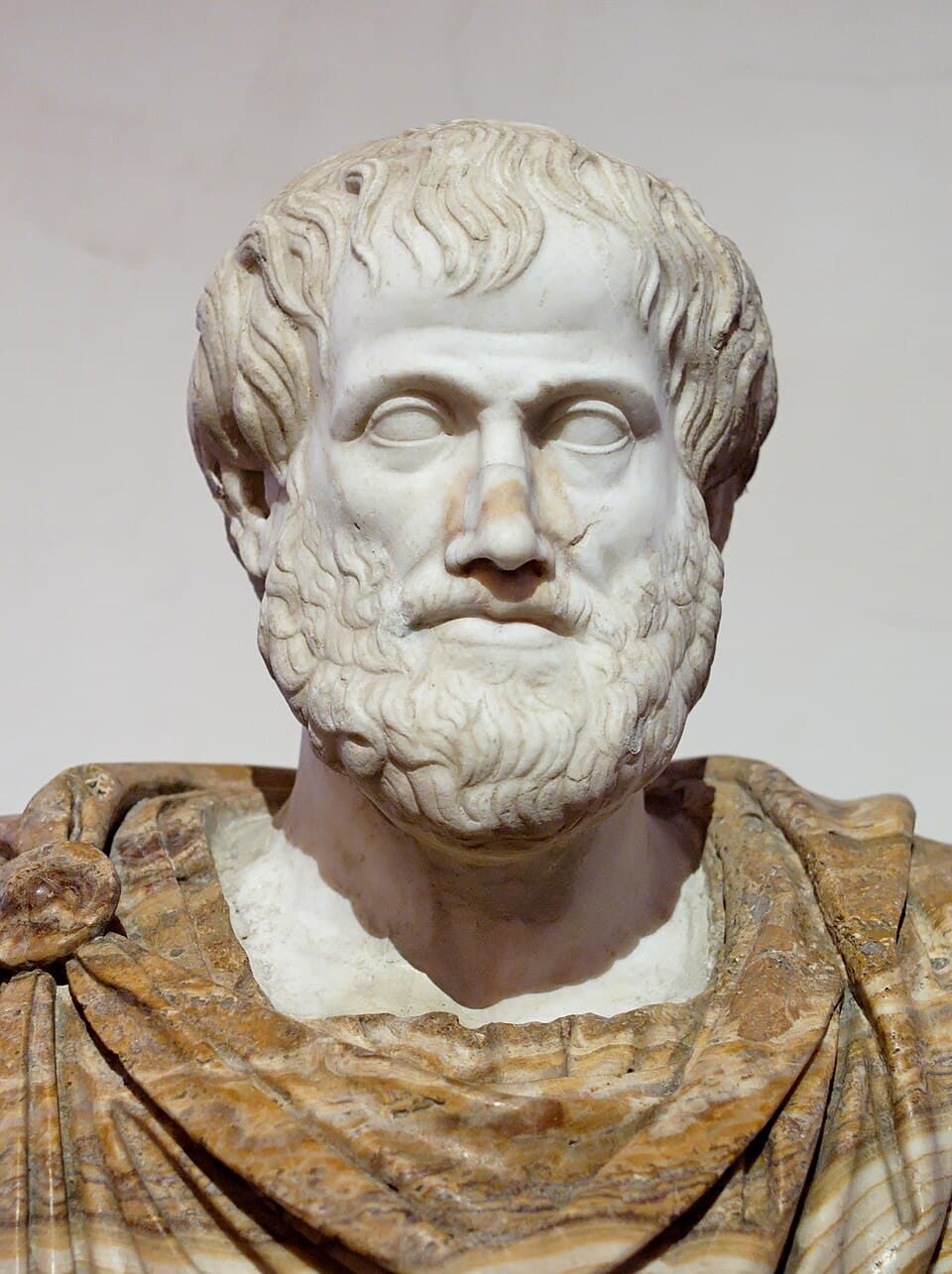
Aristotle
Nicomachean Ethics...ther the excess or defect, and that the mean is according to the dictates of Right Reason; we will now proceed to explain this term. For in all the habits which we have expressly mentioned, as likewise in all the others, there is, so to speak, a mark with his eye fixed on which the man who has Reason tightens or slacks his rope;[1] and there is a certain limit of those mean states which we say are in accordance with Right Reason, and lie between excess on the one hand and defect on the other.
Now to speak thus is true enough but conveys no very definite meaning: as, in fact, in all other pursuits requiring attention and diligence on which skill and science are brought to bear; it is quite true of course to say that men are neither to labour nor relax too much or too little, but in moderation, and as Right Reason directs; yet if this were all a man had he would not be greatly the wiser; as, for instance, if in answer to the question, what are proper applications to the body, he were to be told, “Oh! of course, whatever the science of medicine, and in such manner as the physician, directs.” And so in respect of the mental states it…
Chapter II. Now in our division of the Excellences of the Soul, we said there were two classes, the Moral and the Intellectual: the former we have already gone through; and we will now proceed to speak of the others, premising a few words respecting the Soul itself. It was stated before, you will remember, that the Soul consists of two parts, the Rational, and Irrational: we must now make a similar division of the Rational. Let it be understood then that there are two parts of the Soul posse...
Continue reading →
6
1 of 2 in Book VI, Chapter II140 of 276 in work
Now entering Book VI, Chapter II
⚖Will's Intellectual Engine

Aristotle
Nicomachean EthicsThe author defines moral choice as a synthesis of intellect and desire, arguing that right action requires both intellectual operation and moral character.
...] Now this Intellectual operation and this Truth is what bears upon Moral Action; of course truth and falsehood must be the good and the bad of that Intellectual Operation which is purely Speculative, and concerned neither with action nor production, because this is manifestly the work of every Intellectual faculty, while of the faculty which is of a mixed Practical and Intellectual nature, the work is that Truth which, as I have described above, corresponds to the right movement of the Will.
Now the starting-point of moral action is Moral Choice, (I mean, what actually sets it in motion, not the final cause,) and of Moral Choice, Appetition, and Reason directed to a certain result: and thus Moral Choice is neither independent of intellect, i. e. intellectual operation, nor of a certain moral state: for right or wrong action cannot be, independently of operation of the Intellect, and moral character. But operation of the Intellect by itself moves nothing, only when directed to a certain result, i. e. exercised in Moral Action: (I say nothing of its being exercised in production, because this function is originated by the former:…
But nothing which is done and past can be the object of Moral Choice; for instance, no man chooses to have sacked Troy; because, in fact, no one ever deliberates about what is past, but only about that which is future, and which may therefore be influenced, whereas what has been cannot not have been: and so Agathon is right in saying “Of this alone is Deity bereft, To make undone whatever hath been done.” Thus then Truth is the work of both the Intellectual Parts of the Soul; those states t...
Continue reading →
6
2 of 2 in Book VI, Chapter II141 of 276 in work
⚖The Past's Unchangeable Nature

Aristotle
Nicomachean EthicsThe author asserts that moral choice only applies to the future because the past is immutable, concluding that truth is the primary work of the soul's intellectual parts.
...inated by the former: for every one who makes makes with a view to somewhat further; and that which is or may be made, is not an End in itself, but only relatively to somewhat else, and belonging to some one:[8] whereas that which is or may be done is an End in itself, because acting well is an End in itself, and this is the object of the Will,) and so Moral Choice is either[9] Intellect put in a position of Will-ing, or Appetition subjected to an Intellectual Process. And such a Cause is Man.
But nothing which is done and past can be the object of Moral Choice; for instance, no man chooses to have sacked Troy; because, in fact, no one ever deliberates about what is past, but only about that which is future, and which may therefore be influenced, whereas what has been cannot not have been: and so Agathon is right in saying “Of this alone is Deity bereft, To make undone whatever hath been done.” Thus then Truth is the work of both the Intellectual Parts of the Soul; those states therefore are the Excellences of each in which each will best attain truth.
Chapter III. Commencing then from the point stated above we will now speak of these Excellences again. Let those faculties whereby the Soul attains truth in Affirmation or Negation, be assumed to be in number five:[10] viz. Art, Knowledge, Practical Wisdom, Science, Intuition: (Supposition and Opinion I do not include, because by these one may go wrong.) What Knowledge is, is plain from the following of considerations, if one is to speak accurately, instead of being led away by resemblances....
4
1 of 1 in Book VI, Chapter III142 of 276 in work
Now entering Book VI, Chapter III
⚖Knowledge of Necessity

Aristotle
Nicomachean EthicsAristotle defines true knowledge as the understanding of things that are necessary and eternal, distinguishing it from the uncertainty of observing things that can change.
...e work of both the Intellectual Parts of the Soul; those states therefore are the Excellences of each in which each will best attain truth. Chapter III. Commencing then from the point stated above we will now speak of these Excellences again. Let those faculties whereby the Soul attains truth in Affirmation or Negation, be assumed to be in number five:[10] viz. Art, Knowledge, Practical Wisdom, Science, Intuition: (Supposition and Opinion I do not include, because by these one may go wrong.)
What Knowledge is, is plain from the following of considerations, if one is to speak accurately, instead of being led away by resemblances. For we all conceive that what we strictly speaking know, cannot be otherwise than it is, because as to those things which can be otherwise than they are, we are uncertain whether they are or are not, the moment they cease to be within the sphere of our actual observation. So then, whatever comes within the range of Knowledge is by necessity, and therefore eternal, (because all things are so which exist necessarily,) and all eternal things are without beginning, and indestructible.
Again, all Knowledge is thought to be capable of being taught, and what comes within its range capable of being learned. And all teaching is based upon previous knowledge; (a statement you will find in the Analytics also,)[11] for there are two ways of teaching, by Syllogism and by Induction. In fact. Induction is the source of universal propositions, and Syllogism reasons from these universals.[12] Syllogism then may reason from principles which cannot be themselves proved Syllogistically: an...
6
1 of 1 in Book VI, Chapter IV143 of 276 in work
Now entering Book VI, Chapter IV
⚖Art's Domain of Making

Aristotle
Nicomachean EthicsThe author distinguishes Art as a productive process concerned with things that can be otherwise, separating it from natural necessity and moral action.
...tinct from that also conjoined with Reason, which is apt to Make: and for this reason they are not included one by the other, that is, Doing is not Making, nor Making Doing.[14] Now[15] as Architecture is an Art, and is the same as “a certain state of mind, conjoined with Reason, which is apt to Make,” and as there is no Art which is not such a state, nor any such state which is not an Art, Art, in its strict and proper sense, must be “a state of mind, conjoined with true Reason, apt to Make.”
Now all Art has to do with production, and contrivance, and seeing how any of those things may be produced which may either be or not be, and the origination of which rests with the maker and not with the thing made. And, so neither things which exist or come into being necessarily, nor things in the way of nature, come under the province of Art, because these are self-originating. And since Making and Doing are distinct, Art must be concerned with the former and not the latter.
And in a certain sense Art and Fortune are concerned with the same things, as, Agathon says by the way, “Art Fortune loves, and is of her beloved.” So Art, as has been stated, is “a certain state of mind, apt to Make, conjoined with true Reason;” its absence, on the contrary, is the same state conjoined with false Reason, and both are employed upon Contingent matter. Chapter V. As for Practical Wisdom, we shall ascertain its nature by examining to what kind of persons we in common language...
6