The author uses a metaphorical comparison to the gods to argue that the highest form of happiness is contemplative rather than based on trivial moral actions.
5 of 6 in Book X, Chapter VI266 of 276 in work
Gods' Contemplative Bliss
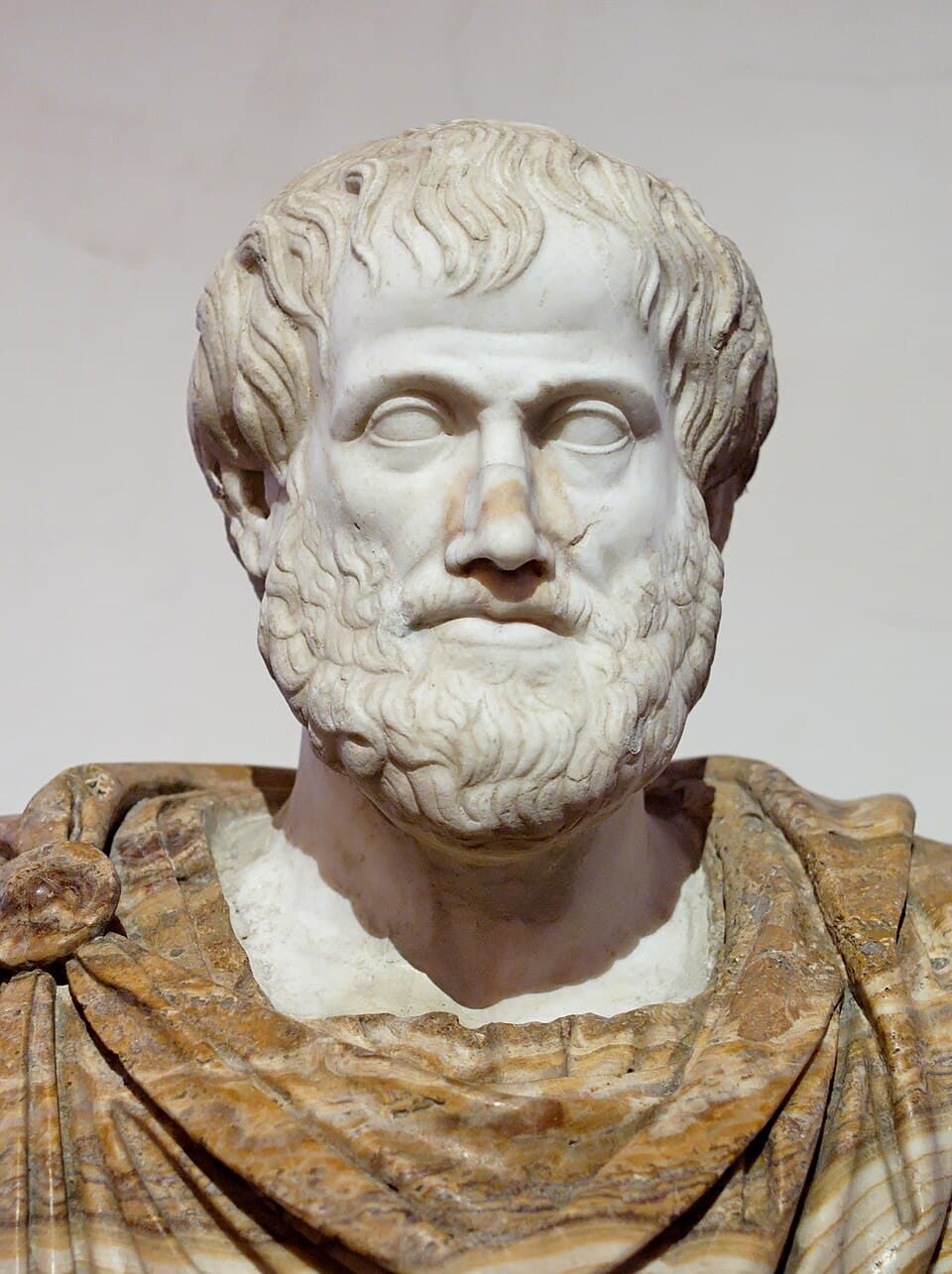
Aristotle
Nicomachean Ethics...r the actions many things are required, and the greater and more numerous they are the more.) But as for the man engaged in Contemplative Speculation, not only are such things unnecessary for his Working, but, so to speak, they are even hindrances: as regards the Contemplation at least; because of course in so far as he is Man and lives in society he chooses to do what Virtue requires, and so he will need such things for maintaining his character as Man though not as a speculative philosopher.
And that the perfect Happiness must be a kind of Contemplative Working may appear also from the following consideration: our conception of the gods is that they are above all blessed and happy: now what kind of Moral actions are we to attribute to them? those of justice? nay, will they not be set in a ridiculous light if represented as forming contracts, and restoring deposits, and so on? well then, shall we picture them performing brave actions, withstanding objects of fear and meeting dangers, because it is noble to do so? or liberal ones? but to whom shall they be giving? and further, it is absurd to think they have money or anything of…
Still, every one believes that they live, and therefore that they Work because it is not supposed that they sleep their time away like Endymion: now if from a living being you take away Action, still more if Creation, what remains but Contemplation? So then the Working of the Gods, eminent in blessedness, will be one apt for Contemplative Speculation; and of all human Workings that will have the greatest capacity for Happiness which is nearest akin to this. A corroboration of which position i...
Continue reading →
2
6 of 6 in Book X, Chapter VI267 of 276 in work
⚖Contemplation as Divine

Aristotle
Nicomachean EthicsThe author argues that the highest form of happiness is contemplative speculation, as it is the only activity shared with the gods and distinguishes humans from other animals.
...e actions, withstanding objects of fear and meeting dangers, because it is noble to do so? or liberal ones? but to whom shall they be giving? and further, it is absurd to think they have money or anything of the kind. And as for actions of perfected self-mastery, what can theirs be? would it not be a degrading praise that they have no bad desires? In short, if one followed the subject into all details all the circumstances connected with Moral actions would appear trivial and unworthy of Gods.
Still, every one believes that they live, and therefore that they Work because it is not supposed that they sleep their time away like Endymion: now if from a living being you take away Action, still more if Creation, what remains but Contemplation? So then the Working of the Gods, eminent in blessedness, will be one apt for Contemplative Speculation; and of all human Workings that will have the greatest capacity for Happiness which is nearest akin to this. A corroboration of which position is the fact that the other animals do not partake of Happiness, being completely shut out from any such Working. To the Gods then all their life is…
Happiness then is co-extensive with this Contemplative Speculation, and in proportion as people have the act of Contemplation so far have they also the being happy, not incidentally, but in the way of Contemplative Speculation because it is in itself precious. Chapter VII. So Happiness must be a kind of Contemplative Speculation; but since it is Man we are speaking of he will need likewise External Prosperity, because his Nature is not by itself sufficient for Speculation, but there must be...
Continue reading →
6
1 of 1 in Book X, Chapter VII268 of 276 in work
Now entering Book X, Chapter VII
⚖Happiness with Moderation

Aristotle
Nicomachean EthicsThe author posits that while happiness is primarily contemplative, it still requires a moderate amount of external goods and health to be sustained.
...such Working. To the Gods then all their life is blessed; and to men in so far as there is in it some copy of such Working, but of the other animals none is happy because it in no way shares in Contemplative Speculation. Happiness then is co-extensive with this Contemplative Speculation, and in proportion as people have the act of Contemplation so far have they also the being happy, not incidentally, but in the way of Contemplative Speculation because it is in itself precious. Chapter VII.
So Happiness must be a kind of Contemplative Speculation; but since it is Man we are speaking of he will need likewise External Prosperity, because his Nature is not by itself sufficient for Speculation, but there must be health of body, and nourishment, and tendance of all kinds. However, it must not be thought, because without external goods a man cannot enjoy high Happiness, that therefore he will require many and great goods in order to be happy: for neither Self-sufficiency, nor Action, stand in Excess, and it is quite possible to act nobly without being ruler of sea and land, since even with moderate means a man may act in accordance with Virtue.
And this may be clearly seen in that men in private stations are thought to act justly, not merely no less than men in power but even more: it will be quite enough that just so much should belong to a man as is necessary, for his life will be happy who works in accordance with Virtue. Solon perhaps drew a fair picture of the Happy, when he said that they are men moderately supplied with external goods, and who have achieved the most noble deeds, as he thought, and who have lived with perfect...
6
1 of 8 in Book X, Chapter VIII269 of 276 in work
Now entering Book X, Chapter VIII
⚖Practice Over Speculation

Aristotle
Nicomachean EthicsThe author asserts that in ethics, theoretical knowledge is insufficient; one must actively practice and exert effort to become truly virtuous.
...pleasure in what is best and most akin to themselves (and this must be the Pure Intellect); and that they requite with kindness those who love and honour this most, as paying observance to what is dear to them, and as acting rightly and nobly. And it is quite obvious that the man of Science chiefly combines all these: he is therefore dearest to the Gods, and it is probable that he is at the same time most Happy. Thus then on this view also the man of Science will be most Happy. Chapter VIII.
Now then that we have said enough in our sketchy kind of way on these subjects; I mean, on the Virtues, and also on Friendship and Pleasure; are we to suppose that our original purpose is completed? Must we not rather acknowledge, what is commonly said, that in matters of moral action mere Speculation and Knowledge is not the real End but rather Practice: and if so, then neither in respect of Virtue is Knowledge enough; we must further strive to have and exert it, and take whatever other means there are of becoming good.
Now if talking and writing were of themselves sufficient to make men good, they would justly, as Theognis observes have reaped numerous and great rewards, and the thing to do would be to provide them: but in point of fact, while they plainly have the power to guide and stimulate the generous among the young and to base upon true virtuous principle any noble and truly high-minded disposition, they as plainly are powerless to guide the mass of men to Virtue and goodness; because it is not their...
2
2 of 8 in Book X, Chapter VIII270 of 276 in work
⚖The Limits of Words

Aristotle
Nicomachean EthicsThe author argues that theoretical arguments are insufficient to make the masses virtuous, as most people are governed by fear of punishment and passion rather than a sense of shame or nobility.
...nough in our sketchy kind of way on these subjects; I mean, on the Virtues, and also on Friendship and Pleasure; are we to suppose that our original purpose is completed? Must we not rather acknowledge, what is commonly said, that in matters of moral action mere Speculation and Knowledge is not the real End but rather Practice: and if so, then neither in respect of Virtue is Knowledge enough; we must further strive to have and exert it, and take whatever other means there are of becoming good.
Now if talking and writing were of themselves sufficient to make men good, they would justly, as Theognis observes have reaped numerous and great rewards, and the thing to do would be to provide them: but in point of fact, while they plainly have the power to guide and stimulate the generous among the young and to base upon true virtuous principle any noble and truly high-minded disposition, they as plainly are powerless to guide the mass of men to Virtue and goodness; because it is not their nature to be amenable to a sense of shame but only to fear; nor to abstain from what is low and mean because it is disgraceful to do it but because of…
but as for what is noble and truly pleasurable they have not an idea of it, inasmuch as they have never tasted of it. Men such as these then what mere words can transform? No, indeed! it is either actually impossible, or a task of no mean difficulty, to alter by words what has been of old taken into men’s very dispositions: and, it may be, it is a ground for contentment if with all the means and appliances for goodness in our hands we can attain to Virtue. The formation of a virtuous characte...
Continue reading →
5