2 of 3 in Book III, Chapter XI73 of 276 in work
Anger's False Courage
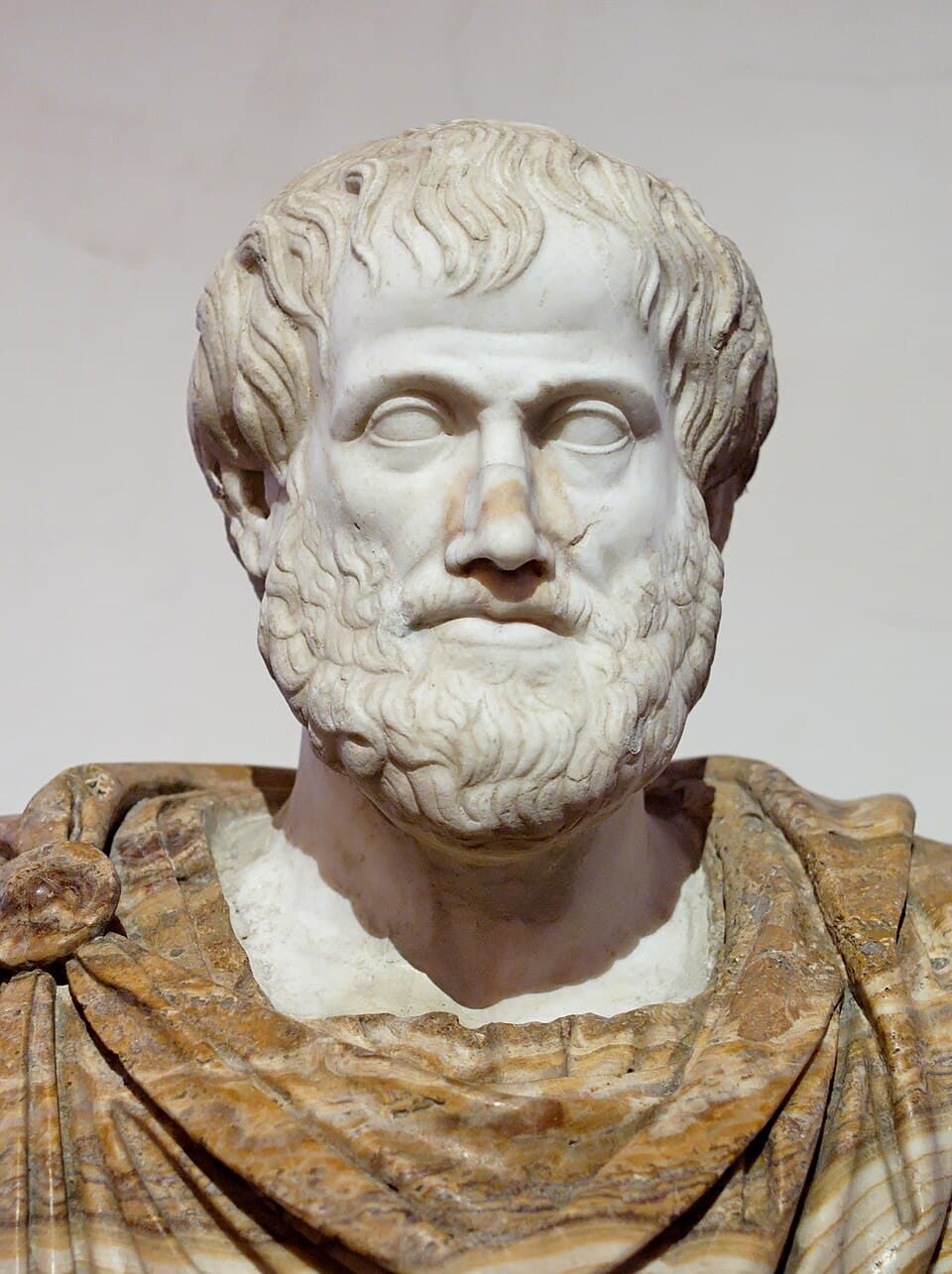
Aristotle
Nicomachean Ethics

Aristotle distinguishes between true courage, which is motivated by honor and reason, and mere animal spirit or anger, which only resembles bravery.

...co-operates with them; but wild beasts from pain, that is because they have been wounded, or are frightened; since if they are quietly in their own haunts, forest or marsh, they do not attack men. Surely they are not Brave because they rush into danger when goaded on by pain and mere Spirit, without any view of the danger: else would asses be Brave when they are hungry, for though beaten they will not then leave their pasture: profligate men besides do many bold actions by reason of their lust.
We may conclude then that they are not Brave who are goaded on to meet danger by pain and mere Spirit; but still this temper which arises from Animal Spirit appears to be most natural, and would be Courage of the true kind if it could have added to it moral choice and the proper motive. So men also are pained by a feeling of anger, and take pleasure in revenge; but they who fight from these causes may be good fighters, but they are not truly Brave (in that they do not act from a sense of honour, nor as reason directs, but merely from the present feeling), still they bear some resemblance to that character.
Nor, again, are the Sanguine and Hopeful therefore Brave: since their boldness in dangers arises from their frequent victories over numerous foes. The two characters are alike, however, in that both are confident; but then the Brave are so from the afore-mentioned causes, whereas these are so from a settled conviction of their being superior and not likely to suffer anything in return (they who are intoxicated do much the same, for they become hopeful when in that state); but when the event di...
5
3 of 3 in Book III, Chapter XI74 of 276 in work
Sudden Fear's True Test
Aristotle
Nicomachean Ethics

The author argues that true courage is best demonstrated in sudden dangers where action springs from fixed habit rather than calculated preparation.

...so from the afore-mentioned causes, whereas these are so from a settled conviction of their being superior and not likely to suffer anything in return (they who are intoxicated do much the same, for they become hopeful when in that state); but when the event disappoints their expectations they run away: now it was said to be the character of a Brave man to withstand things which are fearful to man or produce that impression, because it is honourable so to do and the contrary is dishonourable.
For this reason it is thought to be a greater proof of Courage to be fearless and undisturbed under the pressure of sudden fear than under that which may be anticipated, because Courage then comes rather from a fixed habit, or less from preparation: since as to foreseen dangers a man might take his line even from calculation and reasoning, but in those which are sudden he will do so according to his fixed habit of mind.
Fifthly and lastly, those who are acting under Ignorance have a show of Courage and are not very far from the Hopeful; but still they are inferior inasmuch as they have no opinion of themselves; which the others have, and therefore stay and contest a field for some little time; but they who have been deceived fly the moment they know things to be otherwise than they supposed, which the Argives experienced when they fell on the Lacedæmonians, taking them for the men of Sicyon. Chapter XII. We...
6
1 of 2 in Book III, Chapter XII75 of 276 in work
Now entering Book III, Chapter XII
Courage's Obscured End
Aristotle
Nicomachean Ethics

Using the analogy of a boxer, the author argues that the noble end of courage is pleasant even if the physical actions required are painful.

...has not both equally so, but objects of fear much more than the former; for he that under pressure of these is undisturbed and stands related to them as he ought is better entitled to the name of Brave than he who is properly affected towards objects of confidence. So then men are termed Brave for withstanding painful things. It follows that Courage involves pain and is justly praised, since it is a harder matter to withstand things that are painful than to abstain from such as are pleasant.
It must not be thought but that the End and object of Courage is pleasant, but it is obscured by the surrounding circumstances: which happens also in the gymnastic games; to the boxers the End is pleasant with a view to which they act, I mean the crown and the honours; but the receiving the blows they do is painful and annoying to flesh and blood, and so is all the labour they have to undergo; and, as these drawbacks are many, the object in view being small appears to have no pleasantness in it.
If then we may say the same of Courage, of course death and wounds must be painful to the Brave man and against his will: still he endures these because it is honourable so to do or because it is dishonourable not to do so. And the more complete his virtue and his happiness so much the more will he be pained at the notion of death: since to such a man as he is it is best worth while to live, and he with full consciousness is deprived of the greatest goods by death, and this is a painful idea....
5
2 of 2 in Book III, Chapter XII76 of 276 in work
The Brave Man's Pain
Aristotle
Nicomachean Ethics

An existential observation that the virtuous man finds death most painful because he truly values his life, yet he chooses courage regardless.

...they act, I mean the crown and the honours; but the receiving the blows they do is painful and annoying to flesh and blood, and so is all the labour they have to undergo; and, as these drawbacks are many, the object in view being small appears to have no pleasantness in it. If then we may say the same of Courage, of course death and wounds must be painful to the Brave man and against his will: still he endures these because it is honourable so to do or because it is dishonourable not to do so.
And the more complete his virtue and his happiness so much the more will he be pained at the notion of death: since to such a man as he is it is best worth while to live, and he with full consciousness is deprived of the greatest goods by death, and this is a painful idea. But he is not the less Brave for feeling it to be so, nay rather it may be he is shown to be more so because he chooses the honour that may be reaped in war in preference to retaining safe possession of these other goods.
The fact is that to act with pleasure does not belong to all the virtues, except so far as a man realises the End of his actions. But there is perhaps no reason why not such men should make the best soldiers, but those who are less truly Brave but have no other good to care for: these being ready to meet danger and bartering their lives against small gain. Let thus much be accepted as sufficient on the subject of Courage; the true nature of which it is not difficult to gather, in outline at l...
2
1 of 4 in Book III, Chapter XIII77 of 276 in work
Now entering Book III, Chapter XIII
Brutish Pleasure
Aristotle
Nicomachean Ethics

The text criticizes the lack of self-control in physical pleasures, arguing that such indulgences are 'brutish' because they belong to our animal nature rather than our humanity.

...the quality of wines or seasoning “made dishes.” But men scarcely take pleasure at all in these things, at least those whom we call destitute of self-control do not, but only in the actual enjoyment which arises entirely from the sense of Touch, whether in eating or in drinking, or in grosser lusts. This accounts for the wish said to have been expressed once by a great glutton, “that his throat had been formed longer than a crane’s neck,” implying that his pleasure was derived from the Touch.
The sense then with which is connected the habit of absence of self-control is the most common of all the senses, and this habit would seem to be justly a matter of reproach, since it attaches to us not in so far as we are men but in so far as we are animals. Indeed it is brutish to take pleasure in such things and to like them best of all; for the most respectable of the pleasures arising from the touch have been set aside; those, for instance, which occur in the course of gymnastic training from the rubbing and the warm bath: because the touch of the man destitute of self-control is not indifferently of any part of the body but only of…
Now of lusts or desires some are thought to be universal, others peculiar and acquired; thus desire for food is natural since every one who really needs desires also food, whether solid or liquid, or both (and, as Homer says, the man in the prime of youth needs and desires intercourse with the other sex); but when we come to this or that particular kind, then neither is the desire universal nor in all men is it directed to the same objects. And therefore the conceiving of such desires plainly...
Continue reading →
4