The author asserts that individuals are responsible for their own character, as habits are formed through repeated actions, and ignorance of this is no excuse.
2 of 3 in Book III, Chapter VII66 of 276 in work
Habits Forged by Acts
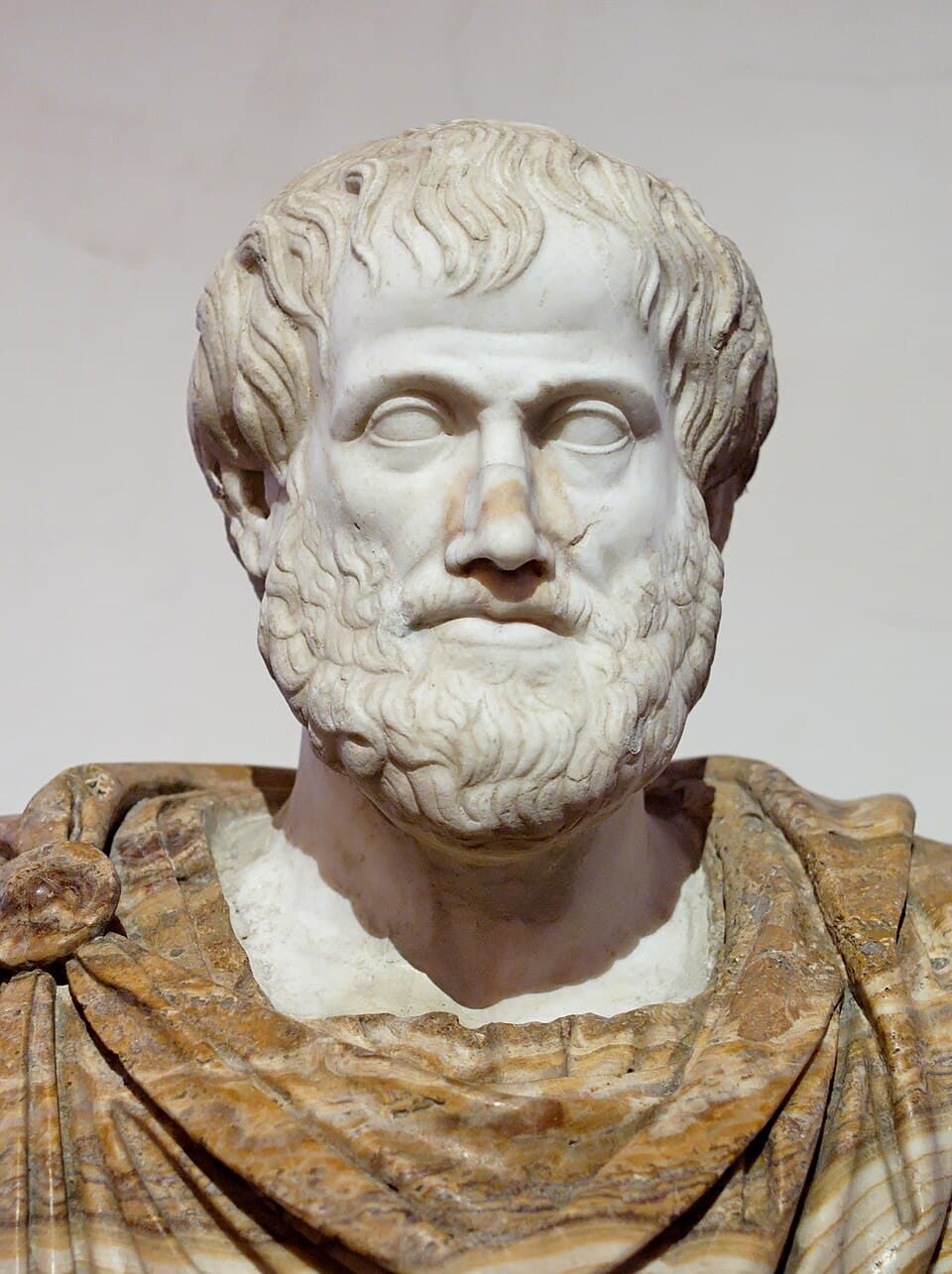
Aristotle
Nicomachean Ethics...lties are double, because the origination in such case lies in a man’s own self: for he might have helped getting drunk, and this is the cause of his ignorance. Again, those also who are ignorant of legal regulations which they are bound to know, and which are not hard to know, they chastise; and similarly in all other cases where neglect is thought to be the cause of the ignorance, under the notion that it was in their power to prevent their ignorance, because they might have paid attention.
But perhaps a man is of such a character that he cannot attend to such things: still men are themselves the causes of having become such characters by living carelessly, and also of being unjust or destitute of self-control, the former by doing evil actions, the latter by spending their time in drinking and such-like; because the particular acts of working form corresponding characters, as is shown by those who are practising for any contest or particular course of action, for such men persevere in the acts of working. As for the plea, that a man did not know that habits are produced from separate acts of working, we reply, such ignorance is a mark of excessive stupidity.
Furthermore, it is wholly irrelevant to say that the man who acts unjustly or dissolutely does not wish to attain the habits of these vices: for if a man wittingly does those things whereby he must become unjust he is to all intents and purposes unjust voluntarily; but he cannot with a wish cease to be unjust and become just. For, to take the analogous case, the sick man cannot with a wish be well again, yet in a supposable case he is voluntarily ill because he has produced his sickness by l...
3
3 of 3 in Book III, Chapter VII67 of 276 in work
⚖Voluntary Vice

Aristotle
Nicomachean EthicsThe author argues that vice is voluntary because, while one cannot stop being unjust by a mere wish, the initial choices that formed the habit were within the individual's power.
...eing unjust or destitute of self-control, the former by doing evil actions, the latter by spending their time in drinking and such-like; because the particular acts of working form corresponding characters, as is shown by those who are practising for any contest or particular course of action, for such men persevere in the acts of working. As for the plea, that a man did not know that habits are produced from separate acts of working, we reply, such ignorance is a mark of excessive stupidity.
Furthermore, it is wholly irrelevant to say that the man who acts unjustly or dissolutely does not wish to attain the habits of these vices: for if a man wittingly does those things whereby he must become unjust he is to all intents and purposes unjust voluntarily; but he cannot with a wish cease to be unjust and become just. For, to take the analogous case, the sick man cannot with a wish be well again, yet in a supposable case he is voluntarily ill because he has produced his sickness by living intemperately and disregarding his physicians. There was a time then when he might have helped being ill, but now he has let himself go he cannot…
Just so the unjust man, and he who has lost all self-control, might originally have helped being what they are, and so they are voluntarily what they are; but now that they are become so they no longer have the power of being otherwise. And not only are mental diseases voluntary, but the bodily are so in some men, whom we accordingly blame: for such as are naturally deformed no one blames, only such as are so by reason of want of exercise, and neglect: and so too of weakness and maiming: no on...
Continue reading →
5
1 of 1 in Book III, Chapter VIII68 of 276 in work
Now entering Book III, Chapter VIII
⚖The Habit's Gradual Formation

Aristotle
Nicomachean EthicsThe author explains that while individual actions are fully voluntary, habits are voluntary only in their origin through repeated choices.
...are ourselves of certain characters), the Vices must be voluntary also, because the cases are exactly similar. Chapter VIII. Well now, we have stated generally respecting the Moral Virtues, the genus (in outline), that they are mean states, and that they are habits, and how they are formed, and that they are of themselves calculated to act upon the circumstances out of which they were formed, and that they are in our own power and voluntary, and are to be done so as right Reason may direct.
But the particular actions and the habits are not voluntary in the same sense; for of the actions we are masters from beginning to end (supposing of course a knowledge of the particular details), but only of the origination of the habits, the addition by small particular accessions not being cognisiable (as is the case with sicknesses): still they are voluntary because it rested with us to use our circumstances this way or that.
Chapter IX. Here we will resume the particular discussion of the Moral Virtues, and say what they are, what is their object-matter, and how they stand respectively related to it: of course their number will be thereby shown. First, then, of Courage. Now that it is a mean state, in respect of fear and boldness, has been already said: further, the objects of our fears are obviously things fearful or, in a general way of statement, evils; which accounts for the common definition of fear, viz. “...
5
1 of 1 in Book III, Chapter IX69 of 276 in work
Now entering Book III, Chapter IX
⚖Fear's Proper Objects

Aristotle
Nicomachean EthicsAristotle distinguishes between proper bravery and the fear of things that are rightfully shameful, arguing that true courage only applies to fears not rooted in one's own vice.
...will resume the particular discussion of the Moral Virtues, and say what they are, what is their object-matter, and how they stand respectively related to it: of course their number will be thereby shown. First, then, of Courage. Now that it is a mean state, in respect of fear and boldness, has been already said: further, the objects of our fears are obviously things fearful or, in a general way of statement, evils; which accounts for the common definition of fear, viz. “expectation of evil.”
Of course we fear evils of all kinds: disgrace, for instance, poverty, disease, desolateness, death; but not all these seem to be the object-matter of the Brave man, because there are things which to fear is right and noble, and not to fear is base; disgrace, for example, since he who fears this is a good man and has a sense of honour, and he who does not fear it is shameless (though there are those who call him Brave by analogy, because he somewhat resembles the Brave man who agrees with him in being free from fear); but poverty, perhaps, or disease, and in fact whatever does not proceed from viciousness, nor is attributable to his own…
Yet we do apply the term[16] in right of the similarity of the cases; for there are men who, though timid in the dangers of war, are liberal men and are stout enough to face loss of wealth. And, again, a man is not a coward for fearing insult to his wife or children, or envy, or any such thing; nor is he a Brave man for being bold when going to be scourged. What kind of fearful things then do constitute the object-matter of the Brave man? first of all, must they not be the greatest, since no...
Continue reading →
5
1 of 2 in Book III, Chapter X70 of 276 in work
Now entering Book III, Chapter X
⚖Courage as Mean

Aristotle
Nicomachean EthicsThe text defines courage as the virtuous mean between the extremes of rashness and cowardice in the face of fear.
...ess in these circumstances, they do not withstand what is truly fearful. The man moreover who exceeds in feeling fear is a coward, since there attach to him the circumstances of fearing wrong objects, in wrong ways, and so forth. He is deficient also in feeling confidence, but he is most clearly seen as exceeding in the case of pains; he is a fainthearted kind of man, for he fears all things: the Brave man is just the contrary, for boldness is the property of the light-hearted and hopeful. So
The coward, the rash, and the Brave man have exactly the same object-matter, but stand differently related to it: the two first-mentioned respectively exceed and are deficient, the last is in a mean state and as he ought to be. The rash again are precipitate, and, being eager before danger, when actually in it fall away, while the Brave are quick and sharp in action, but before are quiet and composed. Well then, as has been said, Courage is a mean state in respect of objects inspiring boldness or fear, in the circumstances which have been stated, and the Brave man chooses his line and withstands danger either because to do so is honourable,…
But dying to escape from poverty, or the pangs of love, or anything that is simply painful, is the act not of a Brave man but of a coward; because it is mere softness to fly from what is toilsome, and the suicide braves the terrors of death not because it is honourable but to get out of the reach of evil. Chapter XI. Courage proper is somewhat of the kind I have described, but there are dispositions, differing in five ways,[18] which also bear in common parlance the name of Courage. We will...
Continue reading →
6