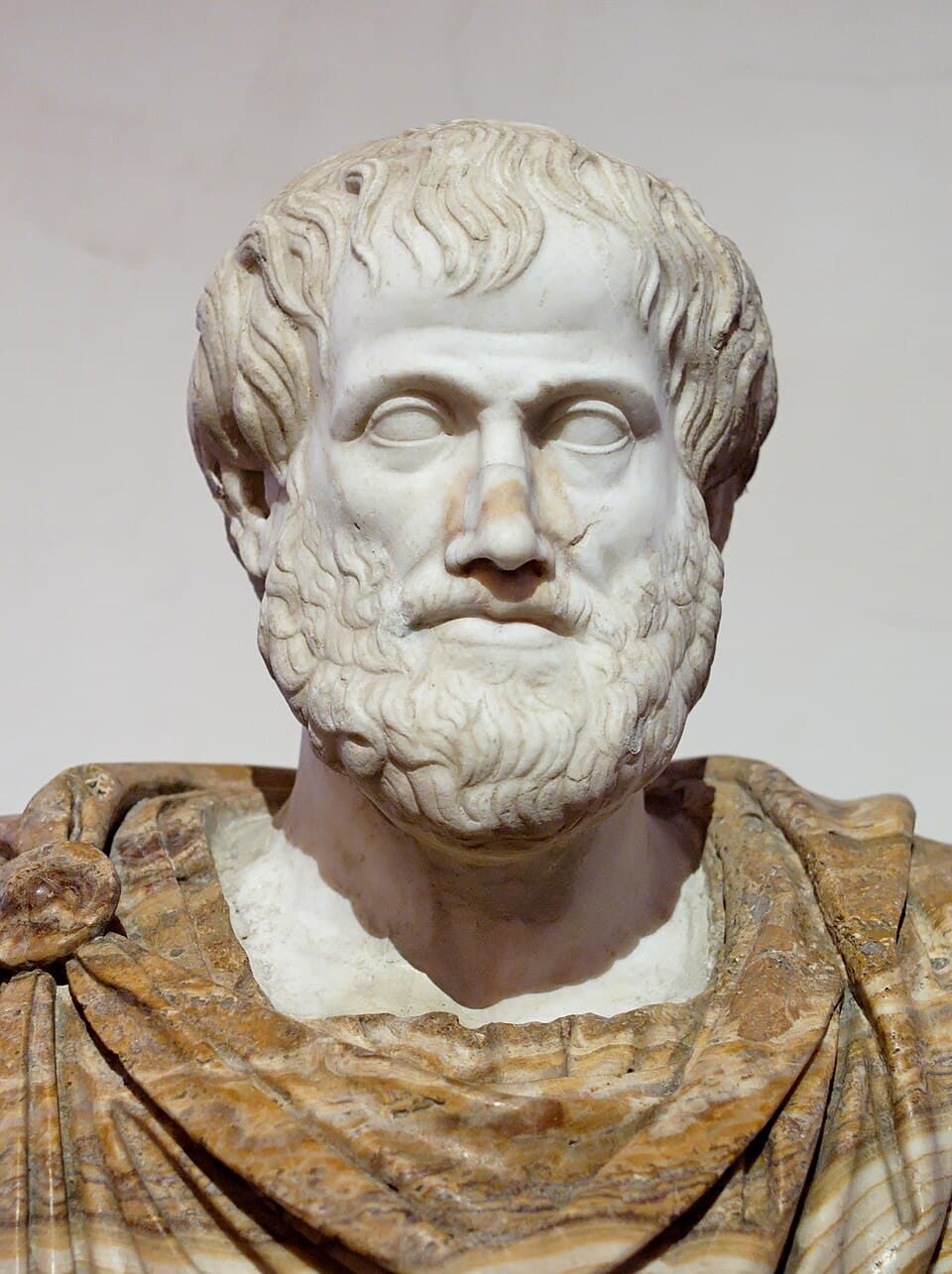
The text describes the 'Meek' man as one who governs his anger according to reason, striking a balance between passion and forgiveness.
1 of 3 in Book IV, Chapter VII101 of 276 in work
Now entering Book IV, Chapter VII
The Measured Anger
Aristotle
Nicomachean Ethics...e extreme characters appear to be opposed, because the mean has no name appropriated to it. Chapter VII. Meekness is a mean state, having for its object-matter Anger: and as the character in the mean has no name, and we may almost say the same of the extremes, we give the name of Meekness (leaning rather to the defect, which has no name either) to the character in the mean. The excess may be called an over-aptness to Anger: for the passion is Anger, and the producing causes many and various.
Now he who is angry at what and with whom he ought, and further, in right manner and time, and for proper length of time, is praised, so this Man will be Meek since Meekness is praised. For the notion represented by the term Meek man is the being imperturbable, and not being led away by passion, but being angry in that manner, and at those things, and for that length of time, which Reason may direct. This character however is thought to err rather on the side of defect, inasmuch as he is not apt to take revenge but rather to make allowances and forgive.
And the defect, call it Angerlessness or what you will, is blamed: I mean, they who are not angry at things at which they ought to be angry are thought to be foolish, and they who are angry not in right manner, nor in right time, nor with those with whom they ought; for a man who labours under this defect is thought to have no perception, nor to be pained, and to have no tendency to avenge himself, inasmuch as he feels no anger: now to bear with scurrility in one’s own person, and patiently see...
2
2 of 3 in Book IV, Chapter VII102 of 276 in work
⚖Repressed Anger's Burden

Aristotle
Nicomachean EthicsAn analysis of the 'Bitter-tempered' person, explaining how repressed anger becomes an internal burden that is only relieved through vengeance.
...with people with whom and at things at which they ought not, and in an excessive degree, but they soon cool again, which is the best point about them. And this results from their not repressing their anger, but repaying their enemies (in that they show their feeings by reason of their vehemence), and then they have done with it. The Choleric again are excessively vehement, and are angry at everything, and on every occasion; whence comes their Greek name signifying that their choler lies high.
The Bitter-tempered are hard to reconcile and keep their anger for a long while, because they repress the feeling: but when they have revenged themselves then comes a lull; for the vengeance destroys their anger by producing pleasure in lieu of pain. But if this does not happen they keep the weight on their minds: because, as it does not show itself, no one attempts to reason it away, and digesting anger within one’s self takes time. Such men are very great nuisances to themselves and to their best friends.
Again, we call those Cross-grained who are angry at wrong objects, and in excessive degree, and for too long a time, and who are not appeased without vengeance or at least punishing the offender. To Meekness we oppose the excess rather than the defect, because it is of more common occurrence: for human nature is more disposed to take than to forgo revenge. And the Cross-grained are worse to live with [than they who are too phlegmatic]. Now, from what has been here said, that is also plain wh...
6
3 of 3 in Book IV, Chapter VII103 of 276 in work
⚖Anger's Blurry Line

Aristotle
Nicomachean EthicsThe author argues that defining the exact boundaries of appropriate anger is impossible through rules alone, as such judgments must rely on the individual's moral sense in specific situations.
...great nuisances to themselves and to their best friends. Again, we call those Cross-grained who are angry at wrong objects, and in excessive degree, and for too long a time, and who are not appeased without vengeance or at least punishing the offender. To Meekness we oppose the excess rather than the defect, because it is of more common occurrence: for human nature is more disposed to take than to forgo revenge. And the Cross-grained are worse to live with [than they who are too phlegmatic].
Now, from what has been here said, that is also plain which was said before. I mean, it is no easy matter to define how, and with what persons, and at what kind of things, and how long one ought to be angry, and up to what point a person is right or is wrong. For he that transgresses the strict rule only a little, whether on the side of too much or too little, is not blamed: sometimes we praise those who are deficient in the feeling and call them Meek, sometimes we call the irritable Spirited as being well qualified for government. So it is not easy to lay down, in so many words, for what degree or kind of transgression a man is blameable:…
Thus much, however, is plain, that the mean state is praiseworthy, in virtue of which we are angry with those with whom, and at those things with which, we ought to be angry, and in right manner, and so on; while the excesses and defects are blameable, slightly so if only slight, more so if greater, and when considerable very blameable. It is clear, therefore, that the mean state is what we are to hold to. This then is to be taken as our account of the various moral states which have Anger fo...
Continue reading →
6
1 of 1 in Book IV, Chapter VIII104 of 276 in work
Now entering Book IV, Chapter VIII
⚖The Art of Opposition

Aristotle
Nicomachean EthicsThe author defines the social extremes of over-complaisance and contentiousness, arguing that the virtuous path is a praiseworthy mean between the two.
...state is praiseworthy, in virtue of which we are angry with those with whom, and at those things with which, we ought to be angry, and in right manner, and so on; while the excesses and defects are blameable, slightly so if only slight, more so if greater, and when considerable very blameable. It is clear, therefore, that the mean state is what we are to hold to. This then is to be taken as our account of the various moral states which have Anger for their object-matter. Chapter VIII. Next,
As regards social intercourse and interchange of words and acts, some men are thought to be Over-Complaisant who, with a view solely to giving pleasure, agree to everything and never oppose, but think their line is to give no pain to those they are thrown amongst: they, on the other hand, are called Cross and Contentious who take exactly the contrary line to these, and oppose in everything, and have no care at all whether they give pain or not. Now it is quite clear of course, that the states I have named are blameable, and that the mean between them is praiseworthy, in virtue of which a man will let pass what he ought as he ought, and also…
However, this state has no name appropriated, but it is most like Friendship; since the man who exhibits it is just the kind of man whom we would call the amiable friend, with the addition of strong earnest affection; but then this is the very point in which it differs from Friendship, that it is quite independent of any feeling or strong affection for those among whom the man mixes: I mean, that he takes everything as he ought, not from any feeling of love or hatred, but simply because his nat...
Continue reading →
6
1 of 3 in Book IV, Chapter IX105 of 276 in work
Now entering Book IV, Chapter IX
⚖The Truthful Mean

Aristotle
Nicomachean EthicsAristotle defines the 'mean' character of truthfulness by contrasting it with the extremes of exaggeration and self-depreciation.
...lace, by a particular discussion of each we shall be better acquainted with the general subject of moral character, and next we shall be the more convinced that the virtues are mean states by seeing that this is universally the case. In respect then of living in society, those who carry on this intercourse with a view to pleasure and pain have been already spoken of; we will now go on to speak of those who are True or False, alike in their words and deeds and in the claims which they advance.
Now the Exaggerator is thought to have a tendency to lay claim to things reflecting credit on him, both when they do not belong to him at all and also in greater degree than that in which they really do: whereas the Reserved man, on the contrary, denies those which really belong to him or else depreciates them, while the mean character being a Plain-matter-of-fact person is Truthful in life and word, admitting the existence of what does really belong to him and making it neither greater nor less than the truth.
It is possible of course to take any of these lines either with or without some further view: but in general men speak, and act, and live, each according to his particular character and disposition, unless indeed a man is acting from any special motive. Now since falsehood is in itself low and blameable, while truth is noble and praiseworthy, it follows that the Truthful man (who is also in the mean) is praiseworthy, and the two who depart from strict truth are both blameable, but especially...
6