Beauty as Power's Grace
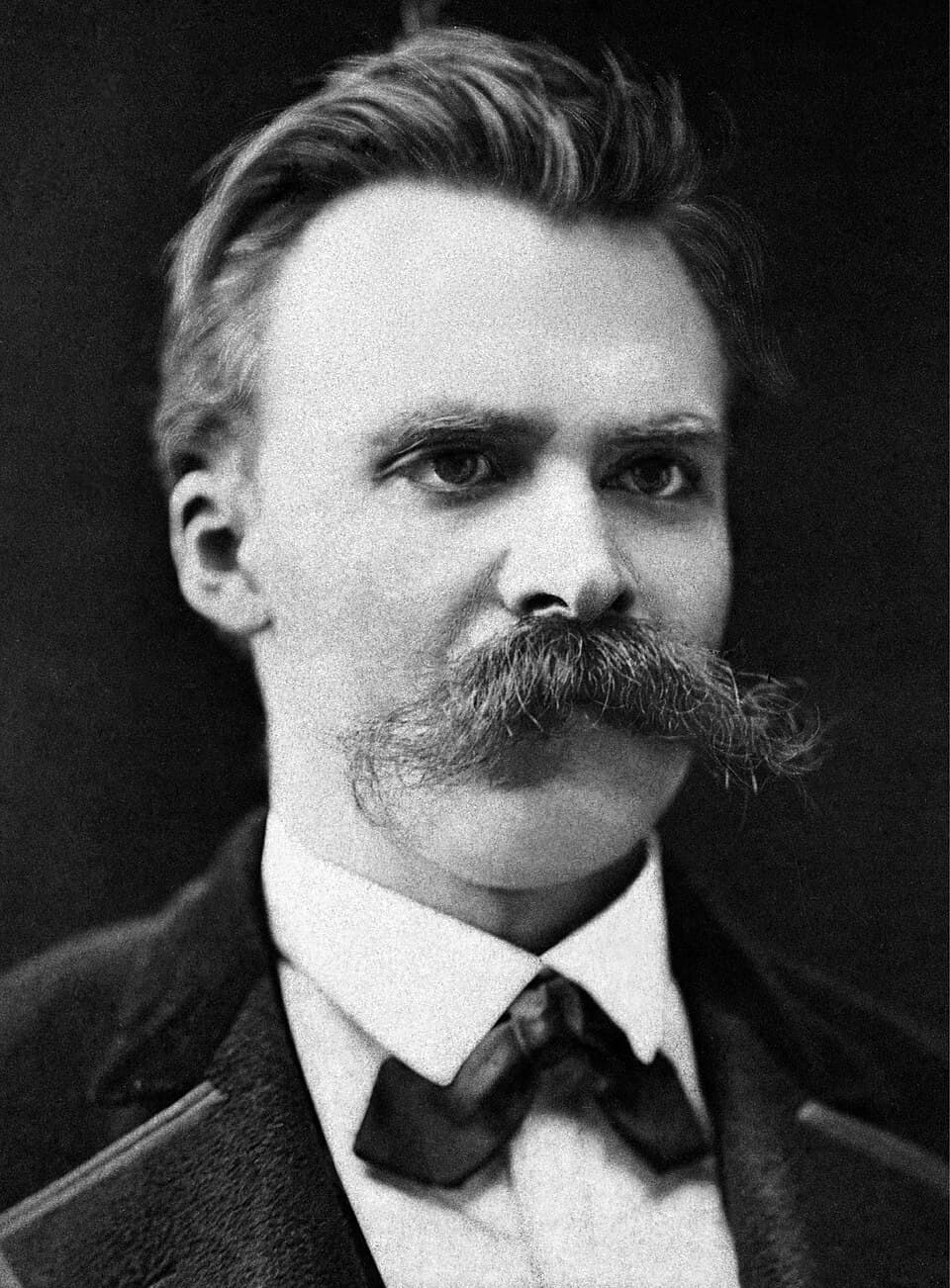
Friedrich Nietzsche
Thus Spake Zarathustra

Nietzsche argues that true beauty is the ultimate self-conquest for the powerful, achieved only when the will is relaxed and power descends into grace.

..., he hath solved enigmas. But he should also redeem his monsters and enigmas; into heavenly children should he transform them. As yet hath his knowledge not learned to smile, and to be without jealousy; as yet hath his gushing passion not become calm in beauty. Verily, not in satiety shall his longing cease and disappear, but in beauty! Gracefulness belongeth to the munificence of the magnanimous. His arm across his head: thus should the hero repose; thus should he also surmount his repose.
But precisely to the hero is BEAUTY the hardest thing of all. Unattainable is beauty by all ardent wills. A little more, a little less: precisely this is much here, it is the most here. To stand with relaxed muscles and with unharnessed will: that is the hardest for all of you, ye sublime ones! When power becometh gracious and descendeth into the visible—I call such condescension, beauty. And from no one do I want beauty so much as from thee, thou powerful one: let thy goodness be thy last self-conquest.
All evil do I accredit to thee: therefore do I desire of thee the good. Verily, I have often laughed at the weaklings, who think themselves good because they have crippled paws! The virtue of the pillar shalt thou strive after: more beautiful doth it ever become, and more graceful—but internally harder and more sustaining—the higher it riseth. Yea, thou sublime one, one day shalt thou also be beautiful, and hold up the mirror to thine own beauty. Then will thy soul thrill with divine desir...
4

Friedrich Nietzsche

Thus Spake Zarathustra

Love and Perish

This candidate directly agrees with and extends the parent's central idea that beauty is found in the full exertion of will, even to the point of self-sacrifice ('where I MUST WILL with my whole Will... where I will love and perish'). It echoes the parent's emphasis on will as the crucial element in the attainment of beauty, positioning it against passive contemplation.

...s do I call IMMACULATE perception of all things: to want nothing else from them, but to be allowed to lie before them as a mirror with a hundred facets.”— Oh, ye sentimental dissemblers, ye covetous ones! Ye lack innocence in your desire: and now do ye defame desiring on that account! Verily, not as creators, as procreators, or as jubilators do ye love the earth! Where is innocence? Where there is will to procreation. And he who seeketh to create beyond himself, hath for me the purest will.
Where is beauty? Where I MUST WILL with my whole Will; where I will love and perish, that an image may not remain merely an image. Loving and perishing: these have rhymed from eternity. Will to love: that is to be ready also for death. Thus do I speak unto you cowards! But now doth your emasculated ogling profess to be “contemplation!” And that which can be examined with cowardly eyes is to be christened “beautiful!” Oh, ye violators of noble names!
But it shall be your curse, ye immaculate ones, ye pure discerners, that ye shall never bring forth, even though ye lie broad and teeming on the horizon! Verily, ye fill your mouth with noble words: and we are to believe that your heart overfloweth, ye cozeners? But MY words are poor, contemptible, stammering words: gladly do I pick up what falleth from the table at your repasts. Yet still can I say therewith the truth—to dissemblers! Yea, my fish-bones, shells, and prickly leaves shall—tic...

Arthur Schopenhauer

The Wisdom of Life

Beauty's Divine Gift

This candidate, by Schopenhauer, presents a starkly different view of beauty. It describes beauty as a superficial 'gift of the gods,' a pleasant but ultimately external advantage that predisposes others favorably. This directly contradicts Nietzsche's view of beauty as a hard-won achievement of the internal will and the gracious condescension of power.

...ate gloom, and the suicide of the healthy and cheerful man, who has entirely objective grounds for putting an end to his existence. [Footnote 1: For a detailed description of this condition of mind Cf Esquirol, Des maladies mentales.] Beauty is partly an affair of health. It may be reckoned as a personal advantage; though it does not, properly speaking, contribute directly to our happiness. It does so indirectly, by impressing other people; and it is no unimportant advantage, even in man.
Beauty is an open letter of recommendation, predisposing the heart to favor the person who presents it. As is well said in these lines of Homer, the gift of beauty is not lightly to be thrown away, that glorious gift which none can bestow save the gods alone-- [Greek: outoi hapoblaet erti theon erikuoea dora, ossa ken autoi dosin, ekon douk an tis eloito]. [Footnote 1: Iliad 3, 65.] The most general survey shows us that the two foes of human happiness are pain and boredom.
We may go further, and say that in the degree in which we are fortunate enough to get away from the one, we approach the other. Life presents, in fact, a more or less violent oscillation between the two. The reason of this is that each of these two poles stands in a double antagonism to the other, external or objective, and inner or subjective. Needy surroundings and poverty produce pain; while, if a man is more than well off, he is bored. Accordingly, while the lower classes are engaged in a c...

Friedrich Nietzsche

Thus Spake Zarathustra

Life's Self-Overcoming

This candidate provides the underlying psychological or metaphysical driver for the parent's claim. It explains that life itself is defined by a 'Will to Power'—a fundamental drive to 'ever surpass itself.' Beauty, as described in the parent text (power becoming gracious), is thus a visible manifestation of this ceaseless, self-overcoming drive, answering the question of what force ultimately drives the creation of beauty.

...as the lesser surrendereth himself to the greater that he may have delight and power over the least of all, so doth even the greatest surrender himself, and staketh—life, for the sake of power. It is the surrender of the greatest to run risk and danger, and play dice for death. And where there is sacrifice and service and love-glances, there also is the will to be master. By by-ways doth the weaker then slink into the fortress, and into the heart of the mightier one—and there stealeth power.
And this secret spake Life herself unto me. “Behold,” said she, “I am that WHICH MUST EVER SURPASS ITSELF. To be sure, ye call it will to procreation, or impulse towards a goal, towards the higher, remoter, more manifold: but all that is one and the same secret. Rather would I succumb than disown this one thing; and verily, where there is succumbing and leaf-falling, lo, there doth Life sacrifice itself—for power! That I have to be struggle, and becoming, and purpose, and cross-purpose—ah, he who divineth my will, divineth well also on what CROOKED paths it hath to tread! Whatever I create, an...
And even thou, discerning one, art only a path and footstep of my will: verily, my Will to Power walketh even on the feet of thy Will to Truth! He certainly did not hit the truth who shot at it the formula: ‘Will to existence’: that will—doth not exist! For what is not, cannot will; that, however, which is in existence—how could it still strive for existence! Only where there is life, is there also will: not, however, Will to Life, but—so teach I thee—Will to Power! Much is reckoned higher...

Marcus Aurelius

Meditations

Mind Over Face

This excerpt provides practical guidance on how to live: one should do well even if criticized, and more importantly, one should focus on cultivating and fashioning the mind itself. This relates to the parent text's challenge of achieving beauty through self-conquest and the relaxation of will, as it advises on the inner work required for noble character.

...n of new heaps of sand cast up one upon another, soon hid and covered; so in this life, all former things by those which immediately succeed. XXIII. Out of Plato. 'He then whose mind is endowed with true magnanimity, who hath accustomed himself to the contemplation both of all times, and of all things in general; can this mortal life (thinkest thou) seem any great matter unto him? It is not possible, answered he. Then neither will such a one account death a grievous thing? By no means.' XXIV.
Out of Antisthenes. 'It is a princely thing to do well, and to be ill-spoken of. It is a shameful thing that the face should be subject unto the mind, to be put into what shape it will, and to be dressed by it as it will; and that the mind should not bestow so much care upon herself, as to fashion herself, and to dress herself as best becometh her.'
XXV. Out of several poets and comics. 'It will but little avail thee, to turn thine anger and indignation upon the things themselves that have fallen across unto thee. For as for them, they are not sensible of it, &c. Thou shalt but make thyself a laughing-stock; both unto the Gods and men, &c. Our life is reaped like a ripe ear of corn; one is yet standing and another is down, &c. But if so be that I and my children be neglected by the gods, there is some reason even for that, &c. As long as...