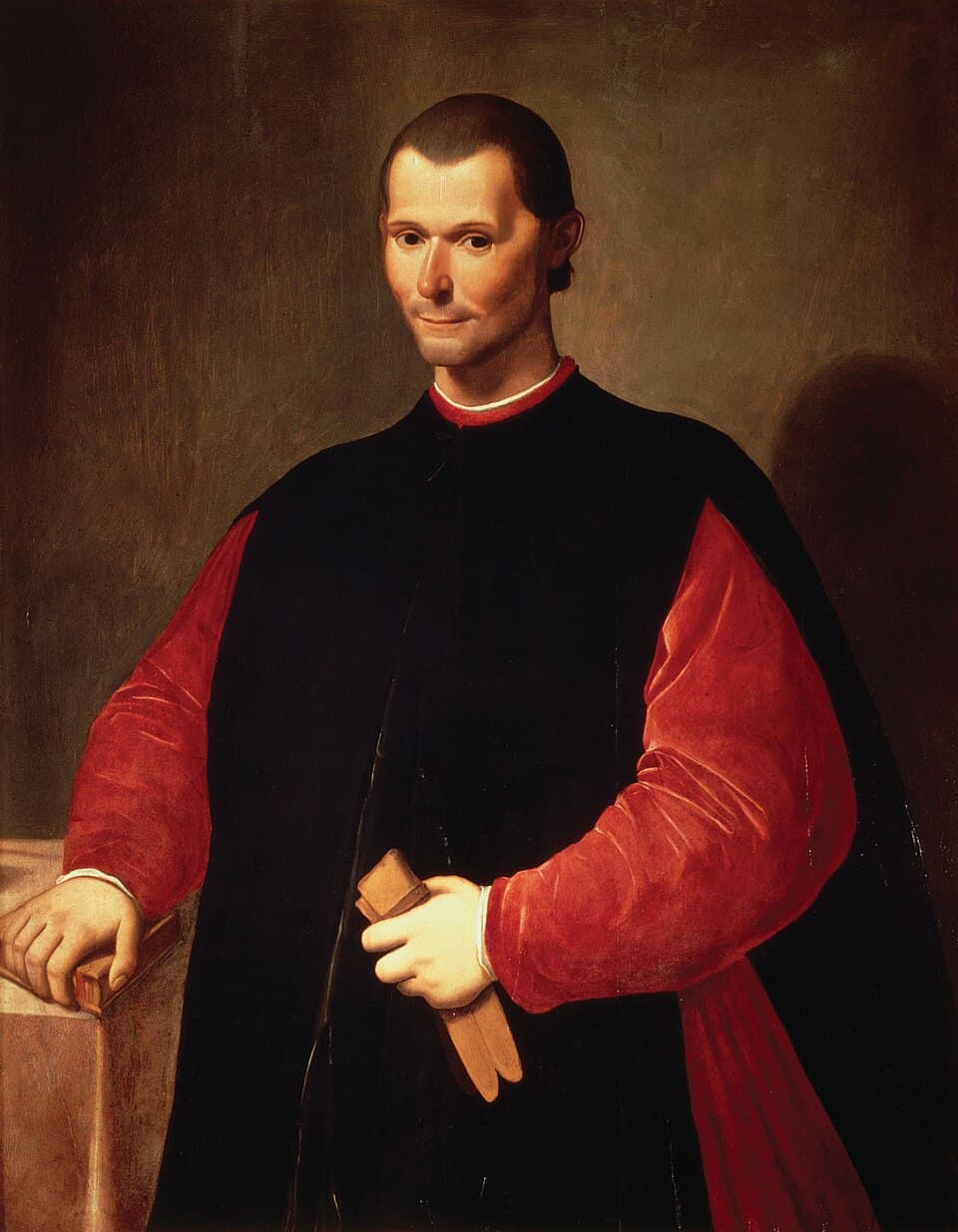
The False Hope
Niccolo Machiavelli
The Prince

Machiavelli explains that people often revolt against their rulers in the hope of improvement, only to find that the necessities of new rule inevitably make their situation worse than before.

...ards him; and in the antiquity and duration of his rule the memories and motives that make for change are lost, for one change always leaves the toothing for another. CHAPTER III. CONCERNING MIXED PRINCIPALITIES But the difficulties occur in a new principality. And firstly, if it be not entirely new, but is, as it were, a member of a state which, taken collectively, may be called composite, the changes arise chiefly from an inherent difficulty which there is in all new principalities; for
Men change their rulers willingly, hoping to better themselves, and this hope induces them to take up arms against him who rules: wherein they are deceived, because they afterwards find by experience they have gone from bad to worse. This follows also on another natural and common necessity, which always causes a new prince to burden those who have submitted to him with his soldiery and with infinite other hardships which he must put upon his new acquisition.
In this way you have enemies in all those whom you have injured in seizing that principality, and you are not able to keep those friends who put you there because of your not being able to satisfy them in the way they expected, and you cannot take strong measures against them, feeling bound to them. For, although one may be very strong in armed forces, yet in entering a province one has always need of the goodwill of the natives. For these reasons Louis the Twelfth, King of France, quickly oc...
3

Niccolo Machiavelli

The Prince

The Danger of Secret Favours

The excerpt agrees with the parent by warning that a prince who comes to power with the help of those discontented with the previous ruler will find it difficult to satisfy them, extending the idea that the hope for improvement is often disappointed.

...at the commencement of a princedom have been hostile, if they are of a description to need assistance to support themselves, can always be gained over with the greatest ease, and they will be tightly held to serve the prince with fidelity, inasmuch as they know it to be very necessary for them to cancel by deeds the bad impression which he had formed of them; and thus the prince always extracts more profit from them than from those who, serving him in too much security, may neglect his affairs.
And since the matter demands it, I must not fail to warn a prince, who by means of secret favours has acquired a new state, that he must well consider the reasons which induced those to favour him who did so; and if it be not a natural affection towards him, but only discontent with their government, then he will only keep them friendly with great trouble and difficulty, for it will be impossible to satisfy them. And weighing well the reasons for this in those examples which can be taken from ancient and modern affairs, we shall find that it is easier for the prince to make friends of those me...
6. It has been a custom with princes, in order to hold their states more securely, to build fortresses that may serve as a bridle and bit to those who might design to work against them, and as a place of refuge from a first attack. I praise this system because it has been made use of formerly. Notwithstanding that, Messer Nicolo Vitelli in our times has been seen to demolish two fortresses in Citta di Castello so that he might keep that state; Guido Ubaldo, Duke of Urbino, on returning to his...

Niccolo Machiavelli

The Prince

The Innovator's Dilemma

The excerpt explains that a new prince must introduce new rules and methods, which inevitably creates enemies and lukewarm support, thereby illustrating the natural necessity that forces him to burden his new subjects.

...irth, in order that he should become King of Rome and founder of the fatherland. It was necessary that Cyrus should find the Persians discontented with the government of the Medes, and the Medes soft and effeminate through their long peace. Theseus could not have shown his ability had he not found the Athenians dispersed. These opportunities, therefore, made those men fortunate, and their high ability enabled them to recognize the opportunity whereby their country was ennobled and made famous.
Those who by valorous ways become princes, like these men, acquire a principality with difficulty, but they keep it with ease. The difficulties they have in acquiring it rise in part from the new rules and methods which they are forced to introduce to establish their government and its security. And it ought to be remembered that there is nothing more difficult to take in hand, more perilous to conduct, or more uncertain in its success, than to take the lead in the introduction of a new order of things, because the innovator has for enemies all those who have done well under the old conditions...
Thus it happens that whenever those who are hostile have the opportunity to attack they do it like partisans, whilst the others defend lukewarmly, in such wise that the prince is endangered along with them. It is necessary, therefore, if we desire to discuss this matter thoroughly, to inquire whether these innovators can rely on themselves or have to depend on others: that is to say, whether, to consummate their enterprise, have they to use prayers or can they use force? In the first instance...

Blaise Pascal

Pensees

Power's Imaginary Foundation

The excerpt reframes the discussion by arguing that the stability of rule depends not merely on force or necessity but on the imaginative constructs that legitimize authority, shifting the lens from practical burdens to the psychology of belief.

...those who do not invent, the latter will call them ridiculous names, and would beat them with a stick. Let no one then boast of his subtlety, or let him keep his complacency to himself. 303 Might is the sovereign of the world, and not opinion.--But opinion makes use of might.--It is might that makes opinion. Gentleness is beautiful in our opinion. Why? Because he who will dance on a rope will be alone,[120] and I will gather a stronger mob of people who will say that it is unbecoming. 304
The cords which bind the respect of men to each other are in general cords of necessity; for there must be different degrees, all men wishing to rule, and not all being able to do so, but some being able. Let us then imagine we see society in the process of formation. Men will doubtless fight till the stronger party overcomes the weaker, and a dominant party is established. But when this is once determined, the masters, who do not desire the continuation of strife, then decree that the power which is in their hands shall be transmitted as they please. Some place it in election by the people, o...
These cords which bind the respect of men to such and such an individual are therefore the cords of imagination. 305 The Swiss are offended by being called gentlemen, and prove themselves true plebeians in order to be thought worthy of great office. 306 As duchies, kingships, and magistracies are real and necessary, because might rules all, they exist everywhere and always. But since only caprice makes such and such a one a ruler, the principle is not constant, but subject to variation,...