Fortune's Fickle Nature
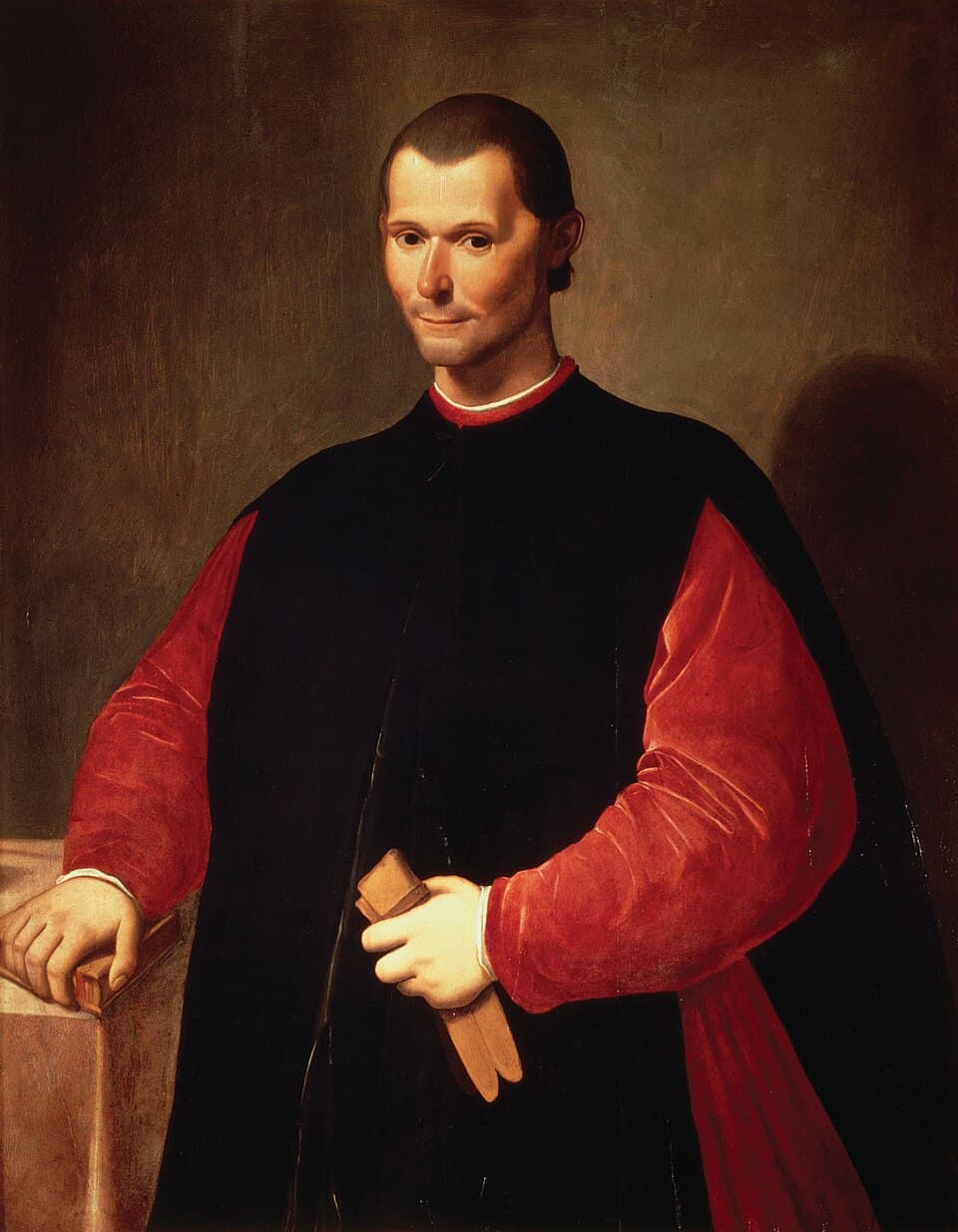
Niccolo Machiavelli
The Prince

The author argues that political success depends on a leader's ability to adapt their actions to the 'spirit of the times' rather than relying on fixed traits.

...t her, and thither she turns her forces where she knows that barriers and defences have not been raised to constrain her. And if you will consider Italy, which is the seat of these changes, and which has given to them their impulse, you will see it to be an open country without barriers and without any defence. For if it had been defended by proper valour, as are Germany, Spain, and France, either this invasion would not have made the great changes it has made or it would not have come at all.
And this I consider enough to say concerning resistance to fortune in general. But confining myself more to the particular, I say that a prince may be seen happy to-day and ruined to-morrow without having shown any change of disposition or character. This, I believe, arises firstly from causes that have already been discussed at length, namely, that the prince who relies entirely on fortune is lost when it changes. I believe also that he will be successful who directs his actions according to the spirit of the times, and that he whose actions do not accord with the times will not be successful.
Because men are seen, in affairs that lead to the end which every man has before him, namely, glory and riches, to get there by various methods; one with caution, another with haste; one by force, another by skill; one by patience, another by its opposite; and each one succeeds in reaching the goal by a different method. One can also see of two cautious men the one attain his end, the other fail; and similarly, two men by different observances are equally successful, the one being cautious, the...
5

Niccolo Machiavelli

The Prince

Fortune's Favor

This excerpt directly extends the parent text's core argument about the interaction of fortune and human action. It reinforces the idea that success depends on aligning one's steadfast nature with the changeable nature of fortune, using the vivid metaphor of fortune as a woman to advocate for an adventurous, forceful approach—a practical elaboration on 'directing actions according to the spirit of the times.'

...ld have done, he would never have succeeded. Because the King of France would have made a thousand excuses, and the others would have raised a thousand fears. I will leave his other actions alone, as they were all alike, and they all succeeded, for the shortness of his life did not let him experience the contrary; but if circumstances had arisen which required him to go cautiously, his ruin would have followed, because he would never have deviated from those ways to which nature inclined him.
I conclude, therefore that, fortune being changeful and mankind steadfast in their ways, so long as the two are in agreement men are successful, but unsuccessful when they fall out. For my part I consider that it is better to be adventurous than cautious, because fortune is a woman, and if you wish to keep her under it is necessary to beat and ill-use her; and it is seen that she allows herself to be mastered by the adventurous rather than by those who go to work more coldly. She is, therefore, always, woman-like, a lover of young men, because they are less cautious, more violent, and with mor...
CHAPTER XXVI. AN EXHORTATION TO LIBERATE ITALY FROM THE BARBARIANS Having carefully considered the subject of the above discourses, and wondering within myself whether the present times were propitious to a new prince, and whether there were elements that would give an opportunity to a wise and virtuous one to introduce a new order of things which would do honour to him and good to the people of this country, it appears to me that so many things concur to favour a new prince that I never...

Aristotle

Nicomachean Ethics

Nobility in Circumstances

Aristotle presents a counter-argument to the parent's claim that a prince's ruin can come without a change in his character. He asserts that the truly good and sensible man bears all fortunes becomingly and is not easily shaken from happiness by ordinary mischances, implying that a virtuous character provides a stability that can withstand fortune's changes, contrary to Machiavelli's more contingent view of success.

...hey bruise as it were and maim the blessedness: for they bring in positive pain, and hinder many acts of working. But still, even in these, nobleness shines through when a man bears contentedly many and great mischances not from insensibility to pain but because he is noble and high-spirited. And if, as we have said, the acts of working are what determine the character of the life, no one of the blessed can ever become wretched, because he will never do those things which are hateful and mean.
For the man who is truly good and sensible bears all fortunes, we presume, becomingly, and always does what is noblest under the circumstances, just as a good general employs to the best advantage the force he has with him; or a good shoemaker makes the handsomest shoe he can out of the leather which has been given him; and all other good artisans likewise. And if this be so, wretched never can the happy man come to be: I do not mean to say he will be blessed should he fall into fortunes like those of Priam. Nor, in truth, is he shifting and easily changeable, for on the one hand from his happ...
and, on the other, after such mischances he cannot regain his happiness in a little time; but, if at all, in a long and complete period, during which he has made himself master of great and noble things. Why then should we not call happy the man who works in the way of perfect virtue, and is furnished with external goods sufficient for acting his part in the drama of life:[35] and this during no ordinary period but such as constitutes a complete life as we have been describing it. Or we must...

Niccolo Machiavelli

The Prince

Fortune vs Free Will

This excerpt explains the underlying psychological and philosophical driver for the phenomena described in the parent text: the common belief that worldly affairs are governed by fortune and God, leading men to inaction. Machiavelli partially concedes this view but asserts the mechanism of 'free will,' positioning fortune as the arbiter of only half our actions, thereby explaining why some rely on fortune (and fail) while others who act can succeed.

...very bad to have neglected all other expedients for that, since you would never wish to fall because you trusted to be able to find someone later on to restore you. This again either does not happen, or, if it does, it will not be for your security, because that deliverance is of no avail which does not depend upon yourself; those only are reliable, certain, and durable that depend on yourself and your valour. CHAPTER XXV. WHAT FORTUNE CAN EFFECT IN HUMAN AFFAIRS AND HOW TO WITHSTAND HER
It is not unknown to me how many men have had, and still have, the opinion that the affairs of the world are in such wise governed by fortune and by God that men with their wisdom cannot direct them and that no one can even help them; and because of this they would have us believe that it is not necessary to labour much in affairs, but to let chance govern them. This opinion has been more credited in our times because of the great changes in affairs which have been seen, and may still be seen, every day, beyond all human conjecture. Sometimes pondering over this, I am in some degree inclined t...
[1] Frederick the Great was accustomed to say: “The older one gets the more convinced one becomes that his Majesty King Chance does three-quarters of the business of this miserable universe.” Sorel’s “Eastern Question.” I compare her to one of those raging rivers, which when in flood overflows the plains, sweeping away trees and buildings, bearing away the soil from place to place; everything flies before it, all yield to its violence, without being able in any way to withstand it; and ye...

David Hume

An Enquiry Concerning Human Understanding

Hidden Causes' Contrariety

Hume's excerpt directly questions our ability to know the true causes behind the uncertainty of events, suggesting hidden 'springs and principles' make outcomes appear contingent. This aligns with the META role by probing the epistemological limits of understanding fortune's changes, a core concern in Machiavelli's text about a prince's shifting happiness.

...d willingly know what judgement should be formed of such irregular and extraordinary actions, we may consider the sentiments commonly entertained with regard to those irregular events which appear in the course of nature, and the operations of external objects. All causes are not conjoined to their usual effects with like uniformity. An artificer, who handles only dead matter, may be disappointed of his aim, as well as the politician, who directs the conduct of sensible and intelligent agents.
The vulgar, who take things according to their first appearance, attribute the uncertainty of events to such an uncertainty in the causes as makes the latter often fail of their usual influence; though they meet with no impediment in their operation. But philosophers, observing that, almost in every part of nature, there is contained a vast variety of springs and principles, which are hid, by reason of their minuteness or remoteness, find, that it is at least possible the contrariety of events may not proceed from any contingency in the cause, but from the secret operation of contrary causes....
A peasant can give no better reason for the stopping of any clock or watch than to say that it does not commonly go right: But an artist easily perceives that the same force in the spring or pendulum has always the same influence on the wheels; but fails of its usual effect, perhaps by reason of a grain of dust, which puts a stop to the whole movement. From the observation of several parallel instances, philosophers form a maxim that the connexion between all causes and effects is equally neces...

Francois de La Rochefoucauld

Maxims

Fortune's Strategic Use

La Rochefoucauld offers concise, actionable advice: to be great, one must know how to profit from every phase of fortune. This provides direct practical guidance on how to engage with the variable circumstances Machiavelli describes, answering the 'what should I do?' question.

To be a great man one should know how to profit by every phase of fortune.