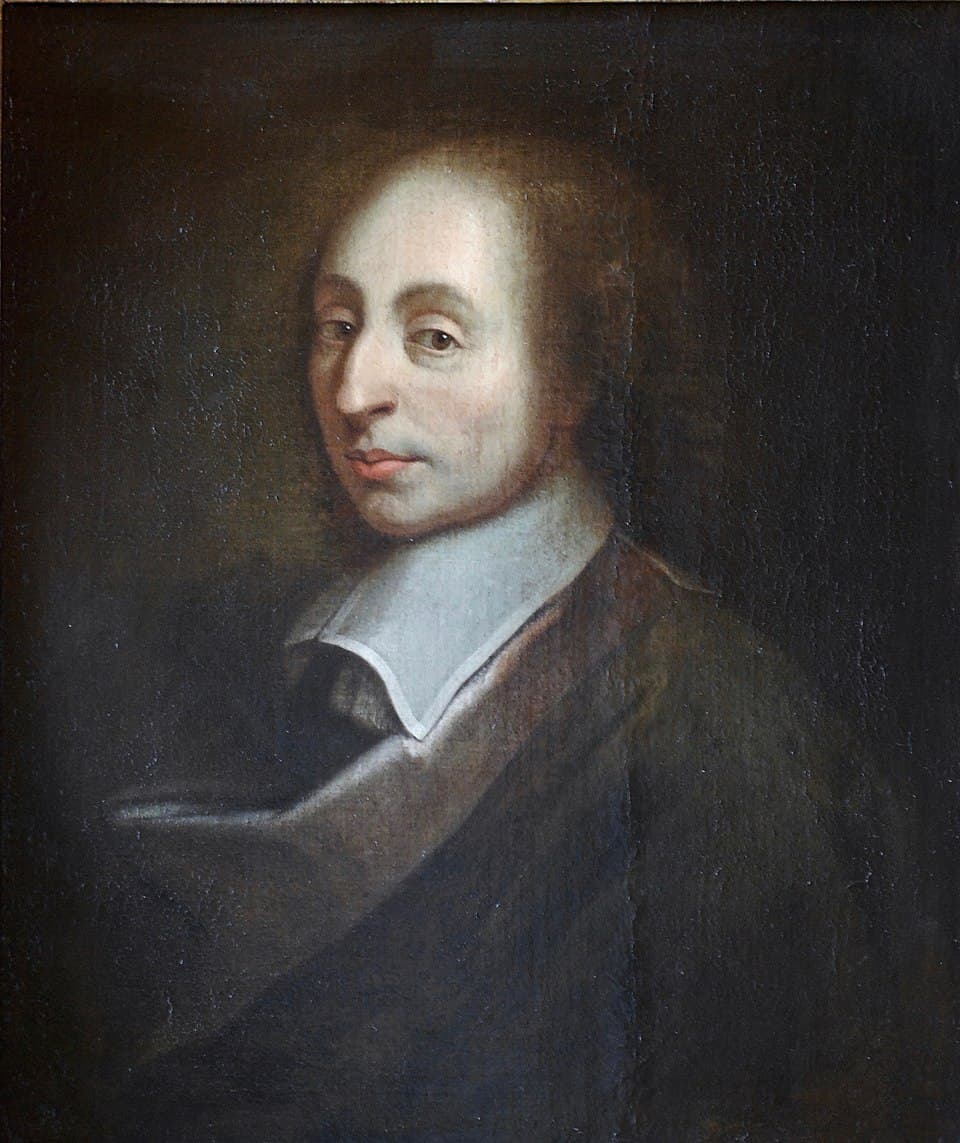
Christ as Lens
Blaise Pascal
Pensees

Pascal asserts that Jesus Christ is the sole lens through which humanity can truly understand God, life, death, and the self, suggesting that without scripture, nature remains dark and confusing.

...st, we prove God, and teach morality and doctrine. Jesus Christ is then the true God of men. But we know at the same time our wretchedness; for this God is none other than the Saviour of our wretchedness. So we can only know God well by knowing our iniquities. Therefore those who have known God, without knowing their wretchedness, have not glorified Him, but have glorified themselves. Quia ... non cognovit per sapientiam ... placuit Deo per stultitiam prædicationis salvos facere.[201] 547
Not only do we know God by Jesus Christ alone, but we know ourselves only by Jesus Christ. We know life and death only through Jesus Christ. Apart from Jesus Christ, we do not know what is our life, nor our death, nor God, nor ourselves. Thus without the Scripture, which has Jesus Christ alone for its object, we know nothing, and see only darkness and confusion in the nature of God, and in our own nature.
548 It is not only impossible but useless to know God without Jesus Christ. They have not departed from Him, but approached; they have not humbled themselves, but ... Quo quisque optimus est, pessimus, si hoc ipsum, quod optimus est, adscribat sibi. 549 I love poverty because He loved it. I love riches because they afford me the means of helping the very poor. I keep faith with everybody; I do not render evil to those who wrong me, but I wish them a lot like mine, in which I receive ne...
5

Augustine of Hippo

Confessions

The Mediator's Milk

Augustine affirms the necessity of embracing Christ as the Mediator between God and humans, echoing Pascal's claim that we know God and ourselves only through Jesus Christ.

...ad in some way known, it had had no sure ground to prefer it to the changeable. And thus with the flash of one trembling glance it arrived at THAT WHICH IS. And then I saw Thy invisible things understood by the things which are made. But I could not fix my gaze thereon; and my infirmity being struck back, I was thrown again on my wonted habits, carrying along with me only a loving memory thereof, and a longing for what I had, as it were, perceived the odour of, but was not yet able to feed on.
Then I sought a way of obtaining strength sufficient to enjoy Thee; and found it not, until I embraced that Mediator betwixt God and men, the Man Christ Jesus, who is over all, God blessed for evermore, calling unto me, and saying, I am the way, the truth, and the life, and mingling that food which I was unable to receive, with our flesh. For, the Word was made flesh, that Thy wisdom, whereby Thou createdst all things, might provide milk for our infant state. For I did not hold to my Lord Jesus Christ, I, humbled, to the Humble; nor knew I yet whereto His infirmity would guide us.
For Thy Word, the Eternal Truth, far above the higher parts of Thy Creation, raises up the subdued unto Itself: but in this lower world built for Itself a lowly habitation of our clay, whereby to abase from themselves such as would be subdued, and bring them over to Himself; allaying their swelling, and fomenting their love; to the end they might go on no further in self-confidence, but rather consent to become weak, seeing before their feet the Divinity weak by taking our coats of skin; and we...

Blaise Pascal

Pensees

The Christ-Mediated Middle

Pascal explains that knowing God without knowing human misery leads to pride, and knowing misery without God leads to despair; only in Jesus Christ do we find both, which is why He is essential for true knowledge.

...t is not man's state. They inspired feelings of pure littleness, and that is not man's state. There must be feelings of humility, not from nature, but from penitence, not to rest in them, but to go on to greatness. There must be feelings of greatness, not from merit, but from grace, and after having passed through humiliation. 525 Misery induces despair, pride induces presumption. The Incarnation shows man the greatness of his misery by the greatness of the remedy which he required. 526
The knowledge of God without that of man's misery causes pride. The knowledge of man's misery without that of God causes despair. The knowledge of Jesus Christ constitutes the middle course, because in Him we find both God and our misery.
527 Jesus Christ is a God whom we approach without pride, and before whom we humble ourselves without despair. 528 ... Not a degradation which renders us incapable of good, nor a holiness exempt from evil. 529 A person told me one day that on coming from confession he felt great joy and confidence. Another told me that he remained in fear. Whereupon I thought that these two together would make one good man, and that each was wanting in that he had not the feeling of the other. The same...

Augustine of Hippo

Confessions

Truth Beyond Individual Minds

Augustine shifts the focus from knowing through a specific mediator to seeing truth in the unchangeable Truth itself, which is above individual perspectives, suggesting a different basis for knowledge.

...have that his own which belongs to all, is driven from what is in common to his own; that is, from truth, to a lie. For he that speaketh a lie, speaketh it of his own. Hearken, O God, Thou best judge; Truth Itself, hearken to what I shall say to this gainsayer, hearken, for before Thee do I speak, and before my brethren, who employ Thy law lawfully, to the end of charity: hearken and behold, if it please Thee, what I shall say to him. For this brotherly and peaceful word do I return unto Him:
"If we both see that to be true that Thou sayest, and both see that to be true that I say, where, I pray Thee, do we see it? Neither I in thee, nor thou in me; but both in the unchangeable Truth itself, which is above our souls." Seeing then we strive not about the very light of the Lord God, why strive we about the thoughts of our neighbour which we cannot so see, as the unchangeable Truth is seen: for that, if Moses himself had appeared to us and said, "This I meant"; neither so should we see it, but should believe it.
Let us not then be puffed up for one against another, above that which is written: let us love the Lord our God with all our heart, with all our soul, and with all our mind: and our neighbour as ourself. With a view to which two precepts of charity, unless we believe that Moses meant, whatsoever in those books he did mean, we shall make God a liar, imagining otherwise of our fellow servant's mind, than he hath taught us. Behold now, how foolish it is, in such abundance of most true meanings, as...

David Hume

An Enquiry Concerning Human Understanding

The Deity's Limited Analogy

Hume's argument that we can only know God through His works and cannot infer further attributes questions the possibility of certain knowledge of God, which contrasts with Pascal's claim that only through Christ and Scripture can we know God and ourselves.

...oot, which also left its impression, though effaced by time or other accidents. Here we mount from the effect to the cause; and descending again from the cause, infer alterations in the effect; but this is not a continuation of the same simple chain of reasoning. We comprehend in this case a hundred other experiences and observations, concerning the usual figure and members of that species of animal, without which this method of argument must be considered as fallacious and sophistical. 113.
The case is not the same with our reasonings from the works of nature. The Deity is known to us only by his productions, and is a single being in the universe, not comprehended under any species or genus, from whose experienced attributes or qualities, we can, by analogy, infer any attribute or quality in him. As the universe shews wisdom and goodness, we infer wisdom and goodness. As it shews a particular degree of these perfections, we infer a particular degree of them, precisely adapted to the effect which we examine. But farther attributes or farther degrees of the same attributes, we can...
Now, without some such licence of supposition, it is impossible for us to argue from the cause, or infer any alteration in the effect, beyond what has immediately fallen under our observation. Greater good produced by this Being must still prove a greater degree of goodness: a more impartial distribution of rewards and punishments must proceed from a greater regard to justice and equity. Every supposed addition to the works of nature makes an addition to the attributes of the Author of nature;...

Marcus Aurelius

Meditations

God's Pure Understanding

Marcus Aurelius offers practical guidance on achieving inner peace by disregarding the body and external concerns, providing an alternative path to self-knowledge and tranquility without reliance on Christian revelation.

...spect thy mind only, and that divine part of thine, and this shall be thine only fear, not that some time or other thou shalt cease to live, but thou shalt never begin to live according to nature: then shalt thou be a man indeed, worthy of that world, from which thou hadst thy beginning; then shalt thou cease to be a stranger in thy country, and to wonder at those things that happen daily, as things strange and unexpected, and anxiously to depend of divers things that are not in thy power. II.
God beholds our minds and understandings, bare and naked from these material vessels, and outsides, and all earthly dross. For with His simple and pure understanding, He pierceth into our inmost and purest parts, which from His, as it were by a water pipe and channel, first flowed and issued. This if thou also shalt use to do, thou shalt rid thyself of that manifold luggage, wherewith thou art round about encumbered. For he that does regard neither his body, nor his clothing, nor his dwelling, nor any such external furniture, must needs gain unto himself great rest and ease.
Three things there be in all, which thou doest consist of; thy body, thy life, and thy mind. Of these the two former, are so far forth thine, as that thou art bound to take care for them. But the third alone is that which is properly thine. If then thou shalt separate from thyself, that is from thy mind, whatsoever other men either do or say, or whatsoever thou thyself hast heretofore either done or said; and all troublesome thoughts concerning the future, and whatsoever, (as either belonging t...