Love's Painful Ascent
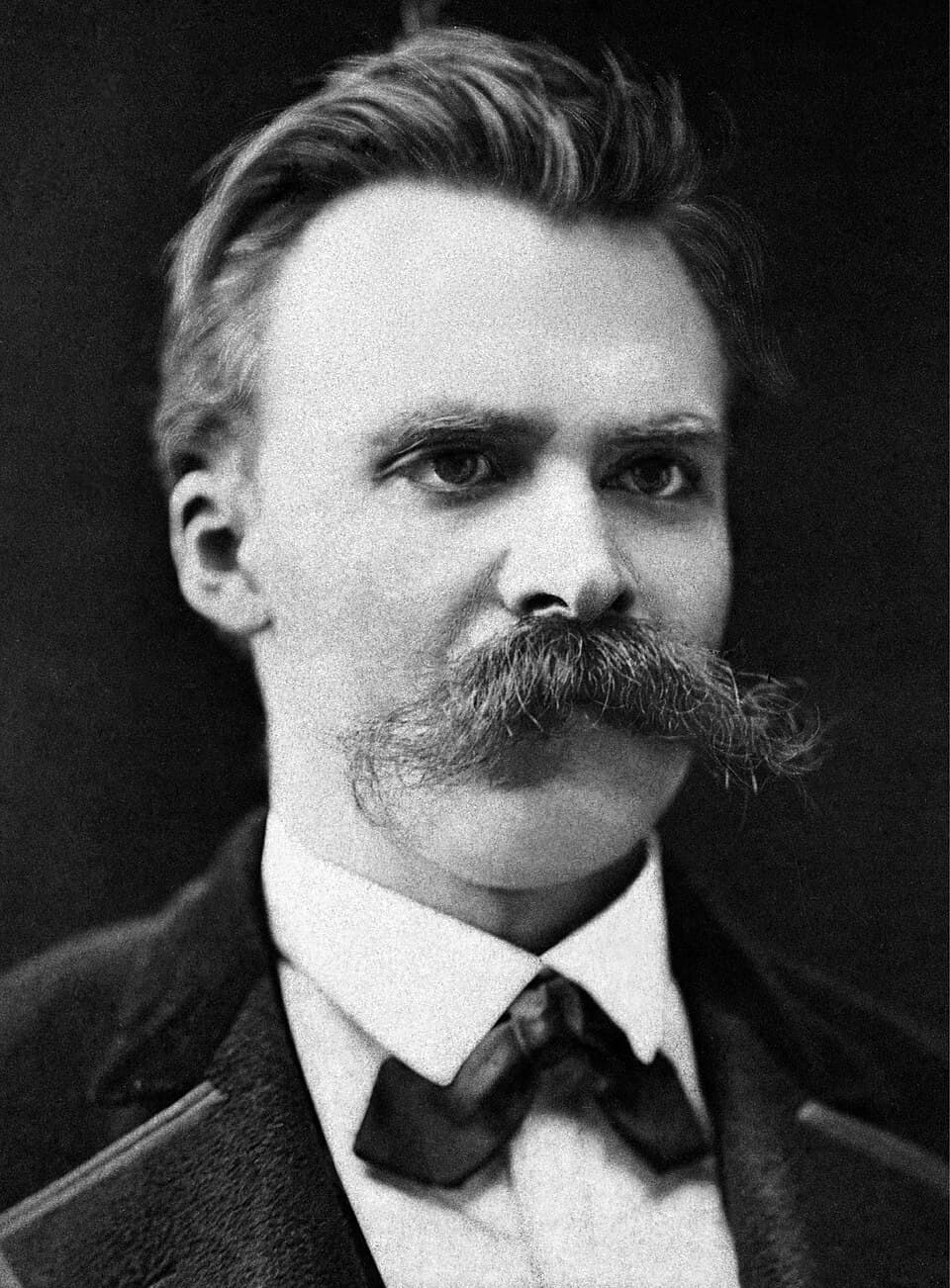
Friedrich Nietzsche
Thus Spake Zarathustra

The author critiques common romantic love as animalistic, urging humanity to transform love into a 'torch' that leads toward self-surpassing and loftier paths.

...e choicely. But one time he spoilt his company for all time: his marriage he calleth it. Another sought a handmaid with the virtues of an angel. But all at once he became the handmaid of a woman, and now would he need also to become an angel. Careful, have I found all buyers, and all of them have astute eyes. But even the astutest of them buyeth his wife in a sack. Many short follies—that is called love by you. And your marriage putteth an end to many short follies, with one long stupidity.
Your love to woman, and woman’s love to man—ah, would that it were sympathy for suffering and veiled deities! But generally two animals alight on one another. But even your best love is only an enraptured simile and a painful ardour. It is a torch to light you to loftier paths. Beyond yourselves shall ye love some day! Then LEARN first of all to love.
And on that account ye had to drink the bitter cup of your love. Bitterness is in the cup even of the best love: thus doth it cause longing for the Superman; thus doth it cause thirst in thee, the creating one! Thirst in the creating one, arrow and longing for the Superman: tell me, my brother, is this thy will to marriage? Holy call I such a will, and such a marriage.— Thus spake Zarathustra. XXI. VOLUNTARY DEATH. Many die too late, and some die too early. Yet strange soundeth the pr...
5

Friedrich Nietzsche

Thus Spake Zarathustra

Love Beyond Humanity

This excerpt extends the parent's call to love beyond oneself by specifying that the highest love is directed towards the furthest, the future, and even towards abstract phantoms, thus reinforcing the idea of love as a path to transcendence.

.... NEIGHBOUR-LOVE. Ye crowd around your neighbour, and have fine words for it. But I say unto you: your neighbour-love is your bad love of yourselves. Ye flee unto your neighbour from yourselves, and would fain make a virtue thereof: but I fathom your “unselfishness.” The THOU is older than the I; the THOU hath been consecrated, but not yet the I: so man presseth nigh unto his neighbour. Do I advise you to neighbour-love? Rather do I advise you to neighbour-flight and to furthest love!
Higher than love to your neighbour is love to the furthest and future ones; higher still than love to men, is love to things and phantoms. The phantom that runneth on before thee, my brother, is fairer than thou; why dost thou not give unto it thy flesh and thy bones?
But thou fearest, and runnest unto thy neighbour. Ye cannot endure it with yourselves, and do not love yourselves sufficiently: so ye seek to mislead your neighbour into love, and would fain gild yourselves with his error. Would that ye could not endure it with any kind of near ones, or their neighbours; then would ye have to create your friend and his overflowing heart out of yourselves. Ye call in a witness when ye want to speak well of yourselves; and when ye have misled him to think well...

Francois de La Rochefoucauld

Maxims

Love as Woman's Passion

This excerpt directly contradicts the parent's cynical view of woman's love by asserting that love is the passion that most becomes a woman, implying a nobility and appropriateness to feminine love that the parent denies.

Of all the violent passions the one that becomes a woman best is love.

Julius Evola

Revolt Against the Modern World

Eros as Androgynous Quest

This excerpt provides a metaphysical explanation for sexual love, positing that it stems from a deep desire to recover a primordial state of wholeness, thus explaining the powerful, often misguided drive that the parent describes as animalistic.

...subjected to the magic of the feminine principle and is reduced to the likes of an earthly demon or a god of the fecundating waters—in other words, to an insufficient and dark power. From this theme derive, analogically and according to different adaptations, types of civilization that may be called Aphrodistic. This could be yet another meaning of the theory of eros that Plato associated with the myth of the androgynous beings whose power was shattered when they became "two," male and female.
Sexual love arises between mortal beings from the deep-seated desire of the fallen male who realizes his inner insufficiency and who seeks, in the fulgurating ecstasis of orgasm, to reascend to the wholeness of the primordial "androgynous" state. In this sense, the erotic experience conceals a variation in the theme of the rebellion of the Titans with the only difference being that, due to its own nature, it takes place under the aegis of the feminine principle.
It is easy to remark that a principle of ethical decadence and corruption must necessarily be connected with a civilization oriented in this sense, as it is apparent in the various festivals that up to relatively recent times were inspired by Aphroditism. If Mouru, the third creation of Ahura Mazda, which most likely corresponds to Atlantis, is seen as the Demetrian civilization, then the notion that the god of darkness set up various sins as some kind of countercreation may refer to the follow...

Søren Kierkegaard

Fear and Trembling

Love's Two-Edged Sword

This excerpt reframes the discussion by presenting love as a serious, immortal exploit rather than a transient emotion, shifting the focus from psychological critique to existential and ethical significance.

...ilderment go ahead and do likewise? If I do not dare to speak freely, I will be completely silent about Abraham, above all I will not disparage him in such a way that precisely thereby he becomes a pitfall for the weak. For if one makes faith everything, that is, makes it what it is, then, according to my way of thinking, one may speak of it without danger in our age, which hardly extravagates in the matter of faith, and it is only by faith one attains likeness to Abraham, not by murder.
If one makes love a transitory mood, a voluptuous emotion in a man, then one only lays pitfalls for the weak when one would talk about the exploits of love. Transient emotions every man surely has, but if as a consequence of such emotions one would do the terrible thing which love has sanctified as an immortal exploit, then all is lost, including the exploit and the bewildered doer of it. So one surely can talk about Abraham, for the great can never do harm when it is apprehended in its greatness; it is like a two-edged sword which slays and saves.
If it should fall to my lot to talk on the subject, I would begin by showing what a pious and God-fearing man Abraham was, worthy to be called God's elect. Only upon such a man is imposed such a test. But where is there such a man? Next I would describe how Abraham loved Isaac. To this end I would pray all good spirits to come to my aid, that my speech might be as glowing as paternal love is. I hope that I should be able to describe it in such a way that there would not be many a father i...

Friedrich Nietzsche

Thus Spake Zarathustra

Learning to Love Oneself

This excerpt offers practical guidance on learning to love, portraying it as a subtle and patient art that requires time and effort, directly responding to the parent's injunction to 'learn first of all to love.'

...light, and be a bird, must love himself:—thus do I teach. Not, to be sure, with the love of the sick and infected, for with them stinketh even self-love! One must learn to love oneself—thus do I teach—with a wholesome and healthy love: that one may endure to be with oneself, and not go roving about. Such roving about christeneth itself “brotherly love”; with these words hath there hitherto been the best lying and dissembling, and especially by those who have been burdensome to every one.
And verily, it is no commandment for to-day and to-morrow to LEARN to love oneself. Rather is it of all arts the finest, subtlest, last and patientest. For to its possessor is all possession well concealed, and of all treasure-pits one’s own is last excavated—so causeth the spirit of gravity.
Almost in the cradle are we apportioned with heavy words and worths: “good” and “evil”—so calleth itself this dowry. For the sake of it we are forgiven for living. And therefore suffereth one little children to come unto one, to forbid them betimes to love themselves—so causeth the spirit of gravity. And we—we bear loyally what is apportioned unto us, on hard shoulders, over rugged mountains! And when we sweat, then do people say to us: “Yea, life is hard to bear!” But man himself only is h...