The Foundation of Power
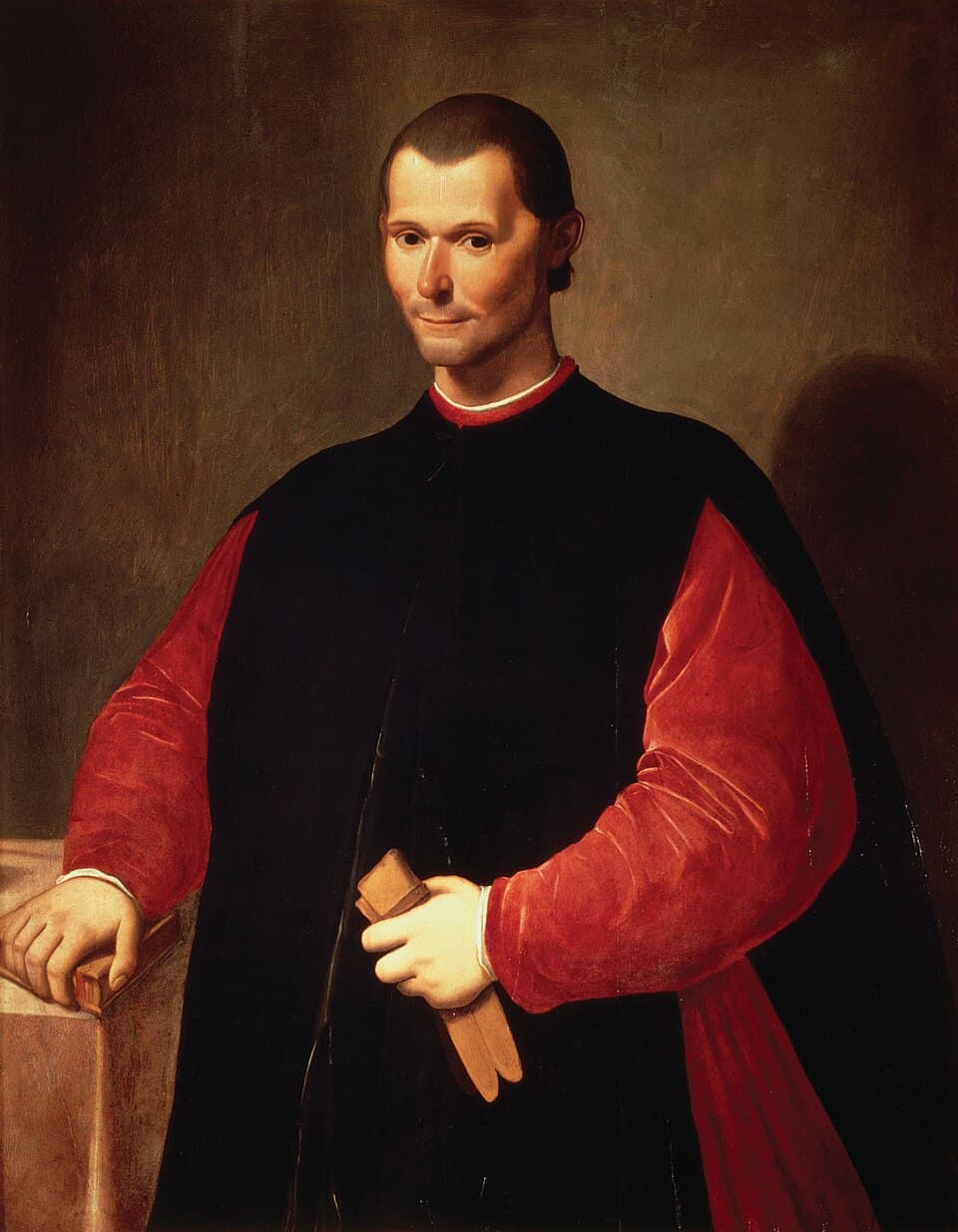
Niccolo Machiavelli
The Prince

The author asserts that true political stability is impossible without a military force comprised of one's own citizens, as reliance on mercenaries is inherently fragile.

...at this was ‘wholly unhistorical.’ He might well have added that the Roman power was at its zenith when every citizen acknowledged his liability to fight for the State, but that it began to decline as soon as this obligation was no longer recognised.”—Pall Mall Gazette, 15th May 1906. I conclude, therefore, that no principality is secure without having its own forces; on the contrary, it is entirely dependent on good fortune, not having the valour which in adversity would defend it. And
It has always been the opinion and judgment of wise men that nothing can be so uncertain or unstable as fame or power not founded on its own strength. And one’s own forces are those which are composed either of subjects, citizens, or dependents; all others are mercenaries or auxiliaries.
And the way to make ready one’s own forces will be easily found if the rules suggested by me shall be reflected upon, and if one will consider how Philip, the father of Alexander the Great, and many republics and princes have armed and organized themselves, to which rules I entirely commit myself. CHAPTER XIV. THAT WHICH CONCERNS A PRINCE ON THE SUBJECT OF THE ART OF WAR A prince ought to have no other aim or thought, nor select anything else for his study, than war and its rules and disc...
6

Niccolo Machiavelli

The Prince

Victory with Own Arms

Directly reaffirms the parent's claim by advising a prince to always avoid mercenaries/auxiliaries and rely solely on his own arms, explicitly valuing this as the only path to a 'real victory.'

...re hazardous than mercenaries, because with them the ruin is ready made; they are all united, all yield obedience to others; but with mercenaries, when they have conquered, more time and better opportunities are needed to injure you; they are not all of one community, they are found and paid by you, and a third party, which you have made their head, is not able all at once to assume enough authority to injure you. In conclusion, in mercenaries dastardy is most dangerous; in auxiliaries, valour.
The wise prince, therefore, has always avoided these arms and turned to his own; and has been willing rather to lose with them than to conquer with the others, not deeming that a real victory which is gained with the arms of others.
I shall never hesitate to cite Cesare Borgia and his actions. This duke entered the Romagna with auxiliaries, taking there only French soldiers, and with them he captured Imola and Forli; but afterwards, such forces not appearing to him reliable, he turned to mercenaries, discerning less danger in them, and enlisted the Orsini and Vitelli; whom presently, on handling and finding them doubtful, unfaithful, and dangerous, he destroyed and turned to his own men. And the difference between one and...

Blaise Pascal

Pensees

Power's Weak Foundation

Directly opposes the parent's premise by arguing that power is most securely founded on the 'folly' and 'weakness' of the people, claiming that a foundation in 'sound reason' is actually 'very ill founded.'

...f the people. But we must now destroy this last proposition, and show that it remains always true that the people are foolish, though their opinions are sound; because they do not perceive the truth where it is, and, as they place it where it is not, their opinions are always very false and very unsound. 329 The reason of effects.--The weakness of man is the reason why so many things are considered fine, as to be good at playing the lute. It is only an evil because of our weakness. 330
The power of kings is founded on the reason and on the folly of the people, and specially on their folly. The greatest and most important thing in the world has weakness for its foundation, and this foundation is wonderfully sure; for there is nothing more sure than this, that the people will be weak. What is based on sound reason is very ill founded, as the estimate of wisdom.
331 We can only think of Plato and Aristotle in grand academic robes. They were honest men, like others, laughing with their friends, and when they diverted themselves with writing their Laws and the Politics, they did it as an amusement. That part of their life was the least philosophic and the least serious; the most philosophic was to live simply and quietly. If they wrote on politics, it was as if laying down rules for a lunatic asylum; and if they presented the appearance of speakin...

Niccolo Machiavelli

The Prince

Fear Over Love

Explains the underlying cause for the parent's observation by detailing a cynical view of human nature—men are 'ungrateful, fickle, false'—which necessitates the reliance on one's own strength to enforce stability through fear.

...tas me talia cogunt Moliri, et late fines custode tueri.”[2] Nevertheless he ought to be slow to believe and to act, nor should he himself show fear, but proceed in a temperate manner with prudence and humanity, so that too much confidence may not make him incautious and too much distrust render him intolerable. [2] . . . against my will, my fate A throne unsettled, and an infant state, Bid me defend my realms with all my pow’rs, And guard with these severities my shores. Christopher Pitt.
Upon this a question arises: whether it be better to be loved than feared or feared than loved? It may be answered that one should wish to be both, but, because it is difficult to unite them in one person, it is much safer to be feared than loved, when, of the two, either must be dispensed with. Because this is to be asserted in general of men, that they are ungrateful, fickle, false, cowardly, covetous, and as long as you succeed they are yours entirely; they will offer you their blood, property, life, and children, as is said above, when the need is far distant; but when it approaches they t...
Nevertheless a prince ought to inspire fear in such a way that, if he does not win love, he avoids hatred; because he can endure very well being feared whilst he is not hated, which will always be as long as he abstains from the property of his citizens and subjects and from their women. But when it is necessary for him to proceed against the life of someone, he must do it on proper justification and for manifest cause, but above all things he must keep his hands off the property of others, be...

Blaise Pascal

Pensees

Opinion vs Might

Shifts the lens from the source of power (one's own strength vs. foreign) to its fundamental nature, positing a distinction between power based on 'opinion and imagination' (pleasant but temporary) and power based on 'might' (lasting but tyrannical).

...rmine justice. 310 King and tyrant.--I, too, will keep my thoughts secret. I will take care on every journey. Greatness of establishment, respect for establishment. The pleasure of the great is the power to make people happy. The property of riches is to be given liberally. The property of each thing must be sought. The property of power is to protect. When force attacks humbug, when a private soldier takes the square cap off a first president, and throws it out of the window. 311
The government founded on opinion and imagination reigns for some time, and this government is pleasant and voluntary; that founded on might lasts for ever. Thus opinion is the queen of the world, but might is its tyrant.
312 Justice is what is established; and thus all our established laws will necessarily be regarded as just without examination, since they are established. 313 Sound opinions of the people.--Civil wars are the greatest of evils.[121] They are inevitable, if we wish to reward desert; for all will say they are deserving. The evil we have to fear from a fool who succeeds by right of birth, is neither so great nor so sure. 314 God has created all for Himself. He has bestowed upon Himself...

Arthur Schopenhauer

The Wisdom of Life

Greatness vs Fame

Questions the very value of the external fame and power that the parent text discusses, suggesting that true, lasting worth is internal ('a possession dependent entirely upon himself') and separate from the unstable judgment of the masses.

...correctly, by the disposition and capacity from which his merits proceed, whether they be moral or intellectual. The best side of a man's nature must of necessity be more important for him than for anyone else: the reflection of it, the opinion which exists in the heads of others, is a matter that can affect him only in a very subordinate degree. He who deserves fame without getting it possesses by far the more important element of happiness, which should console him for the loss of the other.
It is not that a man is thought to be great by masses of incompetent and often infatuated people, but that he really is great, which should move us to envy his position; and his happiness lies, not in the fact that posterity will hear of him, but that he is the creator of thoughts worthy to be treasured up and studied for hundreds of years. Besides, if a man has done this, he possesses something which cannot be wrested from him; and, unlike fame, it is a possession dependent entirely upon himself. If admiration were his chief aim, there would be nothing in him to admire.
This is just what happens in the case of false, that is, unmerited, fame; for its recipient lives upon it without actually possessing the solid substratum of which fame is the outward and visible sign. False fame must often put its possessor out of conceit with himself; for the time may come when, in spite of the illusions borne of self-love, he will feel giddy on the heights which he was never meant to climb, or look upon himself as spurious coin; and in the anguish of threatened discovery and...

Francois de La Rochefoucauld

Maxims

Fame's True Measure

Provides a practical maxim for evaluating the fame of great men, advising one to judge it by 'the means used to acquire it,' which is a concrete guideline related to assessing the stability of power as discussed in the parent text.

The fame of great men ought always to be estimated by the means used to acquire it.