Liberality's Proportional Measure
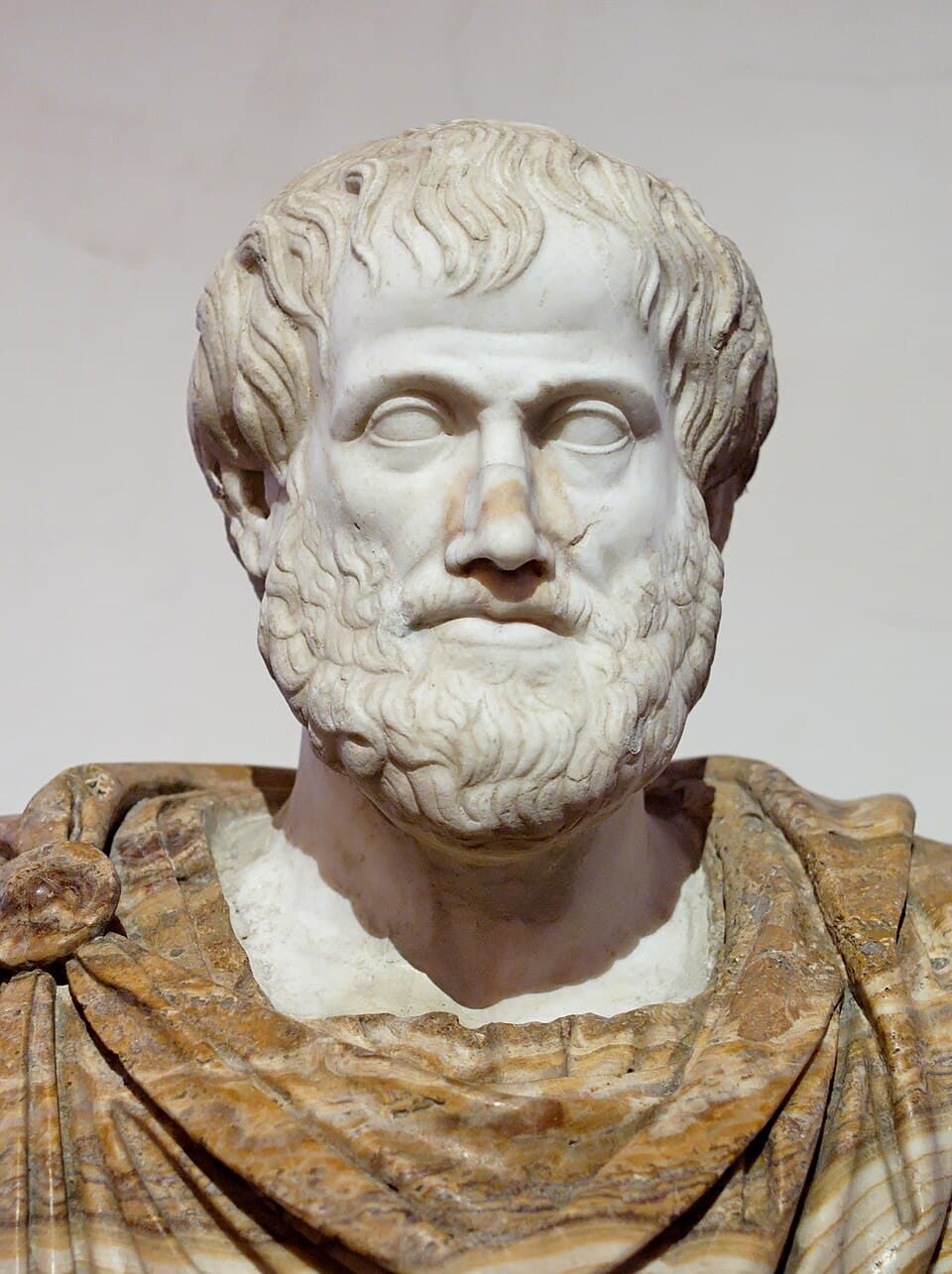
Aristotle
Nicomachean Ethics

The author defines liberality as a moral state relative to one's means rather than the absolute quantity of a gift.

...sary, that he may have somewhat to give: neither will he be careless of his own, since it is his wish through these to help others in need: nor will he give to chance people, that he may have wherewith to give to those to whom he ought, at right times, and on occasions when it is honourable so to do. Again, it is a trait in the Liberal man’s character even to exceed very much in giving so as to leave too little for himself, it being characteristic of such an one not to have a thought of self.
Now Liberality is a term of relation to a man’s means, for the Liberal-ness depends not on the amount of what is given but on the moral state of the giver which gives in proportion to his means. There is then no reason why he should not be the more Liberal man who gives the less amount, if he has less to give out of.
Again, they are thought to be more Liberal who have inherited, not acquired for themselves, their means; because, in the first place, they have never experienced want, and next, all people love most their own works, just as parents do and poets. It is not easy for the Liberal man to be rich, since he is neither apt to receive nor to keep but to lavish, and values not wealth for its own sake but with a view to giving it away. Hence it is commonly charged upon fortune that they who most deserve...
6

Aristotle

Nicomachean Ethics

The Balanced Exchange

This excerpt elaborates on the liberal man's giving in proper proportion and with pleasure, directly extending Aristotle's claim that liberality depends on giving proportionally to one's means.

...pent upon such objects, would have nothing to spend on those on which he ought: for, as I have said before, he is Liberal who spends in proportion to his means, and on proper objects, while he who does so in excess is prodigal (this is the reason why we never call despots prodigal, because it does not seem to be easy for them by their gifts and expenditure to go beyond their immense possessions). To sum up then. Since Liberality is a mean state in respect of the giving and receiving of wealth,
The Liberal man will give and spend on proper objects, and in proper proportion, in great things and in small alike, and all this with pleasure to himself; also he will receive from right sources, and in right proportion: because, as the virtue is a mean state in respect of both, he will do both as he ought, and, in fact, upon proper giving follows the correspondent receiving, while that which is not such is contrary to it.
(Now those which follow one another come to co-exist in the same person, those which are contraries plainly do not.) Again, should it happen to him to spend money beyond what is needful, or otherwise than is well, he will be vexed, but only moderately and as he ought; for feeling pleasure and pain at right objects, and in right manner, is a property of Virtue. The Liberal man is also a good man to have for a partner in respect of wealth: for he can easily be wronged, since he values not wealt...

Niccolo Machiavelli

The Prince

The Reputation Trap

Machiavelli argues that liberality, when practiced, can lead to ruin and hatred, advising princes to avoid it. This challenges Aristotle's endorsement of liberality as a moral virtue.

...his not being possible, he may with less hesitation abandon himself to them. And again, he need not make himself uneasy at incurring a reproach for those vices without which the state can only be saved with difficulty, for if everything is considered carefully, it will be found that something which looks like virtue, if followed, would be his ruin; whilst something else, which looks like vice, yet followed brings him security and prosperity. CHAPTER XVI. CONCERNING LIBERALITY AND MEANNESS
Commencing then with the first of the above-named characteristics, I say that it would be well to be reputed liberal. Nevertheless, liberality exercised in a way that does not bring you the reputation for it, injures you; for if one exercises it honestly and as it should be exercised, it may not become known, and you will not avoid the reproach of its opposite. Therefore, any one wishing to maintain among men the name of liberal is obliged to avoid no attribute of magnificence; so that a prince thus inclined will consume in such acts all his property, and will be compelled in the end, if he wi...
We have not seen great things done in our time except by those who have been considered mean; the rest have failed. Pope Julius the Second was assisted in reaching the papacy by a reputation for liberality, yet he did not strive afterwards to keep it up, when he made war on the King of France; and he made many wars without imposing any extraordinary tax on his subjects, for he supplied his additional expenses out of his long thriftiness. The present King of Spain would not have undertaken or c...

Aristotle

Nicomachean Ethics

Virtue's Pleasurable Action

Aristotle identifies honour as the motive for the liberal man's giving, explaining the psychological driver behind proportional generosity.

...ing, the case of being too little freehanded with one’s own being commoner than taking that which is not one’s own. And again, it is they who give that are denominated Liberal, while they who forbear to receive are commended, not on the score of Liberality but of just dealing, while for receiving men are not, in fact, praised at all. And the Liberal are liked almost best of all virtuous characters, because they are profitable to others, and this their profitableness consists in their giving.
Furthermore: all the actions done in accordance with virtue are honourable, and done from the motive of honour: and the Liberal man, therefore, will give from a motive of honour, and will give rightly; I mean, to proper persons, in right proportion, at right times, and whatever is included in the term “right giving:” and this too with positive pleasure, or at least without pain, since whatever is done in accordance with virtue is pleasant or at least not unpleasant, most certainly not attended with positive pain.
But the man who gives to improper people, or not from a motive of honour but from some other cause, shall be called not Liberal but something else. Neither shall he be so denominated who does it with pain: this being a sign that he would prefer his wealth to the honourable action, and this is no part of the Liberal man’s character; neither will such an one receive from improper sources, because the so receiving is not characteristic of one who values not wealth: nor again will he be apt to ask...

Francois de La Rochefoucauld

Maxims

The Vanity of Giving

La Rochefoucauld reframes liberality as often stemming from vanity, shifting the discussion from moral character to the selfish pleasures of giving.

What we call liberality is often but the vanity of giving, which we like more than that we give away.

Arthur Schopenhauer

The Wisdom of Life

Wealth's Relative Measure

Schopenhauer questions the possibility of defining absolute limits on wealth and desire, highlighting the difficulty in settling the proportionate measure central to liberality.

...es not mention which of the senses he means; so that on this point my account of his doctrine is somewhat more definite and exact than the original. These are needs rather more difficult to satisfy. The third class consists of needs which are neither natural nor necessary, the need of luxury and prodigality, show and splendor, which never come to an end, and are very hard to satisfy.[1] [Footnote 1: Cf. Diogenes Laertius, Bk. x., ch. xxvii., pp. 127 and 149; also Cicero de finibus, i., 13.]
It is difficult, if not impossible, to define the limits which reason should impose on the desire for wealth; for there is no absolute or definite amount of wealth which will satisfy a man. The amount is always relative, that is to say, just so much as will maintain the proportion between what he wants and what he gets; for to measure a man's happiness only by what he gets, and not also by what he expects to get, is as futile as to try and express a fraction which shall have a numerator but no denominator.
A man never feels the loss of things which it never occurs to him to ask for; he is just as happy without them; whilst another, who may have a hundred times as much, feels miserable because he has not got the one thing he wants. In fact, here too, every man has an horizon of his own, and he will expect as much as he thinks it is possible for him to get. If an object within his horizon looks as though he could confidently reckon on getting it, he is happy; but if difficulties come in the way, he...

Niccolo Machiavelli

The Prince

Reputation's Careful Calculus

Machiavelli offers practical political guidance: a prince should accept a reputation for meanness to avoid the pitfalls of liberality, answering 'what should I do?' in a ruler's context.

...ot be followed by soldiers. And of that which is neither yours nor your subjects’ you can be a ready giver, as were Cyrus, Caesar, and Alexander; because it does not take away your reputation if you squander that of others, but adds to it; it is only squandering your own that injures you. And there is nothing wastes so rapidly as liberality, for even whilst you exercise it you lose the power to do so, and so become either poor or despised, or else, in avoiding poverty, rapacious and hated. And
A prince should guard himself, above all things, against being despised and hated; and liberality leads you to both. Therefore it is wiser to have a reputation for meanness which brings reproach without hatred, than to be compelled through seeking a reputation for liberality to incur a name for rapacity which begets reproach with hatred.
CHAPTER XVII. CONCERNING CRUELTY AND CLEMENCY, AND WHETHER IT IS BETTER TO BE LOVED THAN FEARED Coming now to the other qualities mentioned above, I say that every prince ought to desire to be considered clement and not cruel. Nevertheless he ought to take care not to misuse this clemency. Cesare Borgia was considered cruel; notwithstanding, his cruelty reconciled the Romagna, unified it, and restored it to peace and loyalty. And if this be rightly considered, he will be seen to have been...