Deliberated Voluntary Action
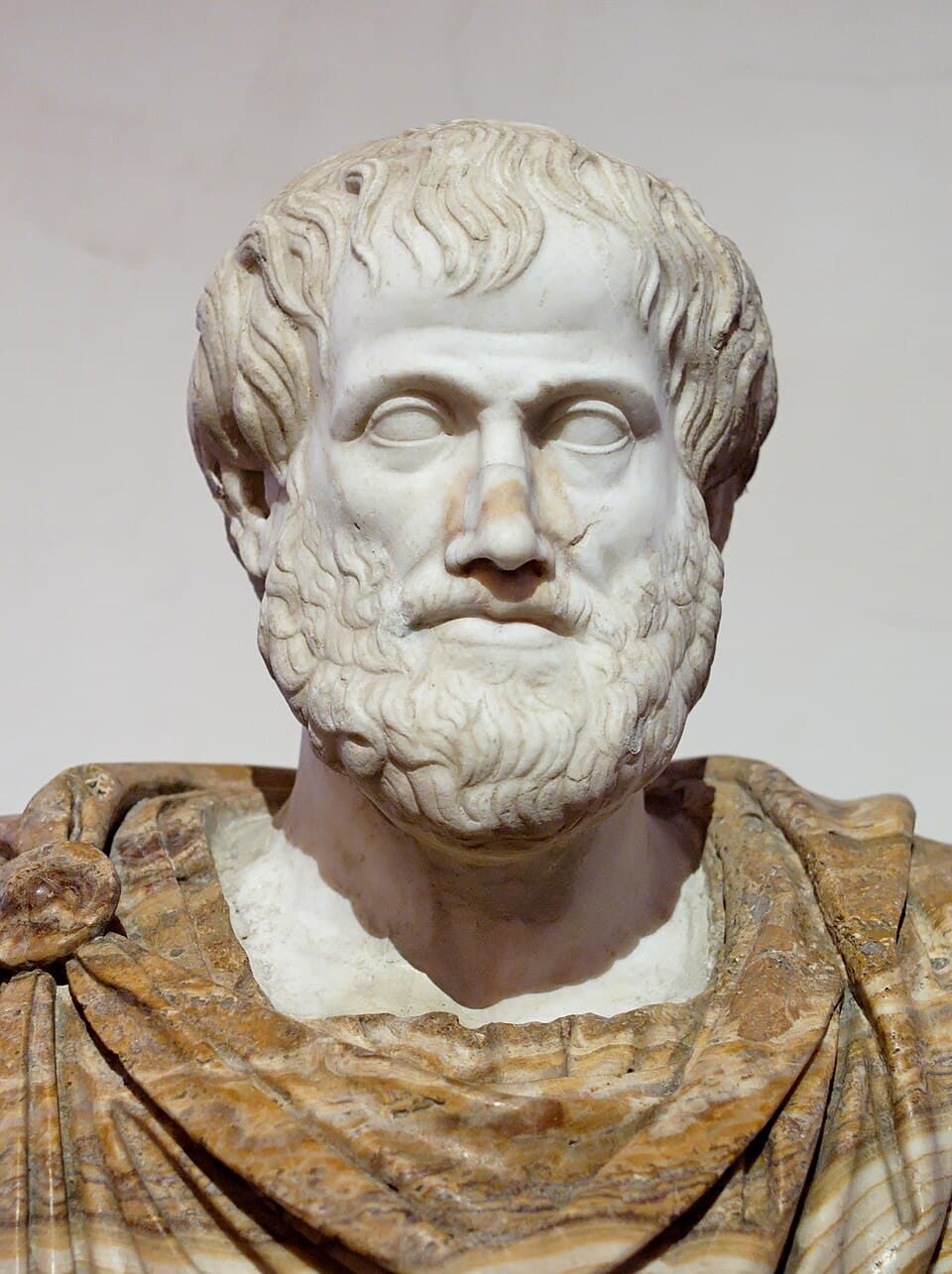
Aristotle
Nicomachean Ethics

The text explores the etymology and logic of moral choice, identifying it as a specific subset of voluntary action involving prior reasoning.

...we pretty well know to be good, but we form opinions respecting such as we do not know at all. And it is not thought that choosing and opining best always go together, but that some opine the better course and yet by reason of viciousness choose not the things which they should. It may be urged, that Opinion always precedes or accompanies Moral Choice; be it so, this makes no difference, for this is not the point in question, but whether Moral Choice is the same as Opinion of a certain kind.
Since then it is none of the aforementioned things, what is it, or how is it characterised? Voluntary it plainly is, but not all voluntary action is an object of Moral Choice. May we not say then, it is “that voluntary which has passed through a stage of previous deliberation?” because Moral Choice is attended with reasoning and intellectual process. The etymology of its Greek name seems to give a hint of it, being when analysed “chosen in preference to somewhat else.”
Chapter V. Well then; do men deliberate about everything, and is anything soever the object of Deliberation, or are there some matters with respect to which there is none? (It may be as well perhaps to say, that by “object of Deliberation” is meant such matter as a sensible man would deliberate upon, not what any fool or madman might.) Well: about eternal things no one deliberates; as, for instance, the universe, or the incommensurability of the diameter and side of a square. Nor again abo...
6

Aristotle

Nicomachean Ethics

Choice's Final Origin

This excerpt directly elaborates on Aristotle's definition of Moral Choice by specifying that it is the object of deliberation and is what is preferred after deliberation, aligning perfectly with the parent's characterization.

...is the originator of his actions; and Deliberation has for its object whatever may be done through one’s own instrumentality, and the actions are with a view to other things; and so it is, not the End, but the Means to Ends on which Deliberation is employed. Nor, again, is it employed on matters of detail, as whether the substance before me is bread, or has been properly cooked; for these come under the province of sense, and if a man is to be always deliberating, he may go on ad infinitum.
Further, exactly the same matter is the object both of Deliberation and Moral Choice; but that which is the object of Moral Choice is thenceforward separated off and definite, because by object of Moral Choice is denoted that which after Deliberation has been preferred to something else: for each man leaves off searching how he shall do a thing when he has brought the origination up to himself, i.e. to the governing principle in himself, because it is this which makes the choice.
A good illustration of this is furnished by the old regal constitutions which Homer drew from, in which the Kings would announce to the commonalty what they had determined before. Now since that which is the object of Moral Choice is something in our own power, which is the object of deliberation and the grasping of the Will, Moral Choice must be “a grasping after something in our own power consequent upon Deliberation:” because after having deliberated we decide, and then grasp by our Will in...

David Hume

An Enquiry Concerning Human Understanding

The Chain of Necessity

This excerpt challenges the notion of free Moral Choice by arguing that voluntary actions are part of a deterministic chain, implying that moral responsibility might be undermined, which contradicts Aristotle's assumption of deliberate choice.

...ions are objects of our moral sentiment, so far only as they are indications of the internal character, passions, and affections; it is impossible that they can give rise either to praise or blame, where they proceed not from these principles, but are derived altogether from external violence. 78. I pretend not to have obviated or removed all objections to this theory, with regard to necessity and liberty. I can foresee other objections, derived from topics which have not here been treated of.
It may be said, for instance, that, if voluntary actions be subjected to the same laws of necessity with the operations of matter, there is a continued chain of necessary causes, pre-ordained and pre-determined, reaching from the original cause of all to every single volition of every human creature. No contingency anywhere in the universe; no indifference; no liberty. While we act, we are, at the same time, acted upon. The ultimate Author of all our volitions is the Creator of the world, who first bestowed motion on this immense machine, and placed all beings in that particular position, when...
For as a man, who fired a mine, is answerable for all the consequences whether the train he employed be long or short; so wherever a continued chain of necessary causes is fixed, that Being, either finite or infinite, who produces the first, is likewise the author of all the rest, and must both bear the blame and acquire the praise which belong to them. Our clear and unalterable ideas of morality establish this rule, upon unquestionable reasons, when we examine the consequences of any human act...

Aristotle

Nicomachean Ethics

Will's Intellectual Engine

This excerpt explains the psychological mechanism behind Moral Choice, describing it as arising from the interplay of appetition and reason, thus answering why and how Moral Choice occurs.

...] Now this Intellectual operation and this Truth is what bears upon Moral Action; of course truth and falsehood must be the good and the bad of that Intellectual Operation which is purely Speculative, and concerned neither with action nor production, because this is manifestly the work of every Intellectual faculty, while of the faculty which is of a mixed Practical and Intellectual nature, the work is that Truth which, as I have described above, corresponds to the right movement of the Will.
Now the starting-point of moral action is Moral Choice, (I mean, what actually sets it in motion, not the final cause,) and of Moral Choice, Appetition, and Reason directed to a certain result: and thus Moral Choice is neither independent of intellect, i. e. intellectual operation, nor of a certain moral state: for right or wrong action cannot be, independently of operation of the Intellect, and moral character. But operation of the Intellect by itself moves nothing, only when directed to a certain result, i. e. exercised in Moral Action: (I say nothing of its being exercised in production, be...
But nothing which is done and past can be the object of Moral Choice; for instance, no man chooses to have sacked Troy; because, in fact, no one ever deliberates about what is past, but only about that which is future, and which may therefore be influenced, whereas what has been cannot not have been: and so Agathon is right in saying “Of this alone is Deity bereft, To make undone whatever hath been done.” Thus then Truth is the work of both the Intellectual Parts of the Soul; those states t...

John Stewart Mill

Utilitarianism

Intention vs Motive

This excerpt reframes the discussion from deliberation and choice to the importance of intention in determining morality, shifting the focus to a different criterion for moral evaluation.

...than leaving him to drown would have been. Had Mr. Davis said, "The rightness or wrongness of saving a man from drowning does depend very much"--not upon the motive, but--"upon the intention" no utilitarian would have differed from him. Mr. Davis, by an oversight too common not to be quite venial, has in this case confounded the very different ideas of Motive and Intention. There is no point which utilitarian thinkers (and Bentham pre-eminently) have taken more pains to illustrate than this.
The morality of the action depends entirely upon the intention--that is, upon what the agent wills to do. But the motive, that is, the feeling which makes him will so to do, when it makes no difference in the act, makes none in the morality: though it makes a great difference in our moral estimation of the agent, especially if it indicates a good or a bad habitual disposition--a bent of character from which useful, or from which hurtful actions are likely to arise.] CHAPTER III.
OF THE ULTIMATE SANCTION OF THE PRINCIPLE OF UTILITY. The question is often asked, and properly so, in regard to any supposed moral standard--What is its sanction? what are the motives to obey it? or more specifically, what is the source of its obligation? whence does it derive its binding force? It is a necessary part of moral philosophy to provide the answer to this question; which, though frequently assuming the shape of an objection to the utilitarian morality, as if it had some special...

David Hume

An Enquiry Concerning Human Understanding

Necessity as Observer's Inference

This excerpt questions our ability to objectively assess liberty and necessity, suggesting that what we perceive as free choice might be an illusion, thus casting doubt on our capacity to settle the issue of Moral Choice.

...s and circumstances and characters, and as we always draw inferences from one to the other, we must be obliged to acknowledge in words that necessity, which we have already avowed, in every deliberation of our lives, and in every step of our conduct and behaviour.[17] [17] The prevalence of the doctrine of liberty may be accounted for, from another cause, viz. a false sensation or seeming experience which we have, or may have, of liberty or indifference, in many of our actions.
The necessity of any action, whether of matter or of mind, is not, properly speaking, a quality in the agent, but in any thinking or intelligent being, who may consider the action; and it consists chiefly in the determination of his thoughts to infer the existence of that action from some preceding objects; as liberty, when opposed to necessity, is nothing but the want of that determination, and a certain looseness or indifference, which we feel, in passing, or not passing, from the idea of one object to that of any succeeding one. Now we may observe, that, though, in reflecting on human act...
We feel, that our actions are subject to our will, on most occasions; and imagine we feel, that the will itself is subject to nothing, because, when by a denial of it we are provoked to try, we feel, that it moves easily every way, and produces an image of itself (or a Velleïty, as it is called in the schools) even on that side, on which it did not settle. This image, or faint motion, we persuade ourselves, could, at that time, have been compleated into the thi...

John Stewart Mill

Utilitarianism

Habit's Three Stages

This excerpt offers practical guidance by describing how habits, especially those aligned with deliberate ends, contribute to confirmed virtue, answering the question of how one should live.

...lly as any one. Will, the active phenomenon, is a different thing from desire, the state of passive sensibility, and though originally an offshoot from it, may in time take root and detach itself from the parent stock; so much so, that in the case of an habitual purpose, instead of willing the thing because we desire it, we often desire it only because we will it. This, however, is but an instance of that familiar fact, the power of habit, and is nowise confined to the case of virtuous actions.
Many indifferent things, which men originally did from a motive of some sort, they continue to do from habit. Sometimes this is done unconsciously, the consciousness coming only after the action: at other times with conscious volition, but volition which has become habitual, and is put into operation by the force of habit, in opposition perhaps to the deliberate preference, as often happens with those who have contracted habits of vicious or hurtful indulgence. Third and last comes the case in which the habitual act of will in the individual instance is not in contradiction to the general inte...
The distinction between will and desire thus understood, is an authentic and highly important psychological fact; but the fact consists solely in this--that will, like all other parts of our constitution, is amenable to habit, and that we may will from habit what we no longer desire for itself, or desire only because we will it. It is not the less true that will, in the beginning, is entirely produced by desire; including in that term the repelling influence of pain as well as the attractive on...