Eternal Wheel of Existence
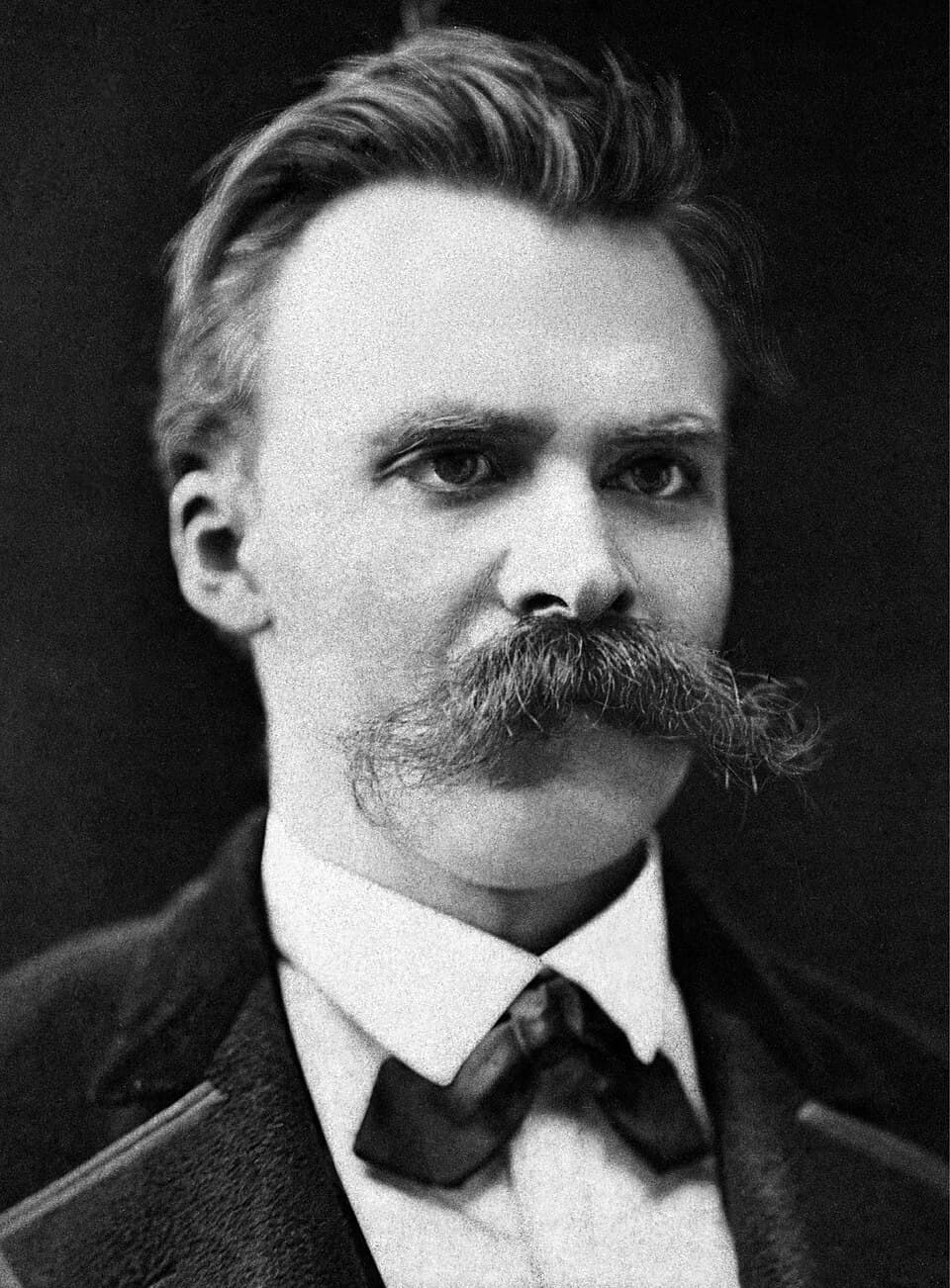
Friedrich Nietzsche
Thus Spake Zarathustra

The author presents the doctrine of the eternal recurrence, asserting that all things in existence move in an eternal cycle of return and renewal. He posits that time is a 'crooked path' where every moment is a beginning and the center of existence is everywhere.

...we forget on hearing tones; how delightful it is that we forget! Have not names and tones been given unto things that man may refresh himself with them? It is a beautiful folly, speaking; therewith danceth man over everything. How lovely is all speech and all falsehoods of tones! With tones danceth our love on variegated rainbows.— —“O Zarathustra,” said then his animals, “to those who think like us, things all dance themselves: they come and hold out the hand and laugh and flee—and return.
Everything goeth, everything returneth; eternally rolleth the wheel of existence. Everything dieth, everything blossometh forth again; eternally runneth on the year of existence. Everything breaketh, everything is integrated anew; eternally buildeth itself the same house of existence. All things separate, all things again greet one another; eternally true to itself remaineth the ring of existence. Every moment beginneth existence, around every ‘Here’ rolleth the ball ‘There.’ The middle is everywhere. Crooked is the path of eternity.”
— —O ye wags and barrel-organs! answered Zarathustra, and smiled once more, how well do ye know what had to be fulfilled in seven days:— —And how that monster crept into my throat and choked me! But I bit off its head and spat it away from me. And ye—ye have made a lyre-lay out of it? Now, however, do I lie here, still exhausted with that biting and spitting-away, still sick with mine own salvation. AND YE LOOKED ON AT IT ALL? O mine animals, are ye also cruel? Did ye like to look at my gre...
6

Marcus Aurelius

Meditations

Dissolution into Elements

This excerpt echoes the parent's theme of eternal renewal and the perpetual endurance of the universe through cycles of change and dissolution.

...did not she know what she did, when she made them? For either of these two to say, is equally absurd. But to let pass nature in general, and to reason of things particular according to their own particular natures; how absurd and ridiculous is it, first to say that all parts of the whole are, by their proper natural constitution, subject to alteration; and then when any such thing doth happen, as when one doth fall sick and dieth, to take on and wonder as though some strange thing had happened?
Though this besides might move not so grievously to take on when any such thing doth happen, that whatsoever is dissolved, it is dissolved into those things, whereof it was compounded. For every dissolution is either a mere dispersion, of the elements into those elements again whereof everything did consist, or a change, of that which is more solid into earth; and of that which is pure and subtile or spiritual, into air. So that by this means nothing is lost, but all resumed again into those rational generative seeds of the universe; and this universe, either after a certain period of time to...
Now that solid and spiritual that we speak of, thou must not conceive it to be that very same, which at first was, when thou wert born. For alas! all this that now thou art in either kind, either for matter of substance, or of life, hath but two or three days ago partly from meats eaten, and partly from air breathed in, received all its influx, being the same then in no other respect, than a running river, maintained by the perpetual influx and new supply of waters, is the same. That therefore...

Augustine of Hippo

Confessions

The Word's Call Home

This excerpt presents a linear, theistic perspective where existence is directed toward a final rest in God, challenging the idea of an endless, meaningless cyclical return.

...n grasp them, when they are hard by? For the sense of the flesh is slow, because it is the sense of the flesh; and thereby is it bounded. It sufficeth for that it was made for; but it sufficeth not to stay things running their course from their appointed starting-place to the end appointed. For in Thy Word, by which they are created, they hear their decree, "hence and hitherto." Be not foolish, O my soul, nor become deaf in the ear of thine heart with the tumult of thy folly. Hearken thou too.
The Word itself calleth thee to return: and there is the place of rest imperturbable, where love is not forsaken, if itself forsaketh not. Behold, these things pass away, that others may replace them, and so this lower universe be completed by all his parts. But do I depart any whither? saith the Word of God. There fix thy dwelling, trust there whatsoever thou hast thence, O my soul, at least now thou art tired out with vanities. Entrust Truth, whatsoever thou hast from the Truth, and thou shalt lose nothing; and thy decay shall bloom again, and all thy diseases be healed, and thy mortal parts...
Why then be perverted and follow thy flesh? Be it converted and follow thee. Whatever by her thou hast sense of, is in part; and the whole, whereof these are parts, thou knowest not; and yet they delight thee. But had the sense of thy flesh a capacity for comprehending the whole, and not itself also, for thy punishment, been justly restricted to a part of the whole, thou wouldest, that whatsoever existeth at this present, should pass away, that so the whole might better please thee. For what w...

Friedrich Nietzsche

Thus Spake Zarathustra

Suffering's Desire for Heirs

This excerpt provides a psychological mechanism for eternal recurrence: joy desires its own eternity and recurrence, wanting everything eternally like itself.

...rdrunk her drunkenness? hath she become overawake? doth she ruminate? —Her woe doth she ruminate over, in a dream, the old, deep midnight—and still more her joy. For joy, although woe be deep, JOY IS DEEPER STILL THAN GRIEF CAN BE. 9. Thou grape-vine! Why dost thou praise me? Have I not cut thee! I am cruel, thou bleedest—: what meaneth thy praise of my drunken cruelty? “Whatever hath become perfect, everything mature—wanteth to die!” so sayest thou. Blessed, blessed be the vintner’s knife!
But everything immature wanteth to live: alas! Woe saith: “Hence! Go! Away, thou woe!” But everything that suffereth wanteth to live, that it may become mature and lively and longing, —Longing for the further, the higher, the brighter. “I want heirs,” so saith everything that suffereth, “I want children, I do not want MYSELF,”— Joy, however, doth not want heirs, it doth not want children,—joy wanteth itself, it wanteth eternity, it wanteth recurrence, it wanteth everything eternally-like-itself.
Woe saith: “Break, bleed, thou heart! Wander, thou leg! Thou wing, fly! Onward! upward! thou pain!” Well! Cheer up! O mine old heart: WOE SAITH: “HENCE! GO!” 10. Ye higher men, what think ye? Am I a soothsayer? Or a dreamer? Or a drunkard? Or a dream-reader? Or a midnight-bell? Or a drop of dew? Or a fume and fragrance of eternity? Hear ye it not? Smell ye it not? Just now hath my world become perfect, midnight is also midday,— Pain is also a joy, curse is also a blessing, night is also a...

Marcus Aurelius

Meditations

Things That Endure Briefly

This excerpt reframes the discussion from cosmic cycles to the human attitude of non-attachment, advising against earnestly seeking or fleeing transient things.

...children are. And they also that applaud thee so gravely, or, that applaud thy speeches, with that their usual acclamation, ἀξιοπίστως, O wisely spoken I and speak well of thee, as on the other side, they that stick not to curse thee, they that privately and secretly dispraise and deride thee, they also are but leaves. And they also that shall follow, in whose memories the names of men famous after death, is preserved, they are but leaves neither. For even so is it of all these worldly things.
Their spring comes, and they are put forth. Then blows the wind, and they go down. And then in lieu of them grow others out of the wood or common matter of all things, like unto them. But, to endure but for a while, is common unto all. Why then shouldest thou so earnestly either seek after these things, or fly from them, as though they should endure for ever?
Yet a little while, and thine eyes will be closed up, and for him that carries thee to thy grave shall another mourn within a while after. XXXV. A good eye must be good to see whatsoever is to be seen, and not green things only. For that is proper to sore eyes. So must a good ear, and a good smell be ready for whatsoever is either to be heard, or smelt: and a good stomach as indifferent to all kinds of food, as a millstone is, to whatsoever she was made for to grind. As ready therefore must a...

Friedrich Nietzsche

Thus Spake Zarathustra

The Giant Chance

This excerpt questions human capacity for knowledge, emphasizing error, ignorance, and the rule of nonsense, thus casting doubt on our ability to comprehend or affirm metaphysical claims like eternal recurrence.

...and his voice had changed: Remain true to the earth, my brethren, with the power of your virtue! Let your bestowing love and your knowledge be devoted to be the meaning of the earth! Thus do I pray and conjure you. Let it not fly away from the earthly and beat against eternal walls with its wings! Ah, there hath always been so much flown-away virtue! Lead, like me, the flown-away virtue back to the earth—yea, back to body and life: that it may give to the earth its meaning, a human meaning!
A hundred times hitherto hath spirit as well as virtue flown away and blundered. Alas! in our body dwelleth still all this delusion and blundering: body and will hath it there become. A hundred times hitherto hath spirit as well as virtue attempted and erred. Yea, an attempt hath man been. Alas, much ignorance and error hath become embodied in us! Not only the rationality of millenniums—also their madness, breaketh out in us. Dangerous is it to be an heir. Still fight we step by step with the giant Chance, and over all mankind hath hitherto ruled nonsense, the lack-of-sense.
Let your spirit and your virtue be devoted to the sense of the earth, my brethren: let the value of everything be determined anew by you! Therefore shall ye be fighters! Therefore shall ye be creators! Intelligently doth the body purify itself; attempting with intelligence it exalteth itself; to the discerners all impulses sanctify themselves; to the exalted the soul becometh joyful. Physician, heal thyself: then wilt thou also heal thy patient. Let it be his best cure to see with his eyes h...

Augustine of Hippo

Confessions

Soul Riveted on Sorrow

This excerpt offers practical guidance by suggesting that the soul should turn toward God to avoid being riveted upon sorrows by transient things.

...one dear to him, to whom all are dear in Him who cannot be lost. And who is this but our God, the God that made heaven and earth, and filleth them, because by filling them He created them? Thee none loseth, but who leaveth. And who leaveth Thee, whither goeth or whither fleeth he, but from Thee well-pleased, to Thee displeased? For where doth he not find Thy law in his own punishment? And Thy law is truth, and truth Thou. Turn us, O God of Hosts, show us Thy countenance, and we shall be whole.
For whithersoever the soul of man turns itself, unless toward Thee, it is riveted upon sorrows, yea though it is riveted on things beautiful. And yet they, out of Thee, and out of the soul, were not, unless they were from Thee. They rise, and set; and by rising, they begin as it were to be; they grow, that they may be perfected; and perfected, they wax old and wither; and all grow not old, but all wither. So then when they rise and tend to be, the more quickly they grow that they may be, so much the more they haste not to be. This is the law of them.
Thus much has Thou allotted them, because they are portions of things, which exist not all at once, but by passing away and succeeding, they together complete that universe, whereof they are portions. And even thus is our speech completed by signs giving forth a sound: but this again is not perfected unless one word pass away when it hath sounded its part, that another may succeed. Out of all these things let my soul praise Thee, O God, Creator of all; yet let not my soul be riveted unto these...